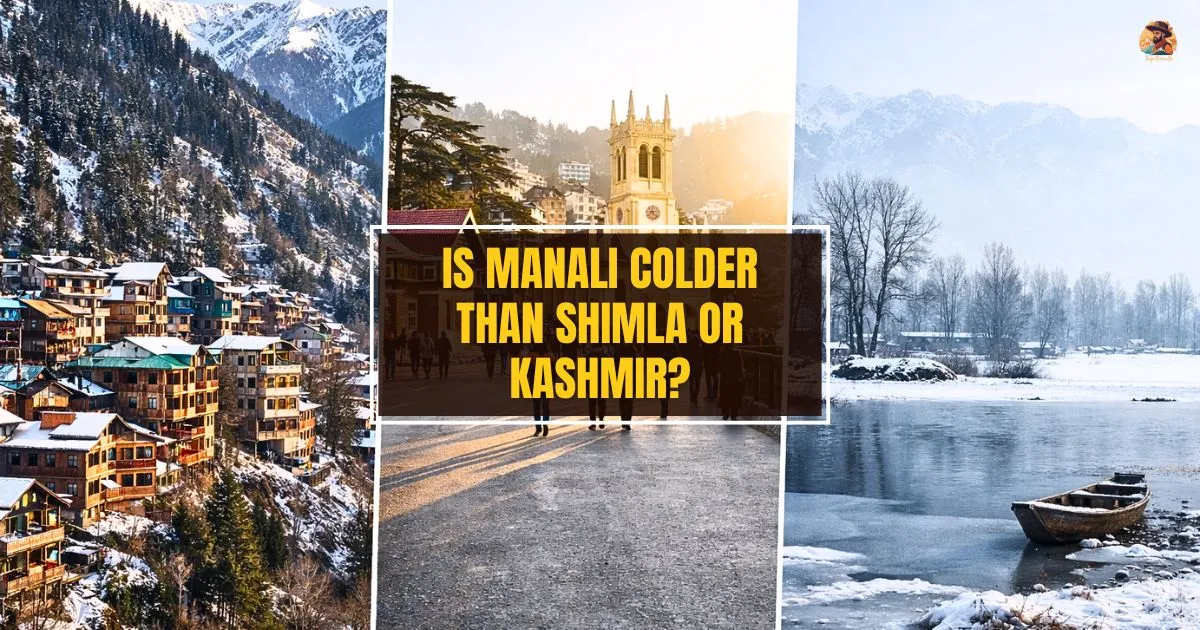
Most travelers planning a winter trip get stuck on one simple question: Is Manali colder than Shimla or Kashmir? Weather apps show similar temperatures, social media shows snow everywhere, and December searches only add to the confusion.
In reality, Manali, Shimla, and Kashmir feel cold in very different ways during winter. Manali’s valley location and wind make the cold sharper; Shimla stays comparatively manageable during the day, while Kashmir experiences longer and drier cold spells, especially in December and January.
This comparison matters because choosing the wrong destination often leads to poor packing, uncomfortable stays, and unrealistic snowfall expectations. Pause here for a moment, because understanding how cold it actually feels in each place will help you decide where your winter trip will be enjoyable rather than exhausting.
Why This Confusion Exists for First-Time Travelers
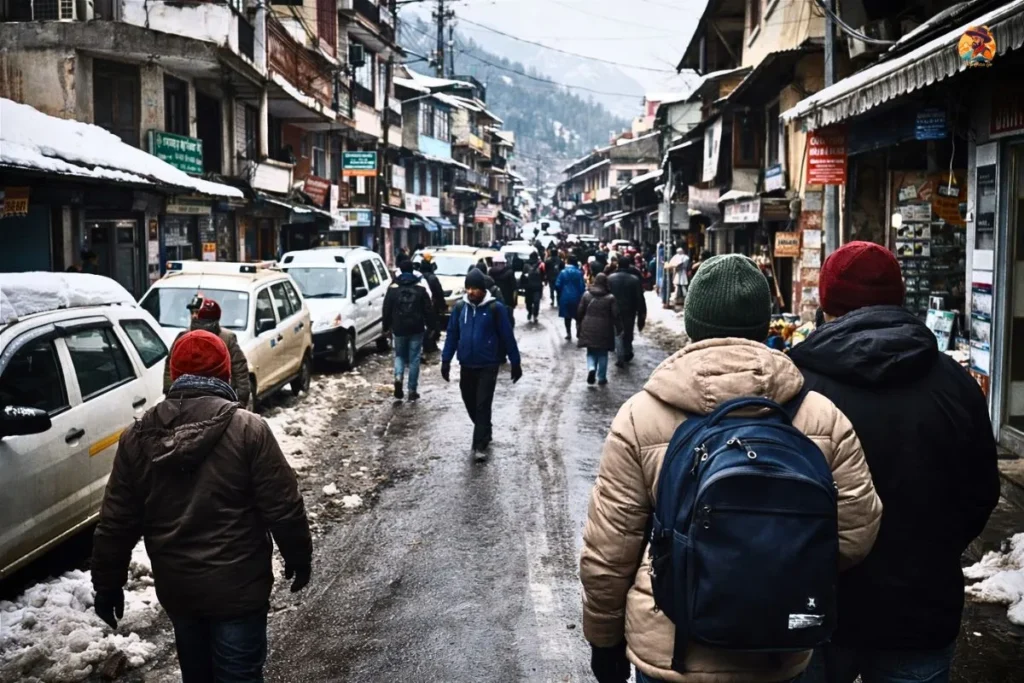
Most first-time travelers asking whether Manali is colder than Shimla assume that cold and snowfall mean the same thing. In reality, Manali weather, Shimla temperatures, and Kashmir vs Manali winter conditions behave very differently, even when numbers look similar on apps.
The confusion usually comes from a few common assumptions that rarely hold on the ground:
- More snowfall always means harsher cold, which is not always the case
- All hill stations feel similar in winter, regardless of altitude or terrain
- December weather looks the same in photos, so the experience must be similar
I realized this gap during a December evening in Manali, when the wind in shaded streets felt sharper than expected, despite moderate temperatures. Social media reels and quick blogs rarely show these details, which is why first-time travelers often pack incorrectly or choose destinations for the wrong reasons.
If you want a broader comparison beyond just cold, this guide on Manali vs Shimla, Kullu & Kashmir – Which One is Right for You? puts weather, travel comfort, and expectations into a clearer context. Pause here and slow down, because this understanding will shape the rest of your winter trip.
Actual Winter Temperatures – Manali vs Shimla vs Kashmir
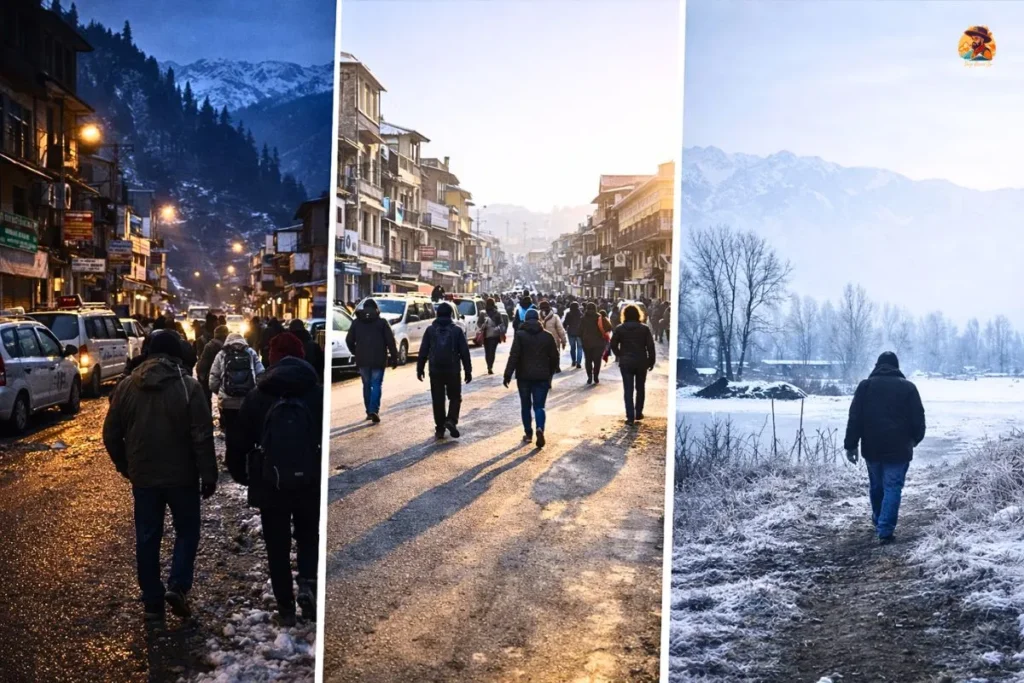
When people ask if Manali is colder than Shimla or Kashmir in winter, they usually expect a number. I learned very early that winter in the mountains is felt more on the skin than seen on an app, especially during December.
Manali delivers a sharp, cold valley, Shimla feels moderated by town life, while Kashmir carries a deep, steady cold throughout the day. That difference is why Manali is colder than Shimla or Kashmir in December, depending on where you are, how long you stay outside, and the time of day.
Manali Winter Temperature Reality
I remember stepping out near Old Manali after sunset, checking Manali’s weather on my phone, and still feeling unprepared within minutes. Cold air settles fast in the valley, and once sunlight disappears, warmth vanishes quickly. By around 6:30 pm in Manali, the temperature drop feels sudden once the sun disappears behind the valley.
This is why Manali is colder than Shimla for many travelers. Local drivers in Manali often warn visitors that evenings feel colder than weather apps suggest. Altitude pockets, sudden night drops, and wind chill combine quietly, making evenings far harsher than daytime suggests. You enjoy Manali more when you accept this rhythm, which also explains its strong winter pull discussed in Why is Manali So Popular Among Tourists?.
Shimla Winter Temperature Reality
When people ask me which is better, Shimla or Manali, I usually tell them to notice how Shimla behaves during the day. Walking near Mall Road around noon often feels comfortable, even in peak winter, because the town holds heat longer. In Shimla, late mornings usually feel comfortable, but cold starts settling back by early evening.
However, Shimla’s winter temperature falls quickly after sunset. I have felt nights bite harder than expected, but the key difference is relief during daylight, which makes Shimla easier for travelers who do not enjoy constant cold. This contrast is explored further in Is Manali Better Than Shimla?.
Kashmir Winter Temperature Reality
My first winter morning in Kashmir started with silence, frozen ground, and breath turning visible instantly. The air feels noticeably dry in Kashmir mornings, and even short walks make the cold settle deep into the body. In a Kashmir vs Manali comparison, Kashmir usually wins on temperature alone, especially in December and January. In Kashmir, the cold often feels established by early morning and rarely eases even after sunrise.
So if you ask if Manali is colder than Kashmir, the answer is mostly no on paper. Kashmir’s cold is drier, steadier, and lasts longer through the day, with snow staying on the ground for weeks. Understanding geography helps here, which is why [Is Manali Near Kashmir?] clears many first-time doubts.
🟦 Mini Summary
Kashmir is numerically the coldest in winter, especially in December. Manali often feels harsher than Shimla because of valley winds and sudden night drops, while Shimla stays more balanced with daytime comfort and cold nights.
Snowfall Comparison – Where Does It Really Snow More?
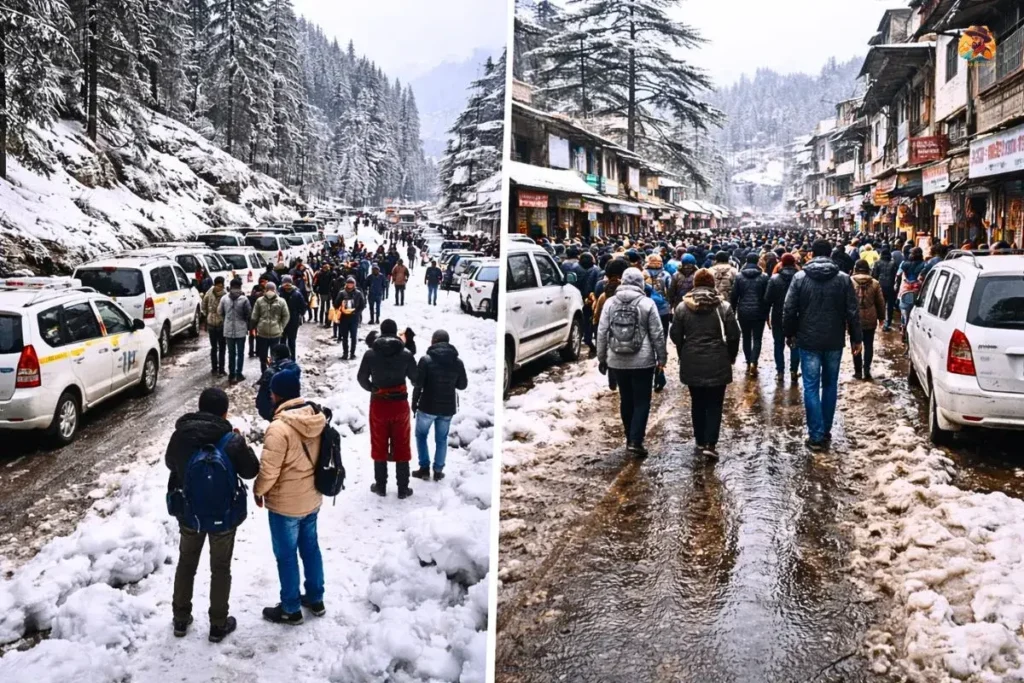
Most travelers searching for Shimla or Manali, which is better for snowfall, assume colder places automatically get more snow. In reality, snowfall experience depends on how often it snows and how long the snow actually stays, not just temperature readings.
I understood this difference clearly while comparing where there is more snow in Shimla or Manali during multiple winter trips. Snowfall looks dramatic online, but ground reality changes fast once crowds, sunlight, and access come into play.
Snowfall Reality Comparison
| Factor | Manali | Shimla |
| Snowfall frequency | Higher, especially during active winter spells | Lower, fewer snowfall days |
| Snow retention | Snow stays longer in shaded and higher areas | Kufri and the nearby outskirts |
| Best snow zones | Solang, Gulaba, higher villages | Kufri and nearby outskirts |
| Crowd impact | Heavy near Solang after snowfall | Very heavy around Kufri and Mall Road |
| Overall snow experience | More consistent but crowded | Short-lived but scenic |
What most blogs skip is how crowds change everything on the ground. Waiting for taxis or getting out of popular snow zones after snowfall often takes far longer than travelers expect. I remember fresh snowfall in Manali that stayed visible till afternoon in quieter stretches, while popular points filled up within hours. In Shimla, snowfall mornings often feel magical, but by evening, slush, vehicles, and foot traffic usually take over.
This is why planning a trip only around the word “snowfall” often leads to disappointment. Snow retention, access timing, and crowd behavior matter far more than a single snowfall alert. Snowfall patterns change every year, so even December plans need flexibility rather than fixed expectations.
If you want a focused, ground-level breakdown, this guide on Where is More Snow – Shimla or Manali? explains the reality without exaggeration. Pause here and take a breath, because snow is enjoyable only when expectations match what actually happens.
Is Manali in Kashmir or Are They the Same?
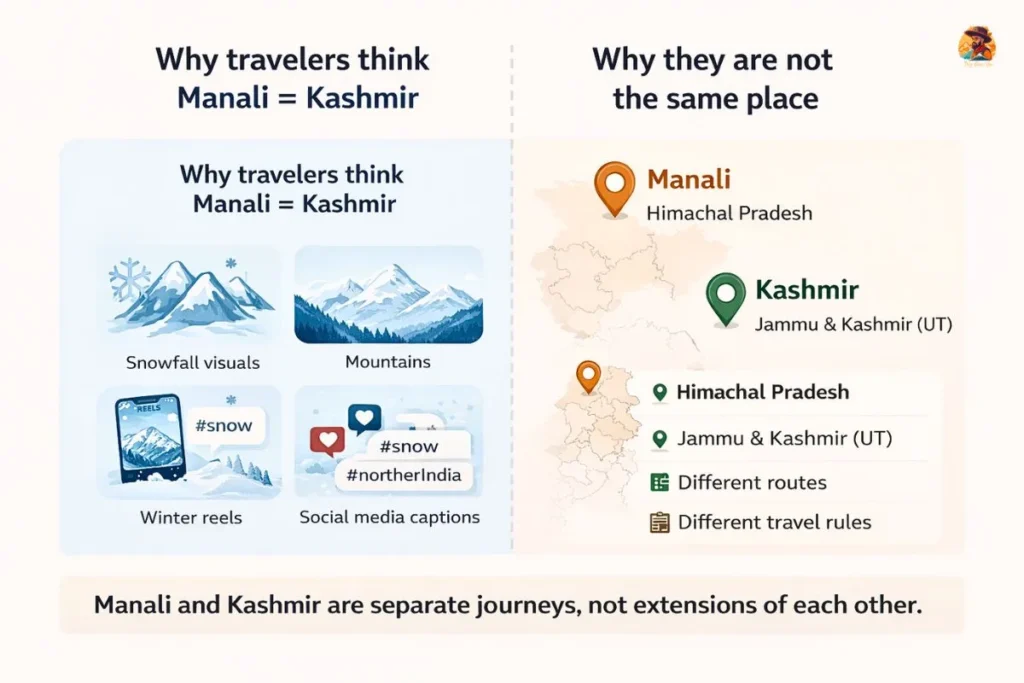
This confusion comes up almost every winter. I have personally met first-time travelers in Manali who genuinely believed they had already entered Kashmir, simply because of the snow and similar scenery. The truth is very clear: Manali is not in Kashmir, and they are not the same place.
Clear geographical reality (no confusion):
- Manali is located in Himachal Pradesh
- Kashmir is a separate region under the Union Territory of Jammu and Kashmir
- Both lie in different mountain systems with completely separate routes and administration
Why does this misunderstanding happen:
- Snow visuals online look similar across hill regions
- Social media captions rarely mention exact locations
- Many blogs casually mix Manali and Kashmir as “north India snow destinations.”
Differences that matter to travelers:
- Culture: Manali follows the Himachali culture, while Kashmir has its own language, traditions, and lifestyle
- Administration: Travel rules, permits, and security checks differ
- Travel reality: Roads, distances, and winter accessibility are not the same
The distance reality most beginners underestimate:
- Manali and Kashmir are far apart, not neighboring destinations
- Covering both in one winter trip is impractical for most travelers
- Winter road closures make plans unpredictable
I have personally explained this difference to confused travelers at the Manali bus stand, who genuinely believed Kashmir had already started.
I usually advise travelers to treat Manali and Kashmir as two completely separate journeys, not extensions of each other. This confusion is common, which is why this detailed explanation in Is Manali Near Kashmir? helps set the route and distance reality clearly. Pause here and take a breath, because choosing the right region saves time, money, and unnecessary stress.
Which Feels Colder to Travelers and Why?
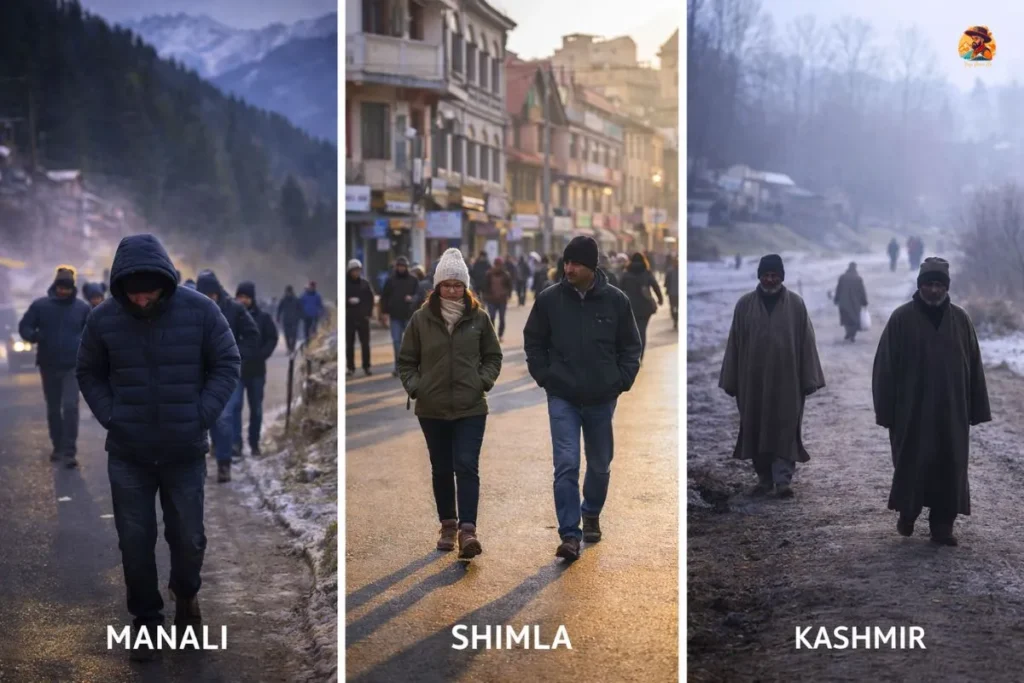
Many travelers ask why Manali is colder than Shimla even when temperatures look similar. The answer lies in how cold behaves on the body, not in numbers alone. Wind, sunlight, humidity, and daily movement change the experience completely, which is why Kashmir vs Manali comparisons often confuse first-time visitors.
Why does cold feel different on the ground
| Factor | Manali | Shimla | Kashmir |
| Wind exposure | Strong valley winds after sunset | Moderate, town blocks wind | Low wind, steady cold |
| Sunlight hours | Shorter due to valley shadows | Better daytime sunlight | Limited winter sun |
| Humidity | Easier in the daytime | Moderate | Dry cold |
| Walking comfort | Cold hits quickly | Easier in daytime | Difficult all day |
| Overall felt cold | Sharp and sudden | Balanced | Deep and constant |
In real experience, Manali feels harsh in short bursts, especially during evening walks when the sunlight disappears quickly. Shimla usually feels manageable during the day, but nights still bite sharply. Kashmir feels colder for longer hours, with steady cold that does not ease much even after sunrise. Cold feels different depending on where you stay, which is why Kullu vs Manali – Which Is Better for Your Himachal Trip focuses on real travel fatigue, movement, and crowd pressure.
Accommodation heating reality
Heating is another factor travelers underestimate. In Manali and Shimla, room heaters often run for limited hours, while in Kashmir, heating is planned for longer cold periods, though comfort still varies by stay type. You will enjoy any of these destinations more if you plan walking time carefully and do not rely fully on indoor heating. Pause here and take a breath, because felt cold matters more than temperature numbers.
Shimla, Manali or Kashmir – Which One Should You Choose?
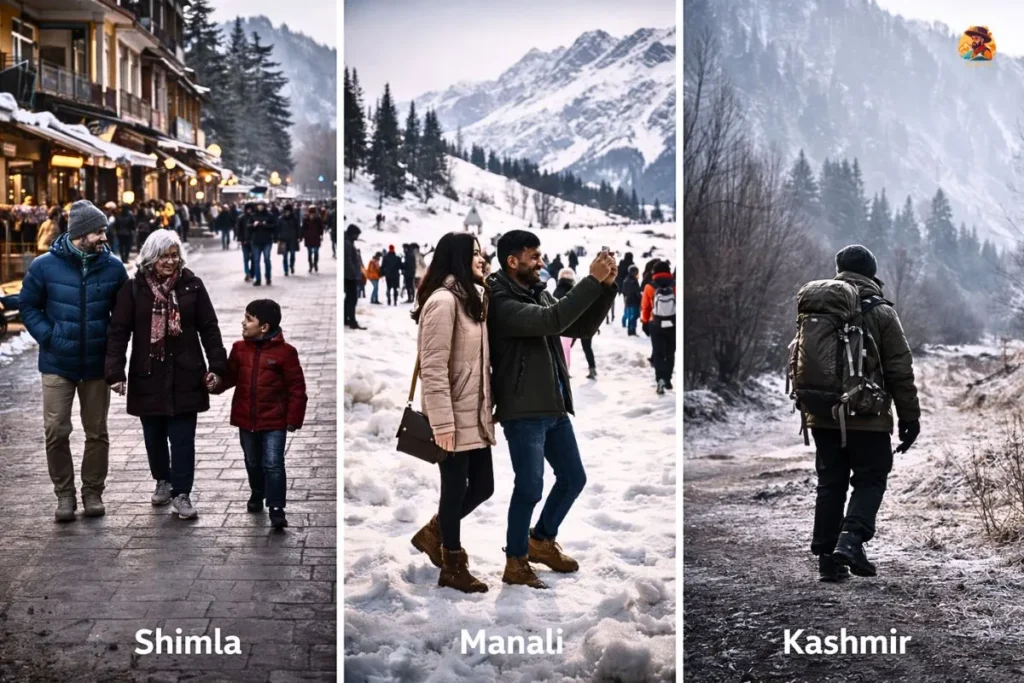
Many readers finally reach this point, asking Shimla Manali or Kashmir, which is better, because temperature and snowfall only matter when they match your travel style. I have seen trips go wrong simply because people chose the coldest or snowiest place, not the right one for themselves.
Here is the most practical way to decide, based on how different travelers actually experience winter on the ground.
If you are traveling with family
Shimla usually works best for families, especially with children or older members. Daytime sunlight, easier walks, and better city facilities make winter more manageable, even when nights turn cold. Manali can feel too harsh in the evenings, while Kashmir demands higher cold tolerance and planning.
If this is your first time chasing snow
Manali suits first-time snow seekers better than Shimla or Kashmir. Snowfall chances are higher, snow stays visible longer in nearby areas, and you still have multiple sightseeing options if the weather shifts. Kashmir can feel overwhelming for beginners, while Shimla’s snowfall often depends heavily on timing.
If you are an adventure traveler
Manali and Kashmir both appeal here, but for different reasons. Manali offers easier access to winter adventure zones and short trips, while Kashmir delivers deeper winter conditions and dramatic landscapes. If you want intensity, Kashmir wins, but if you want flexibility, Manali feels safer.
If you are traveling on a budget
Shimla generally stays more budget-friendly in winter because of better connectivity and wider stay options. Manali costs rise quickly during snowfall periods, and Kashmir usually requires a higher overall budget due to longer travel distances and winter logistics.
Most travelers I have spoken to enjoy their trip more once they stop chasing cold and start matching destinations with their comfort.
If you are still unsure how to sequence destinations, this comparison on Which Place to Go First – Shimla or Manali? helps clarify planning order and pacing. Pause here and take a breath, because the best winter trip is not about choosing the coldest place, but choosing the one that fits you comfortably.
Common Mistakes Travelers Make While Choosing Based on “Cold”
Most wrong winter trips start with one narrow question: Is Manali colder than Shimla? I have seen travelers plan everything around this idea, only to struggle later because being cold alone never defines the real experience.
Here are the most common mistakes I repeatedly notice during winter travel in the hills.
- Assuming snowfall guarantees a good trip
I once saw travelers stuck for hours near Solang after fresh snowfall, thinking snow meant smooth fun. In reality, crowds, traffic jams, and slush often follow snowfall faster than joy does. - Ignoring road and access conditions
Many people track only Manali weather and forget how the roads behave after snow. Delays, blocked stretches, and long waiting times quietly ruin itineraries, especially during peak winter weeks. - Booking stays without confirming heating properly
This mistake hits hardest at night. Not all hotels provide reliable heating, and some heaters work for limited hours. Cold indoors feels worse than cold outside when expectations are wrong.
Another quiet mistake is assuming higher prices mean better winter comfort. If I were planning again, I would choose Manali only with confirmed heating and flexible evening plans. That is not always true, and winter costs behave differently across destinations.
Final Reality Check: Is Manali Colder Than Shimla or Kashmir?
Instead of repeatedly asking is Manali colder than Shimla or Kashmir in December, it helps to pause and check your own cold tolerance. Manali feels sharp in short bursts, Shimla stays more balanced, while Kashmir demands steady cold endurance through the day.
Crowds after snowfall often matter more than temperature, and mental comfort decides whether winter travel feels enjoyable or stressful. If route planning still confuses you, this guide on Can You Cover Shimla and Manali Together? helps set realistic expectations before you decide.
FAQs Travelers Ask Before Choosing Between Manali, Shimla, or Kashmir
Manali usually feels colder than Shimla in winter, even when average temperatures look similar. Valley winds, higher altitude surroundings, and faster heat loss after sunset increase wind chill in Manali.
In December, Kashmir is colder than Manali in actual temperature, especially in the mornings that often go below zero. Manali’s cold is sharper at night, while Kashmir remains cold throughout the day.
Manali generally gets more frequent snowfall, while Shimla sees fewer snow days. However, snowfall in Manali also brings heavy crowds, and snow duration depends more on altitude and shade than on town centers.
Manali’s valley location, reduced sunlight hours, and stronger winds make cold hits faster. Shimla benefits from better daytime sun and urban heat, which improves comfort.
No. Manali is in Himachal Pradesh, while Kashmir is a separate region under the Union Territory of Jammu and Kashmir. They are not geographically connected.
No. They differ in administration, culture, terrain, and travel routes, even though winter scenery may look similar in photos.
By temperature numbers, Kashmir is usually the coldest. In terms of feeling cold, Manali can feel harsher than Shimla due to the wind and valley effects.
Yes, if you plan carefully. Late November or early March feels milder, and staying in central Manali with proper heating improves comfort.
No. Snowfall varies every year and depends on weather systems. Some winters see heavier snowfall in Himachal than in parts of Kashmir.
December offers snow probability, not a guarantee. Manali has higher chances, while Shimla’s snowfall depends heavily on timing, road conditions, and crowds.
Experienced solo travelers can explore our write for us travel India contributor opportunity to share practical tips.

Hi, I am Manoj Kumar, the voice behind Trip Guru Go. I am a travel researcher, SEO content expert, and founder of this blog. With over 12 years of experience in digital travel research, I simplify complex destinations into real, helpful, and trustworthy guides.
Every article I write is backed by local sources, real traveler experiences, and deep fact-checking. Even if I have not visited every place personally, I never share anything without strong on-ground insight.
I do not sell travel packages or promote anything paid. My only goal is to help you travel smarter — with zero fluff, 100% honesty, and a deep focus on your safety and experience.