Cold air touched my cheeks when I reached the taxi stand near Mall Road. The warm smell of fresh buns mixed softly with the morning chill. I held my small notebook tightly because I wanted to understand the Manali taxi cost without feeling lost again. Drivers prepared their cars quietly, and their calm voices encouraged me to ask simple questions about routes and rates.
I still remember my first trip when every quote felt confusing. Those uncertain moments pushed me to note every real fare with care. Many travelers stood near me with the same hesitation, and their expressions reminded me why clarity matters so much here. During later visits, drivers shared honest stories over hot chai, and those small truths shaped this complete guide.
This guide carries that experience. It will help you move confidently through Manali because transport becomes simple when you understand how the valley behaves in each season. Beyond transport details, this Manali trip cost calculation guide helps estimate the full trip budget.
Manali Taxi Cost Overview for 2025
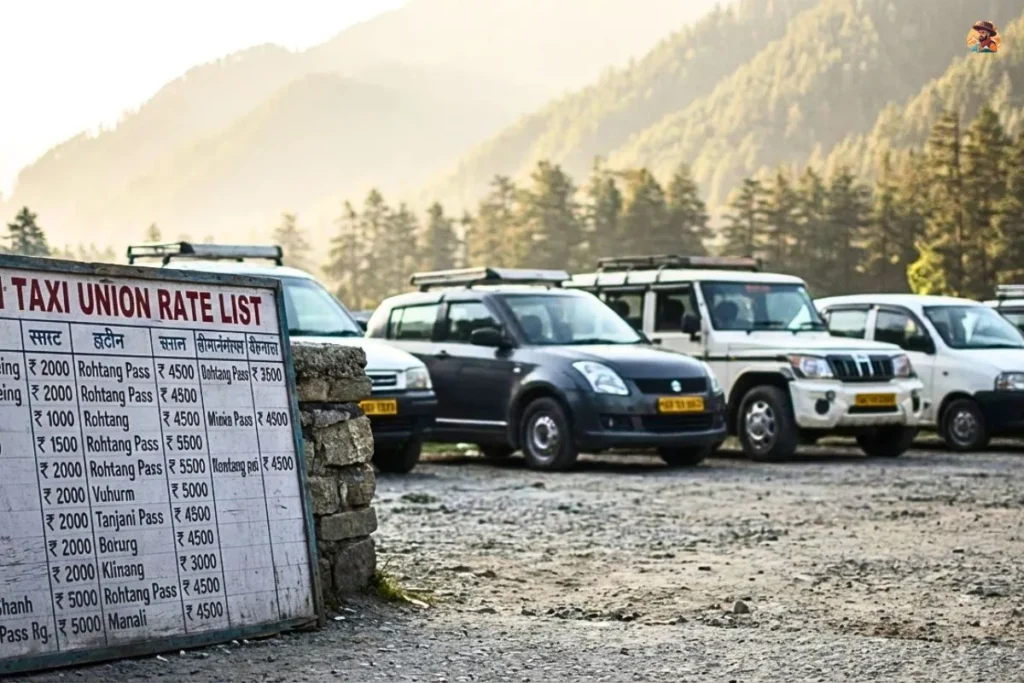
When I reached the taxi lane this morning, a light chill reminded me how quickly fares shift with season changes. Although the pattern looks confusing at first, it becomes simple when you watch the valley change through snow, sunshine, and weekend rush.
How the season affects the cost
- Therefore, snow days increase demand because travelers rush toward Solang and the Atal Tunnel for fresh views.
- During calm months like March, April, August, and early November, fares settle into predictable brackets.
- However, weekends rise slightly because the Mall Road movement grows and drivers match the heavier crowd flow.
How union rates help travelers
- Therefore, the union sheet keeps fares stable through most weeks.
- However, festival days or snow may cause a small temporary rise.
- Because of this, checking the slip before you start prevents confusion.
Quick view of route types
- Local loops like Solang, Atal Tunnel, and Naggar stay within steady fare brackets across most months.
- Semi-local routes such as Kullu and Kasol shift slightly because seasonal traffic changes quickly.
- Long routes like Rohtang, Hampt, and Shinkula depend heavily on road clearance and weather conditions.
First-time traveler quick tips
- Check the union slip before starting, because it prevents sudden quote changes during longer loops.
- Choose weekday travel since prices stay calmer and routes feel smoother across the valley.
To understand hotel, food, and sightseeing expenses together, the Manali trip cost group budget guide shows the complete trip picture.
Fast Takeaway: Taxi prices stay stable on calm weekdays, rise during snow, and follow union sheets for most common loops. Understanding season flow removes nearly all confusion.
Manali Taxi Rates Per km and Per Day
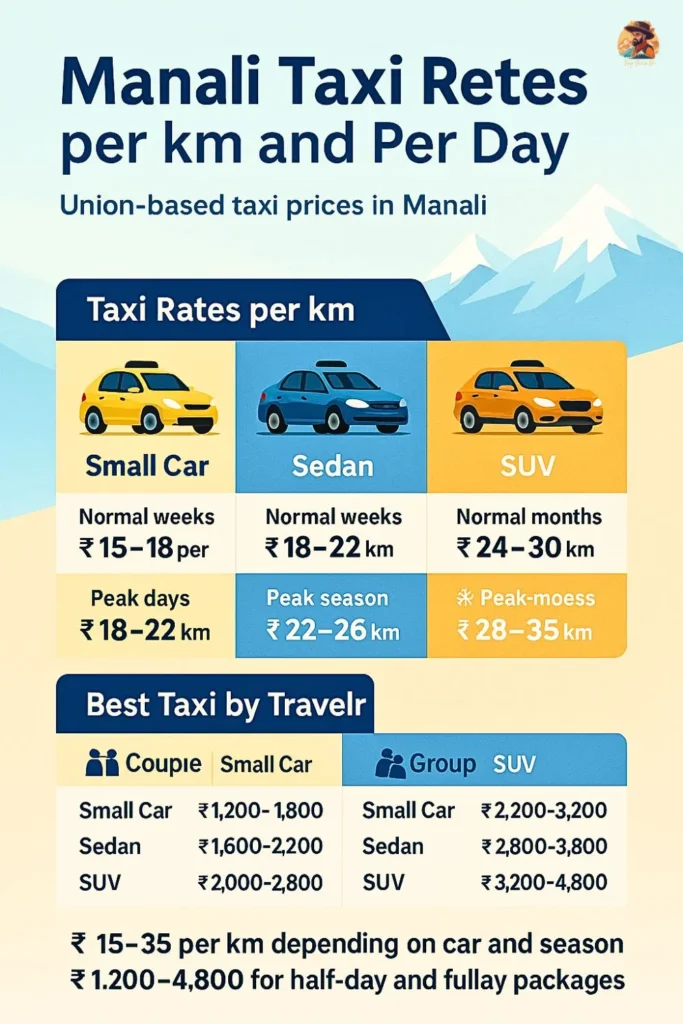
While checking the union board today, the clear numbers made me pause because they explained the entire fare pattern in seconds. Although small changes appear during snow or holiday rush, the base structure remains predictable for most travelers.
Manali Taxi Rates per km (Union Based)
Small Car
- Normal weeks: ₹15 to ₹18 per km
- Peak days: ₹18 to ₹22 per km
- Suitable for two or three people because the short loops feel comfortable
Sedan
- Normal weeks: ₹18 to ₹22 per km
- Peak season: ₹22 to ₹26 per km
- Smoother for long drives toward Naggar, Kasol, or Kullu
SUV
- Normal weeks: ₹24 to ₹30 per km
- Peak months: ₹28 to ₹35 per km
- Best for families because steep climbs demand stronger engines
Peak vs Normal Season Insight
- During normal weeks, fares stay balanced because demand remains steady.
- However, peak periods rise quickly due to heavy snow movement.
- Therefore, clear mornings help keep quotes predictable, although late snow may push rates higher.
Manali Taxi Cost per Day
Warm sunlight touched the main road when I checked the day’s packages again, and these simple slabs help you avoid mid-route surprises.
4 Hour Package
- Small car: ₹1,200 to ₹1,800
- Sedan: ₹1,600 to ₹2,200
- SUV: ₹2,000 to ₹2,800
Ideal for quick loops like Hadimba, Old Manali, and Vashisht.
8 Hour Package
- Small car: ₹2,200 to ₹3,200
- Sedan: ₹2,800 to ₹3,800
- SUV: ₹3,200 to ₹4,800
Useful for full-day plans covering Solang, Nagga, or Kullu.
Best options by traveler type
- Couples: small cars feel easy and affordable
- Families: sedans support comfort on longer curves
- Groups: SUVs help maintain stability on uneven patches
Quick Takeaway
- Therefore, per km rates range from ₹15 to ₹35 depending on the car and season.
- Meanwhile, half-day packages fall between ₹1,200 and ₹2,800.
- Similarly, full-day loops stay between ₹2,200 and ₹4,800.
- However, expect slight rises during snow or weekend rush.
If you want to understand how these rates shape a budget for two people, the Manali trip cost for couples guide explains the complete flow clearly.
Fast Takeaway: Per km charges stay between ₹15 and ₹35, while full-day packages cover most loops at ₹2,200 to ₹4,800. Rates shift only during heavy rush or snow.
Local Sightseeing Taxi Rates in Manali
As I walked toward the sightseeing lane, a calm breeze carried the sound of engines warming up for the day. Although prices look steady on paper, they shift slightly as weather changes across the valley.
Solang Valley and Atal Tunnel Fare
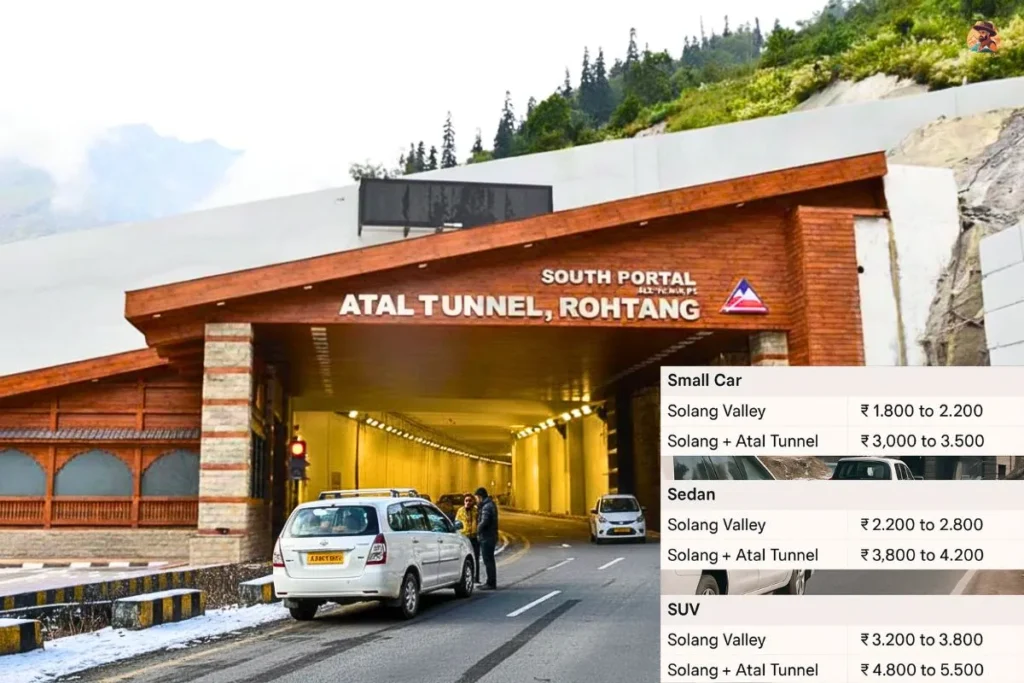
Thin sunlight touched the road near Palchan when I checked these rates again, and that small warmth reminded me how quickly demand rises during fresh snow. Although drivers remain flexible, rates follow a steady structure across most seasons.
Small Car
- Solang Valley: ₹1,800 to ₹2,200
- Solang + Atal Tunnel: ₹3,000 to ₹3,500
If you plan to continue beyond the tunnel, this explains how to reach Sissu from Manali, explains taxi routes, and seasonal road conditions clearly.
Sedan
- Solang Valley: ₹2,200 to ₹2,800
- Solang + Atal Tunnel: ₹3,800 to ₹4,200
SUV
- Solang Valley: ₹3,200 to ₹3,800
- Solang + Atal Tunnel: ₹4,800 to ₹5,500
Weather and Snow Factor
- Fresh snowfall raises demand, therefore early morning rush increases quickly.
- However, clear mornings keep fares stable until midday.
- Because ice slows movement, SUV prices rise slightly.
- Therefore, drivers avoid late returns since roads freeze after sunset.
Safety tip: Always keep a warm jacket ready because the wind near the Atal Tunnel drops sharply after noon.
Old Manali, Naggar, Kullu Tour Rates
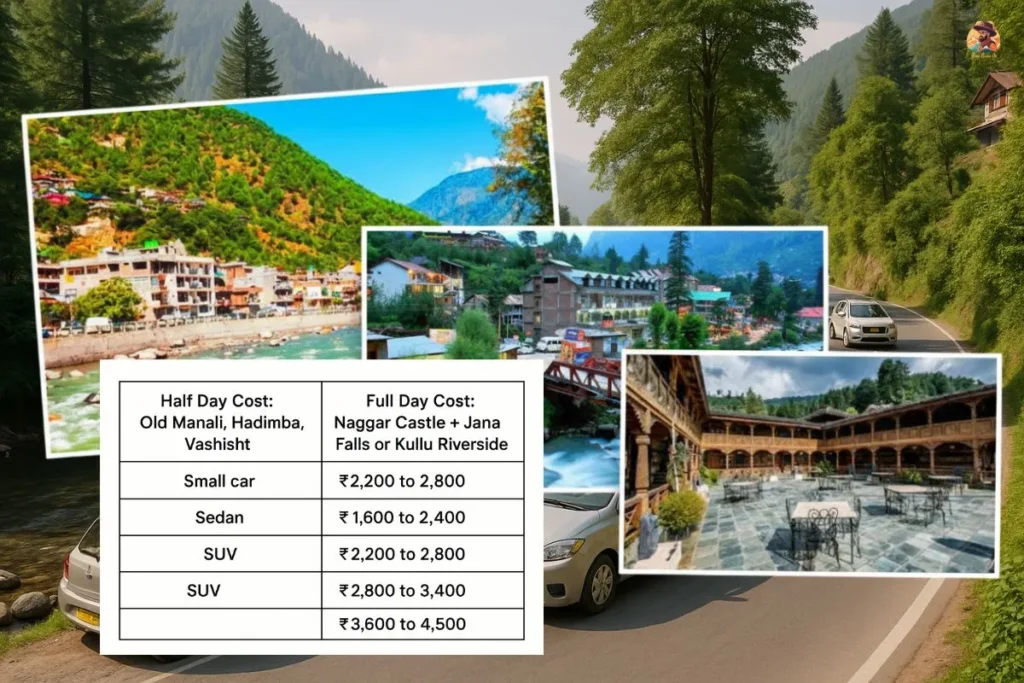
A soft river sound echoed under the Old Manali bridge this morning, and that steady rhythm reminded me why these loops feel calmer than snow routes. Although demand stays mild, prices follow a predictable bracket.
Half Day Cost: Old Manali, Hadimba, Vashisht
- Small car: ₹1,200 to ₹1,600
- Sedan: ₹1,600 to ₹2,000
- SUV: ₹2,200 to ₹2,800
Full Day Cost: Naggar Castle + Jana Falls or Kullu Riverside
- Small car: ₹2,200 to ₹2,800
- Sedan: ₹2,800 to ₹3,400
- SUV: ₹3,600 to ₹4,500
First-time tip: The road near Jana Falls turns slightly uneven; therefore, sedans or SUVs feel more comfortable on that stretch.
Rohtang, Hampta Pass, and Shinkula Fare
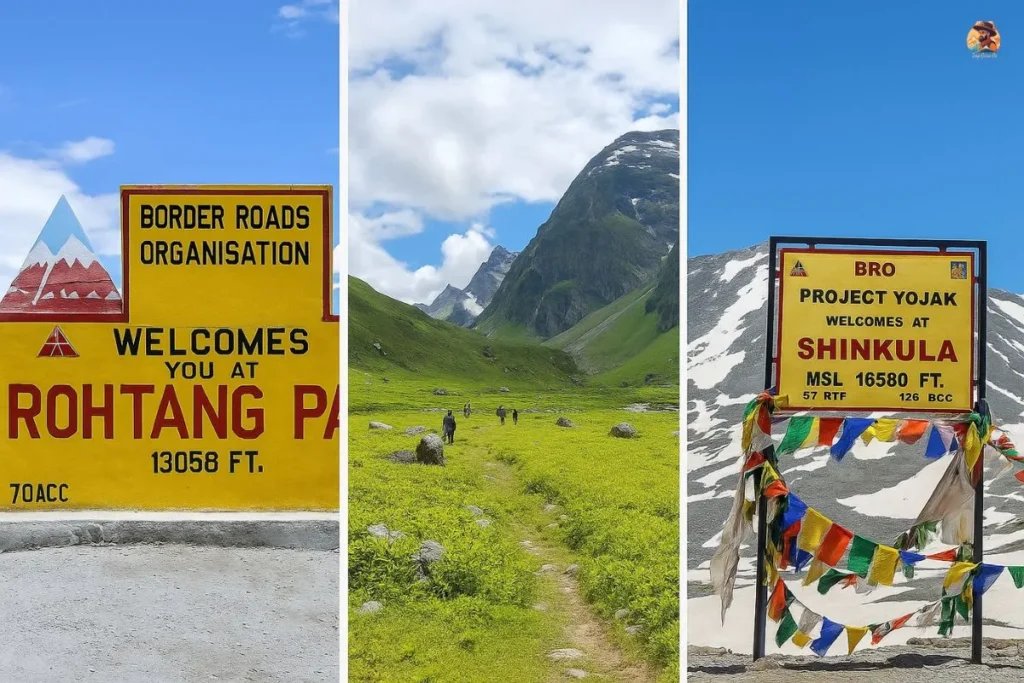
A stronger wind brushed against my jacket when I checked the Rohtang board today, and that quick chill reminded me how sharply high-altitude routes depend on weather. These routes demand more engine power; therefore, prices stay higher.
Rohtang Pass
- Small car: ₹4,500 to ₹5,500
- Sedan: ₹5,500 to ₹6,500
- SUV: ₹7,500 to ₹9,000
- Permit: ₹600 to ₹1,000
Hampta Pass Base / Jobra
- Small car: ₹3,000 to ₹3,800
- Sedan: ₹3,800 to ₹4,500
- SUV: ₹4,800 to ₹6,000
Shinkula Pass
- SUV only: ₹9,000 to ₹12,000
- Small cars avoid this route because altitude strain stays high
Seasonal Access
- Rohtang: May to October
- Hampta: June to September
- Shinkula: depends fully on snow clearance
High Altitude Car Notes
- Because fuel use rises sharply on steep climbs, SUVs cost more.
- Meanwhile, snow chains add ₹500 to ₹800 during frost.
- Therefore, warm layers help since altitude drains energy quickly.
Soft safety reminder: Carry warm layers and drink water often because altitude drains energy faster than expected.
Fast Takeaway: Sightseeing loops stay predictable across 2025, and Solang or Atal Tunnel costs the most due to snow and tourist rush. Naggar loops remain the most stable.
Taxi Cost for Long Distance Routes
When a cab started its early highway run this morning, the steady vibration reminded me how different long routes feel here. Although union pricing creates a stable base, these highway trips still change with season, demand, and road conditions.
Delhi to Manali Taxi Fare
A warm kettle stood near the inquiry desk when I checked these prices again, and the steady heat helped me focus on the latest 2025 pattern. Although the highway feels smooth, the climb after Mandi increases fuel burn; therefore, final rates change slightly across seasons. The best road routes to Manali from Delhi guide compares highway options and driving comfort clearly.
Per km charges (2025 realistic pattern)
- Small car: ₹12 to ₹14 per km
- Sedan: ₹14 to ₹16 per km
- SUV: ₹18 to ₹22 per km
One-way fare
- Small car: ₹4,500 to ₹6,000
- Sedan: ₹6,000 to ₹7,500
- SUV: ₹8,500 to ₹11,500
Round-trip fare (two or three day hold)
- Small car: ₹10,500 to ₹12,500
- Sedan: ₹12,500 to ₹14,500
- SUV: ₹15,500 to ₹19,000
Traveler insight: Round-trip costs more because drivers wait in Manali for your return, and that hold time shapes the final estimate. The how to reach Manali from Delhi guide compares road, bus, and flight options simply.
If you want simple habits that reduce long-route spending, the Manali budget travel tips guide explains the full pattern clearly.
Chandigarh, Shimla, and Dehradun to Manali Fare
A soft fuel smell drifted through the lane when drivers prepared for departure today, and that familiar scent reminded me how these shorter routes stay closely tied to road conditions. Although the weather changes often, the base structure remains steady during most months.
Chandigarh to Manali
- Small car: ₹3,000 to ₹4,200
- Sedan: ₹4,200 to ₹5,200
- SUV: ₹5,800 to ₹7,500
Shimla to Manali
- Small car: ₹3,500 to ₹4,800
- Sedan: ₹4,800 to ₹6,200
- SUV: ₹6,500 to ₹8,800
Dehradun to Manali
- Small car: ₹5,500 to ₹7,000
- Sedan: ₹7,000 to ₹8,800
- SUV: ₹9,500 to ₹12,500
Cheapest months
- March and April feel gentle because the winter rush ends
- August and September remain calm after the monsoon retreats
- Early November stays stable before the holiday movement begins
Road tip: Fog near Swarghat and curves near Pandoh slow down traffic; therefore, early departures save time.
Fast Takeaway: Delhi to Manali costs rise with the season, while Chandigarh and Shimla stay steady. Weekdays remain the cheapest, especially during March, April, August, and September. The How to reach Manali from Chandigarh guide explains buses, taxis, and timing choices in detail.
Fast Takeaway
- Delhi to Manali: ₹12 to ₹22 per km, depending on the car
- Chandigarh / Shimla routes: ₹3,000 to ₹8,800
- Dehradun route: ₹5,500 to ₹12,500
- Best months: March, April, August, September, early November
- Cheapest fares: Weekdays are always more stable
Transport Alternatives to Taxi in Manali
At the bus stand today, the mix of voices and rolling bags showed me how many travelers choose cheaper options instead of taxis. Although taxis feel flexible, buses, trains, and shared rides solve different needs for visitors who want predictable fares during busy seasons.
Delhi to Manali Bus Prices
A steady line moved toward the booking counter when I checked the latest rates, and the simple structure made everything easy to compare. Although prices rise during snow weeks, weekday nights usually offer calmer fares.
Volvo Sleeper (Private Operators)
- ₹1,800 to ₹2,800
- Smooth suspension on night climbs
- Weekend prices rise due to higher demand
Zingbus (Semi Sleeper & Sleeper)
- ₹1,000 to ₹1,800 semi-sleeper
- ₹1,600 to ₹2,400 sleeper
- App discounts appear often during weekdays
HPTDC Volvo
- ₹1,500 to ₹1,700
- Clean buses with steady driving
- Slightly slower due to fixed stops
Weekday Insight
- Tuesday to Thursday remain the cheapest
- Weekend crowds increase surge pricing across operators
For travelers comparing all low-cost options, the cheapest way to reach Manali guide, which includes bus, train, and road.
Delhi to Manali Train Guide
A short vibration from a departing train reminded me why many travelers ask about a direct route, although Manali has no railway station. Therefore, one road transfer becomes necessary for every traveler. The How to reach Manali by train guide explains stations, onward taxis, and real transfer gaps clearly.
Nearest Station
- Chandigarh (CDG) offers the smoothest onward journey
- Una Himachal works too, although the road curves feel longer
Realistic Travel Time
- Delhi to Chandigarh: 3 to 4.5 hours
- Chandigarh to Manali: 8 to 10 hours
- Total travel time: 11 to 14 hours
First-time tip: Choose an early train because the daylight climb after Mandi feels safer and more scenic. Travelers flying closer can check how to reach Manali by flight to understand airport transfers and taxi links.
Local Transport in Manali
A gentle crunch from nearby footsteps reminded me how helpful short-distance options become during crowded evenings. Although taxis remain common, lighter choices suit many travelers.
Auto Rickshaw
- ₹150 to ₹300 for short routes
- Prices rise slightly near Vashisht climbs
- Evening traffic slows movement near Mall Road
Bike Rental
- Scooters: ₹500 to ₹800 per day
- Bikes: ₹1,000 to ₹1,800 per day
- Rain reduces tyre grip; therefore, slower riding helps
Shared Taxis
- ₹50 to ₹150 per seat
- Frequent between Old Manali, Vashisht, and Mall Road
- Best for backpackers carrying light bags
If you want to match these options with a day-wise sightseeing plan, the Manali itinerary collection helps you organise everything clearly.
Fast Takeaway: Buses give the lowest long-distance cost, trains need a road transfer, and shared cabs support short routes. Weekdays reduce fares across all options.
How to Pick the Best Taxi Service in Manali
While walking through the taxi line today, I noticed small details that often decide whether your ride feels safe or stressful. Although most drivers stay honest and patient, a few checks always make the journey smoother and far more comfortable.
Verified Operators
These signs helped me trust the right drivers during many early visits, and they continue to work for every traveler.
- Yellow number plate with clear registration
- Driver ID is placed near the dashboard
- Union slip is visible near the windshield
- Clean seats with working belts
- Calm, steady communication without pressure
Quick tip: A confident driver never hides the rate sheet or rushes your decision.
Union Pricing
Union rates reduce confusion, and they protect travelers from sudden mid-route changes.
- Fixed fares for Solang, Atal Tunnel, and Naggar loops
- Small seasonal rise during snow weeks
- Prices matched with car type and distance
- No surprise add-ons when the slip is shown before travel
Practical note: Checking the slip takes five seconds and saves unnecessary negotiation later.
Common Scams
These patterns appeared slowly during my early trips, and noticing them saved many travelers.
- Overquoting during snowfall when demand rises
- Fake “snow charges” on clear days
- Low starting fare followed by mid-route increases
- Claims that Rohtang permits are finished when they are available
Soft reminder: Whenever a driver speaks too quickly, pause for a moment because genuine drivers move with patience.
Red Flags to Avoid
These signals often appeared before a bad experience, and keeping them in mind always helps.
- No displayed ID or refusal to show the rate sheet
- Poor tyre condition or a strong fuel smell inside
- Cash-only insistence without explanation
- Overpromising with “every spot at one cheap price.”
Comfort tip: Choose a driver who matches your pace, because hill travel feels best when the journey stays calm.
Cheapest Ways to Travel Around Manali
Earlier today, I watched weekday traffic move gently through Mall Road, and that moment reminded me how mid-week travel saves money. Although most visitors rush toward taxis, many quieter options help you save money without losing comfort.
Weekday travel advantage
- Therefore, Tuesday to Thursday fares stay lower.
- Meanwhile, morning rides feel smoother with fewer delays.
- However, early breakfast hours bring small crowd pockets.
Micro-insight: I noticed drivers offer calmer prices after breakfast time because the early rush settles across the valley.
Shared cab system
- Meanwhile, per-seat fares remain low for solo travelers.
- However, brief stops appear during the evening market rush.
Small comfort line: Shared cabs feel more relaxed than they look, especially when you travel with light bags.
Combine sightseeing loops
- Therefore, pairing the Solang and Atal Tunnel avoids extra hiring.
- Meanwhile, Naggar and Jana Falls naturally form one loop.
- Because of this, planning stays simple and predictable.
If you want to plan travel during calmer weeks, the cheapest time to visit Manali guide, is when crowds and taxi prices stay lowest.
Fast Takeaway: Weekdays, shared cabs, and paired loops reduce cost naturally. Smart grouping saves more than negotiation in most Manali routes.
Taxi Cost Guide for Couples, Families, and Backpackers
When I saw different travelers choosing taxis this morning, I realised how needs shift quickly from couples to families and backpackers. Although routes stay the same, comfort, space, and travel pace change the entire experience for couples, families, and backpackers.
Couples
A gentle route always helps couples enjoy the valley slowly, and these loops create enough space for quiet moments together.
Ideal routes
- Solang and Atal Tunnel for calm views and relaxed bends
- Naggar with Jana Falls for peaceful stops and soft walking paths
- Old Manali cafés for slow evenings and light conversations
Best taxi type
- Small cars stay affordable; therefore, couples manage daily travel smoothly
- Sedans feel steadier on long curves, and comfort increases during full-day loops
Micro-comfort line: Do not rush these routes because slow moments often become your best memories here. Couples planning within limits can also check this ₹30,000 Manali trip budget to match taxi choices with a realistic total spend.
Families
Families need space, steady comfort, and flexible movement, and SUVs support all three during changing mountain conditions.
SUV benefits
- Strong engines handle steep climbs near Palchan without discomfort
- Extra leg space helps children rest during long loops
- Ground clearance reduces bumps around Naggar and Jana Falls
Comfort options
- Flexible seating supports quick breaks during curvy stretches
- Luggage fits neatly without crowding the cabin
- Calm drivers match family pace and reduce mid-day stress
Small reminder: Keep snacks ready because children often feel hungry quickly during hill journeys.
Backpackers
Backpackers prefer fast, low-cost travel, and Manali supports this style through shared systems and paired loops. If you travel light and want the lowest daily spend, this Manali backpacker budget guide explains how shared taxis, hostels, and food costs stay balanced.
Shared cabs
- Very low per-seat prices across Mall Road, Old Manali, and Vashisht
- Quick movement, even during a mild rush, because routes remain short
- Ideal for solo travelers who want steady daily savings
Cheapest travel loops
- Solang and the Atal Tunnel pair naturally and reduce repeated hiring
- Naggar with Jana Falls saves fuel because both sit on one stretch
- Mixed transport helps during short hops around busy market lanes
Comfort note: Carry light bags because shared movement becomes easier when you travel lean.
If you want deeper saving strategies for your trip, the Manali budget travel tips guide explains simple habits that reduce cost without reducing comfort.
Fast Takeaway: Couples save with small cars, families need SUVs for comfort, and backpackers cut costs fastest with shared cabs and combined loops.
Sample Manali Taxi Budget for a 3 Day Trip
While planning a three-day loop today, I noticed how a simple structure keeps taxi costs controlled across most seasons. Although each group moves differently, a clear three-day plan keeps taxi costs predictable and stress-free.
Day-wise plan
Day 1: Local Manali
- Hadimba, Old Manali, and Vashisht
- Short distances reduce travel time
- Perfect for a relaxed start
Day 2: Solang + Atal Tunnel
- One shared route saves fuel and hourly charges
- Weather changes may shift timings slightly
Day 3: Naggar Castle + Jana Falls
- Smooth road with peaceful viewpoints
- Ideal for travelers who want a slow, scenic day
Taxi cost breakdown
- Day 1: ₹1,000 to ₹1,500 depending on car type
- Day 2: ₹2,200 to ₹3,000 depending on weather demand
- Day 3: ₹2,000 to ₹2,800 depending on road condition
- Total: ₹5,200 to ₹7,300 for three days in normal weeks
Quick insight: I noticed evening negotiations stay calmer because drivers finish their day routes and quote steady prices.
When to book
- Book one day earlier because evening quotes stay predictable
- Check the union slip before starting any route
- Avoid the early-morning rush since demand rises sharply near the Mall Road
Fast Takeaway
Three-day taxi plans range from ₹5,200 to ₹7,300, and evening bookings keep fares steady. Loop pairing prevents extra fuel and hourly charges.
- Best 3-day loop: Local → Solang + Atal Tunnel → Naggar + Jana Falls
- Average cost: ₹5,200 to ₹7,300
- Best booking time: Evenings
- Must-do: Always confirm the union slip
If you want a comprehensive journey plan that matches these routes, the Manali itinerary collection explains each day in detail.
Final Conclusion on Manali Taxi Cost
As I stood near the quiet valley, I felt how much easier Manali becomes when transport planning stays simple and clear. Although snow or festival weeks create small changes, most fares stay predictable when you combine nearby loops and choose routes that match your daily energy. The How to Reach Manali guide connects flights, trains, buses, and road travel in one place.
Manali feels easier when you use taxis for steep sightseeing routes and buses for long distances, because this balanced approach protects comfort and keeps your budget in control. If you want smoother movement through permits and access points, the Manali entry fee guide explains every rule clearly and prepares you well before the journey begins.
Next step: Explore your itinerary options to match these transport choices with your preferred travel style.
FAQs on Manali Taxi and Transport Cost
A short pause near the taxi stand today reminded me how often travelers ask the same questions about fares and routes.
Union drivers usually charge ₹18 to ₹28 per km, and this range stays steady, although weather or crowd movement may shift prices slightly.
Full-day loops usually cost ₹2,000 to ₹3,000, and SUVs rise a little because longer hill curves demand stronger engines during steep climbs.
Sedans usually feel smoother on long bends, although small cars work well during clear weather, and SUVs help when ice appears suddenly near bends.
Yes, taxis operate there when the road opens, and you always need a valid permit because Rohtang remains heavily regulated throughout the season.
Hampta check-post trips usually cost ₹2,000 to ₹2,500, and the final fare may rise slightly when the weather slows cars near narrow turns.
Weekday semi-sleeper buses are the cheapest option, and fares drop further because demand softens quickly once the weekend rush ends.
Yes, shared taxis feel safe because routes remain short, and movement stays predictable across Mall Road, Old Manali, and Vashisht throughout the day.
Prices stay lowest from Tuesday to Thursday, and drivers often quote steady rates because mid-week crowd pressure remains soft across the valley.
Most drivers charge ₹2,200 to ₹3,200, although early morning departures feel slightly cheaper because traffic stays light and smooth.
Prices may rise during snow weeks because demand increases, although base union rates usually remain stable across the normal travel season.

Hi, I am Manoj Kumar, the voice behind Trip Guru Go. I am a travel researcher, SEO content expert, and founder of this blog. With over 12 years of experience in digital travel research, I simplify complex destinations into real, helpful, and trustworthy guides.
Every article I write is backed by local sources, real traveler experiences, and deep fact-checking. Even if I have not visited every place personally, I never share anything without strong on-ground insight.
I do not sell travel packages or promote anything paid. My only goal is to help you travel smarter — with zero fluff, 100% honesty, and a deep focus on your safety and experience.