Most travelers searching for Rann of Kutch festival dates 2026 make one simple assumption that later creates confusion. They believe the festival happens on one perfect night, and missing that date means missing the real experience.
During my first visit near Dhordo, with cold desert wind cutting through layers of clothing and vendors handing over cups of steaming tea, I realized why this assumption fails. Rann of Kutch is not a one-day event but a winter-long festival season, and once this is understood, planning becomes calmer and far more practical.
You are not chasing a single night here. If you are choosing the phase of the season that best matches your comfort, crowd tolerance, and expectations. For first-time visitors, this Rann of Kutch Festival complete travel guide explains routes, stay options, permits, and ground-level planning in detail.
Rann of Kutch Festival 2026 Dates – Season Calendar Explained
One of the biggest confusions around the Rann of Kutch Festival is the belief that it happens on one specific day. In reality, Rann Utsav operates as a clearly defined winter season, and understanding this season window matters more than tracking any single ceremonial date.
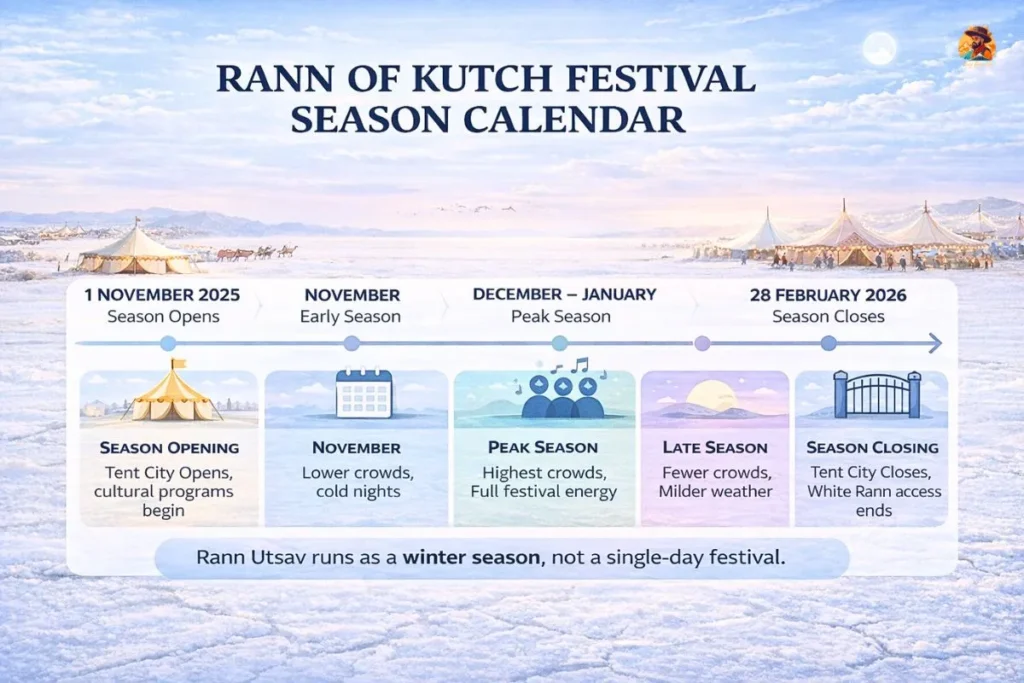
Based on official Gujarat Tourism announcements and consistent past-year patterns, the Rann of Kutch Festival 2026 season officially starts on 1 November 2025 and ends on 28 February 2026. This entire period is treated as the active festival season, subject to daily weather and administrative conditions.
Rann Utsav 2026 Season Calendar (At a Glance)
| Festival Phase | Dates | What Travelers Should Expect |
| Season opening | 1 November 2025 | Tent City Dhordo opens, cultural programs begin |
| Early season | November 2025 | Lower crowds, comfortable days, colder nights |
| Peak season | December 2025 – January 2026 | Highest crowds, full cultural energy, cold nights |
| Late season | February 2026 | Fewer crowds, milder weather, calmer atmosphere |
| Season closing | 28 February 2026 | Tent City closes, White Rann visits stop |
This table sets the official season structure. Everything else in the article builds on this timeline.
Rann Utsav 2026 Start Date and Tent City Season
For the 2026 season, Tent City Dhordo becomes operational from 1 November 2025, which practically marks the start of the Rann of Kutch Festival. From this date onward, cultural performances, handicraft markets, folk programs, and food courts function daily.
The festival officially concludes on 28 February 2026, after which Tent City operations wind down, and White Rann visits are closed for the season. During the active festival window:
- White Rann entry operates on most festival days
- Tent City stays, and cultural programs run daily
- Crowds peak during weekends, Christmas–New Year week, and full moon nights
- Late February generally feels calmer as the season approaches closure
Although access is available throughout the season, the experience changes based on crowd density, weather, comfort, and time of visit.
🟦 Mini Summary
Rann of Kutch Festival 2026 runs from 1 November 2025 to 28 February 2026 as a clearly defined winter season. Tent City Dhordo and White Rann access operate throughout this period. Crowds and comfort levels vary across early, peak, and late season phases, making date selection more important than chasing a single festival night.
Full Moon Nights in Rann of Kutch 2026 – What Actually Changes
Most travelers treat full moon nights as non-negotiable, but the on-ground difference is narrower than expected. After spending evenings across different weeks near Dhordo, the pattern becomes clear: the moon changes the look more than the experience flow.
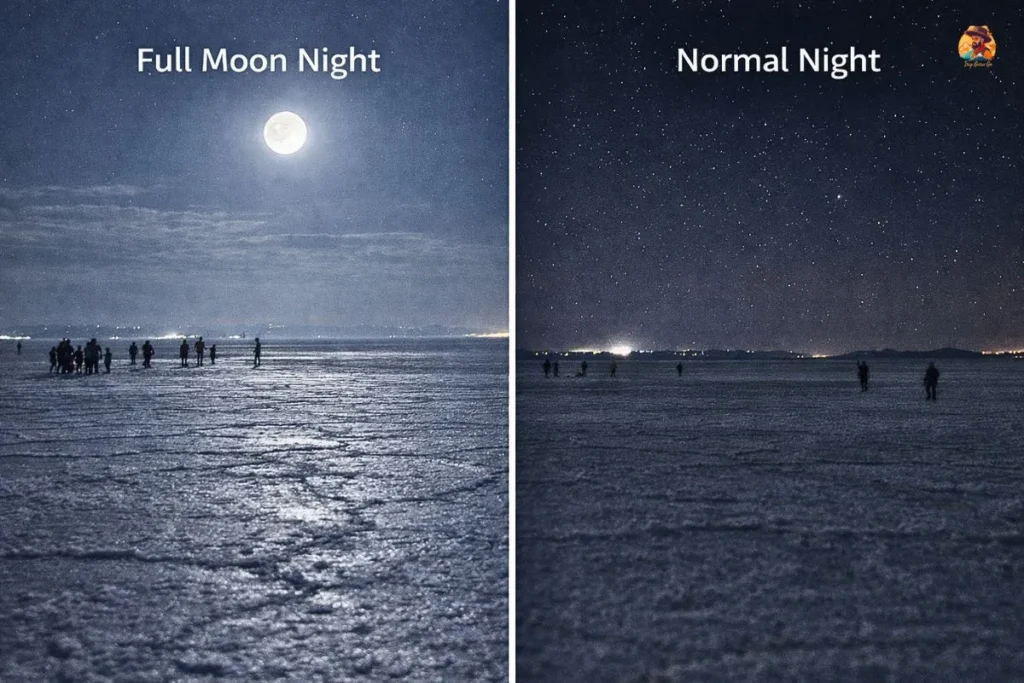
A full moon brightens the salt surface naturally, while non-moon nights rely more on artificial lighting. Everything else depends on how many people arrive the same evening.
Full Moon vs Normal Night – Visual and Crowd Difference
On full moon nights, moonlight reflects strongly off the white salt, which enhances visibility and photography. This visual appeal attracts more visitors, and the impact shows up in movement rather than access.
Based on repeated visits, the practical difference usually looks like this:
- Full moon nights feel brighter but more time-controlled
- Crowd density increases, especially near photo spots
- Normal nights feel darker but calmer and easier to move through
This difference mainly affects photography comfort and movement speed. Travelers who enjoy visuals accept the rush, while others prefer the quiet of non-moon evenings.
🟦 Mini Summary
Full moon nights mainly enhance visual brightness and photography appeal. They also bring higher crowd density and tighter movement, while normal nights offer a calmer, more relaxed experience.
Rann of Kutch in January – Weather, Crowd, and Experience
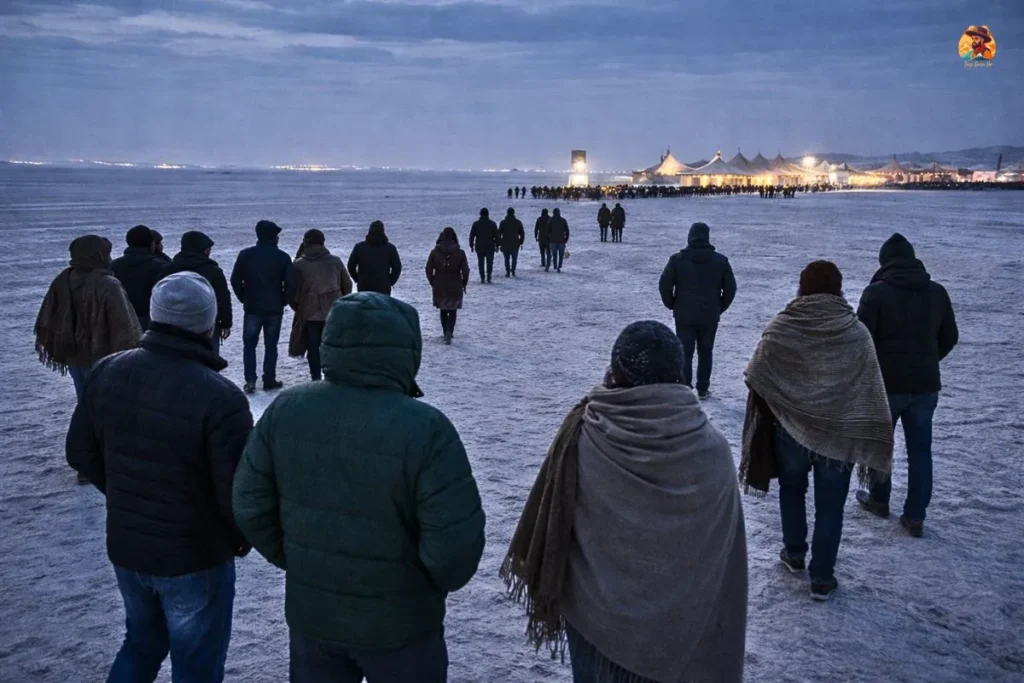
January is often promoted as the best month to visit the Rann of Kutch, but it comes with clear physical demands. The festival feels most energetic during this period, yet the combination of sharp, cold nights and heavy crowds catches many first-time visitors off guard.
From my January visits near the White Rann entry, the discomfort usually starts after sunset. Standing still in queues with strong wind makes the cold feel harsher than expected, especially on busy evenings.
January Weather Reality in White Rann
If you are planning the Rann of Kutch in January, weather preparation matters more than enthusiasm. January is the coldest part of the Rann Utsav season, and the open salt desert intensifies the cold because there is no wind barrier.
| Weather aspect | January condition in White Rann |
| Day temperature | Around 18°C to 25°C |
| Night temperature | Often drops to 5°C–8°C |
| Wind | Strong and constant |
| Cold feel | Sharper due to open terrain |
| Rain | Very rare |
Light jackets are usually not enough after sunset. Proper winter layers decide comfort more than the actual temperature reading.
January Crowd Pattern
January also brings the highest crowd levels of the season. Weekends, holidays, and full moon nights feel packed, and movement inside the White Rann becomes more controlled.
This month suits travelers who:
- Enjoy a lively festival atmosphere
- Do not mind cold nights
- Are comfortable with crowds and waiting
Travelers sensitive to cold or crowd pressure often find January physically tiring by nightfall.
Rann of Kutch in February – Weather, Crowd, and Closing Season Feel
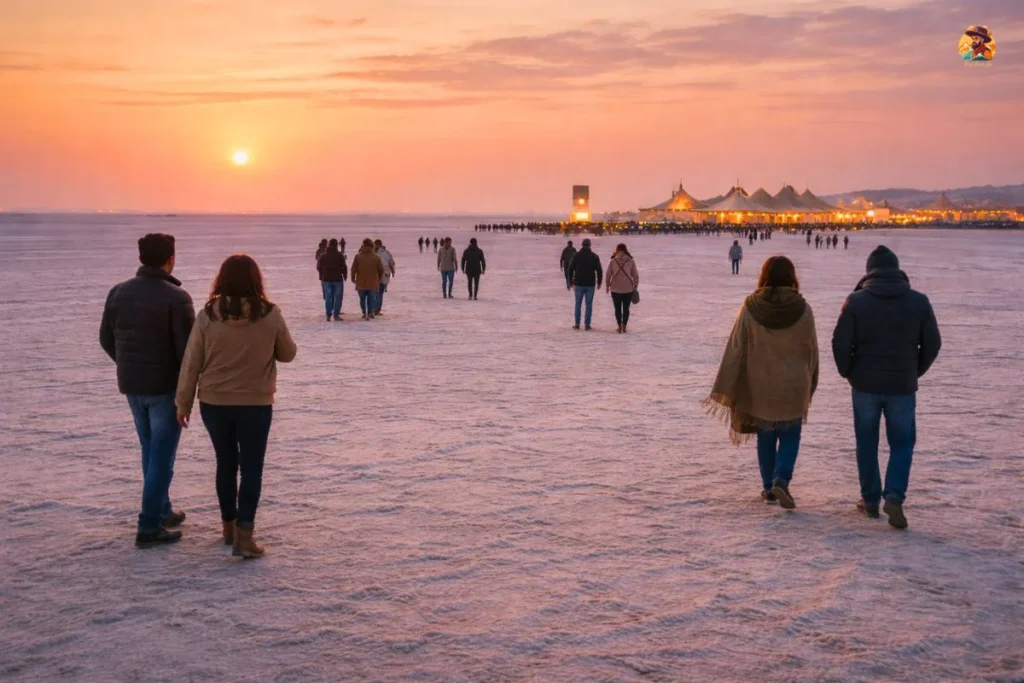
February looks calmer online, and on the ground, this calm is mostly real. The festival continues through the month, but the energy softens as the season moves closer to its end, making the overall experience feel less rushed.
During February evenings near Dhordo, queues move faster, announcements reduce, and movement inside the White Rann feels smoother. The festival does not lose access or structure, but the pace becomes noticeably gentler.
February Climate and Daytime Comfort
For travelers considering Rann of Kutch in February, the weather is the biggest advantage. Daytime temperatures feel comfortable for walking on the salt flats, and sunlight feels easier compared to peak winter weeks.
Nights remain cold, but the drop is more manageable than in January, especially with basic winter layers. Wind presence reduces slightly, which makes longer outdoor time more comfortable.
| Weather aspect | February condition in White Rann |
| Day temperature | Around 22°C to 28°C |
| Night temperature | Around 8°C to 12°C |
| Wind | Moderate |
| Cold discomfort | Lower than January |
| Rain | Very rare |
February Crowds and Festival Energy
February sees a clear drop in crowd pressure, especially on weekdays. Entry queues shorten, bus boarding feels less hurried, and photography becomes easier without constant interruptions.
The trade-off is a softer festival atmosphere. Some cultural programs feel shorter, vendor activity reduces, and the closing-season mood becomes noticeable, particularly toward the end of the month.
February suits travelers who prefer comfort, space, and smoother movement over peak festival intensity.
January vs February – Which Is the Best Time to Visit Rann of Kutch?
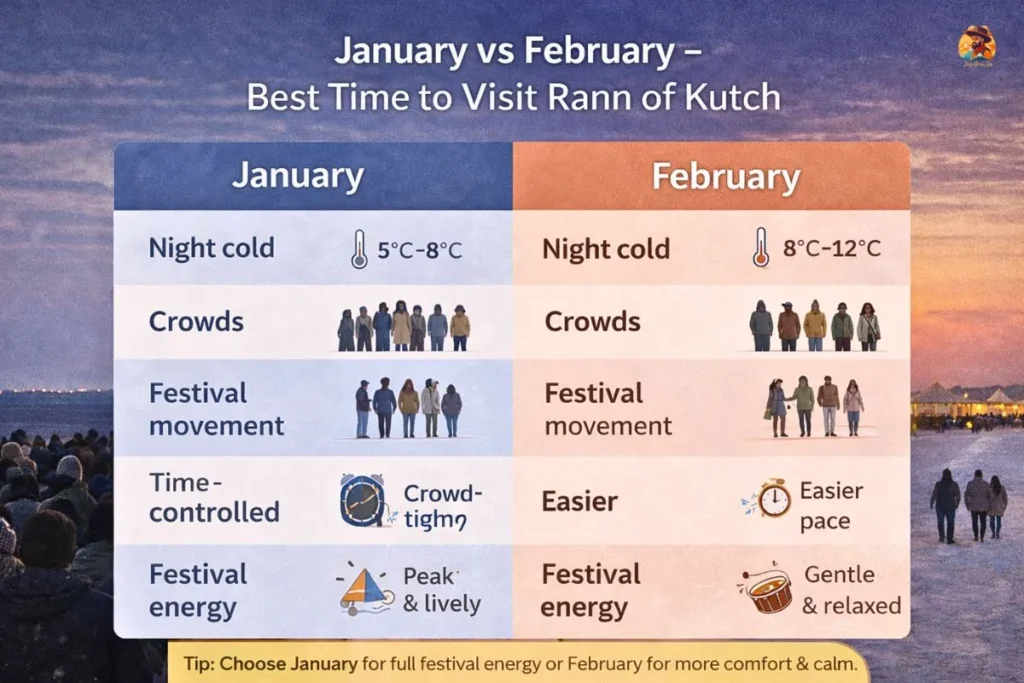
By this point, the choice usually comes down to personal comfort rather than information. January and February both fall within the same Rann Utsav season, but they suit different types of travelers once you account for crowd pressure, cold tolerance, and travel pace.
This section is meant to help you decide, not explain the season again. This calendar shows the official operating window of Rann Utsav 2026.
All festival activities fall within this date range.
Best Time Based on Weather, Crowd, and Budget
| Factor | January | February |
| Night cold | Very cold, especially during waits | Cold but more manageable |
| Crowd pressure | Highest of the season | Clearly lower |
| Movement inside Rann | Time-controlled and busy | Easier and smoother |
| Festival energy | Peak and loud | Softer, closing-season feel |
| Booking pressure | High on popular dates | Slightly more flexible |
If you want the festival at its most active and energetic, January fits better.
If you want easier movement, lower stress, and better physical comfort, February fits better.
Best Month by Traveler Type
- Choose January if: this is your first visit and you want to experience the Rann Utsav at full scale, even with cold nights and crowds.
- Choose February if: you prefer comfort, space, and a calmer pace, or you have already experienced the Rann before.
There is no universally “better” month. The right choice depends on whether you value energy or ease more.
Planning Beyond Dates – Cost and Packages Change by Month
Once dates feel settled, money starts deciding quietly. I have watched this happen at the Dhordo booking counters, where travelers confident about January plans pause after hearing availability updates and revised package options.
On the ground, the pattern is consistent. January pushes prices upward, while February eases pressure slightly, even though the festival structure remains the same.
January vs February – Cost Reality
In practical terms, package costs usually move within these ranges during the season:
- January (peak weeks): prices often sit at the higher end due to strong demand
- February: prices remain similar in base value but offer better availability and fewer forced upgrades
The difference is less about discounts and more about choice versus compulsion.
Full Moon Night Pricing Impact
Full moon dates usually increase package prices due to higher demand, especially for Tent City stays and bundled transport options. The jump is not fixed, but it is noticeable when availability tightens.
Tent City Availability and Cost Pressure
Tent City Dhordo remains the main cost trigger. When preferred categories sell out, travelers often end up paying more for upgrades or adjusting dates. This occurs most often in January and on full moon nights, while February typically allows for steadier pricing decisions.
For a clearer breakdown of actual package costs from budget to luxury, this guide explains the structure in detail: Rann of Kutch packages and trip cost
This is usually the point where travelers align their dates with their budget instead of fighting against both.
First-Time Visitor Tips for Choosing the Right Dates
If this is your first visit, small planning misunderstandings can create unnecessary stress later. These practical tips help you avoid the most common on-ground confusions.
Practical Tips That Make the Experience Easier
- Entry timing confusion: White Rann entry usually happens in fixed evening windows, with buses moving in batches from designated parking zones. Reaching too early often means standing longer in the cold, especially in January, so timing matters more than rushing.
- Full moon expectation reset: A full moon improves visual brightness but does not change entry rules or festival access. Many first-time visitors enjoy non-moon nights more because movement feels easier and crowd pressure reduces.
- Keep buffer days: Weather changes, crowd buildup, or simple travel fatigue can affect plans. Adding one flexible day helps absorb delays and reduces regret, especially during peak weeks.
- Cold night packing hint: Night cold in the White Rann feels sharper than city winters because of the open terrain and wind. Thermal layers, a windproof jacket, gloves, and a cap significantly improve comfort after sunset.
Final Thoughts – Rann of Kutch Festival Dates 2026
When planning the Rann of Kutch festival dates 2026, the most important thing is choosing what feels right for you. January and February are both valid choices, as long as the timing matches your comfort with cold, crowds, and travel pace.
Travelers enjoy the Rann most when expectations stay realistic. With the right mindset, the experience feels smooth, memorable, and worth the effort, regardless of the specific dates chosen.
FAQs About Rann of Kutch Festival 2026
No. Full moon nights are visually popular, but White Rann access and festival activities run on other operating days as well. The main difference is crowd level, not entry permission.
Yes, but the experience is limited. During Rann Utsav, Tent City, cultural programs, and organized access make visiting much easier, especially for first-time travelers.
January nights are very cold due to the wind and open terrain, but manageable with proper winter clothing. Most discomfort happens when travelers underestimate the cold.
Yes. February offers milder weather and fewer crowds, though the festival atmosphere feels calmer as the season nears its end.
Rann of Kutch Festival 2026 runs from 1 November 2025 to 28 February 2026. The festival functions as a seasonal event, not a single-day celebration.

Hi, I am Manoj Kumar, the voice behind Trip Guru Go. I am a travel researcher, SEO content expert, and founder of this blog. With over 12 years of experience in digital travel research, I simplify complex destinations into real, helpful, and trustworthy guides.
Every article I write is backed by local sources, real traveler experiences, and deep fact-checking. Even if I have not visited every place personally, I never share anything without strong on-ground insight.
I do not sell travel packages or promote anything paid. My only goal is to help you travel smarter — with zero fluff, 100% honesty, and a deep focus on your safety and experience.