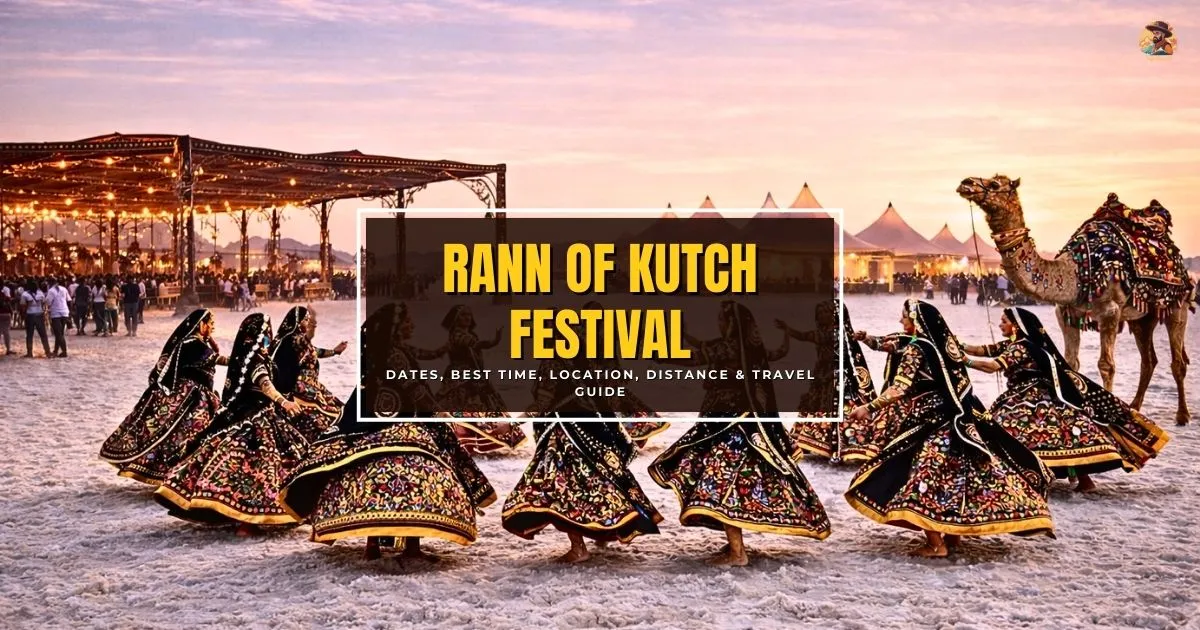
Rann of Kutch Festival 2026 planning confuses most first-time travelers, even after hours of online reading. Dates feel unclear. Distances feel underestimated. Expectations quietly break on arrival.
This guide removes that confusion. Here, you get exact festival dates, best time to visit, real travel distances, and honest on-ground planning advice. You will know when to go, how long to stay, how tiring the journey feels, and what budget range actually works. Rann of Kutch packages and trip cost planning often feel more confusing than choosing travel dates for first-time visitors.
I realized this gap while standing near Bhuj station with hot chai, watching the cold morning fog lift slowly. That moment made it clear. Most guides look beautiful, but they miss real travel realities. This article fixes that problem early, before wrong timing and poor planning waste your money and energy.
Quick Facts About the Rann of Kutch
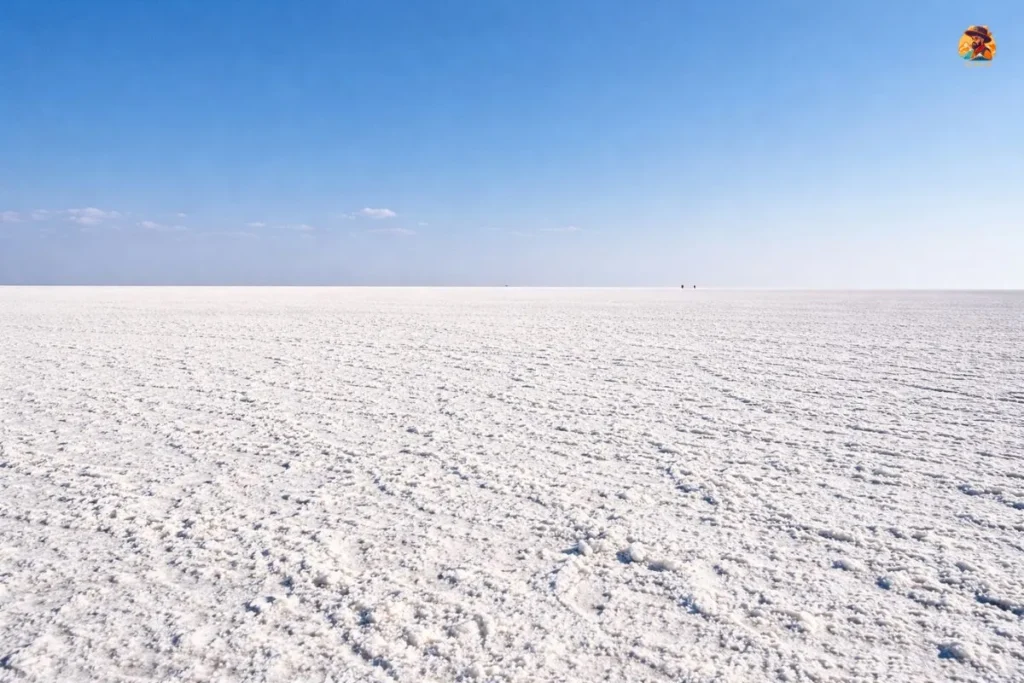
- Festival season: Late October to early March
- Best months to visit: January and February (with a different crowd and comfort levels)
- Known for: White salt desert and glowing full moon nights
- Nearest city: Bhuj, the main base for travel and permits
- Ideal trip duration: 2 to 3 days
- Travel experience: Cultural immersion, wide desert landscapes, slow-paced exploration
Why these facts matter:
These basics help you plan realistic travel days, manage energy levels, and avoid rushing through an experience that rewards slower pacing.
What Is the Rann of Kutch Famous For?
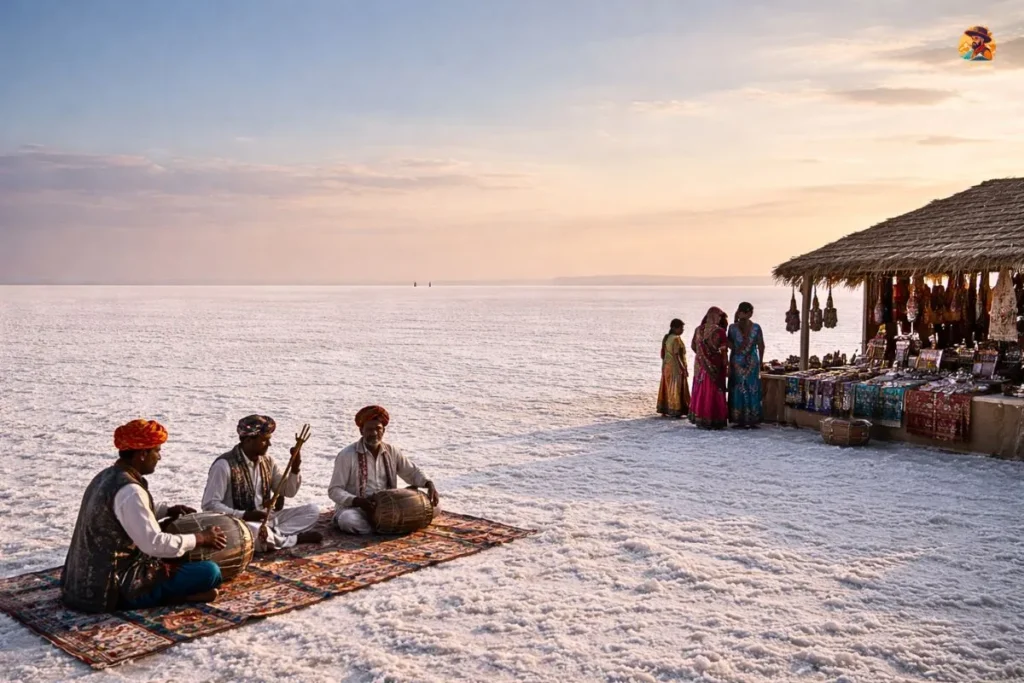
The Rann of Kutch is known for its rare combination of a vast white salt desert and a seasonal cultural landscape. Many travelers assume it is only about seeing white land and clicking photographs, but the region’s identity goes deeper than visuals alone. This place reveals itself slowly through light, silence, and local rhythm rather than instant spectacle.
It is especially famous for:
- The white salt desert:
A massive, flat salt plain that stretches across the horizon and subtly changes colour with light and time of day. - Full moon nights:
Moonlight spreads evenly over the salt surface, creating a quiet, glowing desert environment. - Rann Utsav culture:
Folk music, Garba performances, and local handicrafts that reflect Kutchi traditions. - Photography and open landscapes:
Wide, uninterrupted space with minimal visual distractions and natural light.
Expectation vs reality:
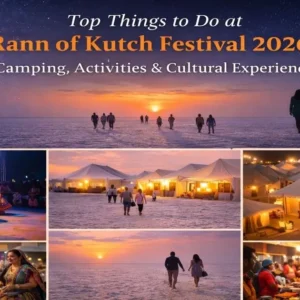
Most people expect constant visual drama and activity, but the Rann often feels slow, quiet, and spacious, rewarding patience more than rushing between highlights. To explore real experiences like cultural performances, White Rann walks, and Tent City activities, read the top things to do at Rann of Kutch Festival before finalizing your travel plan.
Rann of Kutch Festival 2026 Dates (Quick Answer)
Quick answer:
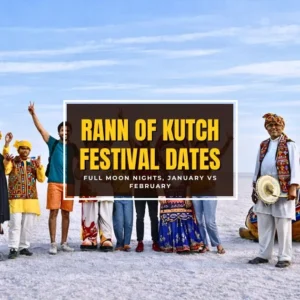
The Rann of Kutch Festival 2026 runs during the winter season, usually from late October 2025 to early March 2026.
What you should lock in your mind first:
- Official season window:
Late October 2025 to early March 2026, depending on weather conditions and local festival scheduling. - Peak interest months:
January and February remain the busiest because daytime weather feels comfortable and skies stay mostly clear. - Crowd reality:
January weekends and holiday periods feel significantly busier than most first-time visitors expect. - Full moon planning note:
Full moon nights change every year and need separate planning, which I explain clearly in a dedicated guide.
First-time visitor guidance:
If this is your first visit to the Rann of Kutch, early February usually feels easier than January due to slightly fewer crowds and a calmer travel pace.
Best Time to Visit Rann of Kutch (What Actually Matters)
Many travelers choose dates based only on availability, then feel tired or overwhelmed by the second day. I always decide timing first, because the winter months here feel very different on the ground.
Why winter works best
Winter keeps daytime temperatures comfortable for walking across the White Rann. Nights turn sharply cold after sunset, which many first-time visitors underestimate. Desert access also remains stable during winter, unlike warmer months when conditions feel harsh.
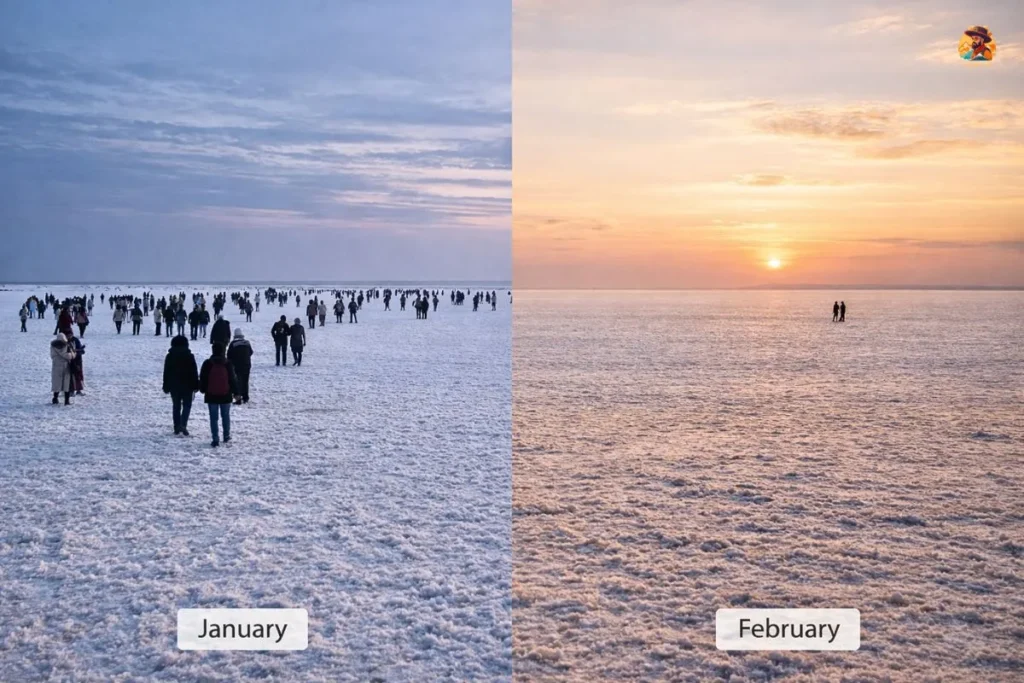
January vs February: what changes
- January:
January feels colder at night and noticeably busier, especially on weekends and holidays. Cultural events run at full scale, but queues, traffic, and noise feel higher than expected. - February:
February feels slightly warmer in the evenings and calmer overall. Movement feels easier, photography feels less rushed, and many travelers enjoy the slower rhythm more.
Crowds and weather, honestly
People assume winter always feels pleasant, but desert winds can make evenings biting cold. January full moon periods attract heavy crowds, while February offers more space without losing the festival atmosphere.
Simple selection rule:
Choose January if you want maximum festival energy and do not mind crowds or colder nights. Choose February if you prefer fewer people, slightly warmer evenings, and a calmer travel pace.
Rann of Kutch Location Explained (With Map Context)
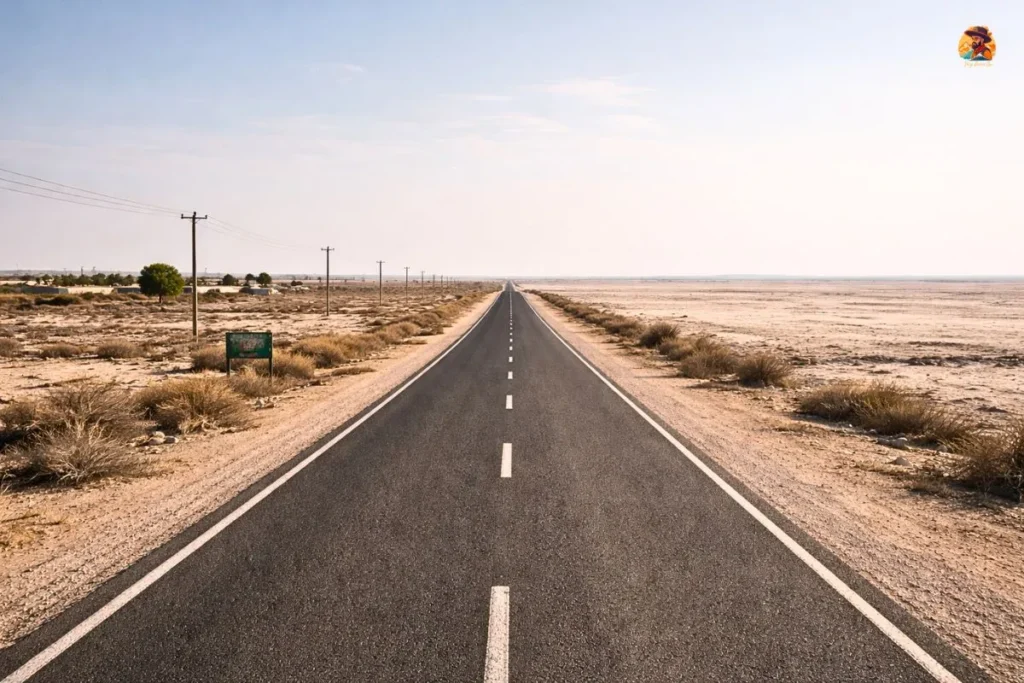
Many travelers look at the map and assume the Rann of Kutch sits just outside a city. In reality, the location feels far more remote once the journey actually begins.
This border proximity is also why foreign visitors need additional permits, explained later in this guide. It is not a single town but a wide salt desert region that opens fully only during the winter months. The White Rann festival area is accessed through Dhordo village, which acts as the controlled entry point.
First-time mental map tip:
If you are visiting for the first time, imagine Bhuj as your last proper city stop, and everything beyond it as slow-moving desert terrain rather than normal highway travel.
What this means on the map:
- The region sits far from major highways after Bhuj
- Large open stretches make distances look shorter than they feel
- Access routes narrow as you move closer to the White Rann
Once you accept Bhuj as your base and factor in slower last-mile travel, route planning becomes far more realistic and less exhausting.
Rann of Kutch Distance From Major Cities
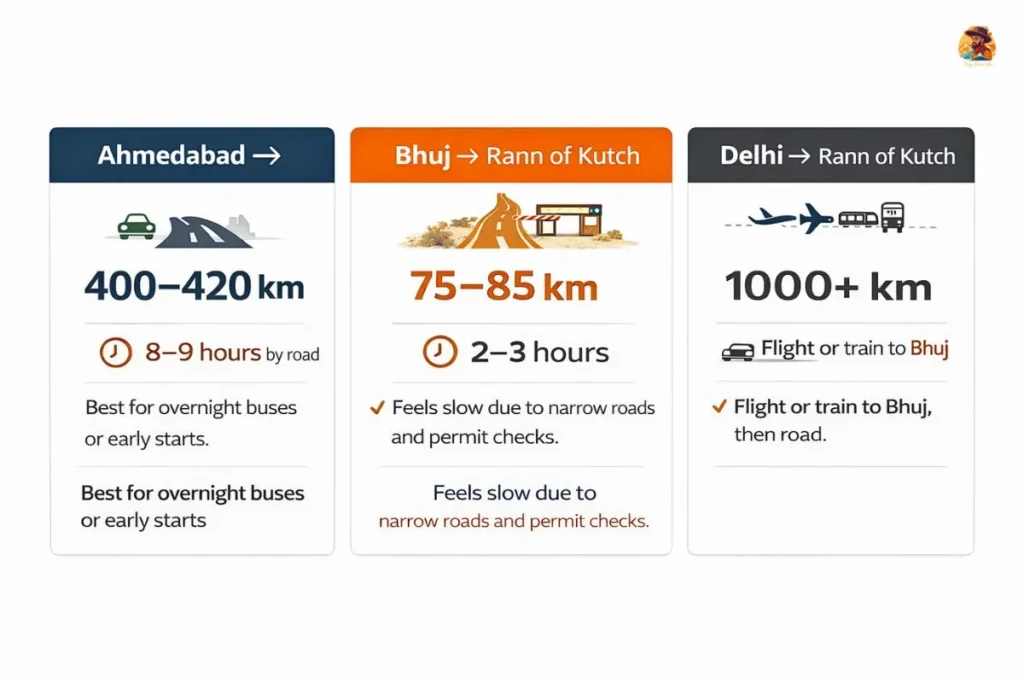
Most travelers check distances but forget that the final stretch toward the White Rann always feels slower. I treat distance as a planning tool, not just a number on a map.
Ahmedabad to the Rann of Kutch
Ahmedabad works well for road trips and overnight buses. The distance is around 400 to 420 kilometers, but the driving speed drops noticeably after Bhuj.
- Approx travel time: 8 to 9 hours by road
- Best suited for: overnight buses or early morning departures
Bhuj to Rann of Kutch
Bhuj is the last major city before entering the White Rann area. The distance is only 75 to 85 kilometers, yet this stretch often takes the longest.
- Approx travel time: 2 to 3 hours
- Why it feels slow: narrow roads, permit checks, limited night visibility
Delhi to Rann of Kutch
For travelers coming from Delhi, direct road travel feels exhausting. Most people reach Bhuj first, then continue by road.
- Total road distance: over 1,000 kilometers
- Best approach: flight or train to Bhuj, then a road journey
Travel decision shortcut:
Choose a road trip if you start from Gujarat or nearby states and enjoy long drives. Choose a flight or train to Bhuj, plus road if you are coming from far cities like Delhi and want to save energy.
How to Reach Rann of Kutch (Overview Only)
Most planning confusion starts when travelers mix routes, timings, and last-mile realities. I keep this simple because clarity here saves energy later.
By Air
The nearest airport is Bhuj Airport, which connects seasonally with major Indian cities. From Bhuj, the White Rann is reached by road via Dhordo, and the final stretch moves slowly.
By Train
Bhuj Railway Station is the closest railhead and the most reliable option in winter. Trains often arrive early morning or late at night, which suits onward road transfers well.
By Road
Road access works best from Ahmedabad or Bhuj, depending on your starting point. Highways feel smooth until Bhuj, after which narrower roads and checks slow the pace toward Dhordo.
First-time visitor priority:
For first-time visitors, a train or flight to Bhuj followed by a road transfer is the most reliable and least tiring option.
Tickets are booked through official platforms, not festival counters.
Where to Book Tickets for Rann of Kutch (Flights, Trains, Buses)
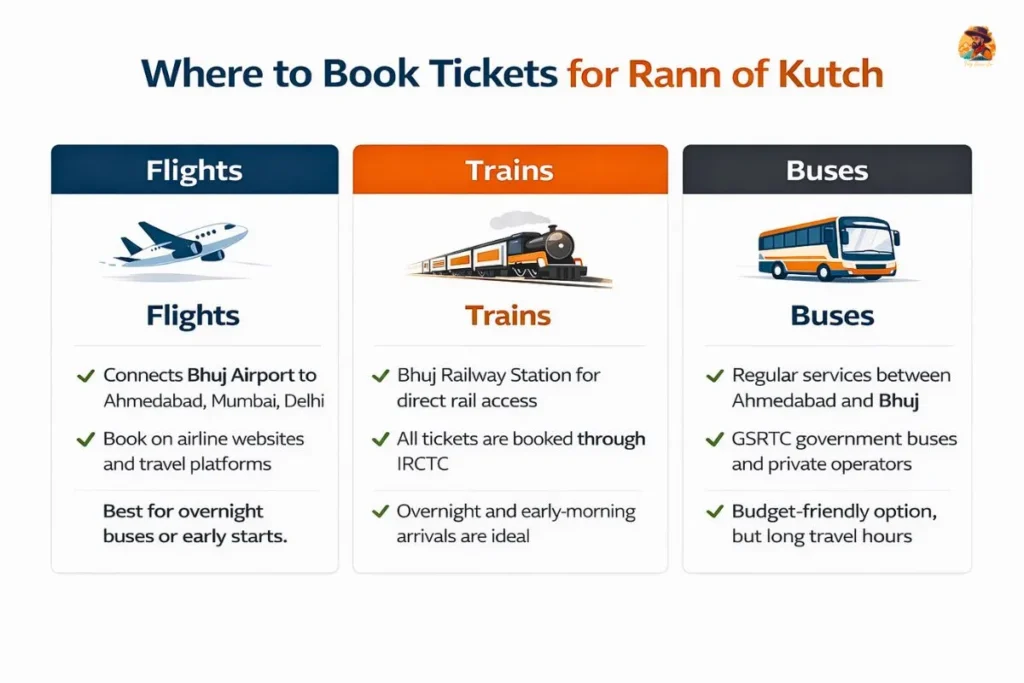
Most travel confusion starts not with routes, but with ticket booking. For the Rann of Kutch, Bhuj acts as the central booking anchor for almost all transport options.
Flights:
Bhuj Airport connects seasonally with cities like Ahmedabad, Mumbai, and Delhi. Flights are best booked through airline websites or standard travel platforms. Winter availability improves, but seats fill quickly around January weekends.
Trains:
Bhuj Railway Station is the most reliable rail option. All train tickets are booked through IRCTC, and overnight or early-morning arrivals work best for onward road travel.
Buses:
Government buses (GSRTC) and private operators run regularly between Ahmedabad and Bhuj. Buses are useful for budget travelers, but feel tiring due to long travel hours.
First-time visitors usually find a flight or train to Bhuj, followed by a road transfer, the least exhausting combination.
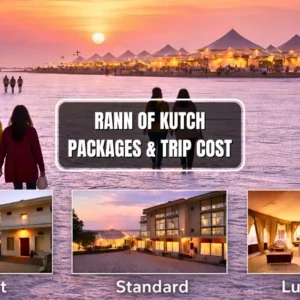
Rann of Kutch Trip Cost (Basic Budget Idea)
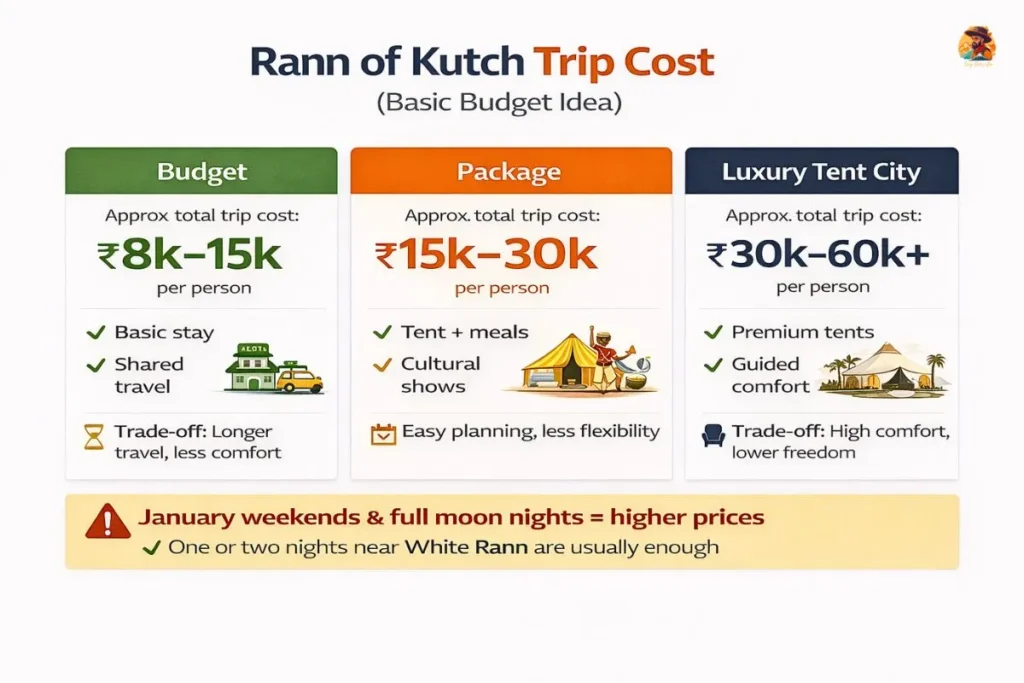
The cost of a Rann of Kutch trip is not fixed and changes with comfort level and timing. I always plan this destination using clear budget ranges, not exact prices, to keep expectations realistic.
Budget travelers
Best for travelers planning independently with simple comfort needs.
- Approx total trip cost: ₹8,000 to ₹15,000 per person
- Usually includes: budget hotels or village stays, shared transport, basic meals
- Trade-off: longer travel days and limited night experiences
Package travelers
Ideal for travelers who want ease and structured planning.
- Approx total trip cost: ₹15,000 to ₹30,000 per person
- Usually includes: tent accommodation, meals, cultural programs, local transfers
- Trade-off: convenience is high, flexibility is limited
Luxury tent city
Designed for travelers who prioritise comfort and managed experiences.
- Approx total trip cost: ₹30,000 to ₹60,000+ per person
- Usually includes: premium tents, guided activities, cultural evenings, and on-site facilities
- Trade-off: comfort is high, freedom is lower
Cost mistake to avoid:
Most travelers overspend by booking premium Tent City packages for all nights, even though one or two nights near the White Rann are usually enough for the full experience.
Additional cost-spike warning:
Trip costs rise sharply during January weekends and full moon nights, especially for Tent City stays, so booking these dates without flexibility often inflates the budget unexpectedly.
Where Do People Stay During Rann Utsav?
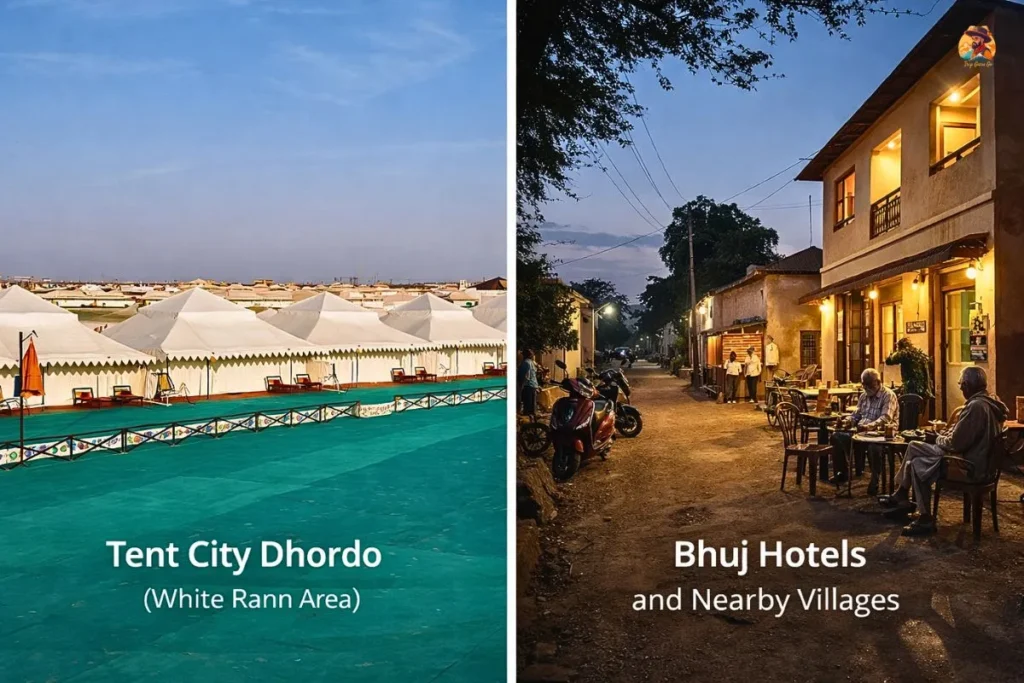
Most travelers assume staying closest to the White Rann is always the best choice. I plan stays based on comfort level and daily travel tolerance, because location alone does not decide the experience.
Tent City Dhordo (White Rann Area)
Tent City near Dhordo sits closest to the festival zone and offers a managed, all-in-one stay.
- What it offers: organised tents, fixed meals, cultural programs, guided visits
- Best for: families, first-time visitors, and travelers who want everything pre-arranged
- Expectation vs reality: people expect freedom, but daily schedules remain structured and fixed
I find this option works best when convenience matters more than flexibility.
Bhuj Hotels and Nearby Villages
Bhuj and the surrounding villages offer a wider choice of stays with more control over daily plans.
- What it offers: hotels across budgets, homestays, flexible food options, and independent movement
- Best for: budget travelers, solo travelers, and slow-paced explorers
- Expectation vs reality: stays feel cheaper and freer, but daily travel time increases
I choose this option when I value flexibility and quieter evenings over proximity.
Simple stay decision rule: If you have only 2 days, Tent City works better because it saves travel time and energy. If you have 3 or more days, Bhuj or village stays feel more relaxed and flexible.
Who Should Visit Rann of Kutch (And Who Can Skip It)
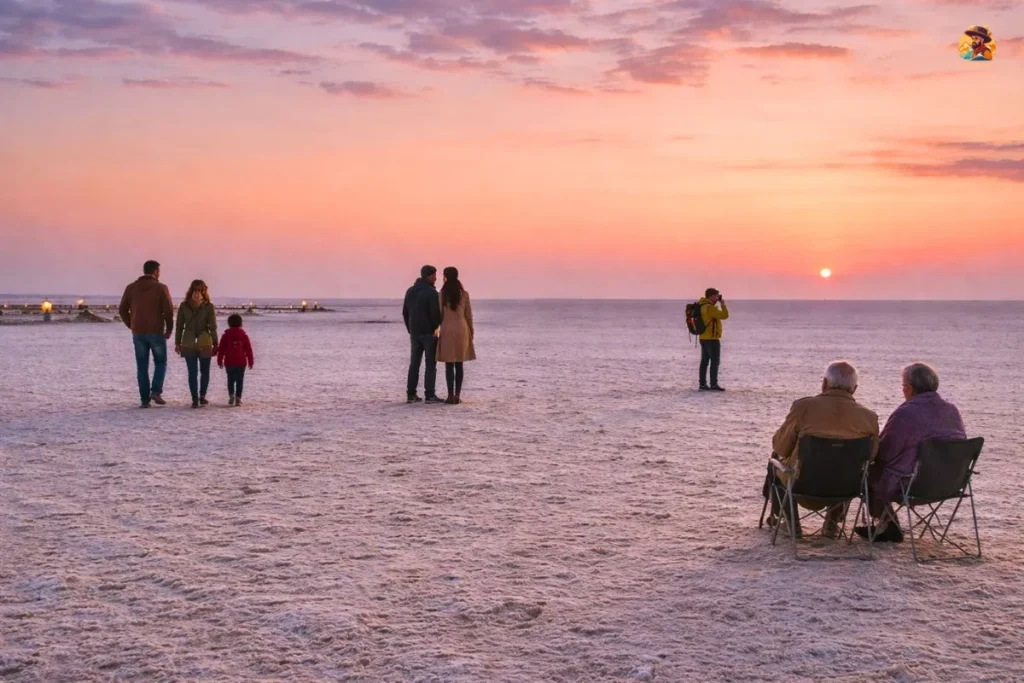
The Rann of Kutch suits certain travel styles deeply, while others may feel tired or underwhelmed. I always match this destination with temperament, not just curiosity.
Families
Families enjoy the Rann more when travel days stay short, and plans remain organised. Comfort-focused stays and limited daily movement work best.
Couples
Couples who enjoy calm landscapes, full moon nights, and slow evenings usually connect well here. Those expecting constant activity often feel the experience is quieter than imagined.
Solo travelers
Solo travelers who enjoy photography, silence, and reflection often find the desert rewarding. Social or nightlife-focused travelers usually feel disconnected.
Older travelers
Older visitors need careful planning due to cold nights and longer road journeys. Short itineraries and comfort-oriented stays work best.
Luxury seekers vs budget travelers
Luxury seekers prefer Tent City comfort and managed experiences. Budget travelers feel happier in Bhuj or villages, but must accept longer travel days.
Who may feel disappointed:
Travelers who need packed itineraries, nightlife, frequent attractions, or fast-paced sightseeing often find the Rann too slow and minimal.
Is Rann of Kutch Worth Visiting? (Honest View)
Many travelers arrive expecting constant excitement, then feel surprised by the stillness. I judge this place honestly by how well it matches a traveler’s mindset, not by how dramatic it looks in photos.
Why do many travelers find it worth visiting
- A landscape you do not see elsewhere:
The white salt desert offers rare scale and openness, especially striking during winter light. - Culture that feels rooted, not rushed:
Rann Utsav music, crafts, and performances feel meaningful when you move slowly and stay present. - A genuine mental reset:
Quiet evenings, wide horizons, and limited distractions help many travelers disconnect from noise and pressure.
Honest reasons some people struggle here
- Travel fatigue and cold nights:
Long road journeys and sharp winter chill can feel draining without proper planning. - Less flexibility during peak periods:
January and full moon dates bring crowds and fixed schedules, which reduce spontaneity.
Final decision nudge:
If you feel unsure, visit with a slow-travel mindset and minimal expectations; the Rann rewards patience and presence more than packed itineraries.
Rann of Kutch Permit – Where and How to Get It
Entry to the White Rann requires an official permit, and this step is non-negotiable. Many delays happen simply because travelers assume permits are handled automatically.
Where permits are issued:
Permits are issued by local authorities and can be arranged:
- Online through official Gujarat administration portals
- Offline at designated permit counters near Bhuj and entry check-posts
Documents required (Indian visitors):
- Government-issued photo ID
- Basic personal details
Permit checks happen on approach routes toward Dhordo, especially during peak season. During January weekends and full moon dates, waiting time increases, so arranging permits in advance saves significant time.
Important Information for Foreign Visitors
Foreign visitors need extra planning for the Rann of Kutch because the region lies close to an international border. This is often overlooked online.
Key points foreign travelers must know:
- A Protected Area Permit (PAP) is required
- Passport and valid Indian visa copies are mandatory
- Processing time can be longer than for Indian visitors
- Some border-adjacent zones remain restricted
Foreign travelers should start permit arrangements well before arrival in Bhuj. On-ground approvals are possible but may involve delays during peak festival periods.
This extra step is routine, not exceptional, but planning for it early prevents last-minute stress.
Important Things to Know Before Visiting the Rann of Kutch
Most first-time issues here come from small details people overlook while planning. These basics quietly decide comfort, safety, and overall mood during the trip.
Permit requirement
Entry to parts of the White Rann requires a government permit, which authorities check on approach routes near Dhordo. Permits are not included automatically with travel bookings or Tent City stays, so planning this avoids delays. Full details are covered in the Rann of Kutch permit section above.
Cold nights are real
Winter evenings turn sharply cold after sunset, even when days feel pleasant. Many travelers pack light after seeing daytime photos and struggle at night without proper winter layers.
Long travel fatigue
Distances look manageable on maps, but the final stretch after Bhuj feels slow and tiring. Tight schedules often lead to exhaustion, so shorter travel days feel more sustainable.
Mobile network limitations
Mobile signals weaken closer to the White Rann, with patchy or no coverage in some zones. Offline maps, downloads, and basic planning done in advance reduce stress later.
Foreign visitor note
Foreign travelers should note that permit rules and processing time differ, and additional documents are required due to the border location. Refer to the Important Information for Foreign Visitors section for details.
Final Thoughts on Visiting the Rann of Kutch Festival
Planning the Rann of Kutch Festival becomes simple when expectations stay realistic, and decisions stay calm. The white salt desert, winter festival atmosphere, and slower pace reward travelers who value experience over rushing through checklists.
Full moon nights change every year and need separate planning, which is why checking the detailed Rann of Kutch Festival dates guide helps avoid confusion. If you dress for cold nights, allow buffer time, and travel at a measured pace, the journey feels peaceful and fulfilling rather than tiring.
If your dates fall in January or February and your expectations are realistic, you are planning the Rann correctly.
FAQs About the Rann of Kutch Festival
The Rann of Kutch is famous for its vast white salt desert and surreal full moon nights. During Rann Utsav, cultural performances, handicrafts, and the open desert landscape together create the main attraction.
Winter is the best time to visit the Rann of Kutch due to pleasant daytime temperatures. January and February look stunning, but also attract the highest crowds.
The Rann of Kutch festival season for 2026 usually begins in late October or early November. Exact opening dates may shift slightly depending on weather and local arrangements.
The Rann of Kutch is located in northern Gujarat, close to the India–Pakistan border. It is a seasonal salt desert region, with Dhordo village serving as the main access point.
Bhuj is the closest and most practical city to the Rann of Kutch. Almost all flights, trains, hotels, and permit arrangements are handled through Bhuj.
Yes, the Rann of Kutch remains fully open in January and February. These months are peak season, especially around weekends and full moon nights.
The cost of a Rann of Kutch trip depends mainly on comfort level and stay choice. Budget trips stay affordable, while Tent City and packaged experiences push costs higher.
Most travelers find two to three days enough for the Rann of Kutch. This allows time for the White Rann visit, cultural events, and relaxed travel.
Yes, visitors need a permit to enter specific areas of the White Rann. Permit checks are routine and usually handled smoothly if planned in advance.
The Rann of Kutch suits families and older travelers with proper planning. Comfortable stays, shorter travel days, and preparation for cold nights make the experience manageable.
Permits for the White Rann are issued by local authorities and can be arranged online through official Gujarat administration portals or offline at designated permit counters near Bhuj and entry check-posts. During peak season, arranging the permit in advance helps avoid waiting delays.
Yes. Foreign visitors require a Protected Area Permit (PAP) due to the Rann’s border location. Passport and valid visa copies are mandatory, and processing time may be longer than for Indian visitors. It is best to arrange this before arriving in Bhuj.

Hi, I am Manoj Kumar, the voice behind Trip Guru Go. I am a travel researcher, SEO content expert, and founder of this blog. With over 12 years of experience in digital travel research, I simplify complex destinations into real, helpful, and trustworthy guides.
Every article I write is backed by local sources, real traveler experiences, and deep fact-checking. Even if I have not visited every place personally, I never share anything without strong on-ground insight.
I do not sell travel packages or promote anything paid. My only goal is to help you travel smarter — with zero fluff, 100% honesty, and a deep focus on your safety and experience.