
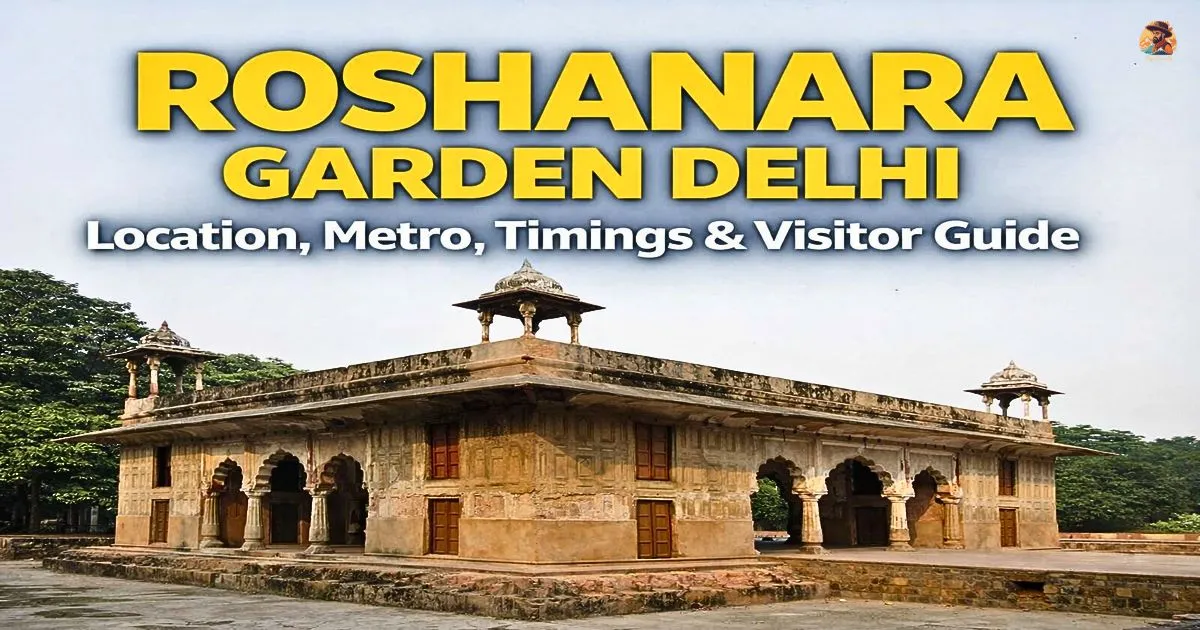
Most people reach Roshanara Garden in Delhi expecting a grand Mughal monument, but many leave talking about how unexpectedly calm it feels. The first time I walked in through its old gate in Shakti Nagar, the traffic noise softened within seconds, and I noticed more local morning walkers than tourists with cameras.
Roshanara Garden, also known locally as Roshanara Bagh, is a seventeenth-century Mughal garden in North Delhi, near Kamla Nagar Market and Delhi University North Campus. Roshanara Garden is one of the lesser-known green spaces among the many historic parks and gardens in Delhi, offering a quieter alternative to more central attractions. Built by Roshanara Begum, her tomb stands at the center, surrounded by open lawns and shaded pathways. Pul Bangash Metro Station on the Red Line is the nearest access point, located about one kilometer away.
Unlike heavily restored monuments, this space feels more like a neighborhood garden where history rests quietly in the background. It suits travelers who enjoy slow walks and quieter corners.
If this is your first visit, relax, I will guide you clearly so you can decide whether Roshanara Garden deserves a place in your Delhi plan.
Quick Facts About Roshanara Garden
Before planning your visit, review these essentials carefully.
- Location: Shakti Nagar, North Delhi (near Kamla Nagar Market and Delhi University North Campus)
- Nearest Metro: Pul Bangash (Red Line), about 1 kilometer away
- Alternate Metro: Vishwa Vidyalaya (Yellow Line), roughly 2.5 to 3 kilometers away
- Entry Fee: Free for general visitors
- Timings: 6:00 AM until sunset (usually 6:30 PM to 7:00 PM depending on season)
- Weekly Closure: None
- Best Season: October to March
- Time Required: 45 to 90 minutes
- Ideal For: Quiet heritage walks and short North Delhi visits
Roshanara Club inside the complex is a private members-only institution and is not open to the public. Timings may occasionally adjust due to maintenance or daylight changes.
Is Roshanara Garden Worth Visiting?
If time in Delhi is limited, this decision matters early. Roshanara Garden is not a major landmark, but it can be a calm and practical stop in North Delhi.
The space feels more like a historical park than a curated monument. Open lawns, mature trees, and a modest tomb shape the experience. It works best when approached as a relaxed walk rather than a sightseeing highlight.
Best suited for:
- Travelers who prefer quiet, uncrowded spaces
- Visitors already near Kamla Nagar or Delhi University
- Morning or evening walkers
- Those wanting a short 45 to 90 minute stop
May feel underwhelming for:
- Visitors expecting iconic architecture
- Those traveling across the city solely for this garden
- Travelers focused on dramatic photo backdrops
Walking effort is light, with mostly flat paths and natural shade along the main routes. Weekdays remain peaceful, while weekends bring more local families, but stay manageable. The visit pairs easily with Kamla Nagar Market or a Delhi University campus walk.
My honest traveler’s note: this place often looks more impressive online than it feels in person, yet it offers a welcome pause from Delhi’s intensity when planned realistically.
Where Is Roshanara Garden Located?
Many visitors assume Roshanara Garden sits on a major tourist road, but the approach actually feels more residential and local. That difference helps set the right expectation before arriving.
Roshanara Garden, also known as Roshanara Bagh, is located in Shakti Nagar, North Delhi, between Kamla Nagar and Civil Lines.
- Area: Shakti Nagar, North Delhi
- Nearby Landmarks: Kamla Nagar Market, Delhi University North Campus
- Main Access Road: Roshanara Road
From Kamla Nagar Market, the garden is within easy walking distance or a brief auto ride, depending on the gate used. The surroundings are mostly residential, so do not expect large tourist signboards at every corner.
On Google Maps, searching “Roshanara Garden” or “Roshanara Bagh” leads to the correct entrance point. The main gate is accessible from the Roshanara Road side, which is usually the simplest entry for first-time visitors.
Some locals refer to it as “Roshanara Park Delhi,” but this is the same historical garden complex. There is only one Roshanara Garden in this area.
Nearest Metro Station & How to Reach
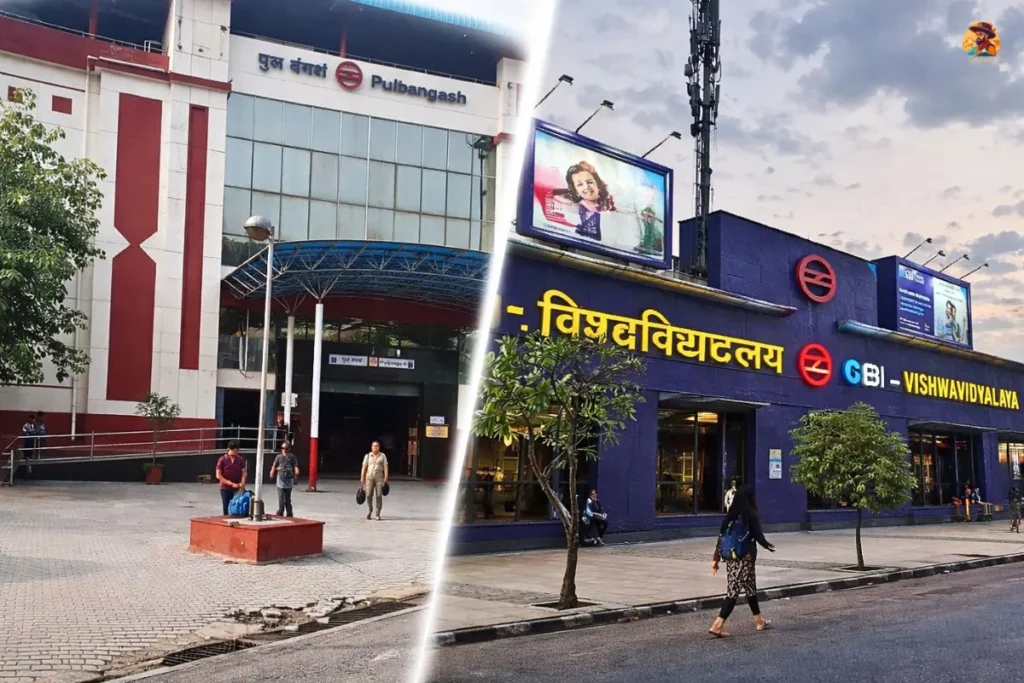
The nearest metro station to Roshanara Garden is Pul Bangash (Red Line). It is located about 1 kilometer from the main gate on Roshanara Road.
From Pul Bangash:
- E-rickshaw fare: ₹20 to ₹40
- Walking time: 10 to 15 minutes
- Best for: Visitors coming from East or North Delhi
An alternate option is Vishwa Vidyalaya (Yellow Line), around 2.5 to 3 kilometers away.
From Vishwa Vidyalaya:
- E-rickshaw fare: ₹40 to ₹60
- Best for: Visitors coming from Central or South Delhi
- Often preferred by Delhi University North Campus students
In summer, walking from either station can feel tiring. Taking an e-rickshaw is usually more comfortable during hot afternoons.
If arriving by car, limited roadside parking is available near the entrance, though space can fill up on weekends. Evening traffic around Kamla Nagar may slow movement between 5 PM and 8 PM.
Quick Decision Guide:
- Coming from East or North Delhi → Use Pul Bangash
- Coming from Central or South Delhi → Use Vishwa Vidyalaya
Timings, Ticket Price & Best Time to Visit
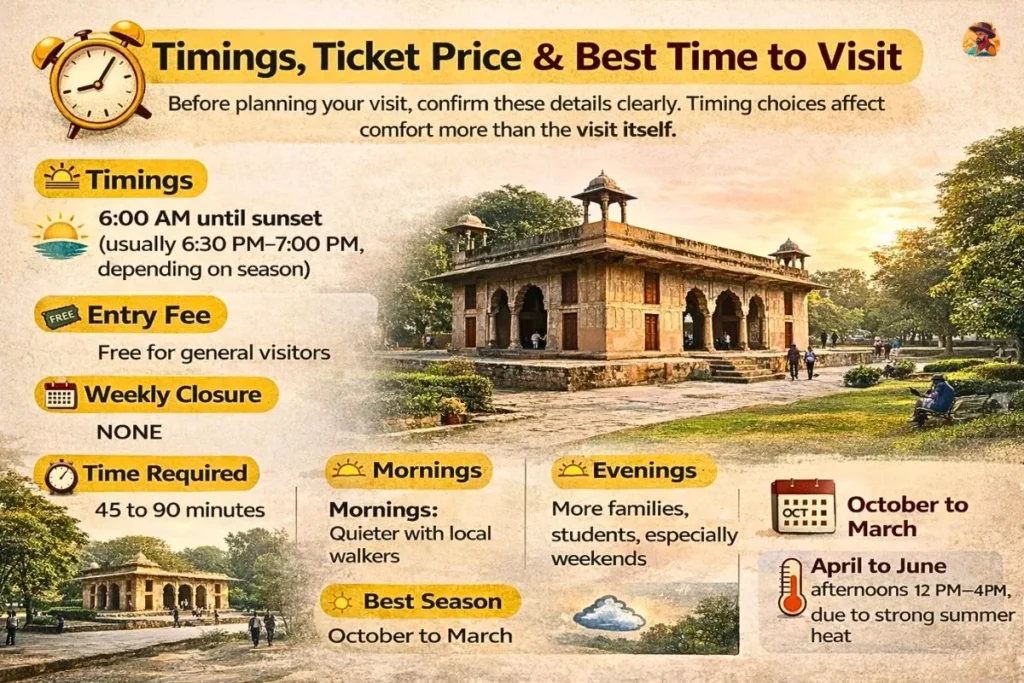
Before planning your visit, confirm these details clearly. Timing choices affect comfort more than the visit itself.
- Timings: 6:00 AM until sunset (usually between 6:30 PM and 7:00 PM depending on season)
- Entry Fee: Free for general visitors
- Weekly Closure: None
- Time Required: 45 to 90 minutes
- Morning vs Evening: Mornings are quieter with local walkers; evenings see more families and students, especially on weekends
- Best Season: October to March
- Avoid: April to June afternoons, especially 12 PM to 4 PM, due to strong summer heat
- Winter Note: December and January mornings may have fog, which can reduce visibility
Weekend footfall increases slightly, but it rarely feels crowded compared to major Delhi monuments.
Timings may occasionally vary due to maintenance or seasonal daylight changes, so verify current hours before visiting.
A Brief History of Roshanara Garden
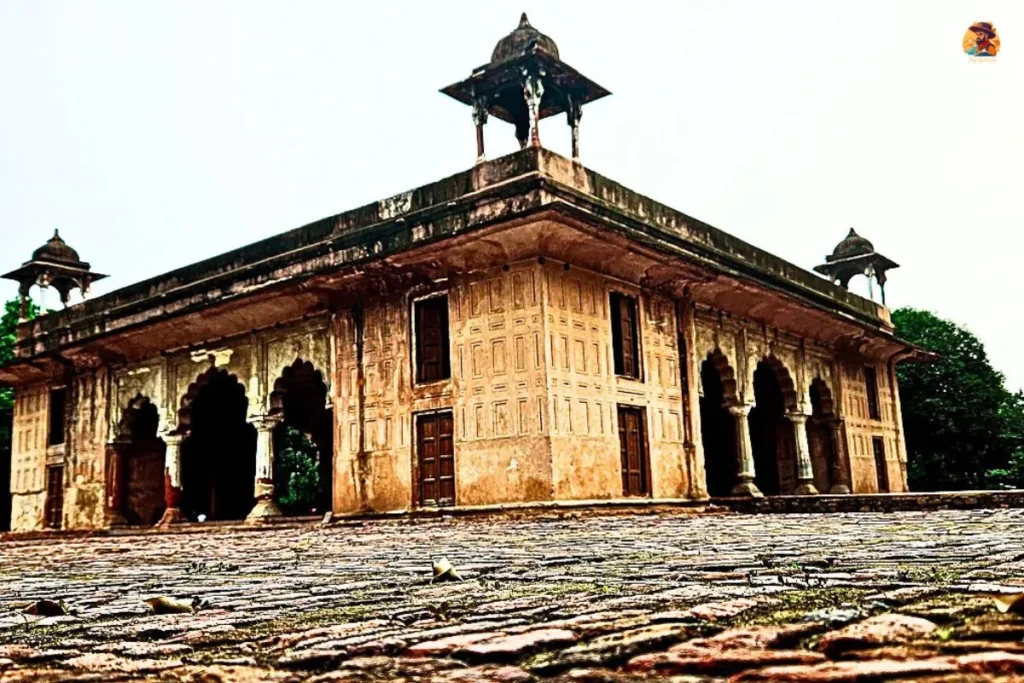
Roshanara Garden was built in the seventeenth century by Roshanara Begum, a powerful and influential figure in the Mughal court and daughter of Emperor Shah Jahan. She played a decisive role during the succession struggle between Aurangzeb and Dara Shikoh, which adds political depth to this otherwise quiet space.
The garden follows the traditional Charbagh layout, where pathways divide the land into balanced sections. At its center stands the modest tomb of Roshanara Begum, noticeably simpler than Delhi’s grand Mughal mausoleums. Standing near the tomb today, its simplicity feels intentional rather than incomplete.
Historical Significance:
- Final resting place of Roshanara Begum
- Example of 17th-century Mughal garden planning in Delhi
- Home to the Roshanara Club, which hosted early BCCI foundation meetings in 1928
Today, the public garden and the private Roshanara Club share the same complex but offer very different atmospheres. The garden remains open and peaceful, while the club operates as a members-only institution.
What You Should Know Before Visiting (Practical Reality)
Most visitors focus on history and overlook these basics, but small practical details shape the comfort of the visit.
Toilets: Public washrooms are available inside the garden. Cleanliness is acceptable, though not at the level of centrally managed monuments.
Drinking Water: Do not depend entirely on public taps. Carry your own water, especially between April and June.
Cleanliness Level: The garden is generally maintained, but it feels like a neighborhood park rather than a tightly regulated tourist site.
Wheelchair Accessibility: Main paths are mostly flat, though some areas have uneven surfaces. Basic movement is possible, but full accessibility support is limited.
Lighting After Sunset: Lighting works along primary paths, yet some corners remain dim. Leaving shortly after sunset is more comfortable than staying late.
Safety for Couples: The garden is commonly used by students and couples during the day. The atmosphere feels normal and relaxed.
Safety for Solo Female Travelers: Daytime visits feel reassuring due to regular local presence. Evenings become quieter, so earlier hours are preferable.
Stray Animals: As in many older Delhi parks, you may occasionally notice stray dogs or monkeys. They rarely disturb visitors if food is kept packed.
Picnic Suitability: Light picnics are fine on the lawns. Organized sports or loud activities are generally discouraged.
What to Wear: Comfortable walking shoes and breathable clothing. Open areas can feel warm despite tree shade.
What to Carry: A water bottle, sunglasses, and a light scarf or cap during the summer months.
My honest traveler’s note: simple preparation makes this visit smoother. Carry water, avoid peak heat, and keep the plan relaxed.
Photography & Visitor Experience
Photography
Personal photography is allowed inside Roshanara Garden, and mobile cameras work well for casual shots. Tripods or larger professional setups may require prior permission, so keeping equipment minimal avoids unnecessary interruption.
Best time for softer light: Early morning or late afternoon, especially between October and March. Midday summer light can feel harsh and flatten colors.
Seasonal impact: Greenery looks fuller after the monsoon and during the winter months. Late summer may leave some patches dry, which can affect wide-angle frames.
Best spots:
- Stone arches around the tomb
- Shaded pathways near the entrance
- Old banyan trees for textured, natural compositions
The garden photographs best in close frames and relaxed portraits rather than wide, architectural shots.
Visitor Experience
The overall atmosphere feels calm and local. Mornings are quieter with walkers and students reading under trees. Evenings bring more families, though noise levels usually remain manageable.
Most visitors appreciate the open space and lighter footfall compared to the central Delhi monuments. Those expecting elaborate design details may find the setting simpler than anticipated.
My honest traveler note: this space feels better when treated as a relaxed walk with a camera, not a destination built purely for spectacle.
Nearby Places & Food Options
Roshanara Garden’s biggest advantage is its North Delhi location. You can easily combine this visit with nearby markets, campus walks, and café stops without stretching your day.
Within Walking Distance (5–15 Minutes)
- Kamla Nagar Market – Street food stalls, budget shopping, small restaurants, juice corners
- Delhi University North Campus – Tree-lined roads and a relaxed college atmosphere
- Shakti Nagar Local Eateries – Small dhabas and tea stalls for simple meals
Short Auto or E-Rickshaw Ride (10–20 Minutes)
- Hudson Lane (GTB Nagar) – Popular student cafés and casual dining options
- Majnu ka Tila (Tibetan Colony) – Tibetan and Asian cuisine with small boutique cafés
- Civil Lines Area – Quieter roads and old colonial-era bungalows
Practical Half-Day Plan
- Garden: Spend 45 to 60 minutes inside Roshanara Garden
- Food: Walk to Kamla Nagar for lunch or snacks
- Stroll: Explore Delhi University North Campus
- Optional: End with a café stop at Hudson Lane
This combination creates a relaxed half-day plan in North Delhi and works best as a local exploration rather than a full sightseeing schedule.
Conclusion – Should You Add Roshanara Garden to Your Delhi Plan?
Roshanara Garden is a quiet Mughal-era garden in North Delhi with open lawns, tree shade, and a calm neighborhood atmosphere. It is free to enter, easy to reach by metro, and works best as a short 45 to 90-minute stop.
It suits travelers who prefer relaxed walks and light heritage over crowded landmark sightseeing. Students, solo daytime visitors, and those already exploring Kamla Nagar or Delhi University will likely find it a comfortable addition.
Include it if you want a peaceful pause between busier Delhi attractions. Skip it if your focus is on iconic monuments or a tightly packed sightseeing schedule.
Roshanara Garden is a worthwhile addition with the right expectations, but it is not among Delhi’s headline attractions.
FAQs About Roshanara Garden
Roshanara Bagh is known for being a seventeenth-century Mughal garden built by Roshanara Begum. It houses her tomb and follows the traditional Charbagh garden layout in North Delhi.
You can reach Roshanara Garden by metro, auto, or car. The nearest metro is Pul Bangash on the Red Line, followed by a short walk or e-rickshaw ride to the main gate on Roshanara Road.
Entry to Roshanara Garden is free for general visitors. There is no regular ticket charge for accessing the public garden area.
Roshanara Begum, daughter of Shah Jahan, played an influential political role during the Mughal succession struggle. She later retired from court life and was buried in the garden she commissioned, which now bears her name.
Pul Bangash Metro Station on the Red Line is the nearest. It is within walking distance or a short e-rickshaw ride from the garden entrance.
Pul Bangash is closer in distance. Vishwa Vidyalaya on the Yellow Line may be more convenient if coming from Central or South Delhi due to better connectivity.
The garden generally opens around 6:00 AM and remains accessible until sunset, usually between 6:30 PM and 7:00 PM, depending on the season.
During daytime hours, the garden feels safe due to regular local presence, including walkers and students. Basic urban precautions are still advisable.
Lighting is functional along main paths, but some areas remain dim. It is more comfortable to leave shortly after sunset rather than stay late in the evening.
There is no verified historical evidence supporting ghost stories about Roshanara Garden. Such claims are based on local rumors rather than documented facts.
Light picnics on the lawns are generally acceptable. Loud activities or organized sports are discouraged.
It is a Mughal-era Charbagh-style garden designed with symmetrical pathways and a central tomb structure.
No, Roshanara Club is a private members-only institution within the larger complex. The public garden area is separate and freely accessible.

Hi, I am Manoj Kumar, the voice behind Trip Guru Go. I am a travel researcher, SEO content expert, and founder of this blog. With over 12 years of experience in digital travel research, I simplify complex destinations into real, helpful, and trustworthy guides.
Every article I write is backed by local sources, real traveler experiences, and deep fact-checking. Even if I have not visited every place personally, I never share anything without strong on-ground insight.
I do not sell travel packages or promote anything paid. My only goal is to help you travel smarter — with zero fluff, 100% honesty, and a deep focus on your safety and experience.


