Sarojini Nagar Market Today at a Glance
Heading out right now?
Pause for thirty seconds and scan this.
It will set your expectations before the crowd does.
| What you want | High-pressure shopping |
|---|---|
| Comfortable walking | Reach before 2 PM on weekdays |
| Cheapest possible rates | Monday pavement sellers, but very chaotic |
| Shortest entry | Metro, Gate No. 1 |
| Space to check clothes | Late morning to early afternoon |
| High pressure shopping | Weekend evenings |
Budget Expectation
- Simple tops may start at ₹50
- Dresses usually sit between ₹100 and ₹500
- Jackets change with the season and surplus quality
Crowd Pattern
- Evenings quickly turn tight, especially on weekends
- Late mornings feel open and breathable
- Afternoons grow busy but manageable
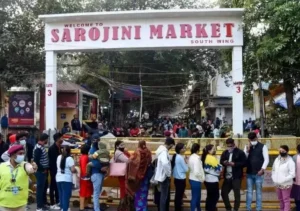
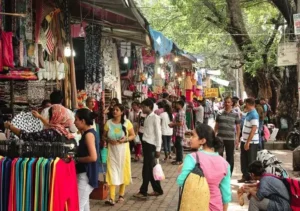
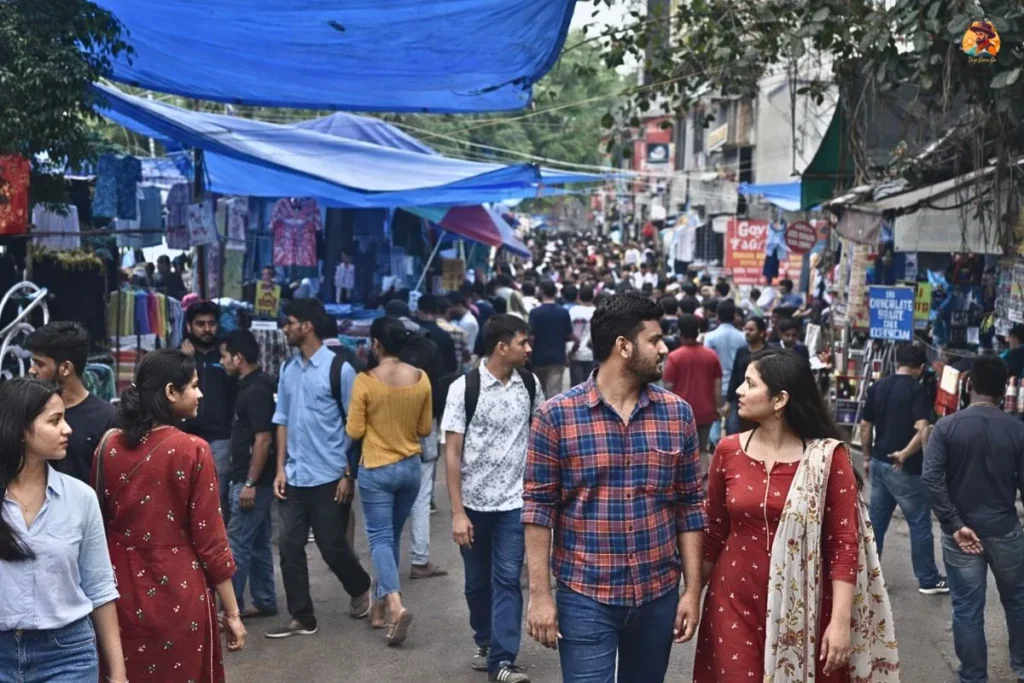
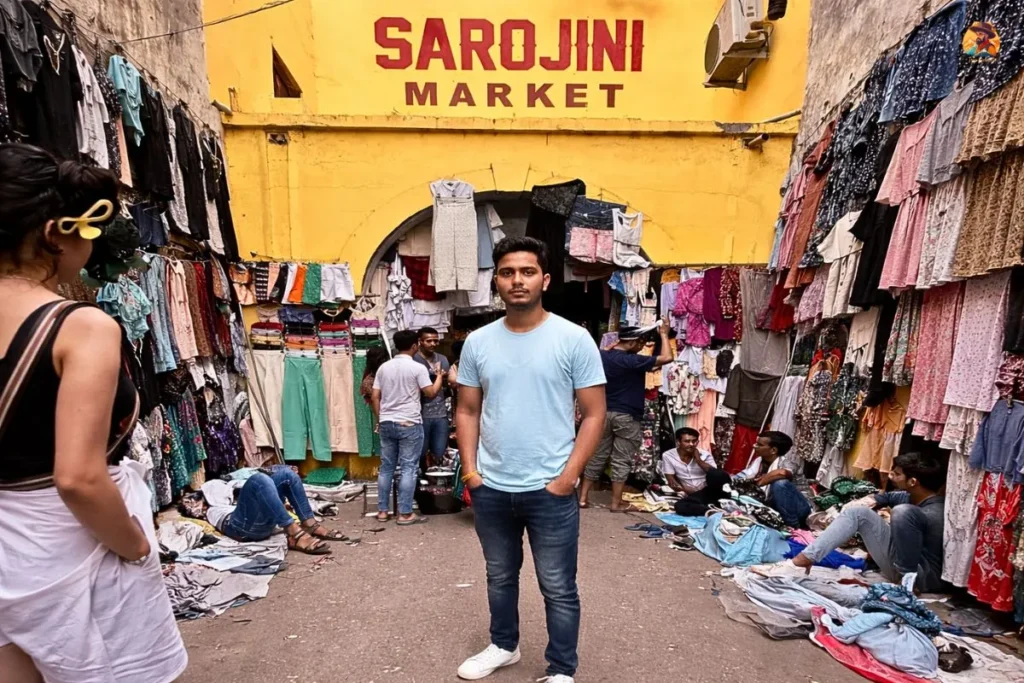
Sarojini Nagar Market Photos to Expect Before You Go

The Ground Reality: Why “Open Today” Can Be Misleading
I have reached Sarojini Nagar Market on days when my phone confidently promised an open market, but the lanes told a different story. Shutters were sliding down, vendors were tying up bundles into sacks, and the usual noise was fading. Even while my screen insisted everything was live, the market was clearly shutting down.
What looks simple online behaves very differently once you step inside these lanes. An open status does not automatically mean easy shopping. The day of the week, the time you arrive, and the crowd packed into narrow walkways decide whether the experience feels energising or mentally exhausting. I learned this only after a few poorly timed visits, when excitement turned into frustration within minutes.
If you are checking Sarojini Nagar Market timings today or deciding whether to step out right now, pause for a moment. Once you understand the weekly off and the real opening rhythm, planning becomes far less stressful.
Is Sarojini Nagar Market Open Today? (Live Status Explained)
If you are standing on a metro platform right now and wondering whether the trip is worth it, the answer depends entirely on the calendar. While Sarojini Nagar Market appears “open” six days a week online, the experience on the ground changes sharply between a Tuesday morning and a Monday afternoon.
Sarojini Nagar Market Weekly Off Day
The official weekly off for Sarojini Nagar Market is Monday. On this day, the main showrooms and permanent shops with glass fronts keep their shutters down, and regular street shopping does not take place.
- Public and Government Holidays: Sarojini Nagar is a local trading market, not a mall. On major national holidays such as Republic Day, Independence Day, and Gandhi Jayanti, the market usually remains completely closed.
- Festival Periods: During festivals like Diwali or Eid, a few shops may open even on a Monday, but this is inconsistent and unpredictable. If the day is a public holiday, it is safer to assume the market will be closed.
The Monday Myth: Is Sarojini Nagar Really Closed on Monday?
This is where most people get confused. If you visit on a Monday, you will still see crowds in the area, but the main market will not be open. What you are seeing instead is the Monday Patri Market (street market).
The Patri Market reality:
On Mondays, with permanent shops closed, street vendors spread out along the pavements, laying surplus export clothes on sheets directly on the ground. It turns into a sea of fabric, where you literally have to dig to find something worthwhile.
Why visit the Patri Market on Monday:
- Prices drop to their lowest levels
- Vendors try to clear leftover weekend stock
- Basic tops can sell for around ₹50, with dresses near ₹100
Who should visit:
- Experienced bargain hunters
- Shoppers are comfortable with heat and heavy crowds
- Those who do not need mirrors, trials, or exchanges
Who should avoid it:
- Anyone wanting a relaxed shopping experience
- Shoppers who need to try clothes or check quality calmly
- Visitors looking for specific premium surplus items
For most travelers, Monday is not a regular shopping day. It only works if you know exactly what you are walking into.
Sarojini Nagar Market Timings Today and Best Hours to Shop
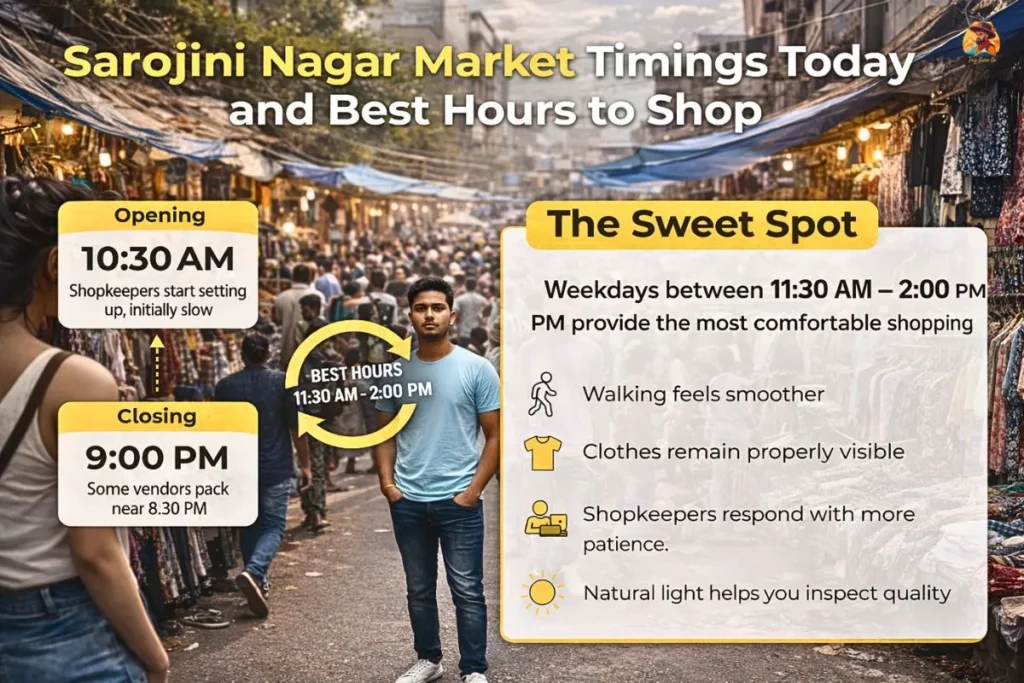
If you are planning by time, know this first. The market opens in layers, not all at once.
Most shops start lifting shutters around 10:30 AM. However, many sellers are still arranging stock. Therefore, early visitors often face half-ready displays.
By 11:30 AM, things settle. Lanes look active, options improve, and bargaining becomes easier. From here, shopping begins to feel enjoyable.
The market usually continues until 9:00 PM. Still, several vendors begin packing near 8:30 PM, especially on weekdays.
The Sweet Spot
On weekdays between 11:30 AM and 2:00 PM, the experience stays most comfortable.
During this period:
- Walking feels smoother
- clothes remain properly visible
- shopkeepers respond with more patience
- Natural light helps you inspect quality
As a result, decisions feel less rushed.
The Discount Window
From 8:15 PM to closing, some prices may soften. Sellers want a final sale before wrapping up.
But choice reduces, trials feel hurried, and energy drops. So visit now only if the rate matters more than the variety.
When It Gets Hard
After 5:00 PM, crowds grow quickly. Moreover, weekends intensify the pressure. Trial lines expand, noise increases, and moving between shops takes longer.
Many expect evenings to feel better because of cooler air. In practice, late mornings work far more efficiently.
Quick Memory Rule
Late morning gives comfort.
Late evening may give a price.
Expectation vs reality:
People often assume evenings are better because of cooler weather. In reality, midday visits are far more productive, especially if you want space to browse, daylight to inspect clothes, and time to compare prices without pressure.
What Your Day at Sarojini Nagar Market Will Actually Feel Like
Sarojini Nagar Market looks compact on a map, but the real experience changes the moment you step inside. I notice this on every visit. The market has a rhythm, and if your timing does not match it, the day starts working against you.
- The Labyrinth Fatigue:
I almost always walk more than expected. The narrow lanes loop back on themselves, and it is easy to pass the same graffiti wall or juice stall twice while trying to find a shop you liked earlier. If you like something, buy it then. Finding the same stall again is never guaranteed. - The Wall of Noise:
Bargaining calls like “Sau-Sau-Sau,” rapid price announcements, and loud music run continuously. After an hour, concentration drops without warning. During peak hours, this constant noise makes decision-making slower and mentally tiring. - The Light and Temperature Shift:
In summer, heat gets trapped between concrete buildings, and by early afternoon, the narrow lanes start feeling suffocating. In winter, daylight fades quickly after 5:00 PM, making it harder to spot stains, holes, or stitching issues in export surplus clothes. The smell of street food often mixes with the scent of new fabric, especially near snack stalls. - The Trial Room Pressure:
Because many shops do not have proper trial rooms, you will often see people trying on jackets in the middle of the lane. During busy hours, everything feels rushed, and shopkeepers expect quicker decisions. Poor timing turns a fun shopping trip into a high-pressure exercise.
Honest reality:
Sarojini Nagar Market looks like a colourful paradise on Instagram reels. In real life, your timing decides whether the day feels productive or quietly exhausting.
How to Reach Sarojini Nagar Market by Metro (Fastest & Easiest)
If you want the least stressful way to reach Sarojini Nagar Market, the Delhi Metro is the clear winner. Road traffic on the Ring Road, parking confusion, and narrow residential detours can easily turn a short drive into a long delay, especially on weekends.
Sarojini Nagar Market Nearest Metro Station
The nearest and most convenient station is Sarojini Nagar Metro Station on the Pink Line.
The “Golden” Exit: Gate No. 1
Gate No. 1 brings you closest to the heart of the market. Using any other exit usually pushes you into residential blocks or towards the hospital side, adding 10 to 15 minutes of unnecessary walking before you even reach the shopping lanes.
Walking Distance
From Gate No. 1, the main market entrance is a flat 3 to 5-minute walk. You will start seeing street vendors and small stalls almost immediately, which confirms you are on the right path.
Metro Route Clarity
- From Gurgaon or Central Delhi: Take the Yellow Line, change at INA, and travel one station on the Pink Line to Sarojini Nagar.
- From Noida or East Delhi: Take the Blue Line, change at Mayur Vihar Phase 1, and switch to the Pink Line.
Reality check:
Many people still get down at the INA Metro Station and take an auto-rickshaw. While that works, getting off at Sarojini Nagar Metro Station itself is far easier, especially when you are heading back with heavy shopping bags and do not want to negotiate fares at the end of a long day.
Reaching Sarojini Nagar Market by Car, Auto, or Cab (Parking Reality)
Reaching Sarojini Nagar Market by car, auto, or cab looks convenient on the map, but the experience on the ground is very different. I only recommend this option if you know exactly what you are walking into.
Multi-Level Parking Reality
There is a multi-level parking facility near the market, but it is not a guaranteed solution.
- Parking fills up quickly on weekends and evenings
- Entry queues build fast during peak hours
- Exiting after shopping often takes longer than expected
Important reality:
If the parking shows a “FULL” sign, do not wait or stop on the roadside. The Delhi Traffic Police are quick with tow trucks in this zone, and cars left idling often get picked up without warning.
The Time-Waste Warning
Driving rarely saves time here.
- Ring Road traffic builds suddenly
- Internal residential lanes slow everything down
- Autos and cabs usually drop you short of the actual market lanes
I have seen metro users finish shopping while cars were still circling for parking.
Pink Square as a Break Zone
When the market feels overwhelming, Pink Square Mall works as a practical break zone.
- Clean washrooms and seating
- Air-conditioned space to rest
- Food options to reset before another shopping round
Many shoppers quietly use this as a pause point rather than a shopping stop.
Bag Holding and Storage Reality
There is no official bag storage facility in Sarojini Nagar Market.
- Some shopkeepers agree to hold bags if you buy from them
- Many refuse, especially during rush hours
- Never assume bag storage will be available
Carrying heavy bags while continuing to shop becomes exhausting quickly, which is why metro travel feels easier by the end of the day.
Reality check:
Cars and cabs feel comfortable in theory, but in practice, they often add stress. Unless you arrive during very off-peak hours, the metro remains the most reliable choice.
Sarojini Nagar Market Practical Survival Info Most First Timers Miss
After you sort transport and timing, small ground realities begin to shape comfort. I learned these after a few tiring rounds inside packed lanes.
Keep these in mind:
- Digital payments work, but signals can fail, so carry small cash
- Mobile networks drop, so fix a meeting landmark before separating
- Wheelchairs struggle, elders need breaks, and seating stays limited
- Rain creates mud and slippery spots, which slow browsing
- Evenings feel tight, so keep bags zipped and phones secure
These tiny preparations can turn a chaotic visit into a manageable one.
Sarojini Nagar Market: Seasonal Reality You Should Know Before Visiting
Weather changes how this market behaves. I plan my timing very differently depending on the month.
Here is what usually happens:
- April to June brings intense heat, so dehydration and fatigue arrive quickly
- July to September creates puddles, mud, and slippery walking paths
- October, before the festival, pushes crowd levels to extreme limits
- Late January often produces clearance energy with better winter deals
- February and March feel lighter with new arrivals and a manageable rush
Choosing the right season can save more energy than bargaining.
Before You Leave Home for Sarojini Nagar Market
A little preparation makes a big difference once crowds build. I never arrive without these basics.
Carry this:
- Small cash for network failure moments
- Water to avoid early exhaustion
- A crossbody bag for better control in crowds
- Power bank because photos, calls, and payments drain battery
- Measuring tape for quick size confidence
Walking in prepared changes the entire mood of the visit.
What to Buy at Sarojini Nagar Market (Reality vs Instagram Hype)
Sarojini Nagar Market looks like a fashion goldmine on Instagram reels, but smart shopping here depends on knowing what genuinely makes sense to buy. I learned this after several mixed wins and a few avoidable mistakes that taught me how this market really works.
Export Surplus Truth (Zara, H&M Reality)
Yes, Sarojini Nagar is famous for exporting surplus from brands like Zara, H&M, and Mango. But expectations need adjustment.
The “Cut Label” Mystery:
If you find a garment where the brand tag is physically cut, scratched, or blacked out with a marker, that is usually a good sign. This often indicates a true export surplus, where factories are required to deface labels so items cannot be returned to official stores.
Inconsistent Quality:
Some pieces are near-perfect, while others were rejected for clear reasons. Always check zippers, inner linings, stitching near the shoulders, and side seams before paying.
Sizing Is Creative:
Sizing rarely follows Indian standards. A European “Small” can fit like a Large here. Never trust the tag alone. I always hold the garment against my shoulders or torso to judge the real fit.
Seasonal Shopping Strategy (2026 Update)
Most people only associate Sarojini Nagar with winter shopping, but the inventory refresh cycle is where the real advantage lies.
- Late January (Right Now):
This is peak winter clearance. Heavy coats and puffer jackets sell at throwaway prices as vendors clear space for spring stock. - February to March:
Spring surplus starts arriving quietly. Light tops, cotton dresses, pastel shirts, and casual wear appear before summer crowds build up. - August:
Autumn stock begins to show. This is the best phase for denim jackets and light layering pieces before heavy winter items dominate again.
I have consistently found that transition months offer better choices with far less chaos than peak-season weekends.
What Is NOT Worth Buying Here
Some items look tempting because of low prices, but they rarely age well.
- High-end footwear:
Trendy designs, but comfort and sole durability are unpredictable. Stick to simple flats if you buy shoes at all. - Cosmetics and perfumes:
Authenticity is impossible to verify at open stalls. A small discount is not worth skin reactions or health risks. - White clothes:
Unless sealed in packaging, white garments often carry faint dust or handling stains from repeated browsing.
🟩 Mini Summary (Decision Clarity)
Sarojini Nagar Market is best for export surplus clothing if you inspect carefully and understand the cut-label signal. Late January, February–March, and August offer the best balance of price and variety. Focus on clothing, avoid cosmetics and high-end footwear, and shop during transition seasons to skip peak chaos.
Sarojini Nagar Market Risks Smart Shoppers Watch For
Excitement can make small dangers invisible. I started noticing these only after a few hits and misses inside the market.
Stay alert about:
- No guaranteed returns or exchanges after payment
- Brand labels that are cut, scratched, or ink-marked
- Pickpockets in tight evening crowds
- Loose threads, broken zippers, or weak seams
- Hurry pressure from sellers during rush hours
A quick check now saves regret later.
The Trial Room Hack Every First-Time Visitor Should Know
This is a reality many people only understand after reaching Sarojini Nagar. Proper trial rooms are a luxury here. Knowing how to navigate this saves you from bad purchases and unnecessary frustration.
The No Trial Room Reality
- Lane shops: Most small stalls have no space for trials
- Crowd factor: Even shops with a curtained corner usually have long queues
- Shopkeeper pressure: If you take too long deciding on fit, bargaining interest drops fast
The Outfit Hack (My Go-To Strategy)
- Wear leggings or slim jeans with a well-fitted tank top or T-shirt
- You can pull dresses, jackets, or shirts over your clothes right in the lane
- This avoids waiting for trial rooms and speeds up decisions
The Jeans Neck Test: Myth or Reality?
You will see locals wrapping jeans around their necks.
- The logic: If the waistband wraps around your neck comfortably, it often fits your waist
- My advice: It works about 70 percent of the time
- Better backup: Carry a small measuring tape. It is lightweight and far more reliable
Reality check:
Sarojini Nagar rewards preparation more than patience. Dressing for quick trials and carrying a measuring tape turns shopping from a gamble into a controlled experience.
Bargaining Strategy That Actually Works in Sarojini Nagar
Bargaining in Sarojini Nagar is not about being aggressive. It is about timing, tone, and knowing when to stop. Once you understand the rhythm, prices fall naturally without the exchange becoming uncomfortable.
The 1/3rd Rule (Your Starting Point)
This is the most reliable baseline I have used across multiple visits.
- The math: If a shopkeeper quotes ₹900, you start at ₹300
- The settlement: Final prices usually land around ₹450–₹550
- Why it works: This reflects the real margin vendors keep. Starting higher weakens your position, while starting too low shuts the conversation down fast
The Bundle Hack
If you like two or three items from the same shop, your bargaining power improves.
- Asking for a lump-sum price (for example, “₹1500 for all three”) works better
- Vendors prefer closing one bigger deal over multiple small negotiations
Realistic Success Rate
Not every bargain works, and that is normal.
- You will succeed cleanly on 60–70 percent of items
- If you walk away and the vendor does not call you back, you have reached their floor price
- It is fine to return and buy at the last quoted price if you genuinely like the item
When NOT to Bargain
- “Fixed Price” boards: These shops rarely negotiate
- ₹50 or ₹100 baskets: Prices are already near clearance levels, and pushing further usually backfires
Reality check:
Successful bargaining in Sarojini feels calm, not confrontational. Keep your reactions neutral. When your offer is realistic, and your timing is right, prices drop without drama.
Street Food at Sarojini Nagar Market (Safe Picks & Honest Notes)
Street food at Sarojini Nagar Market is not about chasing flavours. It is about recovering energy without slowing yourself down. Eating smart here helps you shop longer and think more clearly, especially in crowded lanes.
Energy Recovery, Not a Full Meal
Sarojini works best when you shop in short phases.
- Light snacks help you reset without making you sluggish
- Heavy meals mid-shopping often cut the visit short
- Most regular shoppers eat small, pause briefly, then continue
Food here works best as fuel, not a destination.
Hygiene Expectations (Ground Reality)
Sarojini Nagar is a dense street market, not a controlled food zone. Hygiene standards vary widely.
- Prefer stalls with high turnover and steady crowds
- Avoid food sitting uncovered for long periods
- Freshly cooked, hot items are safer than pre-prepared snacks
If a stall looks overwhelmed or chaotic, it is better to skip it.
Safer Picks for First-Time Visitors
If you want to keep things simple and safe, these usually work well:
- Chaat items are prepared fresh on order
- Momos, a crowd favourite here, especially when cooked fresh in front of you
- Coconut water (nariyal pani) is often the safest option during peak crowds because it comes in a natural seal
- Juice stalls where fruits are cut fresh, but only if the stall is not overwhelmed by the rush
Skip anything that feels rushed, messy, or repeatedly reheated.
First-Time Visitor Reassurance
It is completely fine to skip street food if you are unsure.
- Nearby malls and cafés offer clean washrooms and familiar food
- Many shoppers step out for a proper meal and return later
- You do not miss the Sarojini experience by eating carefully
Reality check:
Street food here is optional, not essential. Eating light and safe keeps your focus on shopping, not recovery.
Sarojini Nagar Market vs Karol Bagh Market (Which One Suits You?)
I have shopped at both Sarojini Nagar and Karol Bagh many times, and they serve very different shopping needs. Choosing the wrong one usually wastes time and energy.
Choose Sarojini Nagar Market if:
- You want cheap, trend-based fashion and export surplus pieces
- You are comfortable with crowds, bargaining, and quick decisions
- You enjoy hunting for deals rather than browsing calmly
- You are shopping mainly for casual wear, jackets, dresses, and fast fashion
Sarojini saves money, but it demands patience and stamina. When the timing is right, the value is hard to beat.
Choose Karol Bagh Market if:
- You are shopping on Ajmal Khan Road for clothes and tailoring
- You want wedding wear, ethnic outfits, or stitched garments
- You need proper trial rooms and a calmer experience
- You are shopping with family or elders
A quick reality note helps here. Gaffar Market in Karol Bagh is mainly for electronics, not clothing. For fashion shopping comparable to Sarojini, Ajmal Khan Road is the correct area.
Sarojini Nagar Market vs Karol Bagh Market: Quick Decision With Numbers
Both markets serve different moods. I choose based on energy level, not only price.
| Market | Jacket price idea | Effort needed | Trial comfort |
|---|---|---|---|
| Sarojini Nagar | ₹200 to ₹500 possible | High walking and hunting | Rare or rushed |
| Karol Bagh | ₹500 to ₹1500 common | Shorter search time | Easier and organised |
If you want adventure, pick Sarojini. If you want predictability, Karol Bagh feels simpler.
Reality check:
Sarojini Nagar saves money but costs energy. Karol Bagh costs more but saves effort. Pick the market that matches how you like to shop, not just how much you want to spend.
Sarojini Nagar Market Emergency and Support Reality
Crowded markets need backup awareness. I feel calmer when I know what exists and what does not.
Helpful to remember:
- Small clinics and pharmacies operate around the surrounding roads
- Police personnel usually patrol near the main entries
- There is no official lost and found system inside the lanes
If something important disappears, immediate local help is your best option.
Is Sarojini Nagar Market Available Online?
No, Sarojini Nagar Market itself is not available online. There is no official website or verified online store for the market.
What you mostly see online are Instagram and WhatsApp resellers. They buy clothes from Sarojini, add their margin, and sell them online at higher prices. While some sellers are genuine, the experience is not the same as shopping in the real market.
Important 2026 note:
Be wary of websites using the name “Sarojini Nagar” to sell cheap goods online. These are often unverified sellers with weak or unclear return policies.
In short, online resellers offer convenience, but you lose bargaining power, quality inspection, and price control. For the real Sarojini experience and the lowest prices, visiting the market in person is still the better option.
Nearby Places to Visit After Shopping (Low-Energy Friendly)
After Sarojini Nagar, most people are tired rather than excited to explore more lanes. These nearby options work without draining what little energy you have left.
- Pink Square Mall:
Best for washrooms, air-conditioning, coffee, or a quiet meal before heading home. - Dilli Haat INA:
Only if you still have some energy. Open space, slower pace, and food options feel calmer than another street market. - Lodhi Garden:
Ideal if you want silence instead of shopping. Sitting under trees here resets the mind after crowded lanes.
Skip places that require more walking or crowds. After Sarojini, the rest feels more rewarding than sightseeing.
Who Should Visit Sarojini Nagar Market (And Who Should Skip It)
Sarojini Nagar is not for everyone, and that is okay. Knowing where you fit avoids disappointment.
You should visit if:
- You enjoy bargain hunting and fast decisions
- Crowds do not stress you easily
- You are shopping for casual, trend-based clothing
- You are okay with imperfect finds at very low prices
You should skip it if:
- You need calm browsing and proper trial rooms
- You are shopping with elders or small children
- You dislike crowds, noise, and physical fatigue
- You want guaranteed quality without inspection
Honest note:
Sarojini rewards flexibility and patience. If that excites you, the market feels thrilling. If not, it feels exhausting.
My Honest Traveler Note on Sarojini Nagar Market
Sarojini Nagar Market is not difficult once you understand it. The chaos feels intimidating only when expectations are unclear. With the right timing, basic preparation, and a little patience, the market becomes manageable and even enjoyable.
I have learned that Sarojini does not reward speed or impulse. It rewards observation, flexibility, and knowing when to pause. Some days you leave with incredible finds, other days with just one good piece and tired feet, and both outcomes are normal here.
If you go in informed, without rushing yourself, Sarojini Nagar Market stops feeling overwhelming and starts feeling familiar. Shop early, inspect carefully, rest when needed, and trust your judgement. That is usually enough.
FAQs About Sarojini Nagar Market Delhi
Yes, Sarojini Nagar Market is open today, from Tuesday to Sunday. If today is Monday, most permanent shops are closed, but street vendors may still be operating.
Monday is the official weekly off day for Sarojini Nagar Market. Main shops with fixed structures usually keep their shutters down.
Officially, Monday is a closed day. However, Monday has become popular for the Patri Market, where street vendors sell clearance and leftover stock on pavements.
2026 pro-tip:
Monday is often the cheapest day for hardcore bargain hunters. Items can sell for as low as ₹20–₹50, but expect heavy crowds, zero trial rooms, and a chaotic experience.
Opening time: Around 10:30 AM
Fully active (sweet spot): Around 11:30 AM
Closing time: Around 9:00 PM, often earlier on weekdays
Arriving before 11:00 AM usually leads to half-open shutters and confusion.
The nearest metro station is Sarojini Nagar Metro Station on the Pink Line.
Take the Pink Line and get off at Sarojini Nagar Metro Station. Use Gate No. 1 for the shortest and easiest walk. The market is about 3–5 minutes on foot.
On major national holidays, the market is usually closed or partially restricted.
Important January 2026 note:
During Republic Day (January 26) and the surrounding days, security is tight. Entry may be restricted, and the market is often fully closed on the 26th itself.
No. Sarojini Nagar Market is not officially available online. Instagram pages or websites using the name are resellers, not the actual market, and usually charge higher prices.
The best time is 11:30 AM to 2:00 PM on weekdays. Shops are fully open, crowds are manageable, and bargaining feels easier.
For cheap, trendy, casual fashion, Sarojini Nagar is better.
For wedding wear, ethnic outfits, and tailoring (Ajmal Khan Road), Karol Bagh is the better choice.
Simple rule:
Sarojini saves money. Karol Bagh saves effort.
Last updated in February 2026

Hi, I am Manoj Kumar, the voice behind Trip Guru Go. I am a travel researcher, SEO content expert, and founder of this blog. With over 12 years of experience in digital travel research, I simplify complex destinations into real, helpful, and trustworthy guides.
Every article I write is backed by local sources, real traveler experiences, and deep fact-checking. Even if I have not visited every place personally, I never share anything without strong on-ground insight.
I do not sell travel packages or promote anything paid. My only goal is to help you travel smarter — with zero fluff, 100% honesty, and a deep focus on your safety and experience.