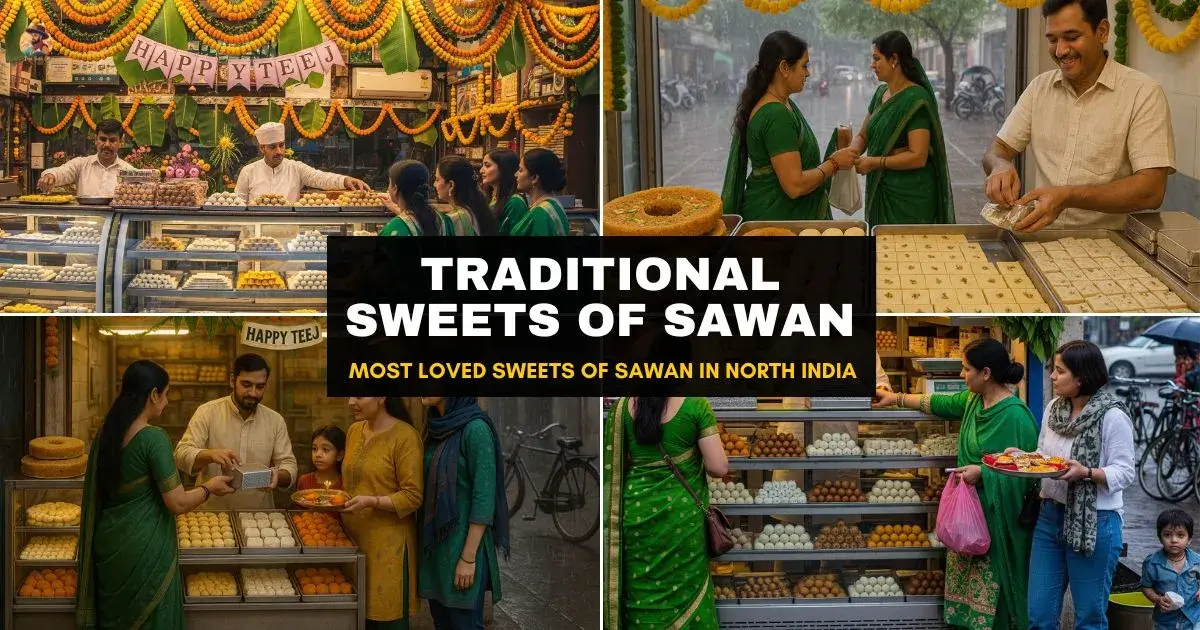
Top Sawan Sweets in North India hold a deep emotional and spiritual value across the region. During this sacred month — from 11 July to 9 August 2025 — sweet shops, temples, and homes come alive with the fragrance of ghee, jaggery, and rosewater.
Wherever I travelled during Sawan — from Sonipat’s sweet lanes to Mathura’s temple bazaars — one thing stayed constant. Sweets were not just part of the ritual. They were the heart of it. Ghevar was gifted on Teej, Peda was offered after Shravan puja, and Barfi was carefully packed for Raksha Bandhan.
In this article, I will share the five most beloved traditional Sawan sweets I experienced firsthand — the ones that brought festivals to life, made fasts sweeter, and left lasting taste memories on my journey through North India.
Why Sawan Sweets Matter So Much in North India’s Festive Culture

There is something about the top Sawan sweets in North India that goes beyond taste. They are part of blessings, of rituals, of small traditions passed down quietly, not written in books, but remembered in kitchens.
I still remember sitting outside a temple in Faridabad on a Shravan Monday, watching a little girl carry a steel tiffin full of Makhana Kheer for her mother’s fast. In Jaipur, I saw a halwai’s hands shake as he gently lifted a tray of Ghevar for a bride’s first Teej. In Sonipat, I held a box of Dudh Wala Ghevar that felt heavier with emotion than sugar.
These are the moments that made me realise — Sawan sweets are not just seasonal. They are spiritual.
📅 Sawan 2025 Calendar
- Start Date: 11 July 2025
- End Date: 9 August 2025
- Key Festivals:
- Shravan Somwar Vrat (Every Monday)
- Hariyali Teej – 27 July 2025
- Raksha Bandhan – 10 August 2025
- Shravan Somwar Vrat (Every Monday)
🎊 Why Sweets Hold Meaning in Every Festival
🟩 Shravan Somwar:

After a day-long vrat, people break fast with light, satvik sweets like Lauki ki Kheer, Singhare ka Halwa, or Panjiri.
I once tasted freshly made Panjiri in Delhi — full of ghee and warmth — and it felt like eating something sacred.
🟨 Hariyali Teej:

Ghevar becomes more than just a dessert. It becomes a tradition gifted to daughters, newlyweds, and sisters.
In Jaipur, I saw women carry decorated baskets with silver-foil Ghevar wrapped like a blessing.
🟦 Raksha Bandhan:

Brothers bring Barfi, Peda, or Motichoor Laddu along with the Rakhis.
In Mathura, I visited Brijwasi Sweets the night before Rakhi — the line was long, but the happiness in every buyer’s eyes said it was worth the wait.
🗺️ Regional Flavours I Experienced Personally
- Rajasthan (Jaipur): Paneer Ghevar at LMB, Sambhar Fini Wala’s experimental Rabri Ghevar
- Uttar Pradesh (Mathura/Lucknow): Peda boxes for Rakhi, Phirni thalis after Somwar puja
- Delhi NCR: Coconut Barfi, MotiChoor laddus, and fresh milk jalebi
- Haryana (Faridabad, Sonipat): Dudh Wala Ghevar, Malpua with Rabri
- Punjab Influence: Kada Prasad and Atte ka Halwa during Sawan Gurudwara visits
In every city I passed through, the traditional sweets of North India showed me something deeper. They are not made to impress the tongue — they are made to honour the season, express devotion, and share love.
That is why Sawan sweets matter. Not because they are sweet, but because they are sacred. Explore more in my guide on Ghevar’s role in Sawan festivals.
1. Ghevar – Teej’s Signature Sweet from Jaipur to Sonipat

I still remember that warm afternoon in Jaipur, walking past Johari Bazaar as the scent of ghee and sugar pulled me toward a glowing tray of Ghevar at LMB. A father stood beside me, carefully picking three paneer ghevars — one each for his daughters’ Teej thali. That moment stayed with me.
Ghevar is not just sweet. It is a ritual. It is how North India begins the Sawan season — by gifting love shaped like a honeycomb.
This flaky, deep-fried disc made of flour, soaked in sugar syrup, is especially made during Hariyali Teej and Raksha Bandhan. Women receive it from their maternal homes as a blessing and a bond. The first bite, dripping with malai or rabri, always tastes like tradition.
🥄 Types of Ghevar You Will See in Sawan
- Plain Ghevar: The classic, honeycomb base without any toppings.
- Malai Ghevar: Topped with fresh cream and sometimes saffron and pistachios.
- Mawa Ghevar: A richer version with solidified milk on top.
- Dudh Ghevar: A local Sonipat and Faridabad twist where ghevar is served soaked in milk and rabri.
🏠 Where Ghevar Tells Its Own Regional Story
- LMB Jaipur – Known for their paneer ghevar, delicate yet firm. It is a Teej essential across Rajasthan.
- Tewari Bros Faridabad – Their thick malai ghevar is creamy, filling, and made fresh every morning in Sawan.
- Shree Shyam Pedawala, Sonipat – Home to the lesser-known dudh wala ghevar, famous for its soft texture and milky soak.
I tasted Ghevar in all three cities. Jaipur’s version feels royal, Faridabad’s hits you with nostalgia, and Sonipat has a raw, homemade warmth that makes you pause. Each version has its voice, and among the Top Sawan Sweets in North India, Ghevar truly speaks from the heart. During Sawan, every voice becomes poetry.
2. Malpua – North India’s Favorite Monsoon Fried Sweet

🍯 My Monsoon Memory with Malpua and Rabri
The smell of ghee was heavy in the air. A priest near a Teej mela stall was flipping thick, golden malpuas straight into a shallow clay bowl. No fancy box, no garnish — just piping hot sweetness soaked in syrup and crowned with a splash of chilled rabri.
That was the first time I understood why malpua is not a regular dessert. It belongs to temples, Teej, and the sacred monsoon.
🌧️ Why Malpua Only Appears in Sacred Moments
You will not find it casually resting in a sweet shop fridge. Malpua comes alive only when the sky turns grey and the bhajan speakers start humming in the background.
In Haryana and Punjab, families still prepare it fresh during Sawan Mondays and Teej. Some temples serve it as bhog, usually topped with thick rabri.
⚖️ Malpua vs Jalebi – Not the Same Sweet
I noticed one thing while eating it in Mathura — malpua is not like jalebi, even though both are fried and sugary. Malpua is dense, soft, and festive. Jalebi is light, crisp, and often casual.
| Sweet | Texture | When It Appears | Best Eaten With |
| Malpua | Soft, spongy | Teej, Shravan Mondays | Rabri or hot milk |
| Jalebi | Crispy, crunchy | Daily + festivals | Curds, lassi, milk |
🧈 Related Punjabi Sweet: Atte ka Halwa / Kada Prasad
During one of my visits to a gurudwara in Faridabad, I was also served Atte ka Halwa, also called Kada Prasad, made from wheat flour, ghee, and sugar. Though not sold in shops, this dish carries deep spiritual value in Sawan, especially in Punjabi homes and Sikh shrines.
📍 Where to Try Malpua During Sawan
- In Faridabad, try Bhagwana Sweets in Sector 16 or old shops in Ballabgarh during Teej
- In Mathura, head to the temple markets near Krishna Janmbhoomi during Shravan Somwar. Many stalls serve it hot with rabri
3. Peda – The Sacred Sweet of Raksha Bandhan & Shravan Mondays

When I think of Sawan sweets, peda is not just a dessert — it is an offering, a promise, a ritual. I still remember visiting a temple in Vrindavan during Shravan Somwar, where small, soft pedas were kept in brass thalis as prasad. Their scent was not of sugar alone — it carried devotion.
🌙 Why Peda Feels Sacred During Sawan
In North India, peda is never just bought for taste. It is bought for moments. During Shravan Mondays, devotees offer it to Shiva temples — especially in towns like Mathura, Vrindavan, and Haridwar.
And when Raksha Bandhan arrives, it is peda again — packed in steel boxes or foil-lined thaalis, handed with rakhis, often by elder brothers who forget to say “thank you” in words but remember to bring sweets home.
It is one of the few sweets in India that is both religious and relational.
🏆 Famous Pedewalas You Must Try
- Gusai Pedewala, Mathura – centuries-old legacy, with that classic grainy, gur-flavored peda only locals know how to appreciate
- Brijwasi Sweets, Vrindavan & Faridabad – soft and creamy style, also available in Rakhi gift boxes
- Shree Radhika Sweets, Mathura – serves Kesar and Elaichi pedas during festive weeks
- In Faridabad, Brijwasi (NIT) and Mohan Sweets (Ballabgarh) often offer limited edition Rakhi pedas in July–August
🪔 More Than Just a Sweet
When I once asked a shopkeeper near Krishna Janmbhoomi, “Why does everyone buy pedas in bulk during Rakhi?”, he smiled and said,
“Rakhi ke din ghar ka taste bhi peda jaisa ho jata hai – shant, meetha, aur purana.”
That line stayed with me.
4. Kheer & Phirni – Creamy Delights for Sawan Fasts & Evenings
When it rains outside and you are observing Sawan vrat inside, only one sweet feels right — kheer. Creamy, light, and comforting, kheer and phirni have always made my Sawan evenings feel a little more special.
🥄 Lauki Ki Kheer – For Sawan Fasting Days

In my home, lauki ki kheer was a Sawan Somwar staple. My mother used to cook it slowly with milk, cardamom, and a hint of desi ghee.
- It keeps your stomach cool during fasting.
- Easy to digest and vrat-friendly.
- Tastes better after chilling for an hour.
Whenever I eat it, even now, I feel like I am sitting on the floor with my cousins during a family puja.
🌰 Makhana Kheer – Light, Nutty, and Protein-Rich

If lauki feels too plain, makhana kheer adds that festive richness.
Makhane (fox nuts) are slow-roasted in ghee, then simmered in milk till soft.
- Perfect for those who want something filling during fasts.
- Packed with protein, calcium, and energy.
- Ideal for kids, elders, and vrat-keeping moms.
It is one of those rare Indian sweets that feels both “shuddh” and luxurious.
🏺 Phirni – Cool, Creamy, and Clay-Pot Special

If kheer is the family dish, phirni is the celebration version.
I tasted my best phirni in Delhi’s Jama Masjid lanes during monsoon. Served in little mitti ki matkis, it had rosewater, chopped pistachios, and a thick, silky texture that stayed cool even on a humid evening.
- Made with ground rice, milk, saffron, and nuts.
- Served cold in clay pots for that earthy fragrance.
- Very popular in Lucknow, Delhi, and Jammu during Sawan evenings.
🟩 Visual Tip:
If you ever get your hands on matki-phirni, take a bite after sunset with a spoon chilled in the fridge.
It melts slowly and gives you that perfect contrast of warmth outside, coolness inside.
5. Barfi – North India’s Festive Gift for Teej and Rakhi
During Sawan, barfi becomes more than just a sweet — it turns into a beautifully wrapped gift of love. Whether it is Teej or Rakhi, no celebration in North India feels complete without these square-shaped tokens of tradition.
🥥 For Teej – Coconut & Saffron Barfi

Teej mornings in our family always began with the smell of nariyal barfi and kesar-infused sweets.
These barfis were light, fragrant, and felt almost sacred, offered to Shiv-Parvati idols before being served to women observing Teej fast.
- Coconut barfi is soft, grainy, and melts easily
- Saffron adds that golden festive aroma
- Often shared with neighbours and family after morning pooja
🧵 For Rakhi – Dry Fruit & Silver-Leaf Barfis

Rakhi barfis are a whole new level of indulgence. I remember opening my gift box last year — silver-leaf kaju barfi next to anjeer-dry fruit blocks that looked too pretty to eat.
- Kaju, pista, and anjeer barfis dominate Rakhi thalis
- Decorated with silver leaf and dry rose petals
- Packed in luxury boxes — starting from ₹350 for 250 grams in Delhi shops
These are not just sweets — they are symbols of love from brothers to sisters.
🏪 Where to Find the Best Barfi in Sawan
Delhi’s Kanwarjis and Gopal Sweets prepare stunning Teej gift boxes, while Radhelal’s in Lucknow and Ram Asrey Sweets are famous for their handcrafted barfis.
Even in Faridabad, old shops near Sector 15 markets do brisk business during the Sawan weeks. In Ballabhgarh, Lal Ved Parkash Halwai’s Khoya Barfi is trusted for its purity and melt-in-mouth taste during Sawan.
📦 Barfi Tip: Always ask for freshly made barfi during Sawan. It tastes softer and stays fresh longer when not made in bulk batches.
Vrat-Friendly & Nutritious Sweets to Eat During Sawan Fasting
During Sawan, especially on Shravan Somwar, the fast is not just spiritual — it is deeply emotional. You give up grains, eat light, and yet, one sweet bite can bring both comfort and strength. These are my go-to vrat sweets that never fail me.
🌰 Singhare Ka Halwa – Warm Strength for Shravan Somwar
In my house, this halwa is always the first thing made before sunrise. Singhare ka atta (water chestnut flour) is roasted in ghee, then thickened with milk or water.
- Feels heavy but is 100% satvik
- Keeps you full till sunset
- Gluten-free and rich in minerals
You will also find this at local sweet shops in Faridabad and Mathura during Sawan.
🥄 Makhana Kheer & Lauki Barfi – Cooling Sweets for the Stomach
Makhana Kheer has become the new vrat favorite for many young families. It is creamy, full of protein, and super light.
Lauki Barfi is made from grated bottle gourd and khoya, and feels almost therapeutic after a hot fasting day.
- Great for kids, elders, and vrat-keeping mothers
- Pair with chilled milk or a banana for extra satiety
🟢 Want to Know More? Jump back to my section on Lauki ki Kheer and Makhana Kheer in Sawan to explore their cooling benefits and family memories.
🪔 Panjiri – Prasad from Delhi to Jammu
Panjiri may look simple, but it is packed with energy. It blends atta, sugar, ghee, gond (resin), and dry fruits.
- Served after evening aarti as Shravan prasad
- Boosts digestion and calms acidity
- Very popular in temples across Delhi and Jammu
My nani used to say: “Fast karo ya na karo, panjiri to har Sawan mein banti hai.”
✅ Pro Tip: Always have these sweets in moderation. They are sacred, nourishing, and keep your Sawan journey soulful and energized.
Other Popular North Indian Sweets Eaten During or Around Sawan
Not every sweet in Sawan is tied to fasting or a ritual. Some are just part of the feeling — when it rains, when cousins visit, when a thali feels incomplete without something sugary and warm. I have eaten most of these not during temples or fasts, but in living rooms, roadside dhabas, and after rakhi thalis — and that makes them even more special.
🍥 Jalebi – That Monsoon Evening Craving with Hot Milk
One Sunday during Sawan, it had just rained and the sky was still grey. A halwai near my street in Faridabad was frying fresh jalebis — golden spirals dancing in hot oil.
We bought ₹20 worth and came home. My mother poured hot milk into a steel glass, and that became our evening snack.
- Jalebi is crisp, sweet, and full of rainy-time memories
- In North India, it is often eaten with milk on Teej or rest days between fasts
- It is that indulgent snack you do not need a reason for
🧈 Balushahi – That Heavier Sweet You Take Just One Bite Of
I always felt balushahi was for grown-ups — thick, flaky, and slow to melt.
Once during Raksha Bandhan, my uncle brought a big red box of mixed sweets. Nobody touched the balushahi till the next day. Then my dadi took a small piece, dipped it in chai, and smiled — “Yeh asli mithai hai.”
- Balushahi is syrup-soaked, buttery, and dense
- It shows up quietly during Sawan but stays long in taste
- More common in Delhi, Mathura, and Haryana families during Teej, return gifts
🍩 Gulab Jamun – Always Waiting at the End of the Feast
After every big Rakhi lunch at my bua’s house, there would be only one dessert that made everyone pause and smile — soft gulab jamuns.
Served hot in small steel katoris, often with a bit of rabri leftover from morning prasad.
- Gulab Jamun is not festival-bound, but Sawan brings it out often
- In Delhi and Faridabad, sweet shops sell saffron-filled ones especially for Rakhi
- It is that sweet you eat last, when the meal is done, but the mood is still warm
🟠 Motichoor Laddu – The Round Sweet of Rakhi Emotions
I remember tying a rakhi to my younger brother, and before he could give me the envelope, my mom would hand him a motichoor laddu to feed me first.
That tiny ritual — brother feeding sister, hands slightly shaking, syrup dripping — stays with me every Sawan.
- Motichoor laddus are often kept in the thali with diya, rakhi, and kumkum
- Orange, soft, and made with tiny boondi soaked in cardamom syrup
- In temples too, they are offered on Shravan Mondays
❄ Gajak – Not a Sawan Sweet, But Still Finds a Place
Gajak belongs to winter. But once on a rainy highway drive to Karnal, we stopped at a roadside stall selling peanut gajak wrapped in old newspaper.
It was sticky, nutty, and perfect with that steaming kulhad chai. Since then, even in Sawan, I associate gajak with road trips and unplanned joys.
- Gajak is made from sesame, jaggery, peanuts, or dry fruits
- Mostly winter sweet, but eaten in monsoon in Rajasthan and Haryana
- Not traditional to Sawan, but it fits the vibe of small, homely indulgences
✅ Final Feeling: These are the kind of sweets you do not plan for — they just find their way into your day when the sky is grey, the house smells of chai, and someone opens that old red sweet box you had forgotten about.
Where to Find the Best Sawan Sweets in North India (2025 Edition)
During my Sawan travels in 2025, I tracked down the most authentic sweet shops that radiate tradition, flavor, and local emotion. Here is your city-wise guide to the heart of Sawan sweetness:
1. Delhi NCR
- Sawan Sweet Shop, Greater Noida – Known for seasonal Thalis loaded with Ghevar and Kheer.
- Bikanervala / Bikanerwala – Classic barfis and Winter, but also launches Sawan specials.
- Kanwarjis (Ashok Vihar) – Raj-style sweets with strong Teej and Rakhi appeal.
- Gopal Sweets (Kamla Nagar) – Snacks and sweets for all festivals rolled into one.
- Bharat Sweet House (Shalimar Bagh) – Perfect for fresh treats with home delivery.
- Jiwaram Sweets (Daryaganj) – A 108-year-old institution known for creamy pedas & seasonal bites.
2. Jaipur
- LMB (Laxmi Mishthan Bhandar) – Paneer Ghevar so light it melts — a Teej icon.
- Sambhar Fini Wala – Experimenting with flavored Ghevar — like rabri or strawberry.
- Anandji Sweets – Local favorite for both Malai Ghevar and saffron-infused barfis.
3. Mathura
- Gusai Pedewala – Loved across the country for its traditional, coarse Gur peda.
- Mohan Misthan Bhandar – Serves thick Phirni and miniature peda thalis.
- Brijwasi Sweets – Known for their Vaishno Devi-style peda and creamy lassi.
4. Lucknow
- Ram Asrey Sweets – Saffron and cardamom pedas with a taste of old Lucknow.
- Radhelal’s – Offers shahi barfis and summer cooling desserts.
- Chhappan Bhog – Packed festive gift boxes with Malpua, Kheer, and sweets.
- Madhurima Sweets – Famous for Ghevar and infused phirni.
- Neelkanth Sweets – A mix of modern packaging with classic sweetness.
5. Faridabad
- Tewari Brothers – Their thick Malai Ghevar is a must-try during Sawan.
- Om Sweets & Snacks – Known for their seasonal Thalis and Barfi boxes.
- Sohan Sweets – A family favorite for Gulab Jamun and laddus.
- Bhagwana Sweets – Home-style peda and rabri in steel plates for fasts.
- Lal Ved Parkash Halwai – Famous for pure Khoya Barfi that tastes like tradition in every bite.
6. Sonipat
- Shree Shyam Pedawala – Famous for that creamy Dudh Wala Ghevar only in monsoon.
- Om Maturam Halwai – Known for fresh, ghee-packed traditional sweets.
- Rahul Dairy & Sweets – A hidden gem for boondi laddus and milk-based barfis.
🎯 Pro Tip for Readers
These sweets shops sometimes prepare Sawan-only varieties for Teej or Rakhi. Try to visit during Shravan Somwar or Teej mornings. Remember to ask for fresh lots or “abhi fry hua flag” items for the best taste.
🟢 Related Guides to Explore Sawan’s Sweet Traditions:
- For Ghevar stories and shops: Best Ghevar Shops in Delhi, Jaipur, and Faridabad (Coming Soon)
- To learn more about Teej & Rakhi traditions: Ghevar in Teej & Rakhi – the full guide
For Foreign Visitors – How to Try Sawan Sweets Safely in North India
If you are a foreign tourist visiting North India between July and August, you will notice a special buzz — women in green sarees, monsoon skies, and sweet shops stacked with colorful, rich desserts. This is the Sawan season, a sacred Hindu month linked to fasting, festivals, and food.
During this time, sweets like Ghevar, Malpua, and Peda are not just snacks — they are symbols of rituals and emotions.
Here are some friendly tips to enjoy them safely and respectfully:
- 🍬 Start with popular shops: Places like LMB in Jaipur, Bikanervala in Delhi, and Brijwasi in Mathura are clean, English-friendly, and trusted by locals.
- 🥄 Try small portions first: Indian sweets are rich. Ask for “one piece” or a tasting sample. Most shopkeepers are happy to help.
- 🚫 Check ingredients: Many sweets are vegetarian (eggless), but contain milk, ghee, or nuts. If you have allergies, say “No milk” or “No nuts” clearly.
- 🙏 Temple prasad: Sometimes sweets like Peda are offered free at temples as a spiritual blessing. Accept with your right hand, and eat only if you are comfortable.
- 💧 Drink bottled water and avoid pairing heavy sweets with raw street food to stay healthy.
If you want a sweet story to take home, ask locals what their favorite Sawan sweet is and why. You might end up with a plate — and a memory.
Conclusion – Why Sawan Sweets in North India Are Sacred & Timeless
Top Sawan sweets in North India are not just festive treats — they are memories of home, rituals, and rain. From Sonipat’s Dudh Wala Ghevar to Rakhi-day peda in Mathura, each bite holds a story. This Sawan, support your local halwai, taste the traditions, and feel the festivals through every sweet.
Whether you are fasting on Shravan Somwar, celebrating Teej, or tying a Raksha Bandhan rakhi, these traditional sweets of Sawan turn each moment into something sacred. Do not just eat them — feel them, share them, and pass them on like blessings.
🔗 Keep Exploring:
- Ghevar – Sawan Sweet of North India
- Ghevar in Teej & Raksha Bandhan – More Than Just a Sweet
- Best Ghevar Shops – Delhi, Jaipur, Sonipat (Coming Soon)
- Make Ghevar at Home – Step-by-Step Recipe (Coming Soon
FAQs – Real Questions People Ask About Sawan Sweets
In North India, Ghevar, Malpua, Peda, Kheer, Phirni, and Barfi are the most loved Sawan sweets. Ghevar is deeply linked with Teej and Raksha Bandhan, while Malpua and Peda are seen as sacred and festive.
Mostly, yes. Ghevar is a seasonal sweet, and you will find the best quality during Sawan (July–August). Some shops sell it year-round, but during Sawan, it is fresh, special, and full of festive meaning — especially in Jaipur, Sonipat, and Delhi.
If you are near Haryana, head straight to Shree Shyam Pedawala in Sonipat. Their Dudh Wala Ghevar is thick, soaked, and unforgettable. You can also try Rahul Dairy & Sweets or Om Maturam Halwai in the same area.
Yes, but only if made with satvik ingredients. During fasts, avoid sweets with refined flour or processed sugar. Look for coconut barfi, lauki ki barfi, or peda offered as prasad in temples. Always ask if the sweets are “vrat-friendly” before buying.
Siblings usually exchange dry fruit barfi, motichoor laddu, peda, and special Teej Ghevar as part of their Rakhi tradition. Many families now create custom boxes with saffron barfi, silver-leaf sweets, and sugar-free options too.
You can order from trusted shops like:
Bikanervala, Kanwarjis, Gopal Sweets (Delhi NCR)
LMB Jaipur, Anandji Sweets, Sambhar Fini Wala (Jaipur)
Look for listings on Zomato, Swiggy, or directly on their websites during Sawan.

Hi, I am Manoj Kumar, the voice behind Trip Guru Go. I am a travel researcher, SEO content expert, and founder of this blog. With over 12 years of experience in digital travel research, I simplify complex destinations into real, helpful, and trustworthy guides.
Every article I write is backed by local sources, real traveler experiences, and deep fact-checking. Even if I have not visited every place personally, I never share anything without strong on-ground insight.
I do not sell travel packages or promote anything paid. My only goal is to help you travel smarter — with zero fluff, 100% honesty, and a deep focus on your safety and experience.