Yamuna Biodiversity Park Delhi stands on the Yamuna floodplain in North Delhi as a large ecological restoration park. I often recommend this biodiversity park in Delhi to travelers who want a quiet nature experience inside the city. The Delhi Development Authority created the park to repair damaged river ecosystems and protect native plants, wetlands, and bird habitats. If you are wondering what the Yamuna Biodiversity Park is, it works as a conservation project that carefully restores the natural environment of the Yamuna basin.
When I first walked into the park, it felt very different from a normal city garden. Wetlands, tall grasses, and mud trails replace the usual concrete paths, and the sound you notice most often is birds calling across the water. The area around Burari and Wazirabad may look ordinary from the outside, but the environment changes quickly once you enter the park. This calm setting makes Yamuna Biodiversity Park Delhi, a peaceful spot for nature walks and birdwatching in North Delhi. If you enjoy exploring nature parks like this, you can also discover other beautiful parks and gardens in Delhi that offer quiet walking trails and natural landscapes.
What is Yamuna Biodiversity Park?
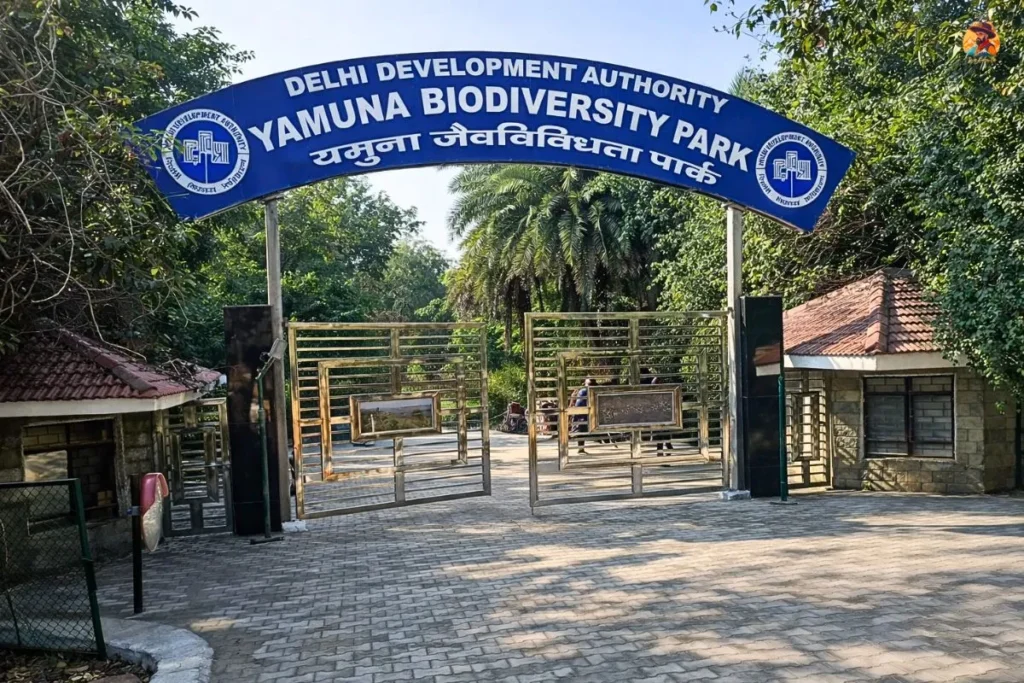
The Delhi Development Authority developed the Yamuna Biodiversity Park (YBP Delhi) as an ecological restoration park on the Yamuna floodplain in North Delhi. The park spans nearly 457 acres of restored landscape and focuses on restoring the Yamuna River’s natural ecosystem. If you are wondering what the Yamuna Biodiversity Park is, it is not a typical city garden but a conservation space designed to rebuild damaged river habitats.
The Delhi Development Authority (DDA) developed the project with scientific support from Delhi University. The main goal was to restore the flora and fauna of the Yamuna basin, which had gradually disappeared due to urban expansion and pollution. The full form of YBP is Yamuna Biodiversity Park, a name commonly used for this urban conservation project in Delhi.
The purpose of the Yamuna Biodiversity Park includes:
- Restoring wetlands and natural floodplain habitats
- Protecting native plants and migratory bird species
- Supporting biodiversity research and environmental education in Delhi
When I walk along the park trails, the place feels closer to a natural wetland reserve than a landscaped city park.
Why Yamuna Biodiversity Park is Important for Delhi
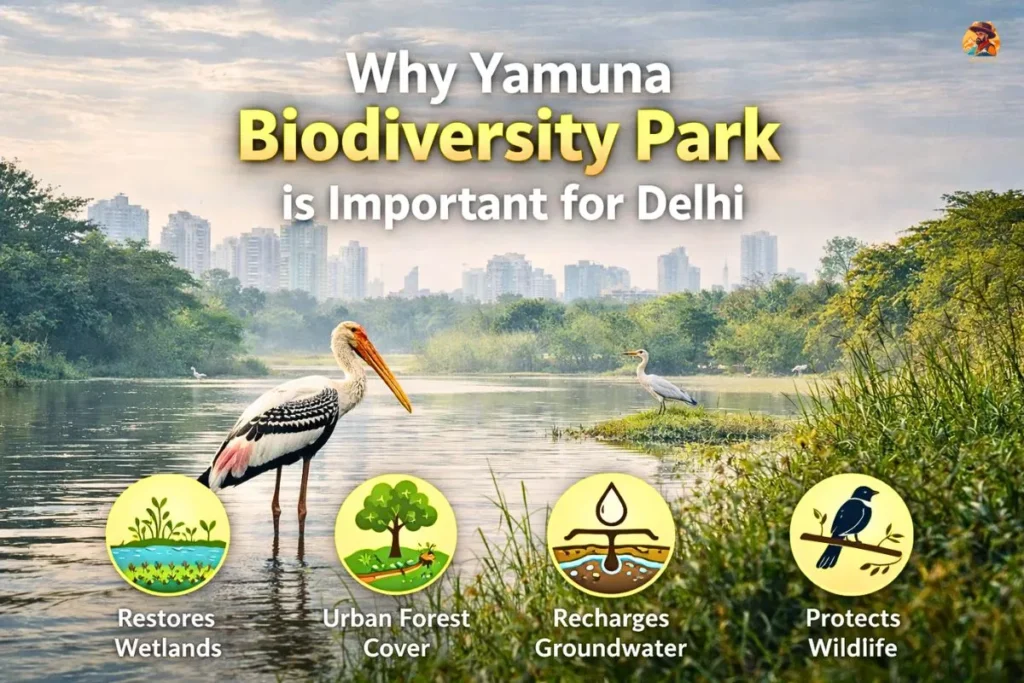
Yamuna Biodiversity Park Delhi is not just a peaceful green space. It helps repair damaged ecosystems along the Yamuna floodplain. If someone asks what the use of a biodiversity park is, the simple answer is that it helps restore nature inside a crowded city and protects local wildlife.
The park plays an important role in Delhi in several ways:
- Ecological restoration of the Yamuna: Wetlands and floodplain habitats have been rebuilt to support natural ecosystems.
- Urban forest development: Native trees and plants create a natural green cover in North Delhi.
- Groundwater recharge in Delhi: Wetlands help rainwater slowly soak into the soil and support underground water levels.
- Carbon sequestration in cities: Plants and trees absorb carbon dioxide and help improve air quality.
- Wildlife in Delhi: The park provides a safe habitat for birds, butterflies, and small animals.
People often call Yamuna Biodiversity Park the green lungs of North Delhi because it helps balance the city’s environment and protects biodiversity.
What You Can See Inside Yamuna Biodiversity Park
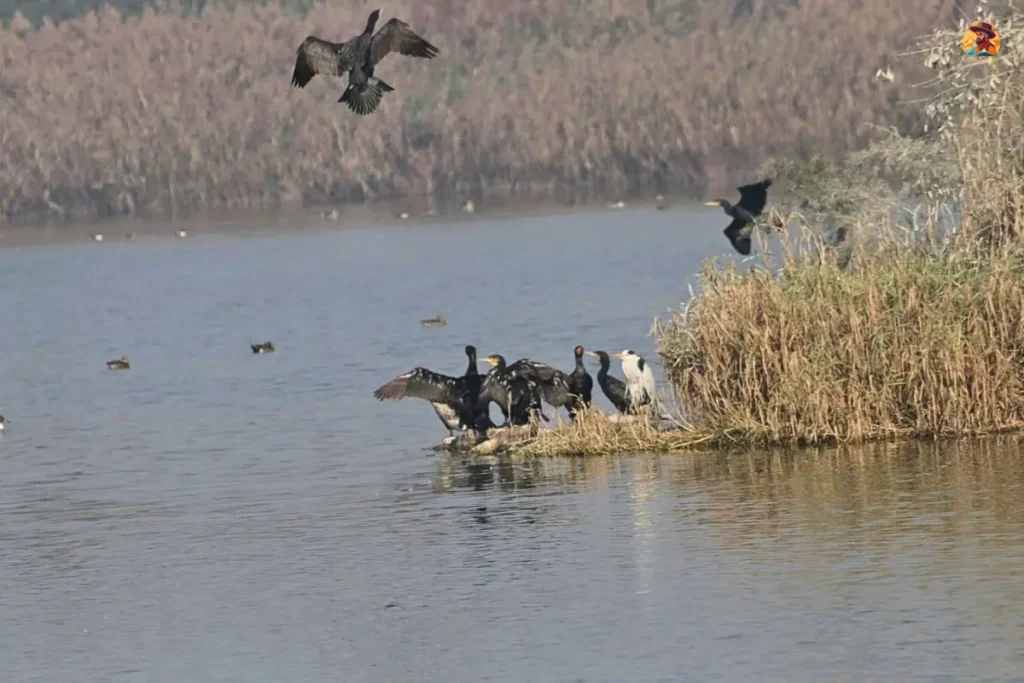
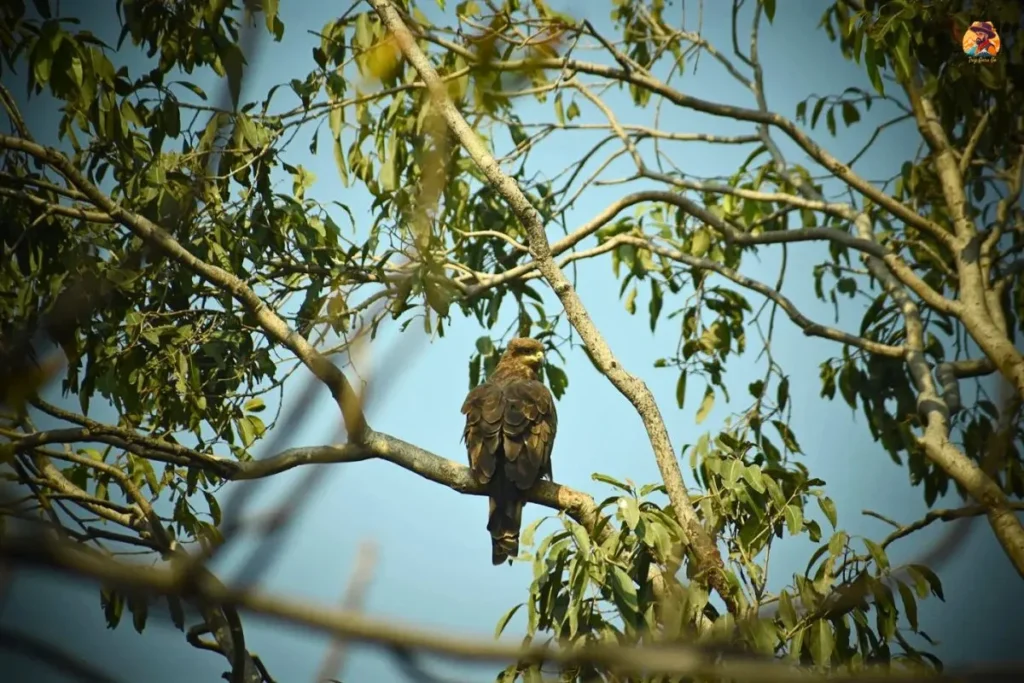
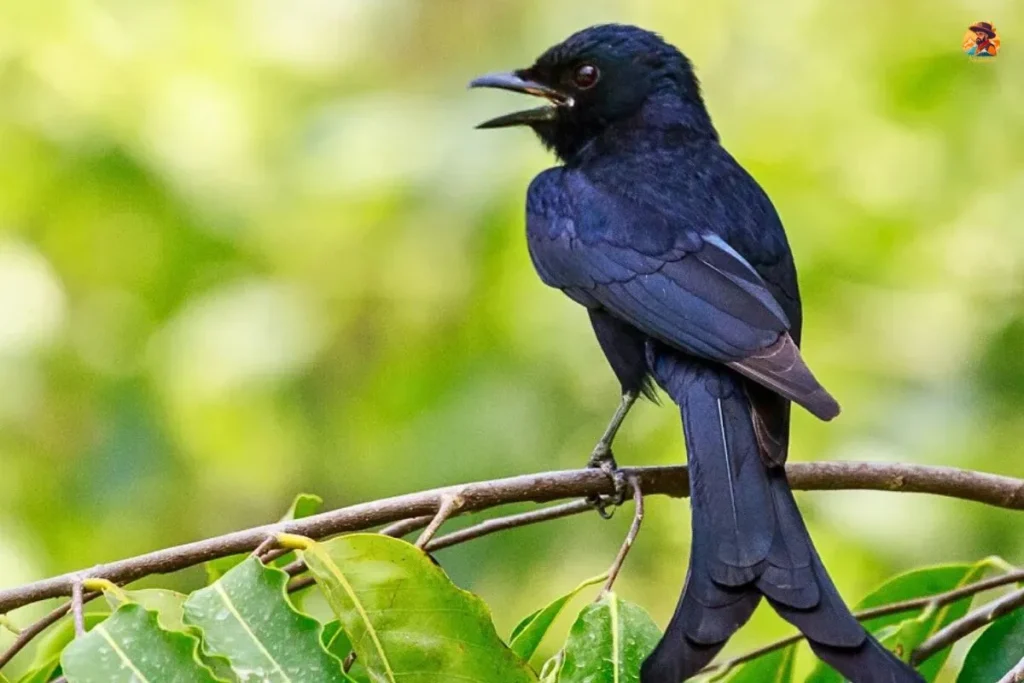
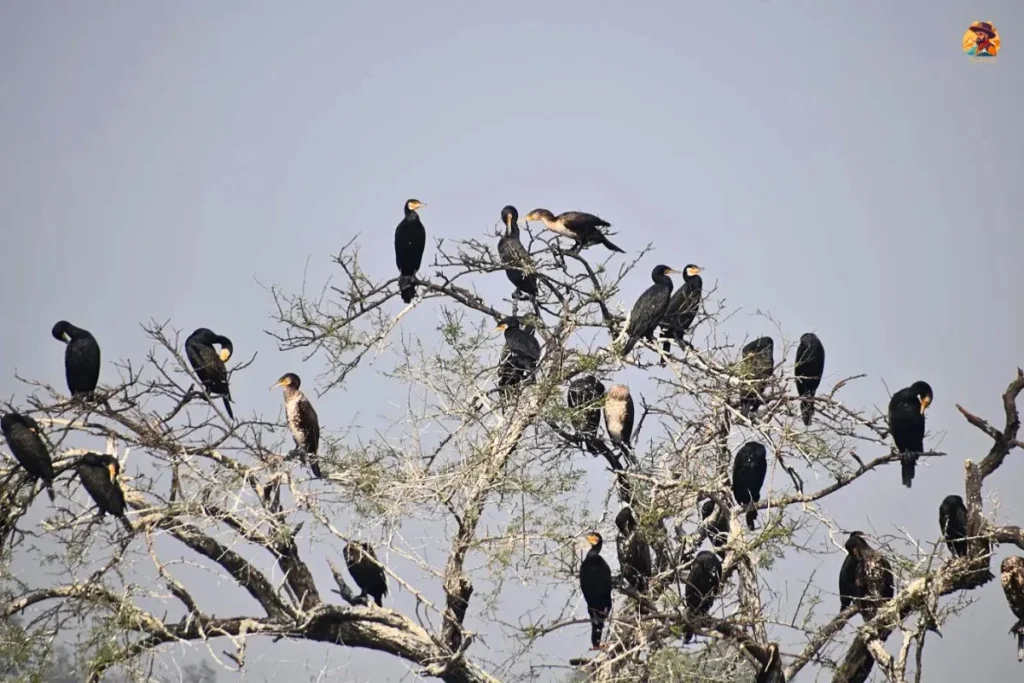
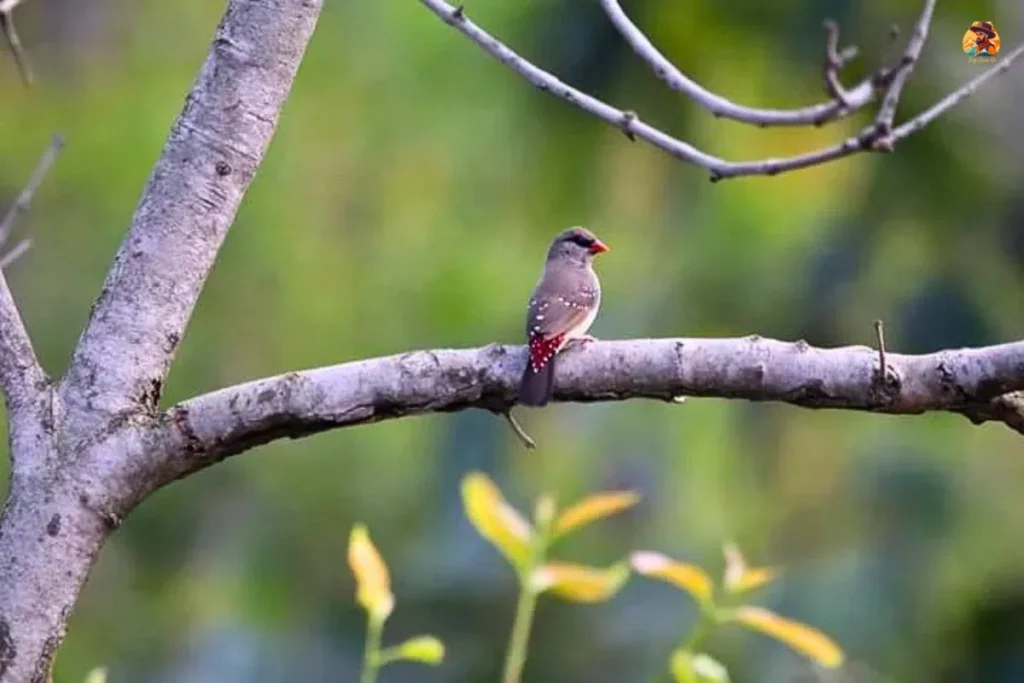
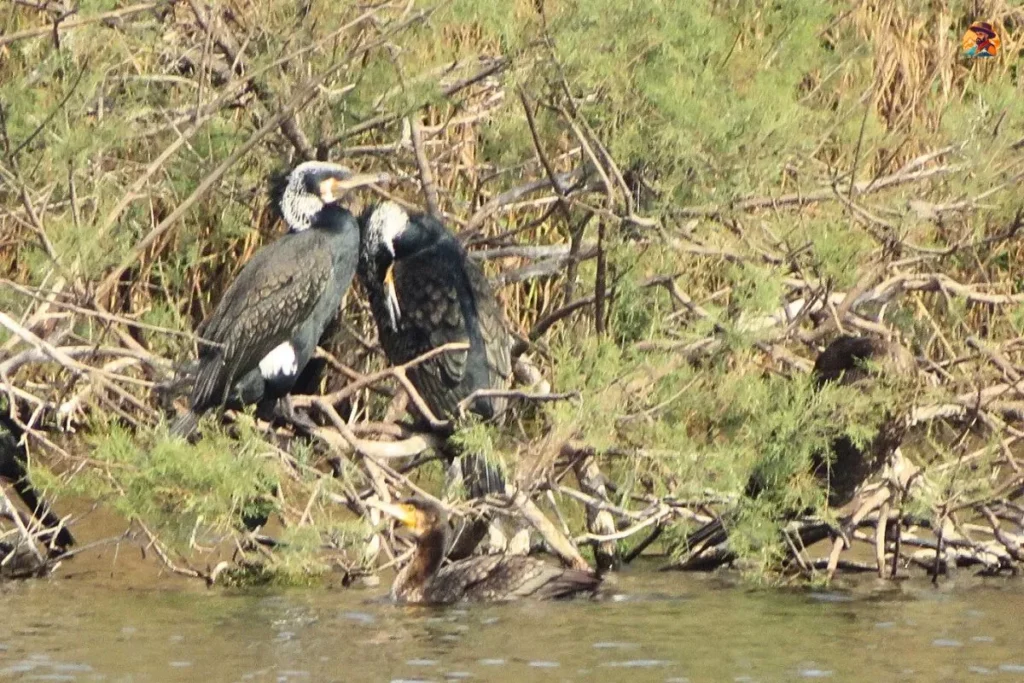
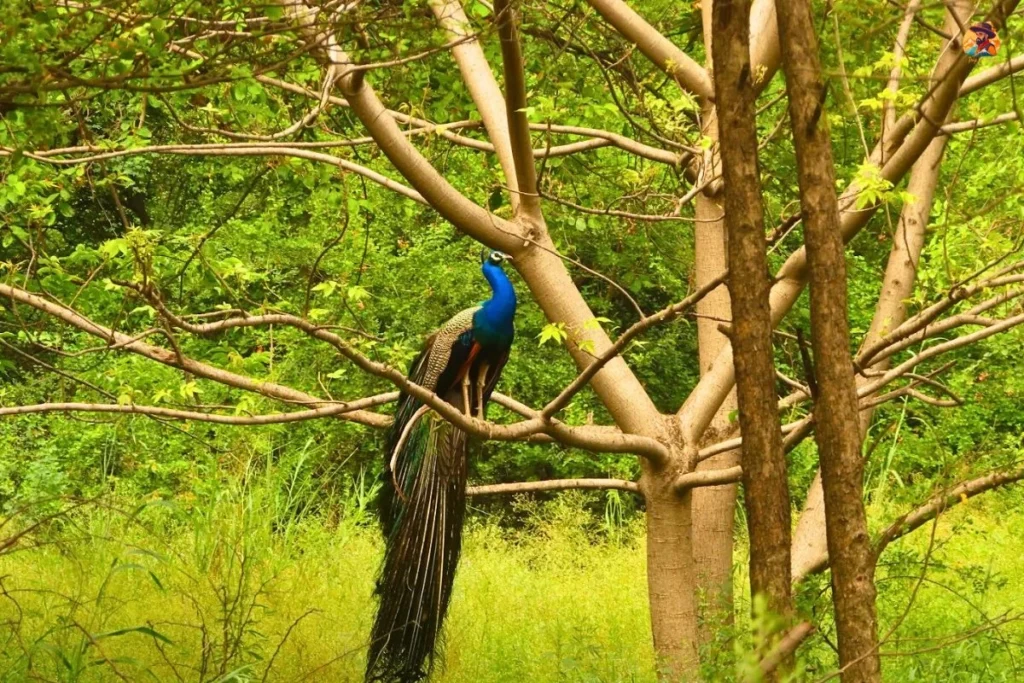
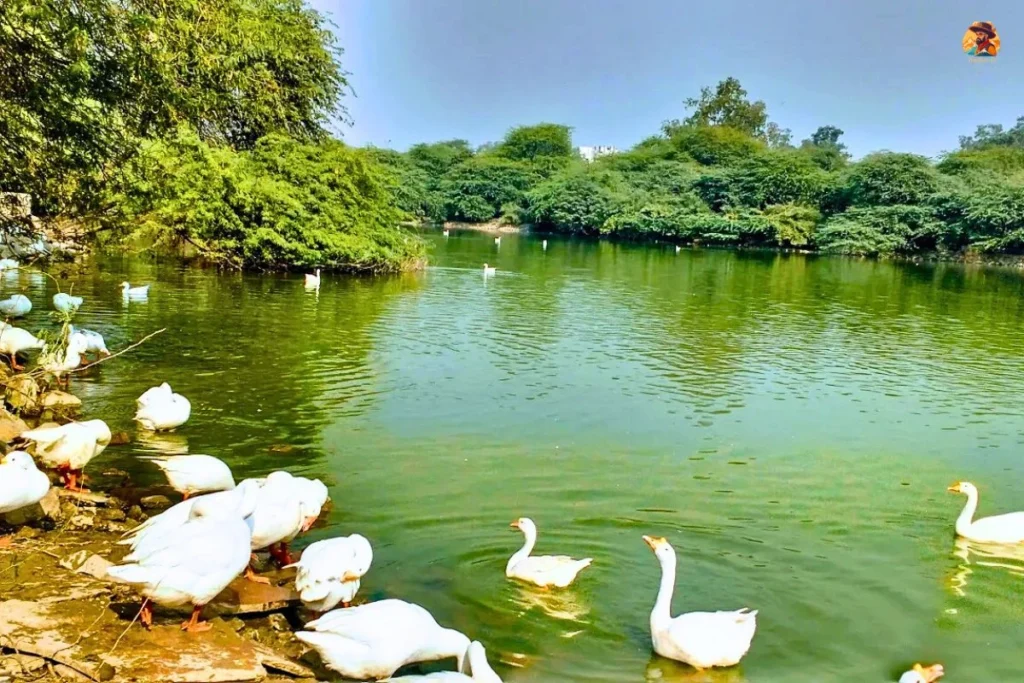
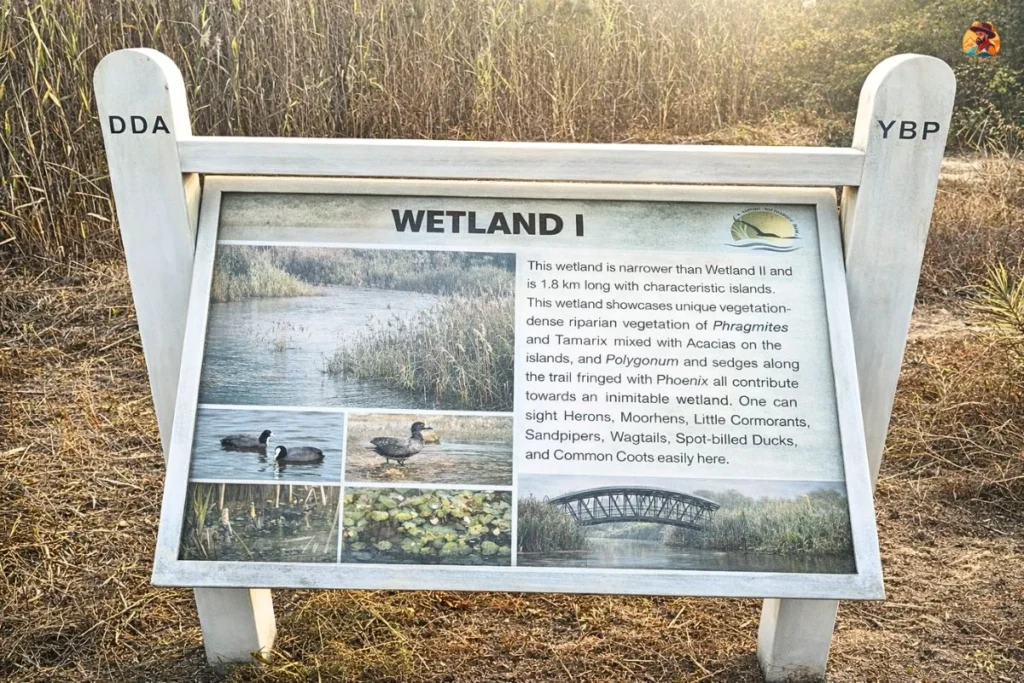
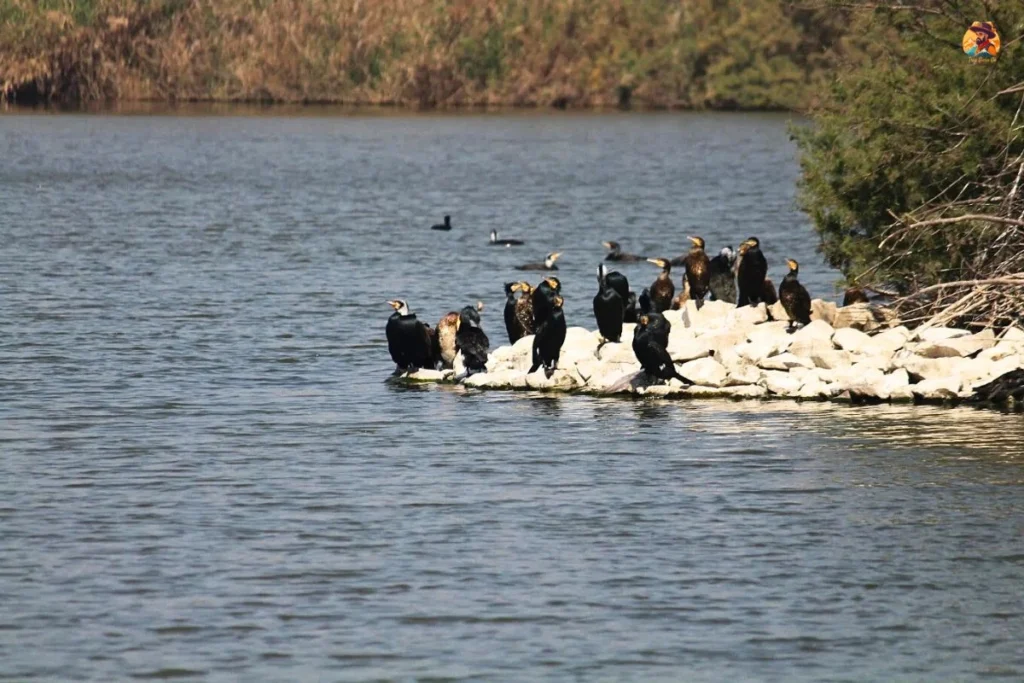
When I walk inside Yamuna Biodiversity Park Delhi, the place feels closer to a natural wetland reserve than a typical city park. Instead of landscaped lawns and picnic areas, the park protects real habitats where birds, plants, and insects live naturally. If you walk slowly along the trails, you start noticing the biodiversity of the Yamuna floodplain around you.
Birds and Migratory Species
Yamuna Biodiversity Park has become a popular birdwatching spot near Wazirabad and an important location for migratory birds in Delhi, especially during winter.
You may notice:
- Herons and egrets near the wetlands
- Ducks and seasonal migratory birds such as the Red-crested Pochard
- Quiet areas that photographers often use for nature photography
Early morning usually gives the best chance to observe birds calmly.
Wetlands and Yamuna Floodplain Ecosystem
Restored wetlands make up a large part of the park and represent the natural Yamuna floodplain ecosystem.
These wetlands help:
- Support aquatic insects and bird habitats
- Restore natural river landscapes that were once damaged
- Create important wetlands in North Delhi
Plants, Butterflies, and Small Wildlife
The park also protects the flora and fauna of the Yamuna basin, including native grasses, shrubs, and trees that once grew naturally along the river.
Inside the park, you may notice:
- A small butterfly conservatory in Delhi, where butterflies gather around flowering plants
- Native vegetation attracts insects and pollinators
- Occasional signs of wildlife in Delhi, mostly birds and small animals that use the park as a habitat
The biodiversity here quietly shows how a damaged river landscape can recover when people give nature time and protection.
Visitor Zone vs Nature Reserve Zone
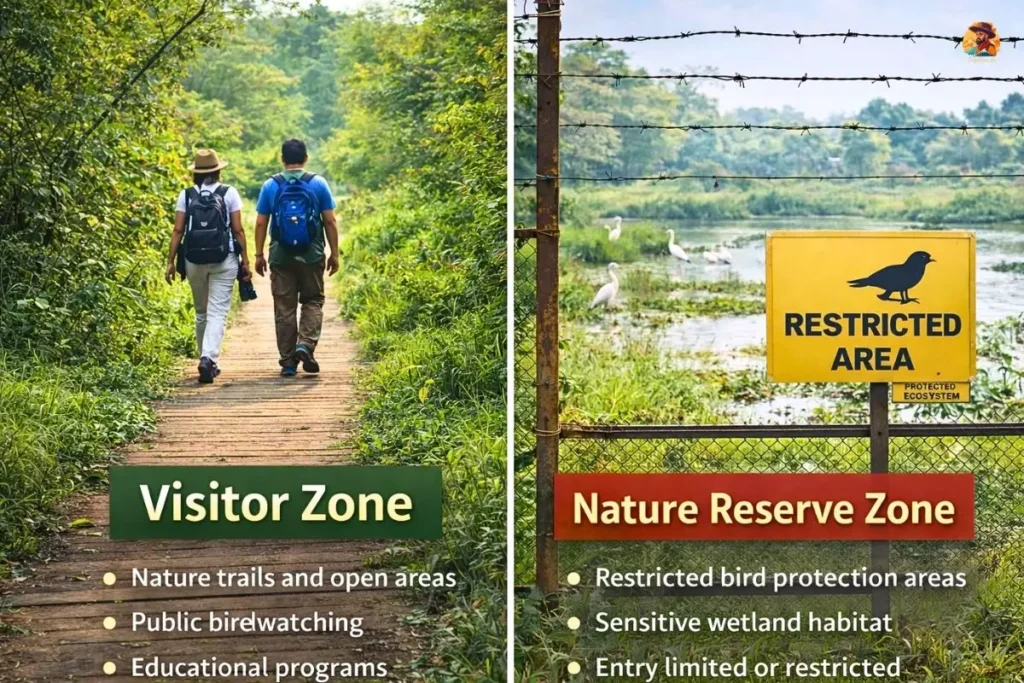
When I first explored Yamuna Biodiversity Park in Delhi, I realized that the park has two different areas. Many visitors assume the entire park allows free walking, but that is not the case. One section welcomes visitors for nature walks, while the other section protects wildlife and wetlands as a biodiversity conservation area.
Visitor Zone
The Visitor Zone is the part of the park where most people spend their time. This area is open for visitors and helps people understand the restored ecosystem of the Yamuna floodplain.
Here you will find:
- Nature Trails For Walking And Birdwatching
- Educational Visits And Nature Awareness Programs
- Open Areas Where Visitors Can Observe Wetlands And Birds
This section allows visitors to experience the park while keeping sensitive habitats safe.
Nature Reserve Zone
The second part of the park is the Nature Reserve Zone, which works as a protected nature reserve zone in Delhi. Entry in this area is usually restricted because it focuses on wildlife protection and wetland conservation.
In this zone:
- Restricted Areas Created To Protect Sensitive Habitats
- Bird Conservation Zones For Migratory And Water Birds
- Wetland Ecosystems That Support Aquatic Life
This system helps Yamuna Biodiversity Park balance tourism and conservation. Visitors can explore nature while the fragile ecosystems remain protected.
Yamuna Biodiversity Park Timings and Entry Fee
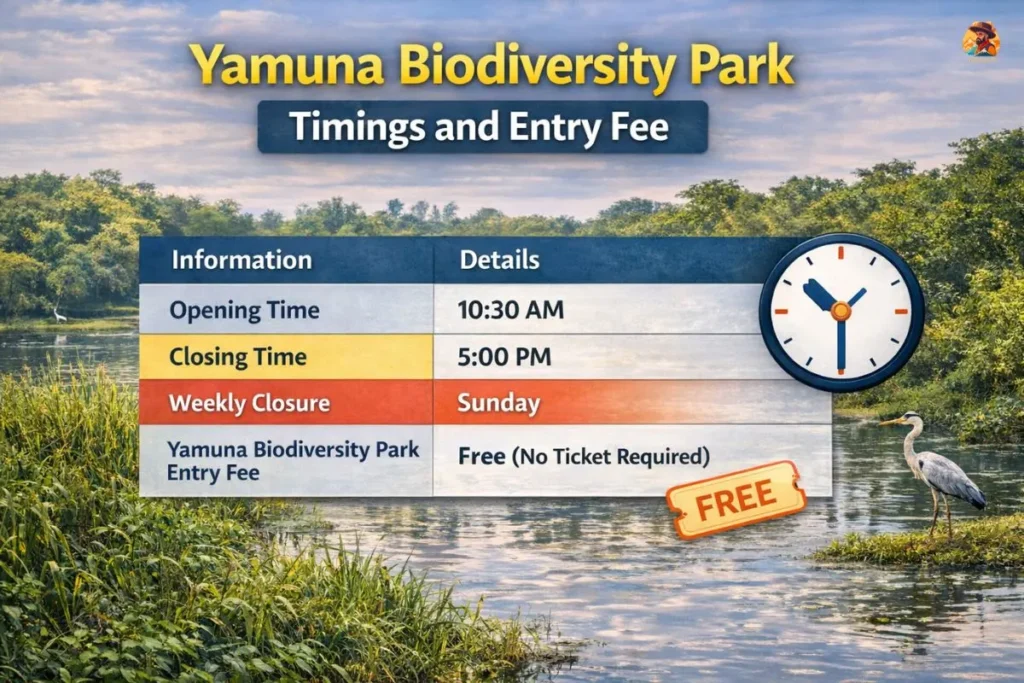
Before planning your visit, it helps to know the Yamuna Biodiversity Park timings and entry rules. I noticed that park authorities strictly follow visiting hours to protect bird habitats and wetlands.
| Information | Details |
| Opening Time | 10:30 AM |
| Closing Time | 5:00 PM |
| Weekly Closure | Sunday |
| Yamuna Biodiversity Park Entry Fee | Free (No Ticket Required) |
The Yamuna Biodiversity Park entry fee is free, and visitors can explore the visitor zone without buying a ticket.
Sometimes the park also organizes guided nature walks and educational visits. These tours may require prior booking or permission, especially for school groups or research visits. Timings and rules may occasionally change depending on park management.
Entry Rules, Booking and Visitor Guidelines
Yamuna Biodiversity Park Delhi follows a few important biodiversity park rules to protect wetlands and wildlife. During my visit, I noticed that park authorities display these visitor guidelines near the entry area. The park does not serve as a picnic spot, so following these rules helps protect the ecosystem.
Guided Nature Walk Booking
The park sometimes organizes guided nature walks and educational visits to explain the Yamuna floodplain ecosystem.
- Registration Required For Guided Tours
- Educational Tours For Schools And Institutions
- Group Visit Permission Needed For Large Groups
In some cases, visitors must arrange guided tour bookings at YBP in advance.
Rules and Do’s & Don’ts
Visitors should follow simple biodiversity park rules during their visit.
- Plastic-Free Zone – Avoid Carrying Plastic Waste
- Avoid Loud Noise – Loud Sounds Can Disturb Birds
- Do Not Disturb Wildlife – Avoid Chasing Birds Or Animals
- Follow Photography Guidelines Near Wetlands
These guidelines help protect the fragile ecosystem of Yamuna Biodiversity Park.
How to Reach Yamuna Biodiversity Park
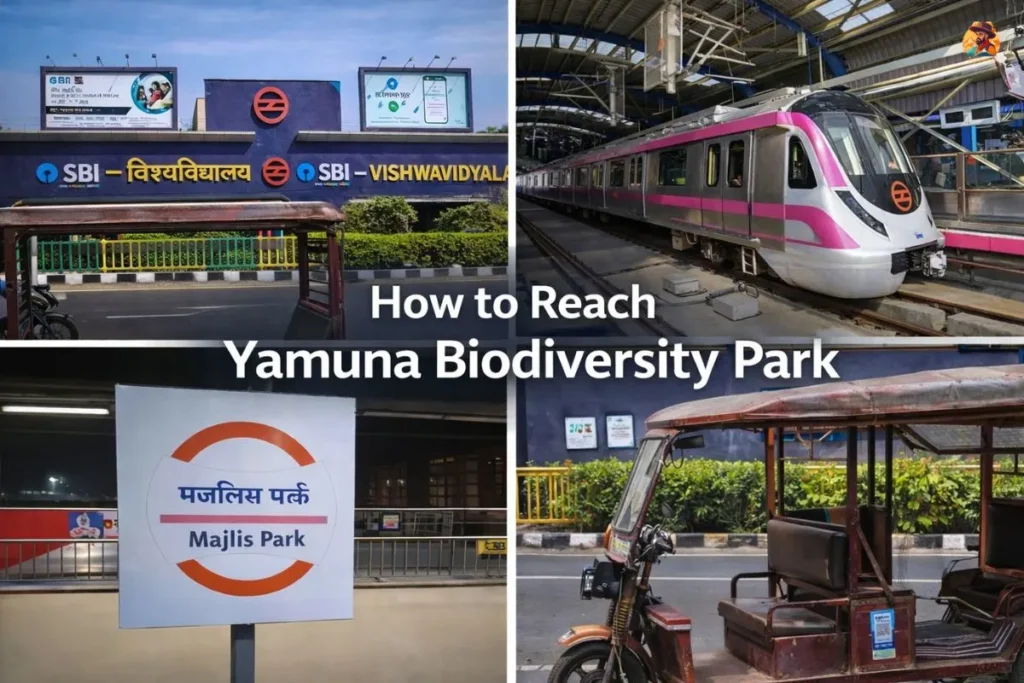
When I visited Yamuna Biodiversity Park in Delhi, I found that reaching the park is quite simple using the Delhi Metro, followed by a short auto ride. The park sits along the Yamuna floodplain between Burari and Wazirabad in North Delhi.
Nearest Metro Station
The Yamuna Biodiversity Park nearest metro stations are:
- Majlis Park Metro Station (Pink Line) – Closest and most convenient option
- Vishwavidyalaya Metro Station (Yellow Line) – Popular choice for visitors coming from Central or South Delhi
Last Mile Connectivity
From the metro station, the park entrance is only a short ride away.
- E-Rickshaws and Autos Available Outside Both Stations
- Estimated Fare: ₹20–₹50
- Travel Time: About 10–15 Minutes
Location in Burari and Wazirabad
The park is located near Jagatpur Village in Burari, close to the Wazirabad side of North Delhi.
- Yamuna Biodiversity Park Burari – Common entry side
- Yamuna Biodiversity Park Wazirabad – Nearby landmark
- Jagatpur Village Burari – Helpful location reference
Reaching from Noida or NCR
Some people search for “Yamuna Biodiversity Park Noida,” but the park is actually located in North Delhi. Visitors from Noida or other NCR areas usually reach Majlis Park or Vishwavidyalaya metro station and then take a short auto ride to the park.
Traveler Note:
If you plan to drive your own vehicle, basic parking is available near the entry gate. I usually prefer the metro because traffic around Wazirabad can get slow during peak hours.
Visitor Facilities at Yamuna Biodiversity Park
Yamuna Biodiversity Park Delhi, keeps its facilities simple because the main focus is ecological conservation. Visitors should not expect the typical amenities of large city parks. However, a few visitor facilities at this biodiversity park make short nature walks comfortable.
Main nature park Delhi facilities include:
- Nature Interpretation Centre (NIC): Located near the entrance, this center explains the biodiversity of the Yamuna basin through displays and educational panels.
- Washrooms: Basic washrooms are available near the entry area.
- Drinking Water: Drinking water points are available, but carrying your own water bottle is a safer option.
- Seating Areas: Small benches and resting spots line some of the walking trails.
- Refreshments: A small snack counter may be available near the entrance for basic snacks or drinks.
Carry water and wear comfortable walking shoes before starting your nature walk, since facilities inside the park remain limited.
Best Time to Visit Yamuna Biodiversity Park
The best time to visit Yamuna Biodiversity Park Delhi is during the cooler months when the wetlands become active with birds and walking conditions feel comfortable. Seasonal changes affect wildlife activity across the Yamuna floodplain.
The most suitable time to visit is:
- October to March: Pleasant weather for a relaxed nature walk in North Delhi.
- November to February: Peak season for migratory birds and birdwatching.
- Early Morning: Best time to explore the wetlands and quiet birdwatching spots near Wazirabad.
During winter, the park becomes one of the calm birdwatching areas in North Delhi, while other seasons still offer butterflies, insects, and seasonal plants across the wetlands.
Nearby Places to Visit Near Yamuna Biodiversity Park
After exploring Yamuna Biodiversity Park Delhi, you can visit a few nearby spots in North Delhi that add history, culture, and more nature to your day.
Some nearby places worth exploring include:
- Yamuna Ghat: A calm riverside stretch near the Yamuna where locals often come for sunrise walks and quiet views of the river.
- Coronation Park (Burari): A large historical ground where the famous Delhi Durbar ceremonies took place during British rule. It is one of the open green spaces near Burari.
- Majnu Ka Tilla (Tibetan Colony): Located near Vishwavidyalaya, this area is popular for Tibetan food, cafes, and small markets. Many visitors stop here after a nature walk.
- Kamla Nehru Ridge (Northern Ridge): About 15–20 minutes away, this forested ridge is known for birdwatching trails and historical landmarks.
- Aravali Biodiversity Park Gurgaon: Another major nature park in NCR. Many travelers search for Aravali Biodiversity Park in Gurgaon, photos before planning a visit, because of its forest trails.
Travel guides often list these spots among the best places to visit in Burari and North Delhi, especially for travelers who enjoy nature and quiet outdoor spaces.
Where to Eat Near Yamuna Biodiversity Park
Since the park has limited food facilities, many visitors prefer eating nearby. Majnu Ka Tilla, about 15–20 minutes away, is popular for Tibetan cafes and street food. You can find small local eateries around Burari and Wazirabad, and some vendors also sell basic snacks near the park entrance.
Final Thoughts on Yamuna Biodiversity Park Delhi
Yamuna Biodiversity Park Delhi quietly shows how a damaged river landscape can recover when people protect and restore nature. This biodiversity park in Delhi plays an important role in rebuilding the Yamuna floodplain ecosystem and providing a safe habitat for birds, wetlands, and native plants.
In a busy city like Delhi, such green spaces have become rare. For nature lovers, photographers, and birdwatchers, the park offers a peaceful escape from traffic and crowds. If you are looking for a calm nature walk in North Delhi or a quiet birdwatching experience near the wetlands, Yamuna Biodiversity Park remains one of the most refreshing places to explore.
FAQs About Yamuna Biodiversity Park
Yamuna Biodiversity Park Delhi is a large ecological restoration area located on the Yamuna floodplain in North Delhi. The park protects wetlands, grasslands, and native plants while providing a safe habitat for birds and other wildlife.
The full form of YBP is Yamuna Biodiversity Park. It refers to the conservation park created to restore the natural ecosystem of the Yamuna River basin.
A biodiversity park helps protect natural ecosystems and support wildlife. It restores damaged landscapes, conserves native plants and animals, and provides educational spaces where people can learn about environmental conservation.
The usual Yamuna Biodiversity Park timings are:
Opening Time: 10:30 AM
Closing Time: 5:00 PM
Weekly Closure: Sunday
Timings may change depending on park management.
No, the Yamuna Biodiversity Park entry fee is free. Visitors can explore the visitor zone without buying a ticket, though guided nature walks may require prior permission.
The nearest metro stations to Yamuna Biodiversity Park are:
Majlis Park Metro Station (Pink Line)
Vishwavidyalaya Metro Station (Yellow Line)
From there, the park entrance is about 10–15 minutes by auto or e-rickshaw.

Hi, I am Manoj Kumar, the voice behind Trip Guru Go. I am a travel researcher, SEO content expert, and founder of this blog. With over 12 years of experience in digital travel research, I simplify complex destinations into real, helpful, and trustworthy guides.
Every article I write is backed by local sources, real traveler experiences, and deep fact-checking. Even if I have not visited every place personally, I never share anything without strong on-ground insight.
I do not sell travel packages or promote anything paid. My only goal is to help you travel smarter — with zero fluff, 100% honesty, and a deep focus on your safety and experience.