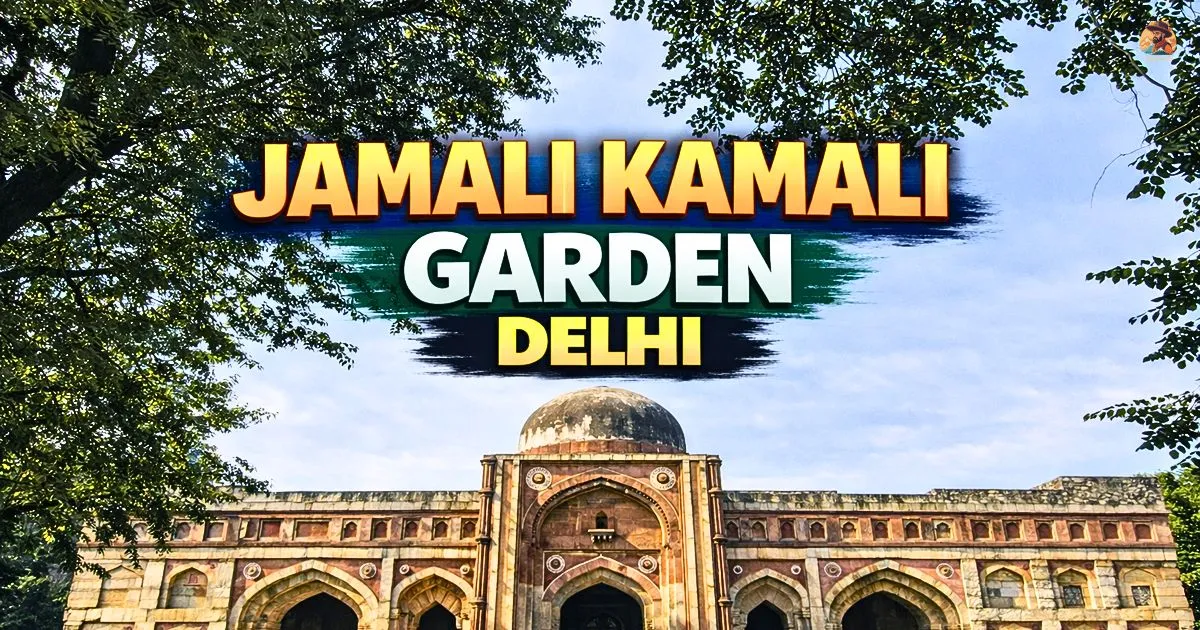
The first time I walked into Jamali Kamali Garden in Delhi, I expected just another quiet monument behind Qutub Minar. Jamali Kamali Garden, officially known as Jamali Kamali Mosque and Tomb, is a 16th-century monument inside Mehrauli Archaeological Park. Within minutes, the traffic noise faded, and I stood inside a small courtyard that felt unexpectedly still. If you are searching for Jamali Kamali ticket price, the nearest metro station, or the truth behind the Jamali Kamali haunted story and love story, I will explain everything clearly and simply.
Jamali Kamali is part of the larger Mehrauli Archaeological Park, a 200-acre heritage zone in South Delhi that holds dozens of monuments within walking distance. If you are exploring peaceful green spaces in the city, you can also check our detailed guide on parks and gardens in Delhi for more calm spots like this. Jamali Kamali Garden is not grand or dramatic, but it gives you something many famous monuments no longer offer. You get space to slow down without heavy crowds. If you enjoy quiet heritage spaces away from the heavy tourist rush, this place will genuinely surprise you.
What Is Jamali Kamali Garden and Why Is It Famous?
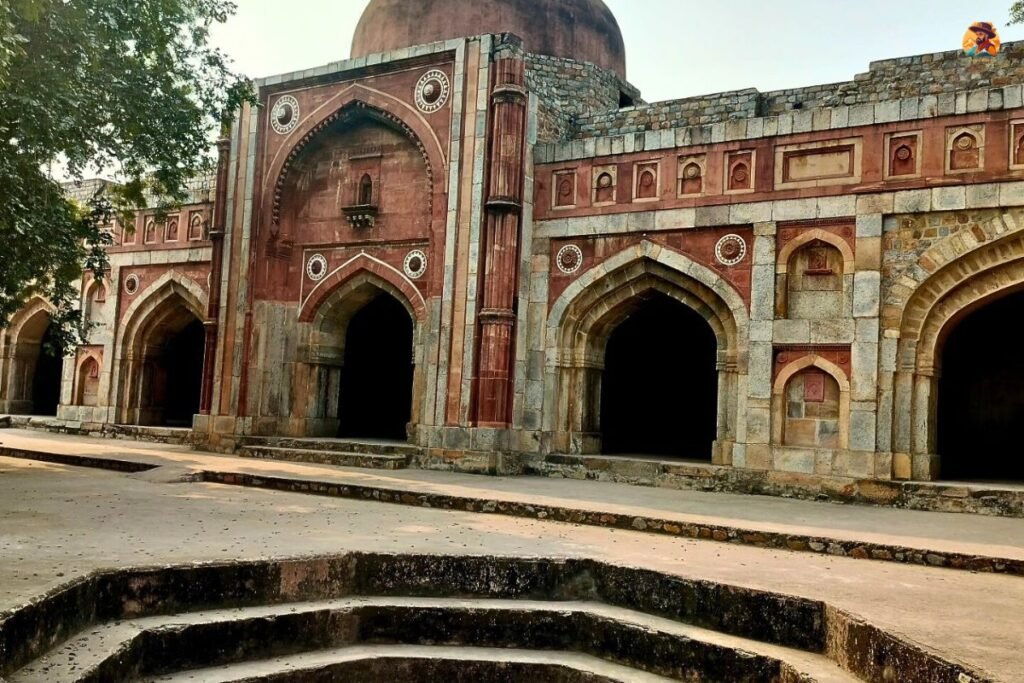
Jamali Kamali Garden is a 16th-century mosque and tomb complex in Mehrauli, South Delhi. It is part of the larger Mehrauli Archaeological Park, a 200-acre heritage area filled with historic structures and open walking paths. Many first-time visitors assume it is just a small ruin near Qutub Minar, but it is actually one of the key monuments inside this park.
You experience three simple elements in one visit:
- A compact red sandstone mosque
- A small tomb chamber with rare blue and red tile work
- An open courtyard that usually feels calmer than the major Delhi monuments
The place is known for its association with the Sufi poet Shaikh Jamali, the contested identity of Kamali, and the popular haunted stories that surround it. Most travelers expect a large Mughal-style garden. In reality, the space feels modest, quiet, and slightly rustic.
The first time I stood inside the prayer hall, my footsteps echoed softly, and the outside traffic noise almost disappeared. That silence is what makes Jamali Kamali memorable.
If you prefer peaceful heritage spaces over crowded tourist sites, this place will suit you well. If you want grand scale and manicured lawns, you may find it understated.
Jamali Kamali Ticket Price, Timings and Entry Details
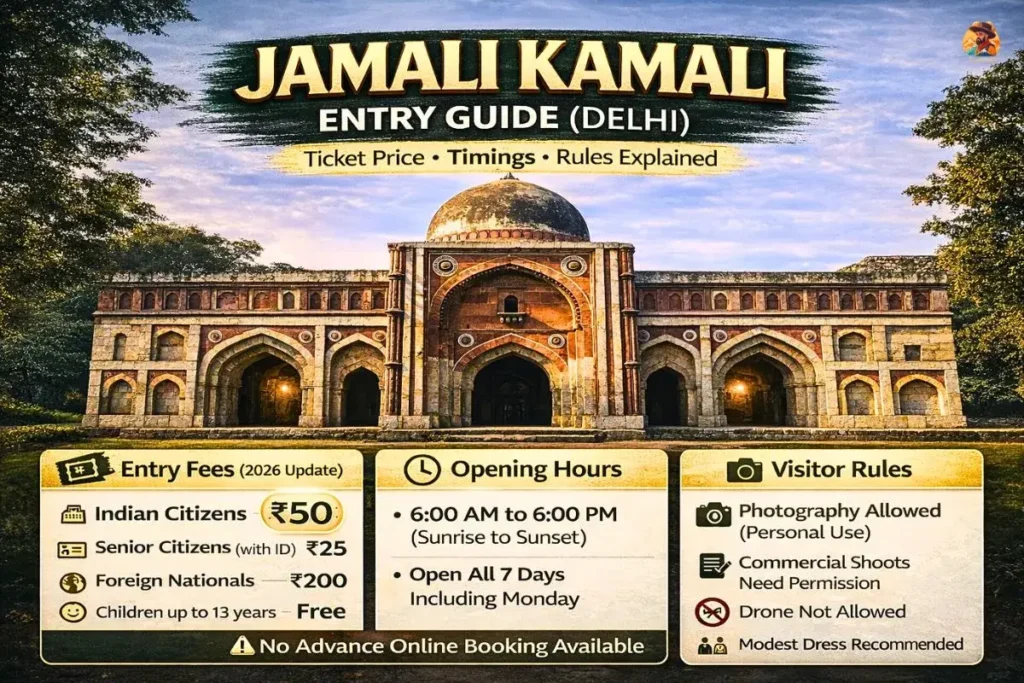
If you are still expecting free entry at Jamali Kamali, that information is outdated. When I visited in early 2026, I confirmed at the main gate that a ticket system had already been introduced under DDA management.
Entry Fees:
- Indian Citizens: ₹50
- Older Citizens (with valid ID): ₹25
- Foreign Nationals: ₹200
- Children up to 13 years: Free
Older citizens must show a valid physical ID or a DigiLocker ID to claim the discounted rate.
The ticket is issued at the main entrance of Mehrauli Archaeological Park and covers access to Jamali Kamali inside the park.
How to Pay for the Ticket?
- Tickets are issued at the main gate of Mehrauli Archaeological Park.
- Payment is usually made by scanning the QR code displayed at the entrance with a UPI app.
- Advance online booking is currently not available.
- Cash options may not always be available, so carrying a digital payment method is strongly recommended.
Tip: Complete your payment at the entry gate itself. The mobile network can weaken deeper inside the park.
Timings:
- Opening Hours: 6:00 AM to 6:00 PM (sunrise to sunset)
- Weekly Off: None. It remains open all seven days, including Monday.
Many visitors assume it closes on Monday like other Delhi monuments. It does not.
Mobile and DSLR photography for personal use is allowed. Commercial shoots require prior permission, and drone use is prohibited. Since this is a mosque complex, modest clothing is appropriate.
On my recent visit, I paid through UPI at the gate, and the process took less than two minutes. However, the mobile network inside parts of the park can be weak. It is better to complete payment at the entrance itself or take a printed ticket, as digital transactions may lag once you move inside.
Government rules in Delhi can change without much notice, so I always recommend checking the latest official update before you leave.
Nearest Metro Station and How to Reach Jamali Kamali
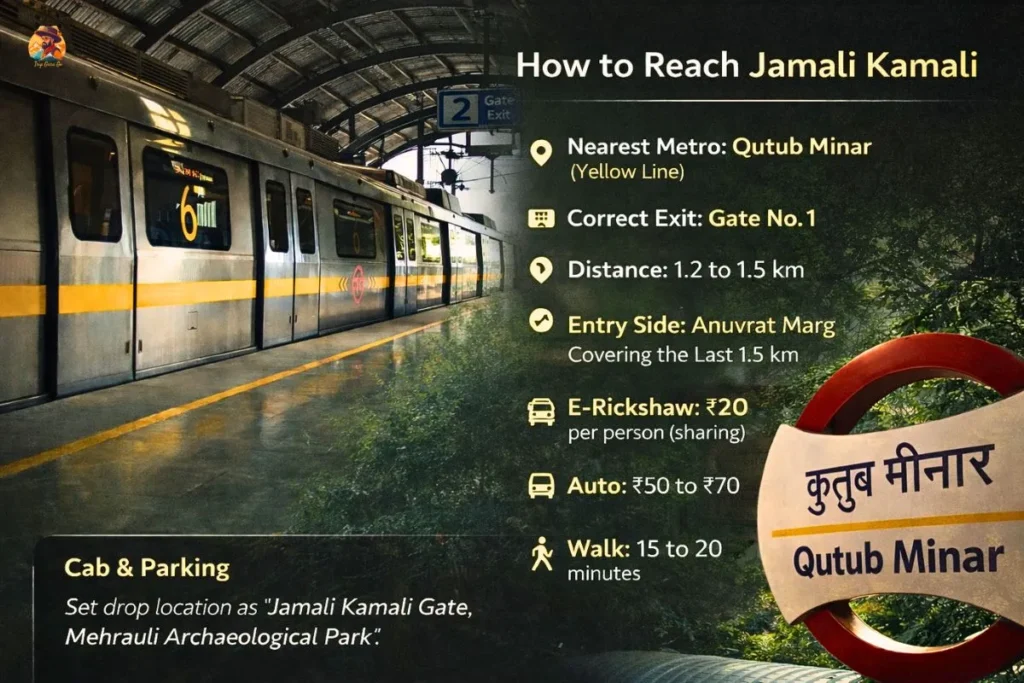
If you rely only on Google Maps here, you may get confused. The nearest and most practical metro stop is Qutub Minar Metro Station on the Yellow Line, and you must use Exit Gate No. 1. I once exited from the other side and had to walk back through traffic, so this small detail matters.
Quick Access
- Nearest Metro: Qutub Minar (Yellow Line)
- Correct Exit: Gate No. 1
- Distance: 1.2 to 1.5 km
- Entry Side: Anuvrat Marg
Maps sometimes show the Chhattarpur Metro closer to the monument boundary. Ignore that route. There is no public entry gate from that side.
Covering the Last 1.5 km
- E-Rickshaw: ₹20 per person (sharing)
- Auto: ₹50 to ₹70
- Walk: 15 to 20 minutes
Walking is pleasant in cooler months. In summer, the narrow pavement and traffic heat can feel draining.
Cab & Parking
Set drop location as “Jamali Kamali Gate, Mehrauli Archaeological Park.” Some drivers stop at the Qutub Minar complex by mistake.
There is no dedicated parking lot for Jamali Kamali. Cars park along Anuvrat Marg, and weekends can get crowded. Metro is usually simpler.
Full Address: Anuvrat Marg, Mehrauli Archaeological Park, Mehrauli, New Delhi – 110030
When I crossed the gate, the loud traffic from the main road faded within minutes. The tree cover and open space create a noticeable shift in atmosphere. That quiet transition prepares you for the monument ahead.
History of Jamali Kamali Mosque and Tomb
Jamali Kamali was built in the early 1500s, during the shift from Lodi rule to the early Mughal period. It is not a king’s monument. It belongs to a Sufi poet and the mysterious person buried beside him. Just behind the towering Qutub Minar, this smaller structure feels surprisingly personal.
Who Was Jamali?
Jamali’s real name was Shaikh Fazlullah. “Jamali” was his pen name. He was a respected Sufi saint and court poet under Sikandar Lodi and later Babur.
And they traveled to Persia and Arabia, and that influence appears in the design here. He died in 1535 AD. This complex reflects spiritual influence rather than royal power.
Who Was Kamali?
There is no clear record of Kamali’s identity. Some historians believe he was Jamali’s brother. Others say he was a devoted disciple.
Modern researchers also discuss the possibility of a deep emotional bond between them, which many interpret as a unique love story of that era. The fact that both share one tomb chamber, a rare honor for non-royal individuals, makes this theory stronger.
Standing inside, especially after seeing the massive scale of Qutub Minar nearby, this chamber feels intimate and personal rather than grand. The silence here feels different.
The Mosque and Tomb Architecture
The complex was built between 1528 and 1535. It shows the transition from Lodi simplicity to early Mughal style.
Key features include:
- Red sandstone structure
- Subtle white marble details
- Five-arched prayer hall
- Blue and turquoise tile work inside the tomb
- Intricate plaster ceiling with Persian-style patterns
Do not forget to look up inside the tomb. The ceiling carvings resemble a Persian carpet shaped in stone. Even after centuries, the patterns remain clear.
Many visitors expect grand Mughal-scale architecture. In reality, this monument is modest in size but rich in detail.
Mini Summary
Jamali Kamali dates back to the early 16th century. Jamali was a Sufi poet, and Kamali’s identity remains uncertain. Their shared tomb and detailed ceiling work make this monument unique in Delhi. For history lovers, it feels like a hidden treasure behind the grand monuments.
Jamali Kamali Love Story — Mystery or Misinterpretation?
Many visitors come here because of the famous love story linked to the tomb. The idea that two non-royal men share one burial chamber immediately creates curiosity. The two graves lie very close inside a decorated private space. In that period, shared tombs were usually for family or married couples. That unusual arrangement is what keeps the theory alive.
Some modern researchers and LGBTQ+ history enthusiasts see this as a rare example of same-sex companionship in medieval India. Others remain cautious because there is no written proof confirming a romantic relationship.
There is also another view. Some scholars suggest that “Kamali” may have been a spiritual title rather than a separate individual. That possibility adds another layer of doubt. Many people expect dramatic symbols of romance carved into the walls. Instead, you will see two simple graves placed side by side.
When I stood inside the chamber, I did not sense drama. I felt restraint and dignity. History has left the interpretation open, and that uncertainty is what keeps the story alive.
Jamali Kamali Haunted Story — What Really Happens Here?
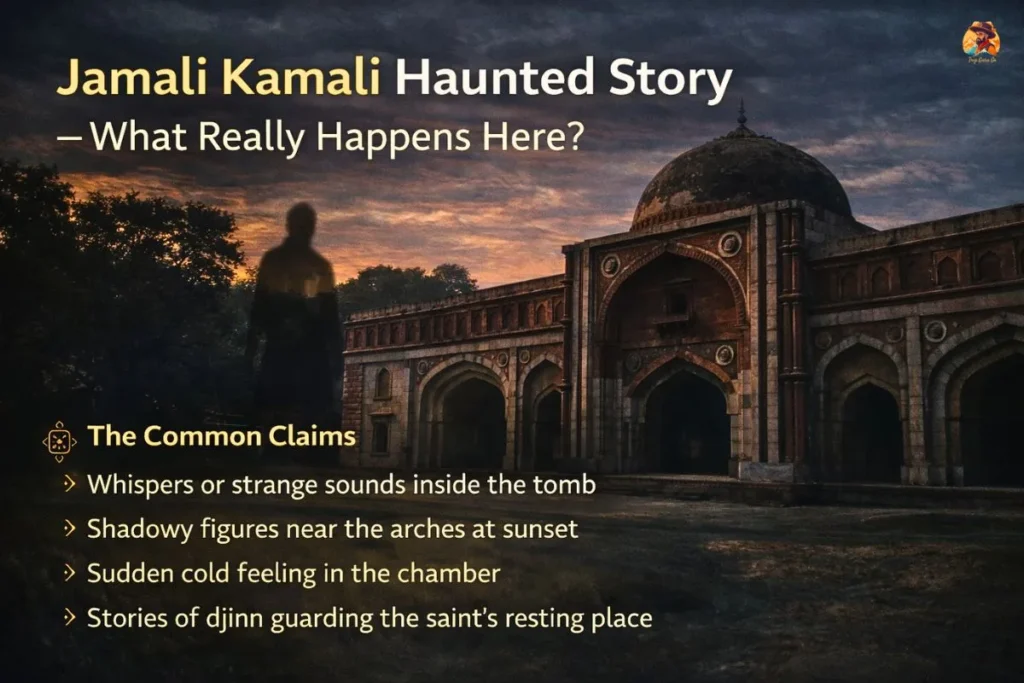
Many people visit Jamali Kamali after watching viral haunted videos. Over time, it has gained a reputation as one of Delhi’s “mysterious” monuments.
The Common Claims
- Whispers or strange sounds inside the tomb
- Shadowy figures near the arches at sunset
- Sudden cold feeling in the chamber
- Stories of djinn guarding the saint’s resting place
In Delhi’s culture, old Sufi spaces are often linked to djinn. Locals do not always see this as something frightening. For many, these beings are believed to protect sacred places.
The Practical Side
The tomb has thick stone walls and curved ceilings, so even small sounds echo inside. Birds move above the arches, and evening light creates long shadows. When someone arrives expecting something strange, normal sounds can feel bigger than they are.
The monument closes at sunset for safety. The park is large and not well-lit after dark. The real concern is isolation, not ghosts.
Jamali Kamali Baoli and What Else to See Inside the Park
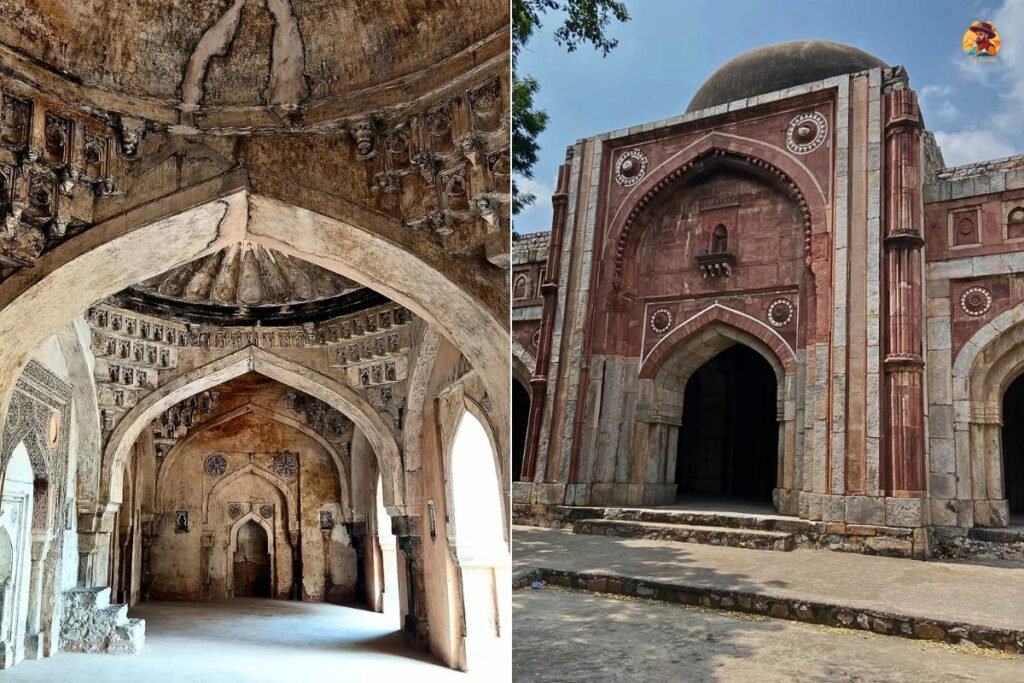
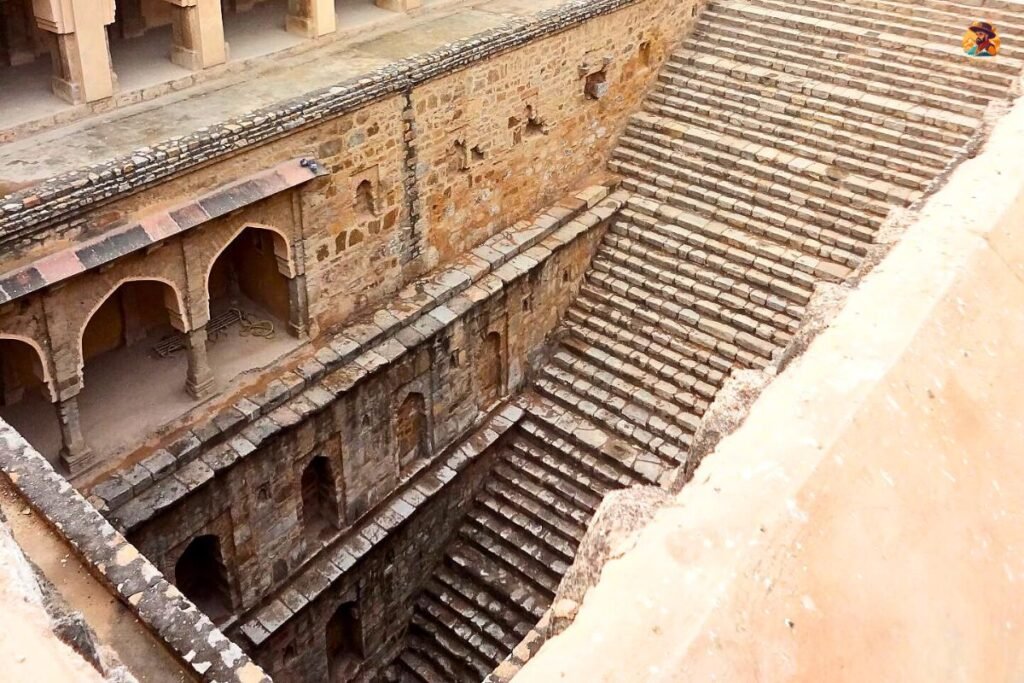
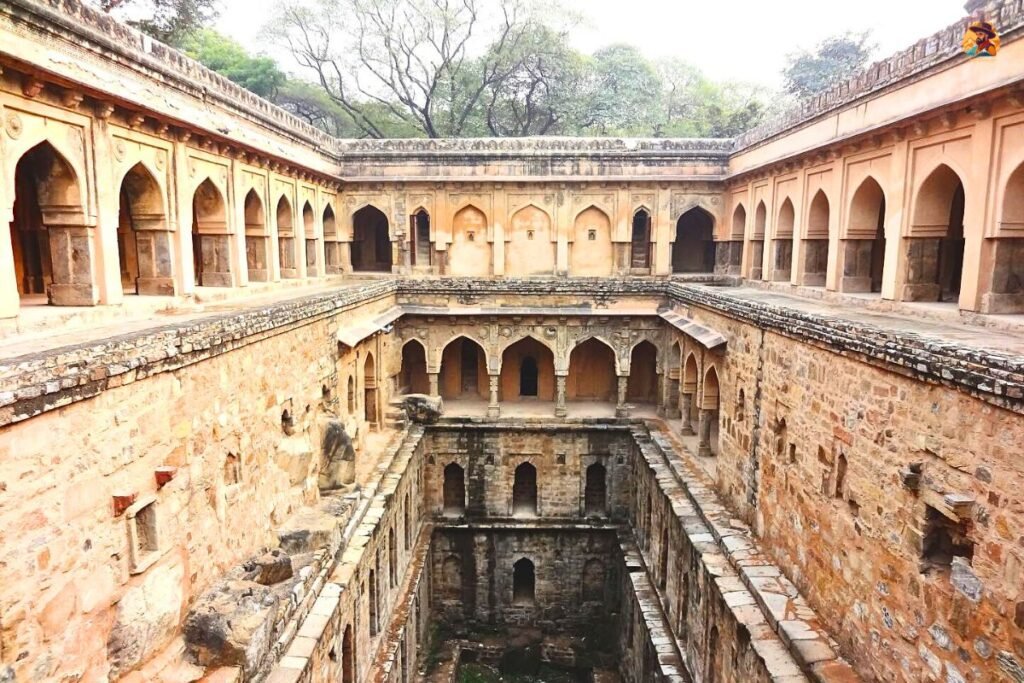
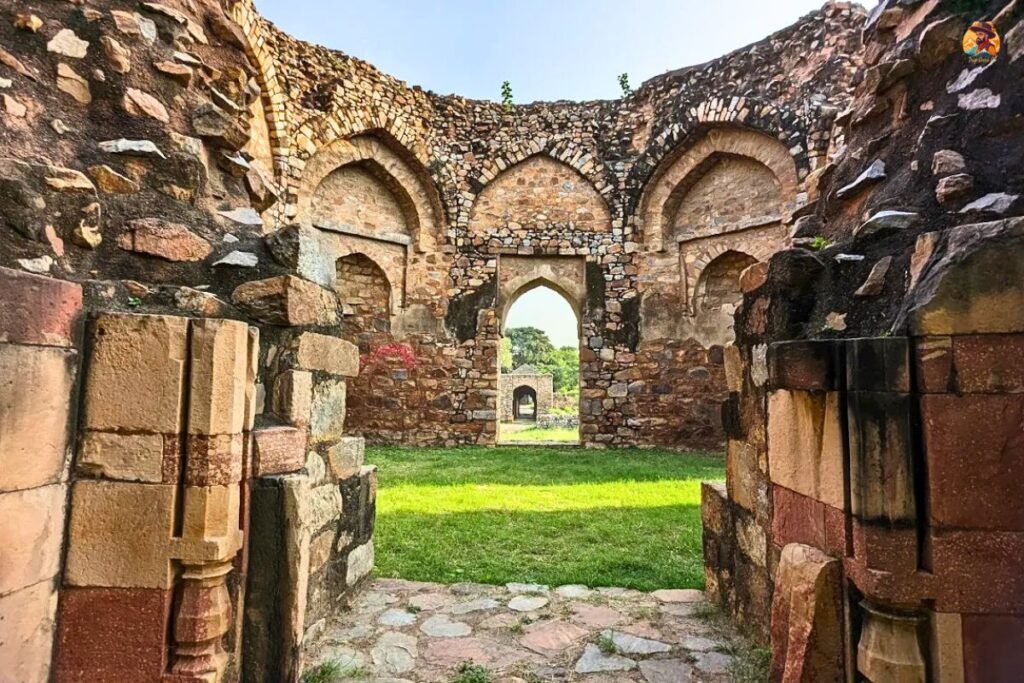
Jamali Kamali is more than just a mosque and tomb. It sits inside the larger Mehrauli Archaeological Park, which has scattered ruins, a stepwell, and several other historic structures within walking distance. If you rush through in fifteen minutes, you will miss half of the experience.
A baoli is a medieval stepwell built to store rainwater and supply water to nearby communities.
What You Can Explore Inside the Park
- Jamali Kamali Baoli – A small stepwell located near the mosque complex. It is simple and not very deep, but peaceful.
- Rajon Ki Baoli – A larger and more impressive stepwell inside the same park. Worth combining in one visit.
- Balban’s Tomb – An important early Sultanate structure within walking distance.
- Adham Khan’s Tomb – A large octagonal tomb, a short drive from the park.
Walking Reality
- Uneven stone paths in several areas
- Moderate walking between monuments
- Limited signboards
- Around 1 to 2 hours needed for relaxed exploration
Expectation versus reality is important here. This is not a manicured tourist garden with clear routes. It feels open and slightly raw, which adds to its character.
Best Photography Spots
- Blue and turquoise tile details inside the tomb chamber
- Arched corridors of the mosque
- Framed views through stone jaalis
- Late afternoon sunlight on red sandstone walls
Personal DSLR photography is allowed. Professional shoots may require permission. Drone photography is not allowed.
Food and Cafe Situation
- No permanent full-service cafe inside the monument complex
- Occasional small vendors near the outer gate
- Better food options near Qutub Minar and Mehrauli village
When I explored slowly, the park felt like a quiet heritage walk rather than a single monument stop. If you enjoy open ruins and peaceful surroundings, this section of the park is worth your time.
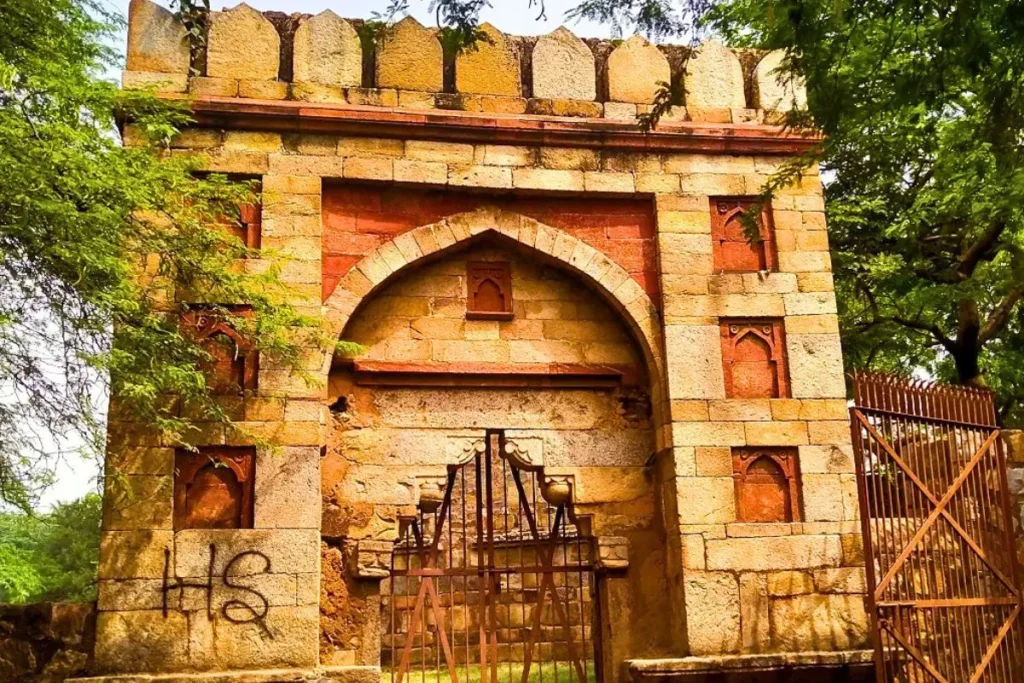
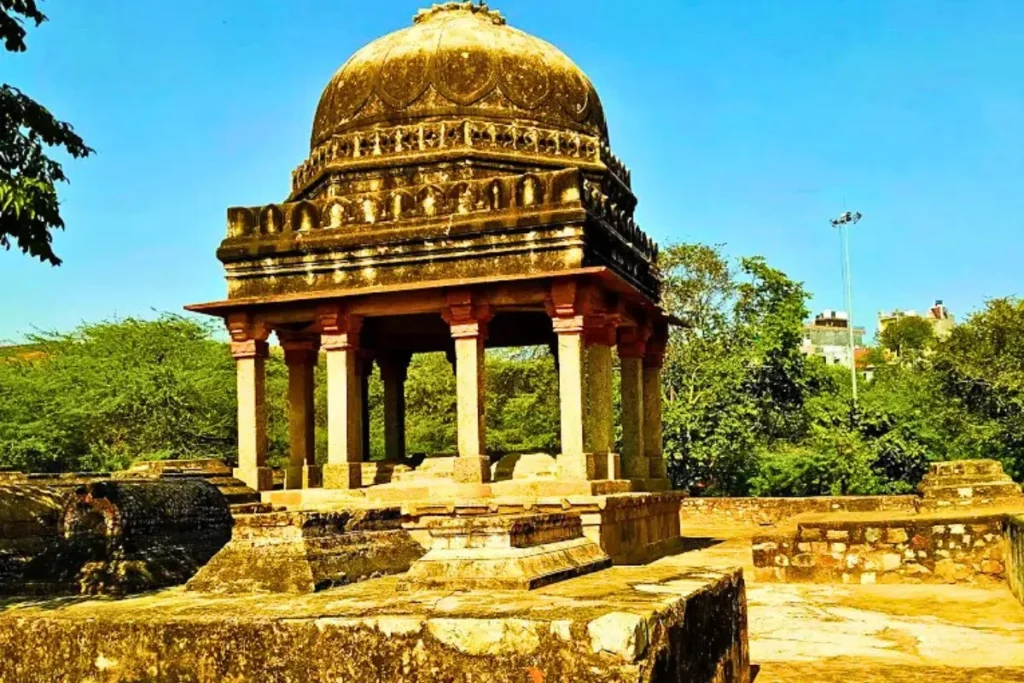
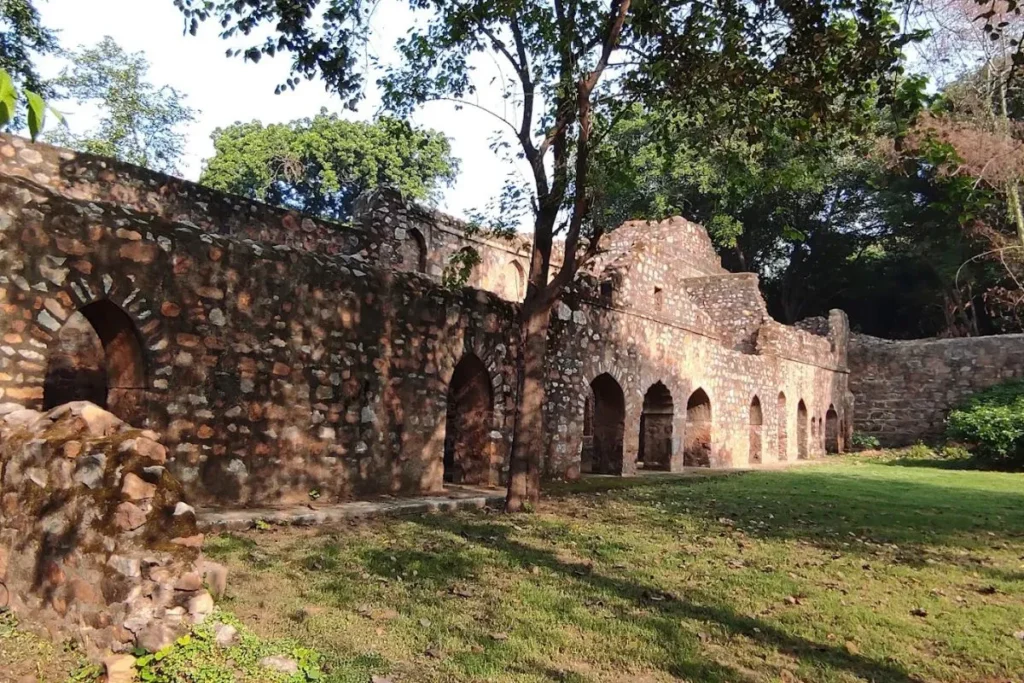
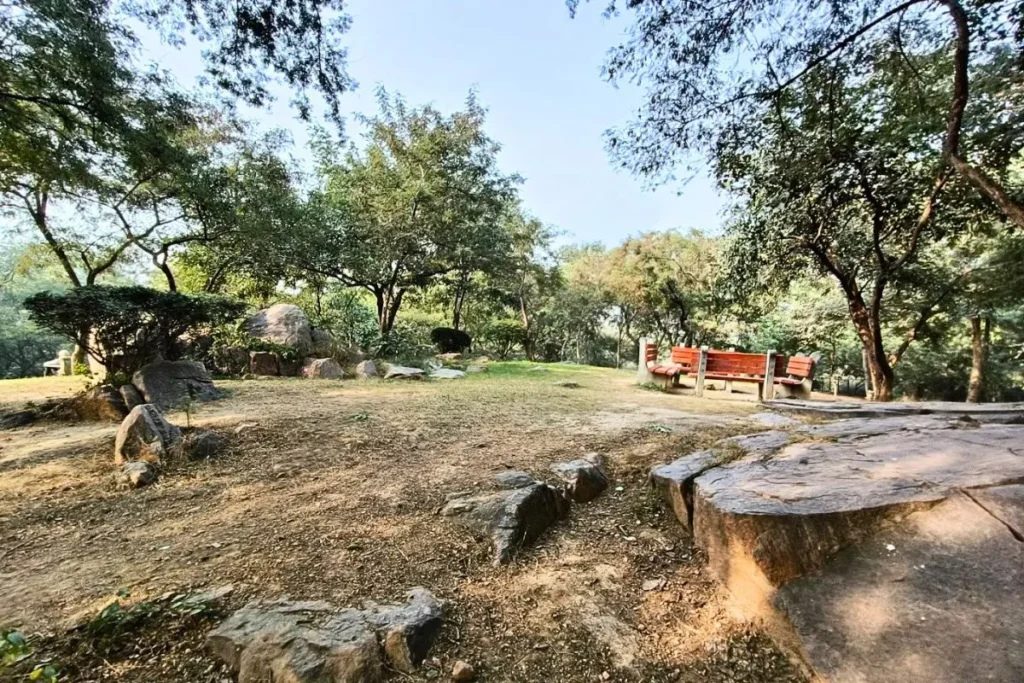
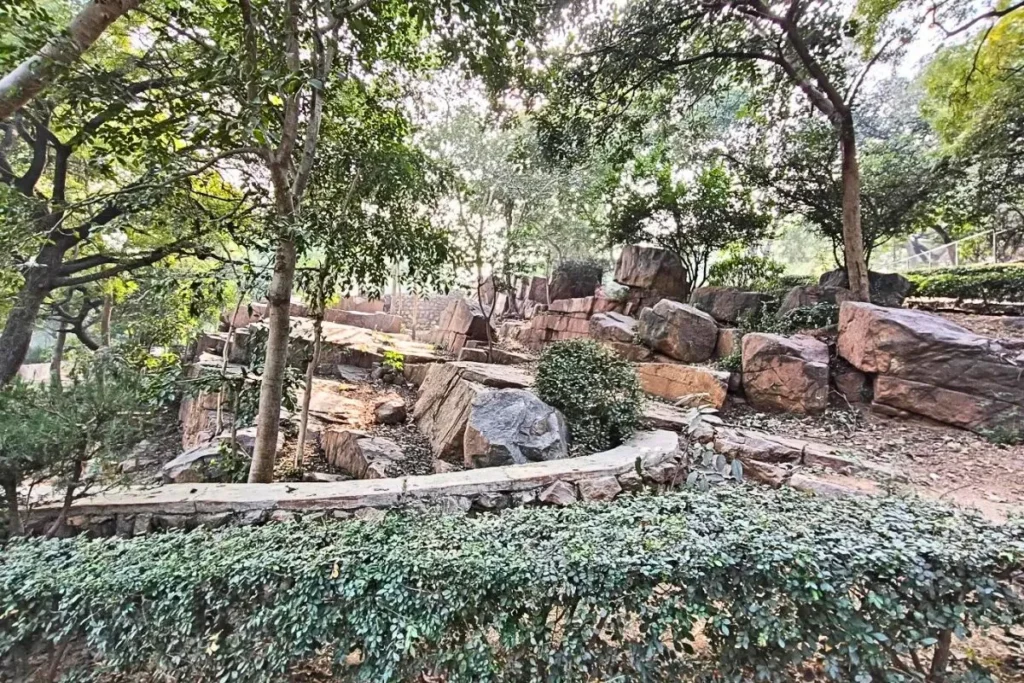
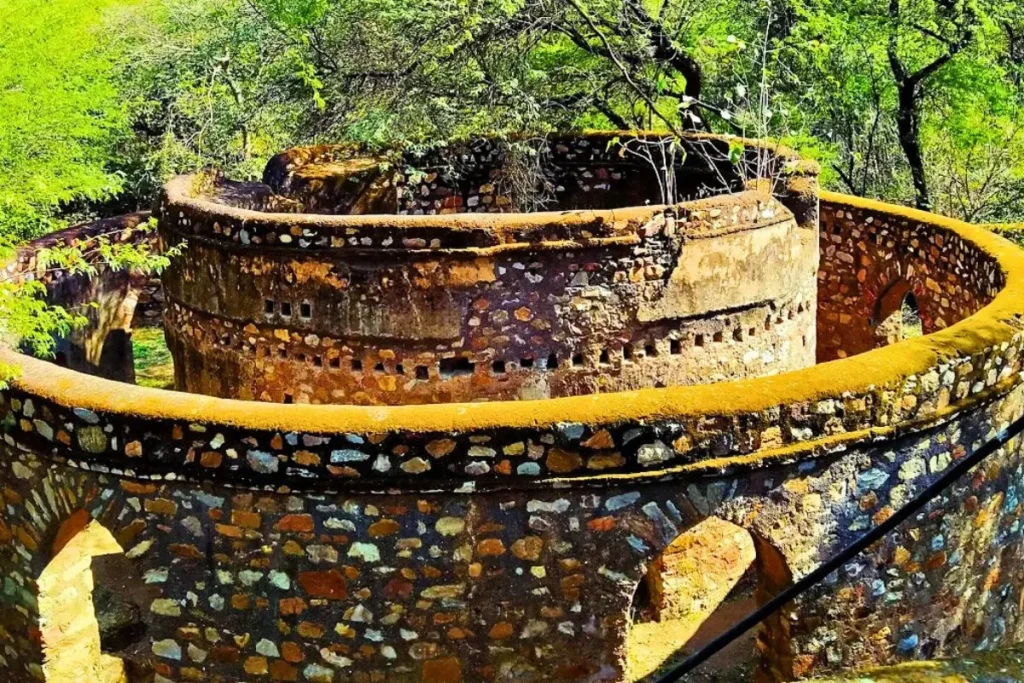
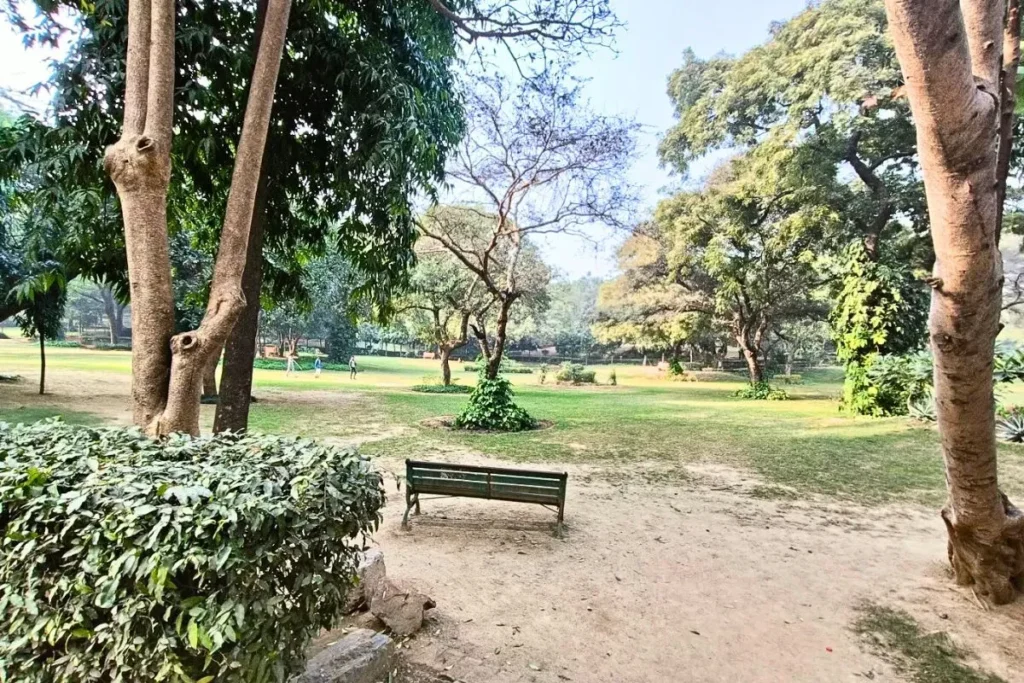
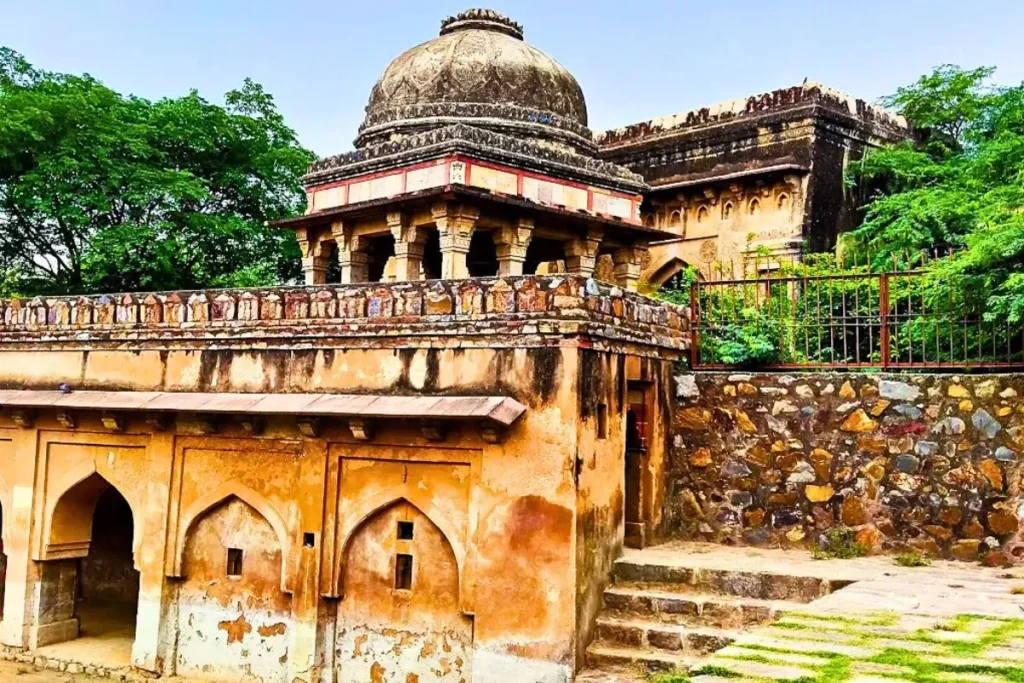
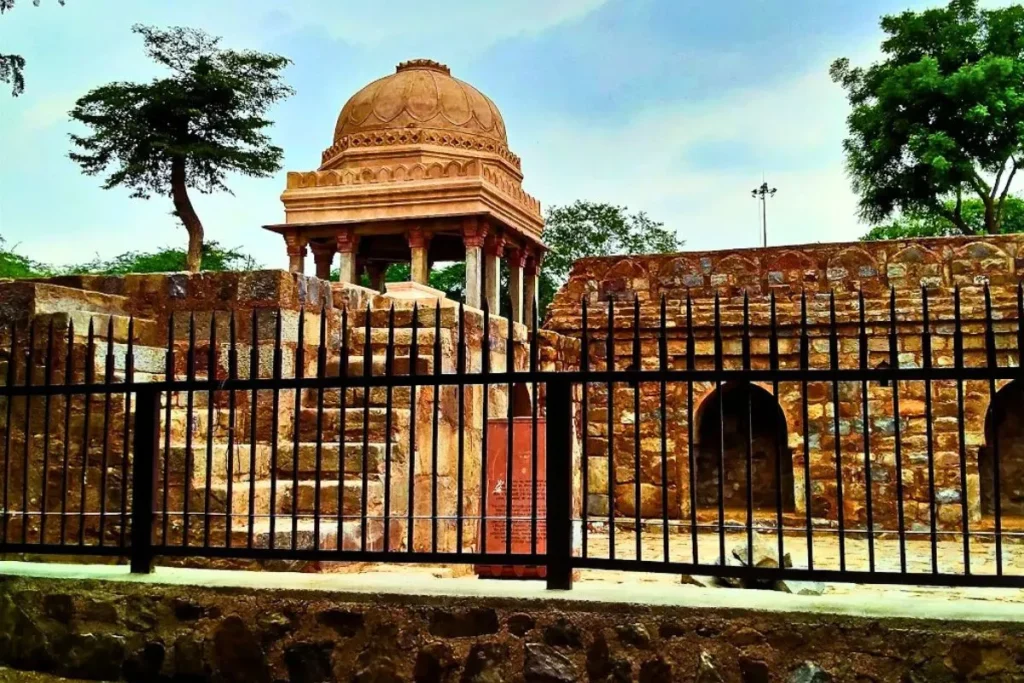
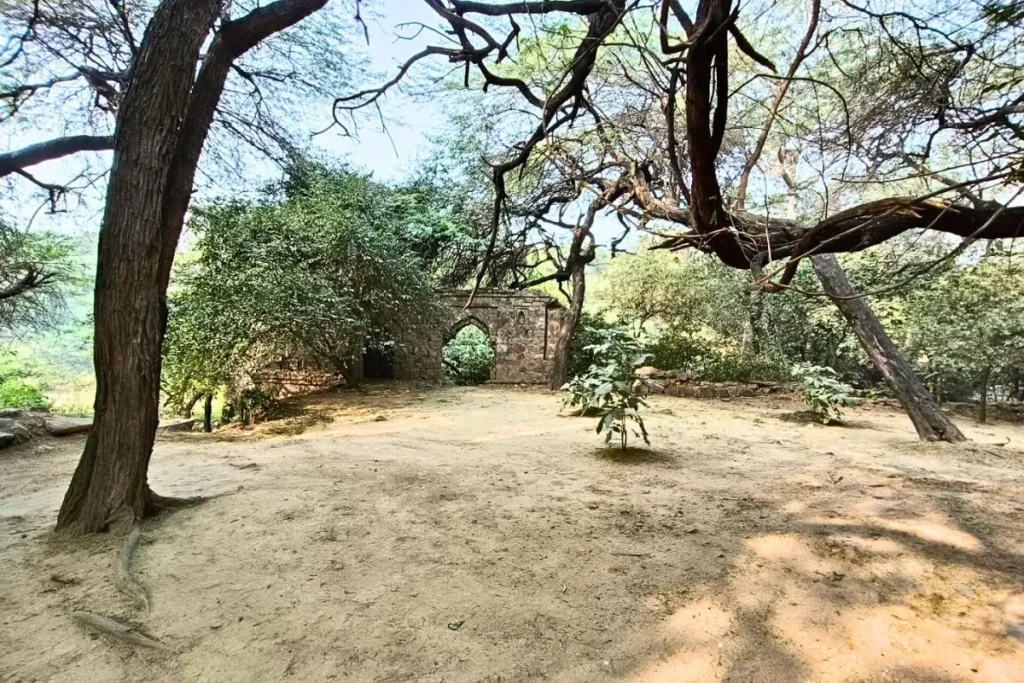
Jamali Kamali Garden Photos
These Jamali Kamali Garden photos will give you a realistic idea of what to expect before your visit.
Best Time to Visit and Insider Travel Tips
Most visitors make one simple mistake here. They arrive in peak afternoon heat and leave earlier than planned. Jamali Kamali is an open stone complex, so the weather directly affects your comfort.
Best Season & Timing:
- October to March – Comfortable weather and easy walking
- April to June – Avoid 12 PM to 4 PM due to extreme heat
- Monsoon – Green surroundings but humid conditions
When I visited in December, I explored for almost two hours without feeling tired. In contrast, summer heat reflects off the stone and feels draining quickly.
Best time of day:
- 10 AM to 11 AM for balanced light
- 4 PM to 5 PM for softer photography light
Morning feels active and relaxed. Late afternoon is beautiful, but the park grows quieter near closing time.
Practical Realities You Should Know:
- The network can be weak near the mosque area. If you are using a digital ticket or booking a cab, handle it near the main gate.
- Jamali Kamali remains open on Mondays, unlike many Delhi monuments. This makes it a useful Monday plan.
- There is almost no waiting time at the entry.
Safety & Comfort:
Jamali Kamali is peaceful but slightly isolated.
- Female solo travelers feel most comfortable between 11 AM and 3 PM, when guards and other visitors are present.
- After late afternoon, the area becomes noticeably quieter.
- If staying close to sunset, visiting in small groups is better.
Quick Visit Checklist:
- Wear comfortable shoes for uneven stone paths
- Carry your own water
- Plan 1 to 2 hours for relaxed exploration
When I left just before sunset, the light was beautiful, but the silence had deepened. If you prefer a livelier atmosphere, arrive earlier in the day.
Is Jamali Kamali Worth Visiting? — Expectation vs Reality
Online, Jamali Kamali looks dramatic and mysterious. Many visitors expect something grand like the Qutub Minar.
In reality, it is smaller and much quieter. The beauty here is not in size. It is in stillness.
You will enjoy it if:
- You like lesser-known histor
- You prefer peaceful corners over heavy crowds
- You enjoy photography without people entering every frame
- You are a couple looking for a calm heritage space
After ticketing began, the park feels more managed and secure. The crowd is lighter and more respectful than before.
You may not enjoy it if:
- You want a massive monument experience
- You expect manicured lawns and luxury park vibes
When I visited on a weekday afternoon, I sat in the courtyard for nearly twenty minutes without interruption. That kind of uninterrupted silence is rare in Delhi. It felt private, not staged for tourists.
For me, Jamali Kamali is worth visiting if you value atmosphere over scale. If you only measure monuments by height, you may leave unimpressed.
And that honest difference is what defines this place.
Places to Visit Near Jamali Kamali Garden (Outside the Park)
Jamali Kamali sits in one of the most heritage-rich pockets of South Delhi. Once you step outside the park gate, several important monuments are within short walking or driving distance.
Here are the best nearby places outside Mehrauli Archaeological Park:
- Qutub Minar (1.2 km)
Delhi’s most iconic monument. If Jamali Kamali feels intimate, Qutub Minar feels grand and imposing. - Adham Khan’s Tomb (Approx. 1 km)
Also known as “Bhool Bhulaiya.” A large octagonal Mughal tomb with thick walls and an interesting history. It is walkable and far less crowded than the Qutub Minar. - Chhatarpur Temple (Approx. 6 km)
One of the largest temple complexes in India. A completely different spiritual atmosphere from the Sufi setting of Jamali Kamali. - Garden of Five Senses (Approx. 3 km)
A landscaped public park known for open lawns and art installations. Good for a relaxed evening walk. - Mehrauli Village Cafes (1–2 km)
Ideal for lunch or coffee after exploring. Several small rooftop cafes operate nearby.
When I combined Jamali Kamali with Adham Khan’s Tomb and a short stop at Qutub Minar, the afternoon felt balanced. You move from quiet Sufi history to Mughal scale within walking distance, which makes Mehrauli one of the most underrated heritage clusters in Delhi.
Conclusion: Jamali Kamali Garden, A Quiet Chapter of Delhi
Jamali Kamali Garden is not about grandeur; it is about stillness. Inside the larger Mehrauli Archaeological Park, it offers history, mystery, and space to breathe without heavy crowds. If you appreciate calm heritage spaces over massive tourist monuments, this place quietly earns its place on your Delhi list. Pair it with nearby sites in Mehrauli, and you will experience a softer side of the city that many visitors miss.
Writers looking to publish practical guides can check our write for us travel blog section for full submission guidelines.
FAQs About Jamali Kamali Garden
Jamali Kamali Garden is located on Anuvrat Marg, Mehrauli, South Delhi – 110030. It lies inside the larger Mehrauli Archaeological Park near Qutub Minar.
Yes. Jamali Kamali is one of the most visited monuments inside the 200-acre Mehrauli Archaeological Park.
As of 2026, entry is ₹50 for Indian citizens and ₹200 for foreign nationals. Older citizens pay a reduced fee. Payment is available at the main entry gate.
Jamali Kamali is open from 6:00 AM to 6:00 PM (sunrise to sunset). It remains open all 7 days, including Mondays.
The nearest metro station is Qutub Minar Metro Station (Yellow Line). Use Exit Gate 1. From there, it is about 1.2 to 1.5 km away.
There are many local legends about paranormal activity. However, there is no official proof. During daytime, the place feels peaceful rather than frightening.
The mystery comes from two men sharing the same tomb chamber. Some interpret this as a deep emotional bond, while others see it as a spiritual relationship between a Sufi saint and his companion.
There is no confirmed historical record. Theories suggest he may have been Jamali’s brother or disciple. The true identity remains unknown.
No, there is no cafe inside the monument complex. Visitors should carry water. Food options are available near Qutub Minar and Mehrauli village.
Yes, it is suitable for families. The space is calm and open, but the stone paths are uneven, so comfortable footwear is recommended.

Hi, I am Manoj Kumar, the voice behind Trip Guru Go. I am a travel researcher, SEO content expert, and founder of this blog. With over 12 years of experience in digital travel research, I simplify complex destinations into real, helpful, and trustworthy guides.
Every article I write is backed by local sources, real traveler experiences, and deep fact-checking. Even if I have not visited every place personally, I never share anything without strong on-ground insight.
I do not sell travel packages or promote anything paid. My only goal is to help you travel smarter — with zero fluff, 100% honesty, and a deep focus on your safety and experience.