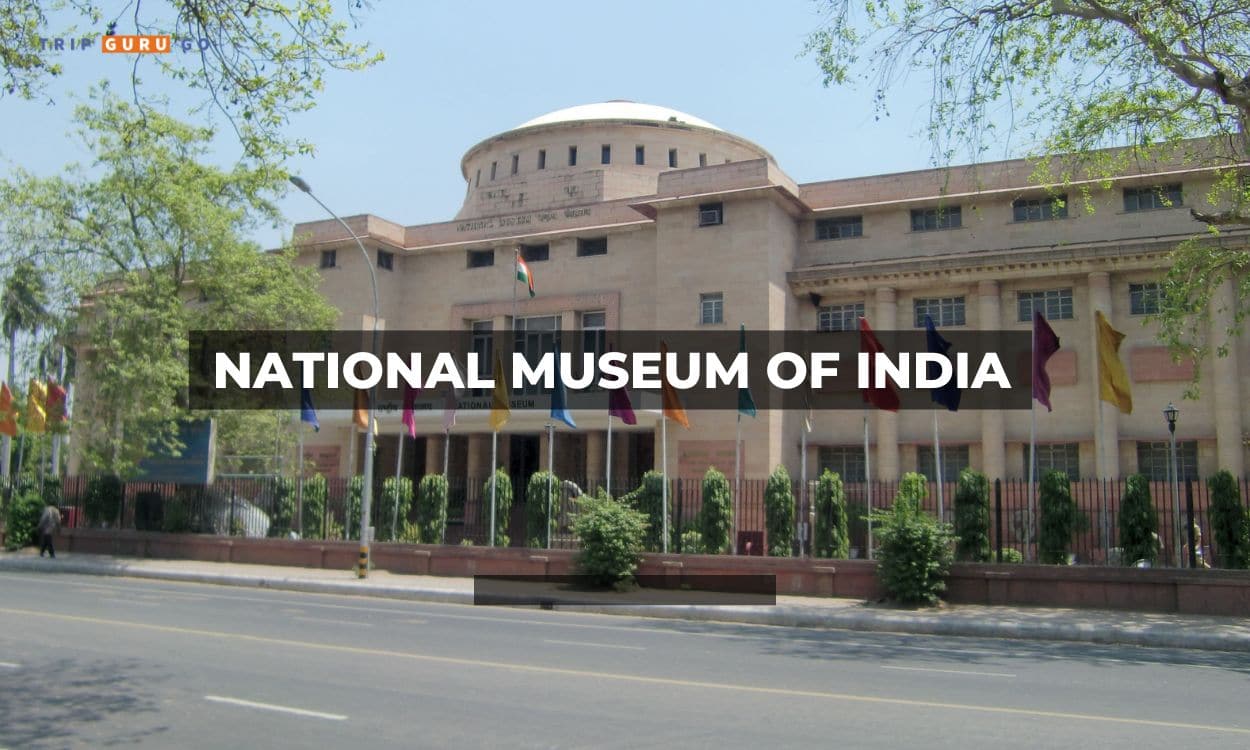
The National Museum of India in New Delhi is one of the country’s most important cultural institutions. It brings together India’s long history through ancient artifacts, sculptures, paintings, and manuscripts, all under one roof. Located close to central Delhi landmarks, the museum attracts history lovers, students, and travelers alike.
In this guide, I share what the National Museum is known for, its historical significance, what you can see inside, and how to plan your visit. You will also find practical details like timings, ticket price, nearest metro, and travel tips to help you explore the museum comfortably and without confusion.
History of the National Museum of India
The idea of the National Museum of India took shape in 1946, when the Maurice Gwyer Committee proposed creating a national space to display India’s historical and artistic treasures. The vision was simple but powerful. India needed a central museum where people could see the depth of its cultural heritage in one place.
A major push came from Sir Mortimer Wheeler, then Director General of the Archaeological Survey of India. He strongly supported the idea and focused on bringing together important artifacts from ASI site museums across the country.
The London Exhibition That Changed Everything (1947–1948)
In the winter of 1947–48, the Royal Academy in London hosted the Exhibition of Indian Art. Carefully selected artifacts from museums across India were displayed, with support from both the Indian and British governments. The exhibition received wide appreciation and proved that India’s heritage deserved a permanent national platform.
From Rashtrapati Bhavan to a National Museum (1949)
After the London exhibition’s success, the same collection was brought to Rashtrapati Bhavan in New Delhi in 1949. The exhibition attracted huge public interest and became the foundation of the National Museum.
On 15 August 1949, the National Museum was officially inaugurated at Rashtrapati Bhavan by Shri C. Rajagopalachari, the Governor-General of India.
Construction at Janpath and Expansion (1955–1989)
Work on the museum’s permanent building at Janpath, New Delhi, began in 1955, with the foundation stone laid by Pandit Jawaharlal Nehru. The first phase of the building opened in 1960, inaugurated by Dr. Sarvepalli Radhakrishnan.
Some iconic pieces, including the Rampurva Bull and the Buddha statue, remained at Rashtrapati Bhavan on Nehru’s request. The second phase of the museum building was completed in 1989.
Collection Growth and Institutional Identity
Over the decades, the National Museum’s collection expanded through donations, acquisitions, and contributions from state museums and private collectors. Today, it houses over 200,000 objects, covering more than 5,000 years of Indian history, from prehistoric artifacts to medieval and modern works.
Initially managed by the Director General of Archaeology, the museum gained independent status in 1957. It now functions under the Ministry of Culture, Government of India, continuing its role as one of the country’s most important cultural institutions.
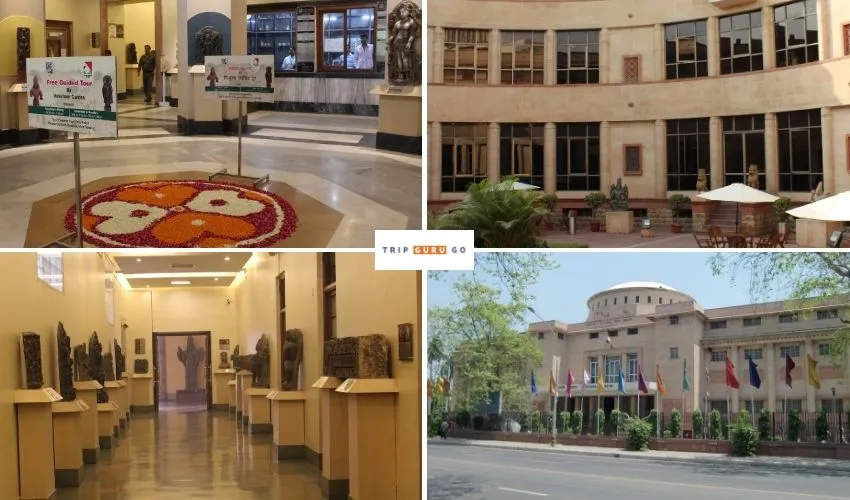
Departments and Diverse Collections at the National Museum of India
The National Museum in New Delhi is divided into different departments, each focusing on various aspects of art and history. These departments help organize and manage the museum’s collections.
Here are the departments at the National Museum:
- Pre-History Archaeology: This department deals with artifacts and objects from ancient times, helping us understand how people lived in the past.
- Archaeology: This department focuses on studying historical sites, ancient buildings, and artifacts to uncover insights about civilizations that existed long ago.
- Manuscripts: Manuscripts are old writings on materials like paper or parchment. This department takes care of these delicate writings and makes them accessible for study.
- Numismatics and Epigraphy: Numismatics involves studying coins, while epigraphy focuses on inscriptions on stones or metals. This department helps us learn about ancient currencies and writings.
- Paintings: The painting department looks after various types of artworks, including miniatures and traditional paintings from different periods.
- Arms & Armour: This department handles weapons and protective gear from different times, giving us insights into the history of warfare and personal defense.
- Decorative Arts: Decorative arts involve objects used for decoration, like furniture, ceramics, and glassware. This department takes care of these beautiful items.
- Central Asian Antiquities: This department focuses on artifacts from Central Asia, helping us learn about cultures and societies from that region.
- Pre-Columbian Art: Pre-Columbian art relates to artworks created in the Americas before Christopher Columbus’s arrival. This department preserves and showcases these ancient American treasures.
- Jewelry: The jewelry department takes care of valuable ornaments and accessories made from precious metals and gemstones.
- Anthropology: Anthropology involves studying human cultures and societies. This department helps us understand different ways of life and traditions.
- Anubhav: This department focuses on creating educational experiences and programs for visitors to learn more about the museum’s collections.
- Education: The education department designs programs to teach people about the exhibits and the history they represent.
- Public Relations: This department handles communication between the museum and the public, ensuring people are informed about exhibitions and events.
- Publication: The publication department is responsible for producing books, catalogs, and other materials related to the museum’s collections.
- Display: The display department arranges the artifacts in the museum’s galleries, making them accessible and engaging for visitors.
The National Museum in New Delhi features a vast collection of art forms—sculptures, historical artifacts, miniatures, textiles, and more. With over 200,000 artworks from India and abroad, rotating exhibitions offer glimpses into diverse history and art.
Evolution of the National Museum of India’s Architectural Design
Ganesh Bikaji Deolalikar, an architect, was responsible for the impressive National Museum building that we see today. Prime Minister Jawaharlal Nehru laid the cornerstone for this structure on May 12, 1955. The inauguration of the completed building took place on December 18, 1960, with Dr. Sarvepalli Radhakrishnan, Vice-President of India, doing the honors.
Evolution of the Building:
This building is located on the land that was initially designated in the plan by Edwin L. Lutyens for the Imperial Museum. A smaller Museum of Central Asian Antiquities that housed Sir Aurel Stein’s significant collection formerly occupied the space.
The construction of the National Museum of India building in New Delhi was carried out in stages to ultimately give it an octagonal shape. The first phase of the building was unveiled in 1960, and the second phase was completed in 1989. The plan for the third and final phase involves demolishing the Archaeological Survey of India (ASI) building, which has been relocated to Dharohar Bhawan. This last phase, shown on the original maps, will add around a quarter of the remaining portion to complete the building’s design. The National Museum of India’s construction has been a gradual and thoughtful process, reflecting its rich history and significance.
The National Museum building comprises three floors, and its galleries are arranged around a central garden court. Notably, the National Museum Institute, located on the first floor and holding “deemed to be a university” status, will be moving to a new campus in Noida.
Exploring Arts Gallery: National Museum of India, Delhi:
The National Museum of India boasts a remarkable array of collections, each offering a captivating journey through different eras and art forms. Here are some of the prominent galleries that showcase these exquisite treasures:
1. Maurya, Shunga, and Satavahana Arts Gallery:
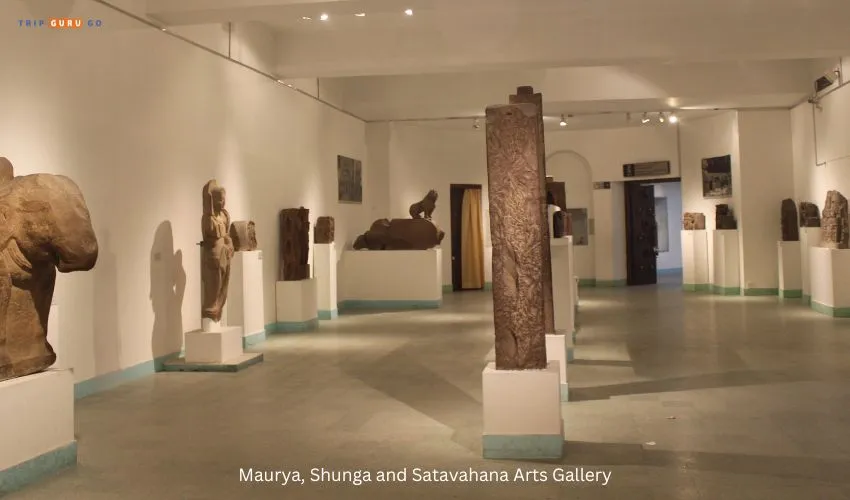
The Maurya, Shunga, and Satavahana Arts Gallery showcases artifacts from the 4th to 1st centuries BCE, representing three prominent dynasties: the Mauryas, Shungas, and Satvahanas. Greek influence is evident in the mirror-like finishing of objects. The collection features fragments of Stupa railings intricately carved with scenes from Buddha’s life. Noteworthy is an artifact depicting Sage Asita’s visit to baby Siddharta and the Bharhut railings narrating stories of Buddha’s relics by Sage Drona. Notably, Buddha isn’t portrayed in physical form; instead, symbols like Dharmachakra and footprints convey his presence. This gallery offers insights into ancient dynasties and their artistic expressions, intertwining history, and spirituality.
2. Kushana Gallery:
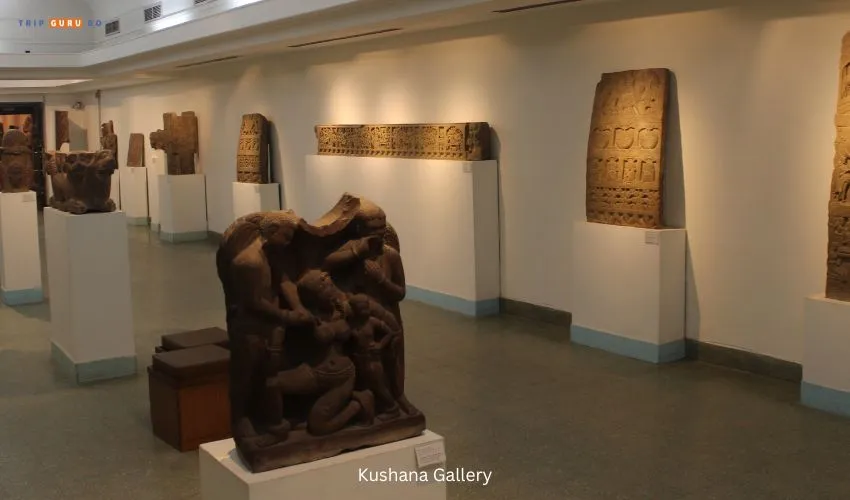
The Kushana Gallery features artworks from the Kushan period (1st–3rd centuries CE). It showcases two significant art schools: the Gandhara School of Art and the Mathura School of Art. Greek iconography was a major influence on the Gandhara style, which emphasized Buddhist themes. A highlight is the Standing Buddha, a 2nd-century CE gray schist sculpture that introduced Buddha in physical form. The Mathura school depicted Buddhism, Jainism, and Brahmanism, while Gandhara art mainly revolved around Buddhist themes. Notable sculptures include the Kuber deity, the Chandramukhi Shivlinga, Bodhisattva figures, and Jain votive plaques.
3. Gupta Gallery:
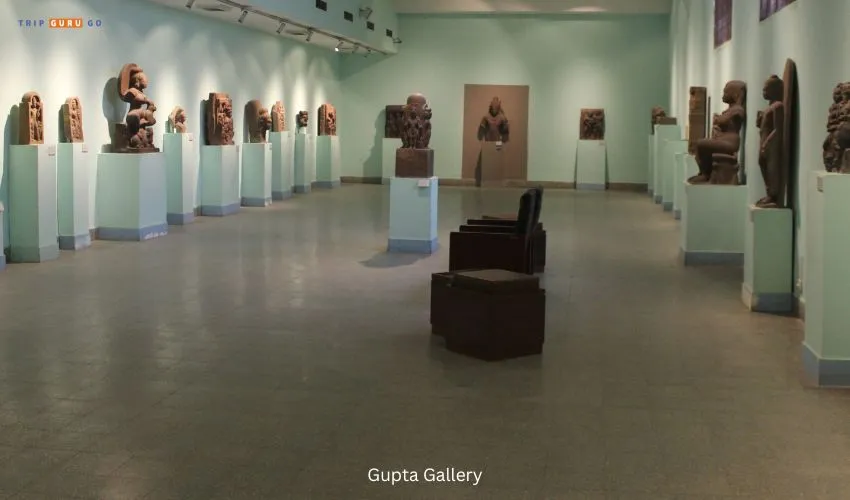
The Gupta Gallery showcases treasures from the Gupta dynasty (4th–6th centuries CE), a pinnacle of Indian art. Mathura and Sarnath were artistic hubs during this time. The Gupta rulers’ patronage led to sculptures of unmatched beauty and perfect form, setting enduring standards. Iconography flourished, refining Kushan art further. Sculptures in this era are celebrated for their well-proportioned figures and distinct features, representing a golden era of artistic excellence.
4. Medieval Arts Gallery:
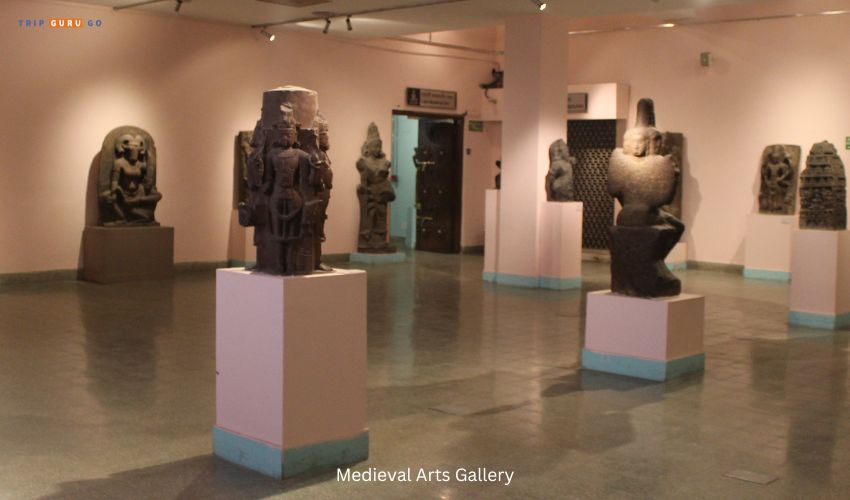
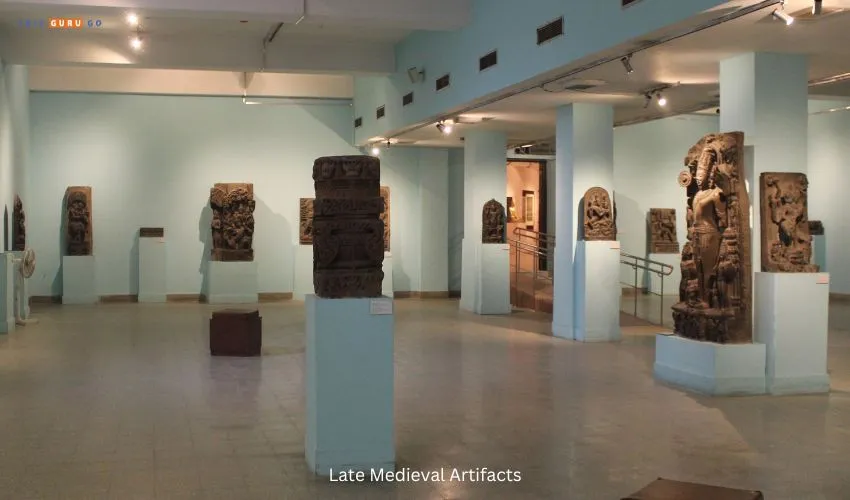
The Medieval Arts Gallery at the National Museum is divided into two sections: Early and Late. These sections house sculptures from distinct periods, offering insights into India’s rich artistic heritage.
- Early Medieval Artifacts: This gallery showcases sculptures from the 7th to 10th centuries, a time marked by the rule of various dynasties across different regions. The Gupta Empire’s decline led to regional control by dynasties such as the Palas, Maitrakas, Vardhanas, Pratiharas, Pallavas, Cholas, and Chalukyas. Despite challenges, master craftsmen created sculptures for numerous temples, reflecting both diversity and artistic decline.
- Late Medieval Artifacts: In this section, sculptures spanning the 10th to 13th centuries depict India’s further subdivision into principalities. Dynasties like Hoysalas, Nayakas, Paramars, Chandelas, Gajapatis, Senas, and Chahamanas ruled different regions.
Among the notable sculptures is the exquisite marble carving of the Sun God, along with the graceful figure of Saraswati, carved delicately in marble, representing music, learning, and intelligence. These artifacts encapsulate the artistry and cultural diversity of the medieval era.
5. Decorative Arts Gallery:
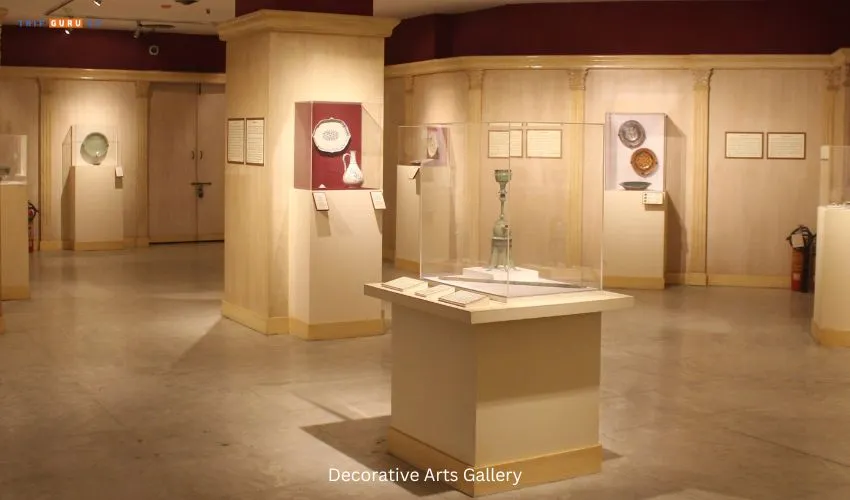
The Decorative Arts collection at the National Museum offers a glimpse into the daily lives of Indians from the 16th to the 20th centuries. This collection encompasses objects that blend both utility and aesthetic appeal, shedding light on societal, religious, economic, and technological changes. Ceramics, Pottery, Furniture, Textiles, Glassware, Metalware, and jewelry are among the diverse categories covered.
- Decorative Arts Gallery 1: Step into this gallery to explore the ivory, Jade, and ceramic collections. Ivory sculptures of Hindu and Christian religious figures, utilitarian objects in Jade, and vibrant glazed tiles and blue-white pottery in Ceramics showcase the mastery of craftsmanship. Themes like Thrones of India and Games and Leisure in the Past provide insights into the evolution of power seats and recreational activities. Notable is the studded throne of the King of Varanasi, symbolizing authority. Game artifacts like Rattles and Chess sets combine artistry and playfulness.
- Decorative Arts Gallery 2: In this gallery, journey through time with artifacts spanning from the protohistoric era to the present day. Witness the evolution of Metalware, jewelry, and Wooden objects, reflecting changing tastes and status. Among the wooden items, the notable Vahana stands out. The variety and quality of objects mirror generational preferences, showcasing the ongoing dialogue between art and functionality.
6. Miniature Painting Gallery:
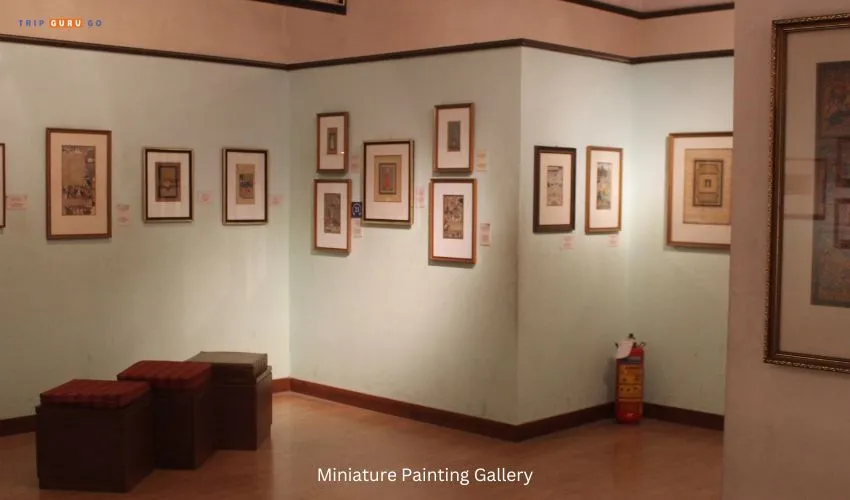
The National Museum boasts a prized collection of miniature paintings, a hallmark of its prestigious holdings. With over 17,000 pieces spanning 900 years, this collection is the world’s largest of its kind. The Department of Painting at the museum showcases a diverse range of styles from across India, such as Pala, early Jain, Sultanate, Malwa, Mewar, Bundelkhand, Mughal, Deccani, Rajasthani, Pahari, Sikh, Jammu, Tanjore, Mysore, and Company School paintings.
- Mughal Miniature Paintings: The era of Mughal rule was a golden age for miniature paintings. Emperors Jahangir and Shahjahan were avid patrons of art, fostering themes like portraiture, landscapes, durbar scenes, and processions. The Deccani style blended Islamic elements with indigenous art, merging local traditions with Persian and European influences.
- Central India Miniature Paintings: Central India’s artistic diversity shines through miniatures from Malwa and Bundelkhand. These paintings offer insights into the cultural tapestry of the region.
- Rajasthani Miniature Paintings: Rajasthani miniatures flourished across Mewar, Bundi, Kota, Kishangarh, Jaipur, Jodhpur, and Bikaner. Each region contributed its distinct flair: Mewar portrayed Hindu myths, Bundi and Kota showcased composition prowess, Bikaner excelled in portraiture, and Kishangarh depicted the elegant “Bani Thani.”
- Pahari Miniature Paintings: Pahari schools thrived in Basohli, Chamba, Guler, and Kangra. The late 18th and early 19th centuries saw Kangra emerge as a hub for the Pahari style, particularly under Maharaja Sansar Chand’s patronage.
In this gallery, these miniature paintings offer windows into India’s cultural, artistic, and historical mosaic, portraying diverse themes, styles, and influences.
7. Buddhist Artifacts Gallery:
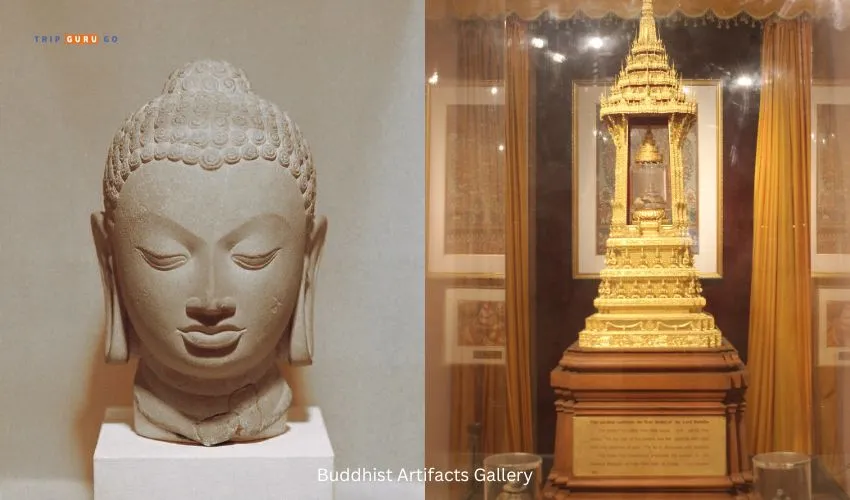
Discover the treasures of the Buddhist Artifacts Gallery, showcasing sacred relics of Buddha dating from the 5th to the 4th centuries BC. Unearthed from Piprahwa in Uttar Pradesh, these relics include caskets with bone fragments, ornaments, figures, and precious gemstones. An inscription on one casket verifies its contents as Buddha’s sacred relics. Further excavations led by the Archaeological Survey of India revealed additional soapstone caskets containing more of these revered bone relics. This historic site is believed to be the ancient Kapilavastu, Buddha’s hometown.
The gallery magnificently presents Buddhist artistry across diverse mediums:
- Stone, Bronze, Terracotta, Stucco, Wooden Sculptures & Painted Scrolls (Thangkas): These exhibits hail from Nepal, Tibet, Central Asia, Myanmar, Java, and Cambodia, representing the three major Buddhist forms: Hinayana, Mahayana, and Vajrayana. The pieces evoke deep devotion, dedication, and a profound love for humanity.
Key highlights include:
- Adoration of Stupa: A Pale Green Limestone Masterpiece from Nagarjunakonda, 3rd century AD.
- Standing Buddha: A Dark Grey Schist Stone Representation from the Kushana Period, 2nd–3rd Century AD
- Laughing Boy Head: A Stucco Artwork from the Kushan Era, 3rd–4th century AD
- Scenes from Buddha’s Life: A Chunar Sandstone Marvel from the Gupta Period, 5th century AD, in Sarnath
- Buddha Head: A Buff Chunar Sandstone sculpture from the Gupta period, 5th century AD, in Sarnath
- Standing Buddha: A 10th-century AD Bronze artwork from Pala, Nalanda
- Elephants carrying Buddha’s Relics: A Red Sandstone Creation from Bharhut, 2nd century BC, during the Sunga Period
- Sacred Relics from Kapilavastu: Spotted Red Sandstone Relics from Piprahwa, 5th–4th century BC
Step into this gallery to experience the spiritual essence, historical significance, and artistic excellence of Buddhist heritage.
8. Evolution of Indian Scripts and Coins Gallery:
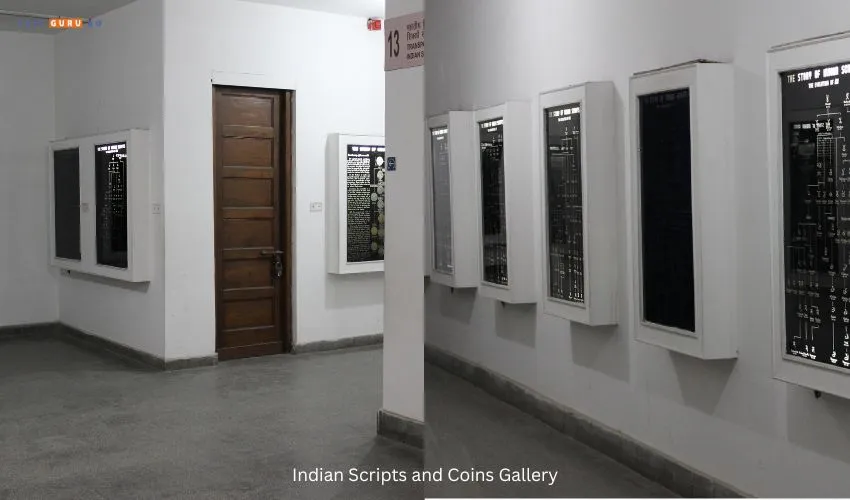
Trace the evolution of Indian scripts and currencies through this informative gallery. Explore how writing systems evolved and how coins played a crucial role in shaping India’s economic history. Delve into the cultural significance of scripts and currencies in this fascinating journey through time.
9. Bronze Gallery:
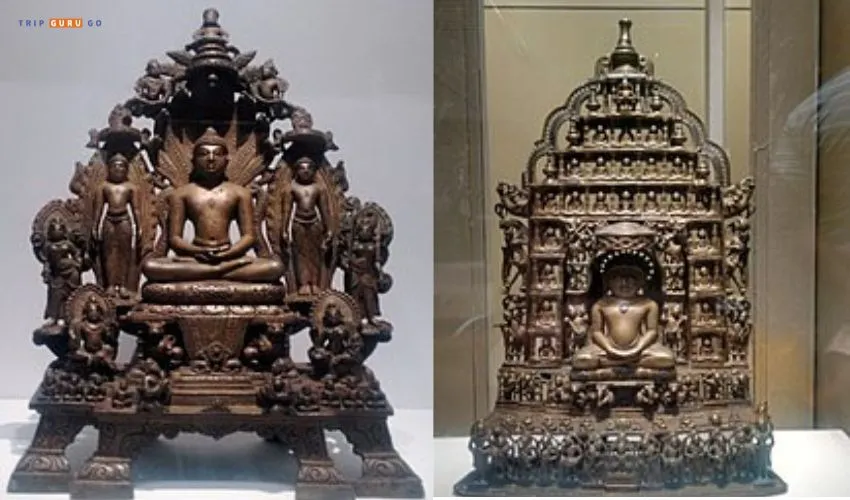
The Bronze Gallery, a testament to Indian artistry and sculpture, unfolds with innovative displays. Its recent renovation has brought forth a unique and accessible arrangement where sculptures harmonize with detailed descriptions. Shri Tejpal Singh, Deputy Curator of Archaeology, and CPWD executed this thoughtful design with a design by Ms. Matrika from Mumbai that seamlessly combines aesthetics and information.
Highlights:
- Exceptional Exhibits: The gallery proudly showcases four Buddha images from Phophnar, Madhya Pradesh, acclaimed for their exceptional artistry.
- Pala Bronzes: Noteworthy Pala bronzes, primarily with Buddhist themes, grace the space. Originating from Nalanda in Bihar and dating back to the 8th to 10th centuries, they offer glimpses of history.
- Himalayan Treasures: The gallery features bronzes from the Himalayan region, especially from Kashmir and Himachal Pradesh. These pieces represent the skilled artistry of Northern India.
- Regional Skill: Witness the brilliance of Chamba’s metalwork through the remarkable Svachchhanda Bhairavi. This is a tribute to the craftsmanship of Himachal Pradesh.
- Global Influence: The exhibit isn’t limited to Indian soil. It also includes selected Nepalese and Tibetan bronzes, showcasing the interplay of cultures.
- Masterful Iconography: The Vasudeva-Kamalja image, a testament to Nepalese bronze art, is a striking example of intricate iconography.
Key Artworks:
- Vishnu Vaikuntha from Kashmir (9th century AD)
- Nataraja from Chola, Tamil Nadu (12th century AD)
- Kaliya-Mardan Krishna from Early Chola (10th century AD)
- Shiva-Tripurantaka from Early Chola (9th century AD)
- Svachchhanda Bhairavi from Utpala Chamba, Himachal Pradesh (10th century AD)
The Bronze Gallery masterfully captures the evolution and craftsmanship of India’s bronze sculptural heritage.
10. Manuscript Gallery:

The Manuscripts Gallery is a treasure trove comprising over 14,000 manuscripts and texts, with around 1,000 being beautifully illustrated. These diverse manuscripts are recorded in various languages and scripts, covering a vast array of subjects. The materials used for these manuscripts range from parchment and birch bark to palm leaf, cloth, paper, and even metals. Encompassing a period from the 7th to the 19th centuries, these manuscripts offer insights into the religious and sectarian diversity of the Indian Subcontinent, serving as windows to the region’s history. Key highlights of this collection include:
- Asthasahasrika Prajnaparamita: A Sanskrit manuscript on palm leaf from the 12th century AD
- Baburnama: A Persian manuscript on paper from AD 1598
- Balabodhini: A Sanskrit manuscript on birch bark from the 12th century AD
- Gita Govinda of Jayadeva: Sanskrit verses on a palm leaf in an accordion format from the 18th century AD
- Jain Kalpa Sutras: Prakrit manuscripts on paper from the 15th century AD
These manuscripts, through their diverse forms and content, illuminate the rich historical tapestry of India with profound authenticity.
11. Coin Gallery:
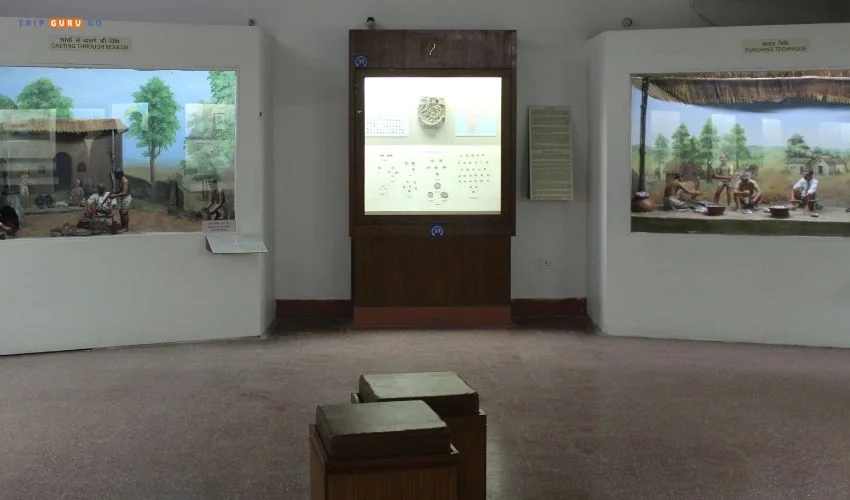
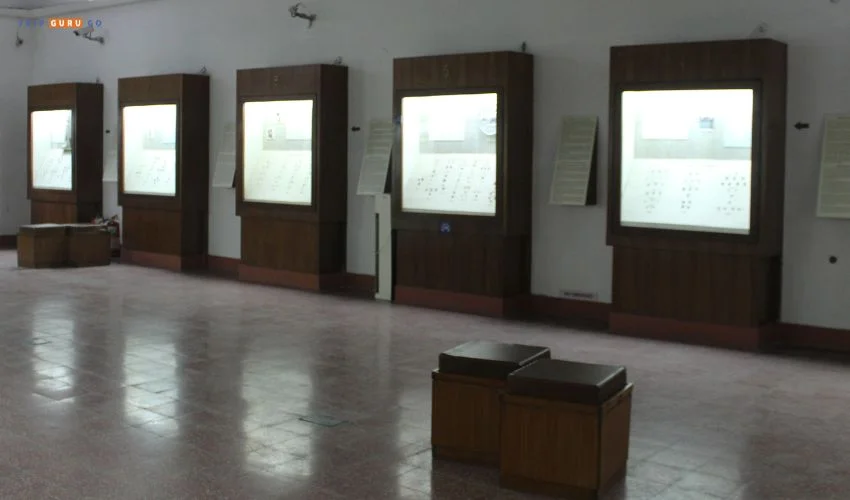
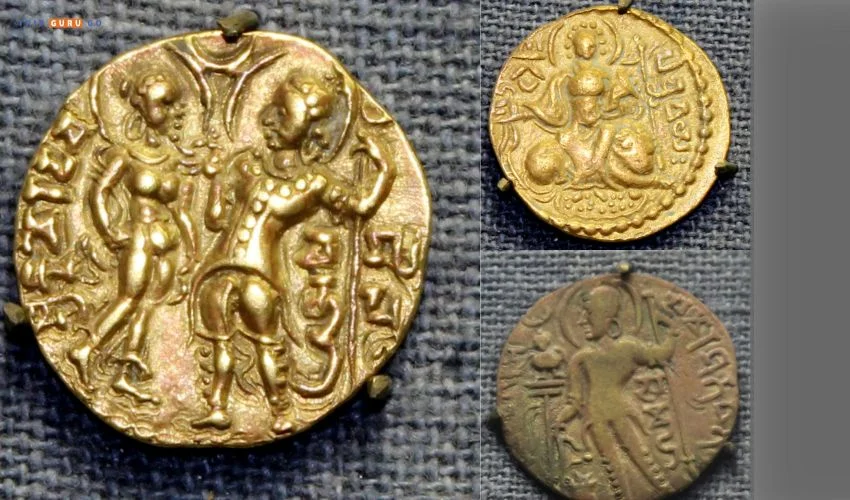
The Coins Gallery at the National Museum in New Delhi holds a remarkable collection of over 130,000 coins, some dating back to the sixth century BC, when coins first appeared in India. Among these treasures are exceptionally rare coins. On display are 1669 coins, including replicas, measuring vessels, couries, and ratties used in ancient times for weights and measures. The gallery covers the entire spectrum of Indian coinage, from the earliest bent bar and punch-marked coins to those from the Indian Pot with Seated Monkey States, British India, and post-independence eras. Intriguing dioramas showcase coin production techniques, offering insights into the rich history of Ancient, Medieval, and Modern India. These coins provide a genuine source of information about the nation’s diverse history.
12. Central Asian Gallery:
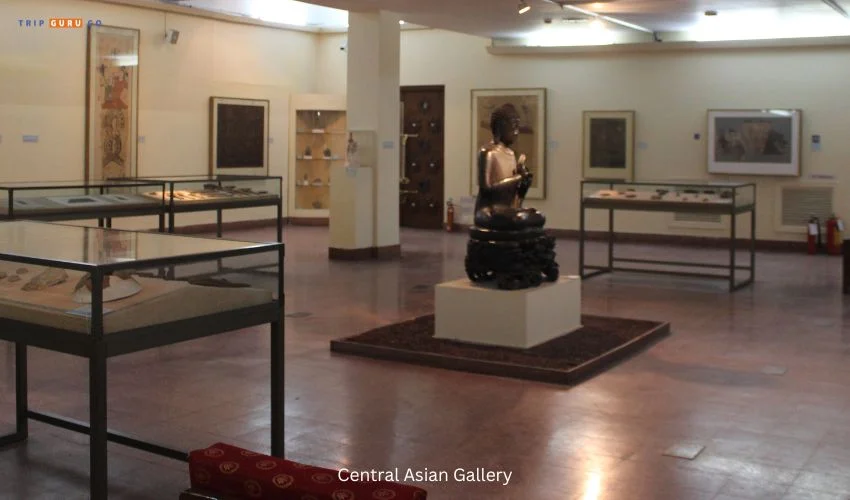
Sir Aurel Stein, a renowned archaeologist of the early 20th century, amassed a varied collection that is on display in the Central Asian Gallery. His expeditions between 1900 and 1916 unearthed treasures from over 100 ancient Silk Route cities. This impressive collection includes wall paintings, sculptures, coins, silk banners, pottery, and more. It offers a glimpse into the rich cultural heritage of Central Asia, highlighting religious and secular artifacts, gold and silver items, and documents. Stein’s exploration immortalizes the vibrant history and connections of the Silk Route civilizations.
13. Maritime Heritage Gallery:
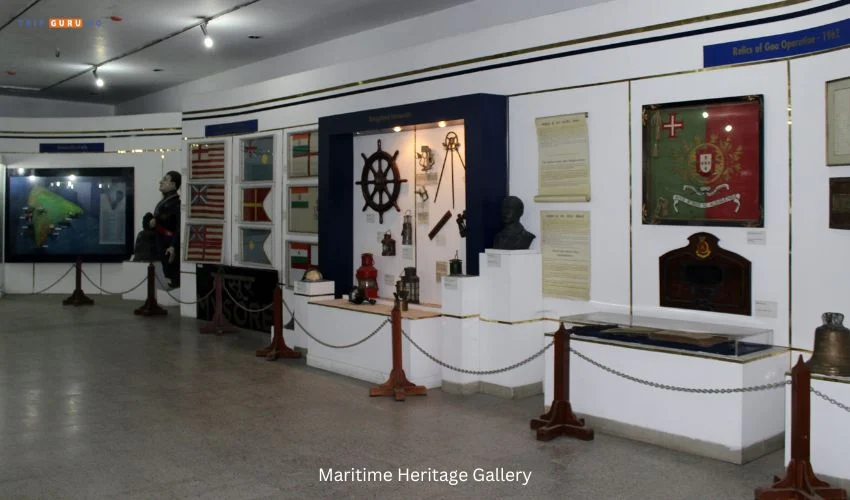
The Maritime Heritage Gallery, situated on the first floor of the National Museum, highlights India’s vibrant maritime history using artifacts, photos, and dioramas. This gallery, established in 1991, offers insights into the country’s maritime heritage, showcasing its maritime achievements and cultural significance.
14. Tanjore and Mysore Painting Gallery:
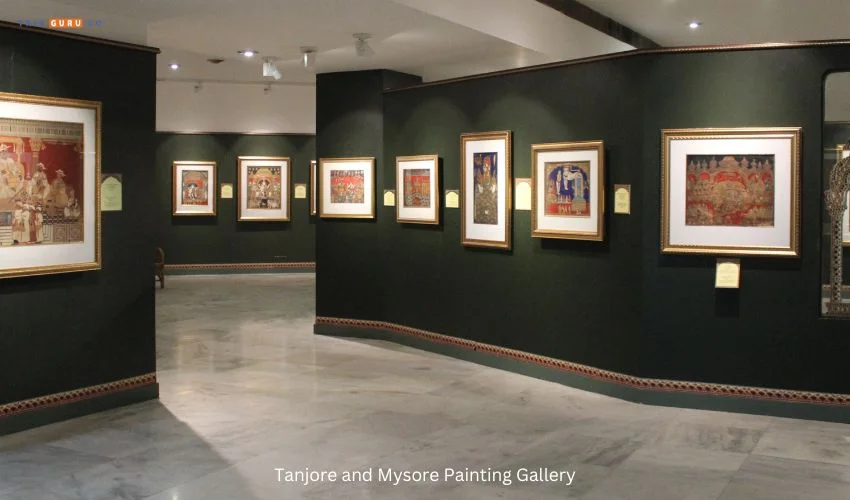
Step into the captivating world of South Indian art in the Tanjore and Mysore Paintings Gallery. This gallery proudly presents masterpieces from two renowned schools of painting: Tanjore and Mysore.
Highlights:
- Tanjore School: Named after Tanjavur in Tamil Nadu, these artworks dazzle with real gold and silver foil, precious stones, and vibrant colors.
- Depict Hindu deities: Krishna, Rama, Vishnu, Shiva, and more.
- Showcase royal figures, saints, and diverse subjects.
- Mysore School: Founded in South Karnataka during Maharaja Mummadi Krishnaraja Wodeyar’s reign, it offers diverse artistic expressions.
- Magnificent murals and distinct Mysore paintings on cloth, paper, and wood
- Reflects the region’s cultural heritage and artistic prowess.
Exquisite Paintings:
Among the 88 captivating paintings on display, you’ll find exceptional pieces like:
- Navaneeta Krishna with Tanjore King Shivaji II
- Nataraja Shiva
- Rama Pattabhishekam
- Durbar of Serfoji II
- Enchanting “Marriage ceremony of Shiva-Parvati and Sita-Rama
Explore the profound beauty and cultural richness of Tanjore and Mysore paintings in this gallery, where each stroke of the brush narrates stories of devotion, royalty, and spirituality.
15. Textile Gallery:
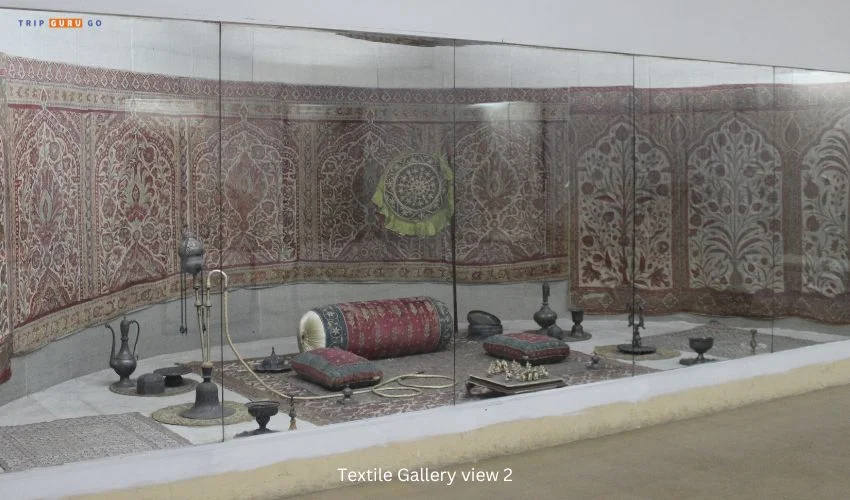
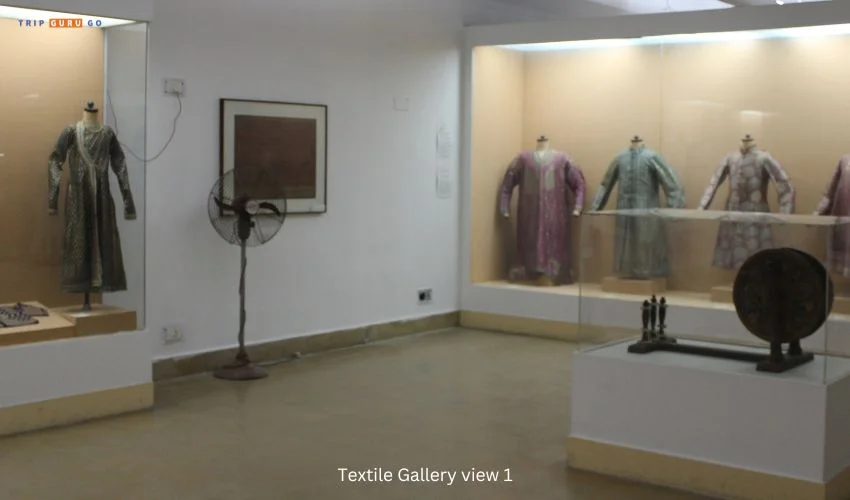
Step into the Textiles Gallery to explore a stunning collection of traditional Indian textiles from the Later Mughal period. Marvel at the intricately woven, printed, dyed, and embroidered cotton, silk, and woolen fabrics on display.
Royal Chamber:
Experience the regal elegance of the Royal Chamber, where textiles take center stage. Admire the embroidered silk carpet beneath your feet and the cloth ceiling above. The walls are adorned with exquisite printed fabrics, while intricately detailed zari and zardozi work graces the pillow covers, showcasing the opulent use of textiles in royal style.
16. Pre-Columbian and Western Arts Gallery:
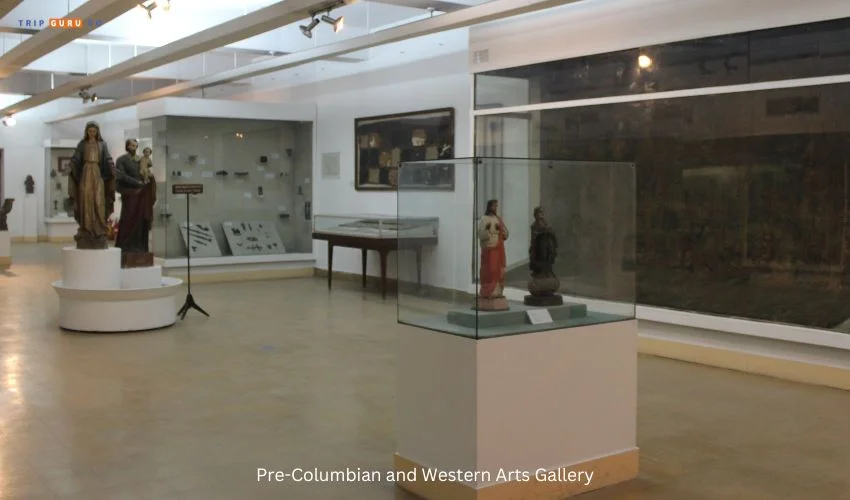
The Pre-Columbian and Western Arts Gallery features a collection donated by Mr. and Mrs. Heeramaneek. It showcases key cultures from the pre-Columbian era, including the Olmec culture from Mexico. The Olmec are known for monumental stone sculptures of human heads and intricate jade sculptures. The collection encompasses artifacts predating Christopher Columbus’s arrival in the Americas, with items from Mexico, Peru, the Maya, the Inca, the North-West Coast, Panama, Costa Rica, and El Salvador. This gallery offers a glimpse into the diverse artistic heritage of these regions before European contact.
17. Harappan Gallery:

The National Museum’s Harappan Gallery offers a captivating journey into the past, where the enigmatic Indus Valley civilization once flourished. This gallery houses an exceptional collection of artifacts that shed light on the lives and achievements of this ancient civilization.
- Iconic Artifacts: Discovering the Past At the center of this collection stands the revered “Dancing Girl,” a mesmerizing bronze sculpture from the early Harappan period. The skeletal remains from Rakhigarhi provide a tangible link to the people who inhabited this land.
- Glimpses of a Lost Era: Treasures of the Past: The gallery presents Terracotta images of the Mother Goddess, Clay Pottery, a mix of sculptures in bronze and Terracotta, Bone Objects, Ivory, Steatite, Semi-Precious Stones, Painted Pottery, and exquisite jewelry items.
- Seals of Identity: A Window into Trade and Symbolism Highlighted are diverse seals showcasing animal depictions and mysterious symbols, offering insights into trade and cultural connections. The depiction of proto-Shiva Pasupati on one seal adds spiritual significance.
- Preserving the Past: Challenges and Legacy The collection faced challenges during the Partition era, with key artifacts shared between India and Pakistan. Despite this, the gallery continues to grow, incorporating discoveries from post-Partition excavations.
- Echoes of History: Reliving the Indus Civilization: Step into the Harappan Gallery to relive the vibrant echoes of a civilization that thrived in the Indus Valley. Each artifact narrates a chapter of this ancient tale, inviting us to connect with a past that continues to inspire wonder.
Each gallery at the National Museum offers a unique glimpse into India’s diverse cultural heritage, spanning centuries and regions. From sculptures and paintings to manuscripts and coins, these collections embody the richness and complexity of India’s artistic legacy.
Anthropology Department’s Collection at the National Museum of India
The Anthropology Department at the National Museum proudly houses a collection of ethnographically significant objects. These treasures have been gathered through exploratory journeys and generous contributions from private collectors. Within the Ethnic Art Gallery, visitors can appreciate a wide array of tribal and folk artworks that form a significant part of our diverse heritage.
Tribal Lifestyle of Northeast India Gallery:
Explore the vibrant cultures of Northeast India in this dedicated gallery. Known as the “Seven Sisters and One Brother, this region is a treasure trove of diverse traditions and arts. The gallery showcases a rich array of traditional artifacts, including clothing, jewelry, paintings, wood carvings, and more. Discover the unique lifestyles, handicrafts, and personal adornments of various tribal groups that contribute to the rich tapestry of North East India’s heritage.
Sharan Rani Bakliwal’s Musical Instruments Gallery:
The Sharan Rani Bakliwal Musical Instruments Gallery, named after India’s Sarod Maestro, showcases a diverse collection of musical instruments. Donated by Padamshree (Late) Mrs. Sharan Rani Bakliwal, this gallery features instruments from tribal, folk, and classical backgrounds. It also includes some 19th-century Western instruments. Divided into Wind, String, and Percussion categories, the collection offers a comprehensive view of musical heritage. A bamboo sculpture of the Goddess Saraswati playing the Veena adds to the gallery’s charm.
Wood Carving Gallery at the National Museum of India, New Delhi:
Step into the Wood Carving Gallery to explore a captivating collection not only from India but also from Nepal, Central India, and Tibet. This gallery showcases India’s wood carving legacy, highlighting styles from the 17th to 19th centuries, including Rajasthan, Gujarat, Odisha, and South India. Discover decorative and practical objects, architectural elements, and sculptures. A remarkable highlight is a 9th-century wooden pillar, the oldest in the museum. This gallery, of which Anamika Pathak is the curator, offers a fascinating look into the traditions of wood carving artistry.
Arms and Armour Gallery at the National Museum of India:
Step into the Arms and Armour Gallery to witness the evolution of weaponry from the Stone Age to the Modern Age. This captivating collection includes a variety of arms, such as edged weapons, projectiles, firearms, and more. Explore the assortment of sacrificial, ritual, and war weapons, along with ornamental and protective gear for both humans and animals. Predominantly showcasing Mughal arms, the gallery also features notable representations of Maratha, Sikh, and Rajput weaponry, offering a fascinating insight into India’s martial history.
Tradition, Art, and Continuity Gallery at the National Museum of India:
A valuable addition to the National Museum occurred on February 6, 2014, with the unveiling of the “Tradition, Art, and Continuity” Gallery. This exhibit showcases over 200 objects collected by private enthusiasts, spanning diverse regions and social groups. On display are remarkable items like a Santhal community palanquin, West Bengal scroll paintings, Punjab’s Phulkari textiles, bronze sculptures from Bastar, as well as terracotta creations and intricate basketry. This gallery wonderfully encapsulates the rich artistic traditions of various corners of India.
Inclusive Tactile Experience Gallery at the National Museum of India:
In collaboration with UNESCO, NPRD, and Saksham, the National Museum of India, New Delhi, introduced the ‘Anubhav: A Tactile Experience’ gallery in 2015. This unique space is designed for people with disabilities and features tactile replicas of 22 artifacts from the museum’s collection. The gallery offers Braille labels, audio guides, and ramps, encouraging visitors to touch and explore the displayed objects. Under the direction of Vijay Kumar Mathur and Rige Shiba, the gallery provides a welcoming environment for people with disabilities. Hemant Tomar’s Modeling department crafted the replicas, and Amardeep Labana designed the gallery to emphasize dimensions, ensuring an enriching experience.
Museum Digitization: National Museum’s Online Initiative
The National Museum of India, New Delhi, has undertaken a significant initiative to digitize its collection using the ‘JATAN’ software, a virtual museum builder. This effort, led by the Centre for Development of Smart Computing, aims to create digital versions of preserved objects and monuments, accessible to researchers and the public. These digital imprints are integrated into a national digital repository, enabling easy access to theme-based collections. The museum enhances the visit experience through the “Darshak” mobile app, providing object details via QR codes.
National Museum of India’s Inclusion in the Google Art Project
The National Museum has contributed items from its collection to the Google Art Project, a non-commercial endeavor by Google via the Cultural Institute. Over a hundred objects have been photographed and described on the Google Art Project website under “National Museum, New Delhi.” This effort has greatly expanded online access to the museum’s collection for visitors. The National Museum’s Google page will continue to feature more of its significant collections, enhancing its digital presence.
A Journey of Discovery: Visitor Experience at the Museum
Interactive Exhibits: Bridging Past and Present
Embark on an interactive journey at the National Museum of India, New Delhi, bridging history and modern technology. Innovative exhibits let you engage with artifacts through virtual reality, deepening your understanding of India’s rich heritage.
Education at the National Museum of India: Engaging Programs
The National Museum of India, New Delhi, serves as more than a repository; it’s an educational hub. Our diverse range of workshops, lectures, and seminars invite learners of all ages to deepen their understanding of Indian history and culture.
Entry Fee and Timings at the National Museum of India
The National Museum of India welcomes visitors from Tuesday to Friday between 10 am and 6 pm. On Saturdays and Sundays, the museum extends its hours until 8 pm, allowing more time for exploration. The Museum is closed on Mondays and Gazetted holidays. Please contact the Museum for more information. These National Museum New Delhi timings provide ample opportunities for individuals to immerse themselves in the rich cultural heritage it offers.
At the National Museum of India, Delhi, the entry fee is Rs. 20 for adults, while foreigners are charged Rs. 350 for admission. Students up to class 12th can enjoy free entry by presenting their valid student ID cards. This arrangement provides students with the chance to connect with India’s cultural heritage without incurring any admission costs. The National Museum of India ticket price for different categories makes it accessible to a diverse audience.
How do I reach the National Museum of India?
- Nearest Metro Station: The Central Secretariat and Udyog Bhawan metro stations are the National Museum’s nearest Metro stations. These stations offer convenient access for visitors using the Delhi metro system.
- Nearest Railway Station and Cabs: The National Museum is located approximately 4.5 km from New Delhi Railway Station, making it the National Museum’s nearest railway station. You can find it on Janpath, close to the road that connects India Gate and Rashtrapati Bhawan. Cabs are readily available to transport visitors from these stations to the museum.
Bus Routes:
- National Museum Bus Stop: Bus routes 505, 521, 522, 526, 531, 580, and 615, and the HoHo Bus (Delhi Tourism Service) stop at the National Museum Bus Stop.
- Nirman Bhawan Bus Stop: Bus routes 047, 156, 181, 346, 408, 410, 430, 435, 440, 443, 456, 459, 470, 481, 490, 530, 580, 970, 973, and 984 halt at the Nirman Bhawan Bus Stop.
These transportation options ensure easy and convenient access to the National Museum of India, allowing visitors to reach the museum with ease.
Visitor Information Table
| Visitor Information | Details |
|---|---|
| Location | New Delhi, India |
| Nearest Metro Stations | Central Secretariat and Udyog Bhawan Metro Station |
| Nearest Railway Station | New Delhi Railway Station |
| Address | Janpath Rd, Rajpath Area, Central Secretariat, New Delhi, Delhi 110011 |
| Timings | Tue to Fri: 10 am – 6 pm, Sat & Sun: 10 am – 8 pm |
| Entry Fee | Adults: Rs. 20, Foreigners: Rs. 350, Students up to class 12th: Free (with I-cards) |
| Parking | Available |
| Wheelchair Access | Yes |
| Website | https://nationalmuseumindia.gov.in/en/visiting |
| Contact | Phone: 011 2301 9272, |
Nearby attraction of the National Museum of India:
Here are nearby attractions around the National Museum of India in New Delhi:
- India Gate: Iconic war memorial and open space.
- Rashtrapati Bhavan: Presidential residence with stunning architecture.
- Humayun’s Tomb: UNESCO site with Mughal architecture.
- Lodhi Gardens: Historical gardens with monuments.
- National Gallery of Modern Art: Contemporary Indian art collection.
- Purana Qila: Ancient fort showcasing Delhi’s history.
- Gurudwara Bangla Sahib: Serene Sikh temple.
- Janpath Market: Local shopping and handicrafts.
- National Handicrafts & Handlooms Museum: Traditional crafts and textiles.
These sites offer a range of experiences near the National Museum of India.
Conclusion
In conclusion, the National Museum of India, New Delhi, stands as an embodiment of the nation’s cultural tapestry. Its extensive collection, coupled with innovative displays and educational initiatives, solidifies its position as a cultural beacon. In this article, we are dedicated to sharing the remarkable stories that reside within its walls and contributing to a broader appreciation of India’s rich heritage. This case study of the National Museum, New Delhi, serves as an invitation to visit the museum and embark on a journey that transcends time, connecting the past, present, and future.
FAQs
The National Museum of India is located in New Delhi, which is a Union Territory and the capital of India.
The National Museum of India is commonly referred to as the “National Museum.” It is located in New Delhi and showcases an extensive collection of artifacts related to India’s rich cultural heritage.
The National Museum of India is situated in New Delhi, the capital of India. It is located on Janpath, near India Gate.
Unfortunately, I do not have real-time access to external sources or recent case studies. However, you can likely find case studies or research papers related to the National Museum, New Delhi, through academic databases, libraries, or online resources.
Yes, you can find photos of the National Museum, New Delhi, by searching online on platforms like Google Images or by visiting the official website of the museum.
The nearest Metro station to the National Museum in New Delhi is Udyog Bhawan Metro Station. It’s within walking distance of the museum.
The first National Museum of India was established on August 15, 1949. It holds a remarkable collection of artifacts representing India’s diverse history and culture.
Yes, there is a National Museum of Natural History in India. It is located in New Delhi and focuses on promoting environmental awareness and natural history education.
The National Museum of India is built on Janpath Road, near India Gate, in New Delhi.
For detailed information about the National Museum of India, including exhibitions, collections, timings, and entry fees, you can visit the official website of the museum or contact them directly through their provided contact details.
References:

Hi, I am Manoj Kumar, the voice behind Trip Guru Go. I am a travel researcher, SEO content expert, and founder of this blog. With over 12 years of experience in digital travel research, I simplify complex destinations into real, helpful, and trustworthy guides.
Every article I write is backed by local sources, real traveler experiences, and deep fact-checking. Even if I have not visited every place personally, I never share anything without strong on-ground insight.
I do not sell travel packages or promote anything paid. My only goal is to help you travel smarter — with zero fluff, 100% honesty, and a deep focus on your safety and experience.