

Safe shopping for foreign tourists in Delhi is not only about avoiding pickpockets or scams. It is about soaking in the chaos, colours, and charm of its markets while feeling confident at every step. I still remember my first morning in Sarojini Nagar. The winter air carried the smell of frying pakoras, shopkeepers smiled widely in hopes of their first sale, and the lanes shimmered with fabrics swaying in the breeze. My bag was close to my chest, my camera ready, and my eyes scanning for the right stalls. Some calls from shopkeepers felt welcoming, others pushed me to walk faster. In this guide, I will share exactly how I navigated these moments, which markets felt safest, and the little mistakes you can easily avoid when shopping in Delhi.
Why This Guide Is a Must for Foreign Tourists
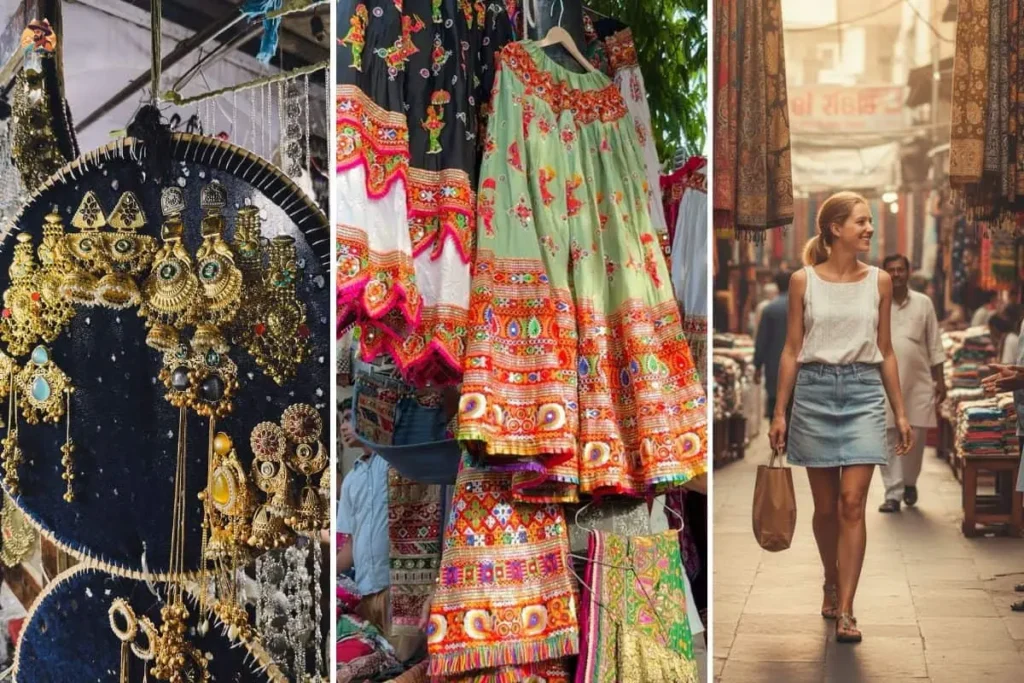
Delhi shopping has always pulled me in with its mix of chaos and charm. One afternoon, I stepped out of Rajiv Chowk Metro and followed the crowd towards Janpath Market. The lanes were alive with colours — bright scarves hanging like flags, wooden bangles clinking in trays, and the constant rhythm of bargaining in the air.
But in between this beauty, I noticed a hand brush too close to my bag. I tightened my grip, stepped aside, and watched as the same person moved on to another distracted tourist. That moment reminded me that safe shopping in Delhi is not about being afraid — it is about staying aware while still enjoying every detail the city offers.
Delhi shopping is exciting because no two markets feel the same. One day, you might be digging through piles of budget-friendly clothes in Sarojini Nagar, the next you could be sipping coffee in Khan Market while browsing high-end boutiques. This variety is what makes Delhi unforgettable, but it also means knowing how to adapt your safety approach to each place.
In this guide, I will blend my personal market stories with practical safety tips, so you can enjoy Delhi shopping without letting small risks spoil the magic. And keep reading, because I will also share one simple trick I use in every market that has saved me more than once.
Delhi’s Shopping Spectrum – From Street Bazaars to Luxury Arcades
I have never been able to shop in Delhi the same way twice. Every lane, every mall, every bazaar feels like it has its own heartbeat. One winter afternoon, I started in Sarojini Nagar. The smell of frying samosas drifted in from a roadside stall while teenagers haggled over denim jackets. My hands brushed against racks of colourful sweaters, some still carrying faint perfume from their last owner.
By evening, I had swapped that noise for the quiet hum of Select Citywalk. The polished floors reflected soft yellow light, and the air smelled faintly of brewed coffee from a café nearby. Nobody called me to “just have a look” — here, you browsed in peace.
That is Delhi shopping in a nutshell:
- Street Bazaars – Crowded, noisy, full of bargains and surprises. Keep your cash ready and eyes open.
- Local Markets – Organised chaos with permanent shops. Prices are mid-range, and variety is endless.
- Malls – Air-conditioned comfort, fixed prices, strong security.
- Branded Boutiques – Calm, premium, and distraction-free shopping.
Knowing which space you are in changes how you shop, how you bargain, and how you stay safe. Knowing which markets to visit can save time and stress. You can plan smarter with the Delhi Local Markets Shopping Guide.
Safest & Most Tourist-Friendly Markets in Delhi
Some Delhi markets feel like old friends — I know exactly where to go, where to pause, and when to leave. Others, I still approach with a little caution. Here are the places where I have felt both the thrill of discovery and the comfort of safety.
Sarojini Nagar – Budget Fashion & Lively Bargains
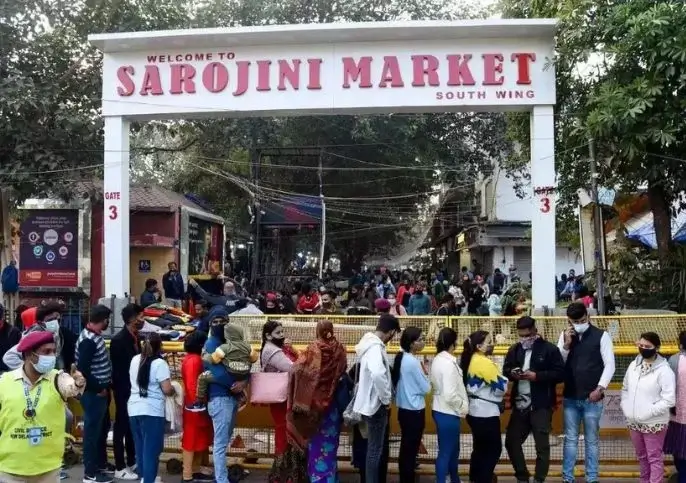
I once spent an entire morning here hunting for a winter coat. Shopkeepers shouted prices like an auction, and every few minutes, someone brushed past with bursting shopping bags. I finally walked away with a branded coat for ₹450 — and a strange satisfaction of winning the bargain. If you love bargaining and budget fashion, do not miss the Sarojini Nagar Market in Delhi. It is one of the liveliest shopping spots where every lane hides a surprise deal.
Lajpat Nagar – Ethnic Wear & Wedding Finds
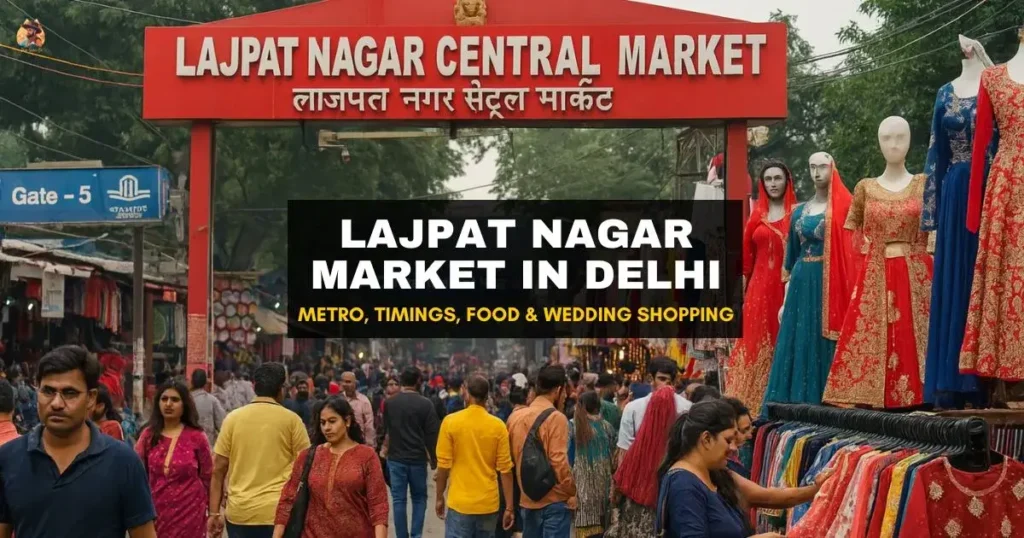
Before my cousin’s wedding, I came here with my mother. The fabric shops felt like treasure chests, every shelf stacked with silk, chiffon, and cotton in colours I did not know the names of. The sellers here remember repeat customers and often throw in small discounts if you return. For ethnic wear and wedding shopping, Lajpat Nagar Market in Delhi is pure bliss. The energy, fabric variety, and warmth of the shopkeepers make it unforgettable for every traveler.
Khan Market – Classy Boutiques & Branded Outlets

Whenever I feel like shopping without raising my voice, I come here. No bargaining, no shouts from shopkeepers — just quiet browsing and the occasional “Would you like some water?” from a polite store assistant. Those who prefer calm, branded boutiques should explore Khan Market in Delhi. It is one of the safest and most elegant shopping zones in the city, perfect for relaxed window shopping.
Janpath & Tibetan Market – Boho Accessories & Souvenirs
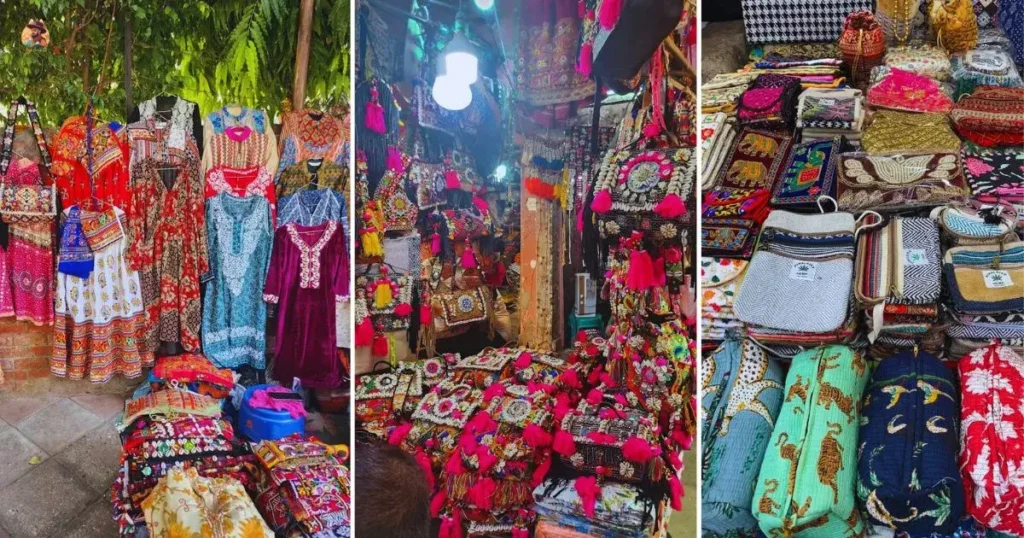
I have lost track of how many scarves I have bought here, “for friends,” and ended up keeping. Tibetan jewellery stalls glimmer in the afternoon sun, and the smell of incense lingers in the air. When it comes to scarves, silver jewellery, and boho finds, Janpath and Tibetan Market Delhi is every tourist’s favorite corner. You can easily spend hours exploring its colorful stalls.
Dilli Haat – All-India Crafts & Regional Food
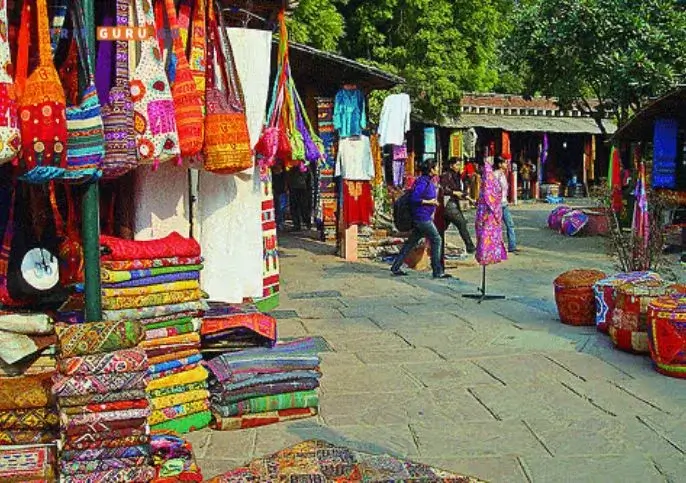
This is where you can taste momos from Sikkim, buy Madhubani paintings from Bihar, and hear Rajasthani folk songs — all in one walk. The ticketed entry keeps the crowd pleasant, and I always leave with something handmade. For handmade crafts, folk music, and regional food, Dilli Haat INA feels like a mini India. Every stall tells a story, making it a must-visit for travelers who value culture and safety together.
Select Citywalk – Modern, Secure & Air-Conditioned
After hours in crowded bazaars, stepping in here feels like changing worlds. You can shop for global brands, enjoy a peaceful meal, and walk out without once worrying about your bag.
Street-Smart Safety Tips for Foreign Shoppers
Delhi’s markets are like rivers — lively, unpredictable, and sometimes overwhelming. Enjoying them safely is not about avoiding the water, but about knowing how to swim.
When I shop in the morning, I feel more in control. The crowds are smaller, my pace is slower, and I can spot trouble before it gets too close. Evenings are different — electric with energy, but also thick with people. In those hours, I keep my bag in front of me and move with the flow instead of against it.
A few habits I follow every time:
- Carry less cash – I split my money into two wallets. One for quick payments, one hidden.
- Choose the right bag – An anti-theft crossbody is worth every rupee.
- Check before buying – Once in Janpath, I spotted a factory tag on a “handmade” scarf.
At night, I stick to places where the light is warm and constant, and the crowd is still lively — Connaught Place, Dilli Haat, or Khan Market. I avoid narrow lanes and never take shortcuts between stalls.
Shopping in Delhi can be both thrilling and safe if you stay aware, trust your instincts, and remember that saying “no” is as important as finding the best deal.
Where to Shop in Delhi for Indian Clothes
The first time I stepped into Lajpat Nagar for wedding shopping, I remember the air being thick with the scent of fresh marigold garlands from a nearby florist. Inside a fabric store, the walls were stacked so high with rolls of silk that it felt like they were leaning over me. The shopkeeper unrolled bolt after bolt, each one catching the tube-light glow differently.
If you are hunting for budget ethnic wear, Lajpat Nagar and Chandni Chowk’s Kinari Bazaar are where your feet will get tired before your eyes do. I have walked those narrow lanes with bags in both hands, my fingers brushing against sequinned borders hanging low from shop awnings. The joy here is in digging through stacks and finding that one piece that feels made for you.
But if you want calm and guaranteed quality, I head to South Extension or Khan Market. In these branded clothes markets in Delhi, the staff offer you water, the AC hums softly, and the price tags are firm. You pay more, but you also skip the bargaining battle.
A quick guide from my own map:
- Lajpat Nagar: Affordable sarees, salwar suits, and lehengas.
- Chandni Chowk: Kinari Bazaar for fabrics, borders, trims.
- South Extension: Designer ethnic brands, premium tailoring.
- Khan Market: Boutique stores, luxury fabrics.
Which Areas in Delhi Are Famous for Shopping
I once asked a taxi driver which area is famous for shopping in Delhi. Without blinking, he rattled off a list as if it were poetry. Over time, I have walked them all — each with its own rhythm.
Sarojini Nagar feels like a street carnival. Music from tiny speakers competes with bargaining voices, and clothes hang in such tight rows that sunlight struggles to get through.
Lajpat Nagar is slower, more deliberate. Here, the thrill is in matching dupattas to suits, haggling gently while sipping the free chai a shopkeeper offers.
Chandni Chowk overwhelms me every time — silver jewellery glinting in one lane, bridal lehengas glowing red and gold in another. The smell of chaat from a street stall somehow makes it inside the fabric shops. If you want to witness old Delhi’s charm, walk through Chandni Chowk Market. From silver jewelry to wedding lehengas, it is a sensory explosion that every foreign shopper must experience at least once.
Khan Market is the opposite of all this noise. It is where I go for branded clothes, books, and quiet coffee in between.
Dilli Haat feels like a weekend fair that never ends — ticket in hand, you wander from Rajasthan to Nagaland in a few steps, guided by colours, crafts, and cooking smells.
If you are hunting for authentic Mughal-style jewelry and ethnic wear, head to Meena Bazaar in Delhi near Jama Masjid. It is rich in heritage and perfect for those who love timeless designs.
And that is the beauty: in Delhi, shopping is not one activity. It is many worlds, each just a metro ride apart.
Bargaining Like a Local – Without Offending Anyone
I used to think bargaining meant arguing until you got the price you wanted. That was until my first week in Delhi, when I tried to buy a scarf in Janpath. I quoted such a low price that the shopkeeper laughed, turned away, and served someone else. I walked off, embarrassed — and empty-handed.
Over time, I learned it is more like a friendly game than a fight. I start with a smile, ask the price, and then counter with something lower but not insulting. If we meet in the middle, we both win. If not, I thank them and start walking — more than half the time, they call me back.
Two of my favourite tricks:
- First sale of the day: Once in Sarojini Nagar, I bought a kurta for ₹300 instead of ₹450 simply because it was the first sale and the shopkeeper wanted “good luck” for the day.
- Evening clear-outs: In Lajpat Nagar, I have seen vendors slash prices in the last hour just to avoid packing the stock again.
Before heading to any market, read these bargaining tips for Delhi markets. They will help you shop smarter, save money, and connect better with local vendors.
The key is to remember the human side. Sellers work long hours, and a polite customer often gets more than just a discount — they get remembered the next time.
Getting to Delhi’s Shopping Hubs Safely
The morning I first visited Sarojini Nagar, I stepped off the Pink Line metro into the cool air, phone in one hand, tote bag slung across my chest. I followed the stream of college students — their chatter and laughter made the short walk feel even safer.
I have learned that the Delhi Metro is my best travel partner. The Violet Line drops me almost at Lajpat Nagar’s doorstep, the Yellow Line brings me to Chandni Chowk’s chaos, and the Pink Line leads me to Sarojini’s bargains. For solo female tourists, markets like Khan Market or Dilli Haat are even kinder — the exits open into busy, visible streets with no dark alleys in between.
When I take an auto or taxi, I book through an app and keep Google Maps open. Once, an auto to Janpath tried a side street detour; I simply said, “We can stay on the main road, it is faster,” and he nodded without fuss.
I have realised: getting there safely is not about overthinking danger, it is about choosing the path where people, light, and movement never disappear.
Payment Safety – Cash, Cards & Digital Apps
Q: Why do I carry small notes in Delhi shopping markets?
Because I once waited ten minutes in Sarojini while a shopkeeper “looked for change” for my ₹500 note on a ₹120 scarf. The air smelled of frying pakoras, and my patience ran out before his coins arrived. Smaller notes mean faster deals and less attention on your wallet.
Q: Do I use cards in street markets?
Only if I can see the swipe machine. In Connaught Place, I stopped a cashier from taking my card to a back counter — I could hear the whir of ceiling fans and shop music while standing by the machine, making sure the payment stayed in sight.
Q: Which payment method do I prefer in branded clothes markets in Delhi?
UPI. In Khan Market, I paid for a kurta with Google Pay while the faint smell of coffee drifted from a café next door. The payment pinged on my phone before the shopkeeper had even folded the bag.
Q: My golden rule?
Cash for bazaars. Cards or UPI for malls and branded stores.
Best Time & Season for Safe Shopping
- Winter in Janpath — The late-afternoon sun turns every scarf into art. I sip masala chai from a paper cup, watching the crowd move in a lazy rhythm.
- Morning in Sarojini Nagar — Shopkeepers greet me with “First customer, madam!” The air is cooler, the prices softer, and the lanes wide enough to breathe.
- Evening in Khan Market — Fairy lights wrap around balconies. I stroll without rushing, knowing this is one of the safest markets in Delhi for solo female tourists.
- Summer in Chandni Chowk — The heat rises from the pavement, mixing with the smell of jalebis frying in ghee. I stick to shaded lanes and pop into fabric shops for a quick blast of cooler air before stepping out again.
Every hour changes the mood, but daylight in October–March always gives me the safest, most pleasant shopping days.
Special Tips for Solo Female Travelers
I have walked through Chandni Chowk alone, but only along its busiest veins. The sound of rickshaw bells, the smell of frying jalebis, the constant foot traffic — all of it felt like a safety net.
When I took a friend from Spain on her first market trip, we joined a guided shopping walk. Our guide knew every shortcut, every shopkeeper’s name, and even where to get the best samosas mid-route.
Once in Lajpat Nagar, a shopkeeper tried to hand me a sequinned dupatta “as a free gift” — only for me to realise later he had added its price to my bill. We both laughed when I pointed it out, and he removed it immediately.
My own rules have saved me more than once:
- If a lane feels too quiet, I turn back without thinking twice.
- I keep my emergency numbers on paper in my wallet — it once helped when my phone battery died mid-trip.
- Group shopping tours are not just safer; they open doors to better bargains.
Delhi rewards curiosity, but it respects caution. If you choose the right spaces and trust your instincts, you can shop here with both joy and peace of mind.
Final Word – Shop Freely, Stay Aware
Shopping in Delhi is an adventure filled with colours, sounds, and stories waiting at every turn. From bargaining for jackets in Sarojini Nagar to sipping coffee between boutiques in Khan Market, every market has its own personality. The key is to stay aware, trust your instincts, and choose places where you feel comfortable.
A little preparation makes the experience both safe and joyful. If you want to explore more, check my detailed market guides on Sarojini Nagar, Lajpat Nagar, Chandni Chowk, and Dilli Haat. They will help you plan your routes, shortlist your stops, and bargain like a local while enjoying the true charm of Delhi shopping.
🔗 Explore More Delhi Market Guides on Trip Guru Go
If you enjoyed reading this market guide, you will love exploring more colorful markets across Delhi. Each one has its own story, vibe, and shopping charm.
- 🛍️ Sarojini Nagar Market Delhi – Great for budget fashion finds
- 🏛️ Chandni Chowk Market Delhi – For traditional wear, jewellery, and market hustle
- 🎨 Dilli Haat INA Delhi – Handicrafts, craftspeople, and cultural vibes
- 👗 Karol Bagh Market Delhi – Wedding wear, mehendi stalls, and vibrant marts
- 📚 Connaught Place Shopping Delhi – Mixture of branded, local, and underground shopping
- 🕰️ Chor Bazaar Delhi – Vintage finds and treasure hunting
- 🛒 Sadar Bazaar Delhi – Wholesale goods, festive shopping, and bargains
- 🧣 Lajpat Nagar Market Delhi – Ethnic wear, dupattas, and tailored pieces
- 👟 Kamla Nagar Market Delhi – Youth fashion, casual styles, and street trends
- 🎒 Janpath & Tibetan Market Delhi – Boho bags, jackets, and souvenirs
- 📷 Khan Market Delhi – Cafés, bookstores, and quieter boutique vibes
- 🏛️ Palika Bazaar Delhi – Electronics, deals, and shopping under CP
- 💸 Bargaining Tips for Delhi Markets – How to negotiate without stress
Keep exploring Delhi like a local with Trip Guru Go!
FAQs – Safe Shopping in Delhi
Mornings are the safest, especially between 10 a.m. and noon. Markets are just opening, crowds are lighter, and shopkeepers are in a good mood for their “first sale” of the day.
In street markets, I usually start 30–40% lower than the quoted price. Bargain with a smile and be ready to meet in the middle.
Sarojini Nagar and Lajpat Nagar are my favourites for budget fashion. Both have wide selections and great deals if you know how to negotiate.
Some larger stalls accept cards, but I recommend carrying cash or UPI for street shopping. Use cards only in reputable stores where the machine is in front of you.
Yes. Markets like Khan Market, South Extension, and Select Citywalk are secure, well-lit, and have fixed prices.
Lajpat Nagar and Chandni Chowk are famous for sarees, suits, lehengas, and fabrics. Both have options from budget-friendly to high-end.
It is safe in busy, well-lit areas like Dilli Haat, Connaught Place, and Select Citywalk. Avoid isolated lanes and stick to places that remain lively after dark.
Sarojini Nagar: Pink Line, 5–7 min walk.
Lajpat Nagar: Violet Line, Gate 5 exit near the market.
Chandni Chowk: Yellow Line, direct access to the main bazaar.
Yes. Central Cottage Industries Emporium in Connaught Place and various state emporiums in Baba Kharak Singh Marg offer quality products with fixed prices.
Stay in a busy area, move towards a shop or café, and call a trusted contact. If needed, ask shopkeepers or security staff for help — most are willing to assist.

Hi, I am Manoj Kumar, a travel researcher and SEO content expert writing for Trip Guru Go, focused on Delhi and nearby travel destinations.
Being from Delhi NCR, I understand the travel preferences, routes, budgets, and experiences that travelers from this region actually look for. Every article I write is backed by local insights, real traveler experiences and detailed research to provide accurate and useful travel information.