
The city was still wrapped in darkness when I stepped out of my house in Faridabad. Streetlights cast long shadows on empty roads, and a thin layer of fog clung to the air. My friends were already waiting, hands tucked in their pockets, stamping their feet to keep warm. We had spoken about Chor Bazaar Delhi for years, but this was the first time our plans had survived the talking stage.
I wanted a vintage camera. One friend had his eye on rare speakers, another on second-hand lenses. Everyone said mornings were when the real treasures surfaced, so by 4 a.m., we were in my car, the windows slightly cracked to let in the cold air. The road ahead was quiet except for the low hum of the engine and the occasional whoosh of a truck passing by. Delhi’s Chor Bazaar is full of vintage wonders. For a complete list of city markets, visit the Delhi Local Markets Shopping Guide.
A Sunday Morning That Pulled Me Into Chor Bazaar

Old Delhi greeted us with its usual contrast — stillness and chaos sharing the same space. Near Jama Masjid, the streets narrowed into a maze where old walls leaned close enough to touch. A chaiwala’s kettle hissed in the corner, sending up clouds of steam scented with cardamom. Somewhere behind me, a cycle bell rang twice, sharp in the morning air.
As we turned a bend, the market began to reveal itself. Jackets hung from makeshift poles, rusted bicycles leaned against chipped doorframes, and a man squatted beside a table covered with old watches that ticked in uneven rhythms. Shopkeepers were lifting shutters, their movements unhurried, as if the day had not yet decided its pace.
For a moment, I slowed down — not to turn back, but to take it all in. This was not a place you just walked through. It was a place you entered like a story, one detail at a time. And I was ready for my first chapter.
When the Market Wakes Up – Chor Bazaar Timings & Rhythm
You know, the real magic of Chor Bazaar Delhi is in the early morning. When we reached, some shutters were half open, a pale tube light flickering inside. Cold air drifted through the lanes, carrying the smell of fresh chai. One shopkeeper shouted, “First sale of the day, take it for ten!” — and that was it, the market was awake.
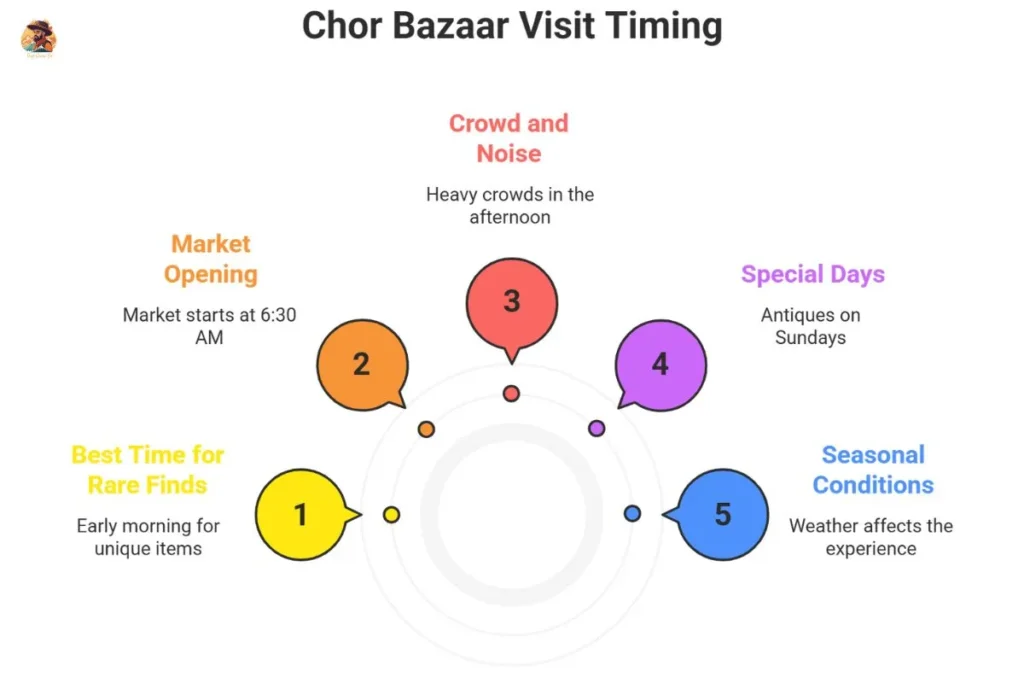
By 6:30 a.m., there were only a few people, and you could browse in peace. After 8 a.m., the crowd grows, and the bargaining noise fills every lane. If you are coming today or tomorrow, those first two hours are gold.
Opening Hours & Quietest Moments:
- Starts around 6:30 a.m. – 7:00 a.m.
- The best time is before 8:00 a.m. for rare finds.
- Afternoons are crowded and noisy.
How Sundays Change Everything
Sunday is a different story. Sellers bring out their best stock, and the crowd triples. Plus, it is Daryaganj Book Market day, so you get the scent of old books mixing with the shine of brass and gadgets. I once walked away with a vintage gramophone and a rare novel on the same Sunday.
Winter, Monsoon, and Festivals – My Experience
In winter, fog softens the chaos, and a steaming chai in hand makes the hunt perfect. Monsoon brings puddles, so wear good shoes. During Diwali, every stall sparkles, but prices go up.
Finding Your Way – From Metro Gate to the First Shop

I always take the Jama Masjid Metro Station Gate No. 3 exit. Cross towards the mosque, slip into the narrow lane on the left, and in six or seven minutes, the first jackets, tools, and radios will tell you you have arrived.
Jama Masjid Metro Route in My Steps
- Exit Gate No. 3
- Cross towards the Jama Masjid
- Take the left lane, walk 6–7 minutes to Chor Bazaar
Landmarks That Whisper ‘You’re Close’
A glimpse of the Red Fort or the spice-scented air of Chandni Chowk means you are near. Sometimes, the sharp rise and fall of bargaining voices give it away before you see it.
Shortcuts Locals Use to Avoid the Rush
- Enter from the Ballimaran side – fewer crowds.
- Cut through Meena Bazaar early – straight into the heart.
- On Sundays, use Daryaganj’s back lanes to skip traffic.
The Market’s Soul – What Caught My Eye
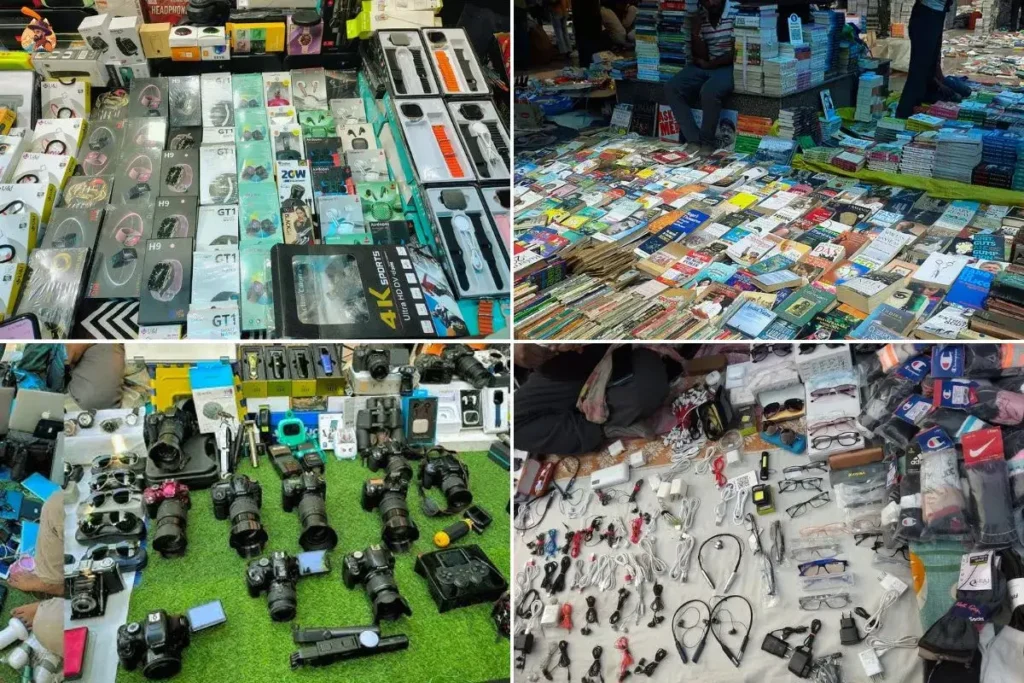
Every corner of Chor Bazaar, Delhi, felt like flipping through a scrapbook someone had left open for too long. Dust floated in the sunlight, and the air was thick with the smell of chai, brass polish, and something faintly metallic. Some stalls made me curious, some made me laugh, and a few made me forget I was even in a market.
Brass Lamps, Gramophones & Things That Tell Stories
One shop had brass lamps stacked like they were guarding a hidden door. I picked up a gramophone; the wood felt smooth and slightly warm from sitting in the sun. The owner placed a record and gave it a slow spin. First came the crackle, then a scratchy old tune that made the market’s noise fade for a moment. I remember thinking, I am not just holding a gramophone, I am holding evenings from someone’s past.
iPhones and Electronics – The Real Price Talk
Further in, rows of iPhones, cameras, and speakers shone under bright lights. The smell of warm plastic mixed with machine oil came from somewhere close. One phone I tried did not even turn on. The seller grinned, “Battery dead… kaam karta hai, check kar lo.” I tested it twice before handing it back. That is when it hit me — here, every shiny thing is either a bargain or a lesson.
Old Books & Prints That Still Smell of Another Time
Near the back, I found a leaning stack of books. Their covers felt like soft fabric, the paper edges rough under my thumb. When I opened one, a heavy scent rushed out — dust, fading ink, and decades of silence. Between two pages, a folded print of an old Delhi street slid out. I just stood there, wondering who had tucked it away and why.
Strange Finds – From Film Posters to Vintage Cameras
My favourite stall was part Bollywood, part history — faded film posters stacked beside box cameras. When I picked one up, its leather strap cracked softly in my hand. The seller chuckled, “It works, par film milna… Delhi mein barf milne jaisa hai.” I laughed, but a small part of me wanted to buy it anyway.
From Stolen Myths to Street Legends – The Story of Chor Bazaar
They say the name Chor Bazaar came from stolen goods once traded here, back when the lanes were darker and the deals quieter.
I first heard that story leaning against a tea stall, my glasses fogging from the steam. The shopkeeper stirred his cup and said, “Ek ghadi Chandni Chowk se gayab hui thi… teen mahine baad yahin mili.” I could not tell if he was sharing the truth or just enjoying the curiosity on my face, but I kept listening anyway.
How I Bargained Without Losing the Smile
A brass lamp caught my eye. Sunlight hit its carvings, making them glow like they had been polished just for me.
“How much?” I asked.
“Eight hundred,” he said without blinking.
“Four hundred,” I replied, trying to sound calm even though my heart was racing a little.
“Seven,” he shot back.
I put it down, pretending to look at another stall. He called out again, “Five-fifty.”
I turned, “Five hundred.”
There was a pause. He nodded. I smiled — part victory, part relief. As I carried the lamp wrapped in old newspaper, its cool weight in my hands felt like more than just a purchase. It felt like I had played the market’s game and walked away grinning.
Brands that serve travelers can explore ways to work with our travel blog and reach readers planning visits.
Keeping Safe Without Losing the Fun
Chor Bazaar’s crowd is as colorful as it is chaotic, but I have learned that the trick to enjoying it is to stay alert without losing the joy. Over time, I have built my own little “safety mantra” that lets me explore without worry.
I keep my valuables where my hand can reach them without looking. For cash, I carry only what I need for the day, and the rest stays safe elsewhere. Whenever the crowd grows too thick, I pause at the side. Those moments are never wasted—watching faces, overhearing shop banter, catching the clink of coins, or smelling the faint aroma of chai drifting from a stall makes me feel even more connected to the market.
My quick safety steps:
- Keep your phone and wallet in a front pocket or cross-body bag.
- Split your day’s cash into separate pockets.
- Slow down in a crowd and observe your surroundings.
Two Markets, One Walk – My Route From Chor Bazaar to Daryaganj
For me, Chor Bazaar and Daryaganj are not just two markets—they are two chapters of the same story. The narrow lane between them feels like a slow fade from one world into another.
Leaving Chor Bazaar, the metallic scent of brass and the sharp calls of shopkeepers slowly fall behind. Step by step, the atmosphere softens. By the time I reach Daryaganj, the clang of tools and bargaining voices has turned into the soft rustle of book pages and the occasional laugh from a bookseller.
I almost always end this walk with a book in my hand—not because I planned to buy one, but because somewhere along the way, the stories of the market convince me to carry a story home.
Getting There From Anywhere in Delhi
The easiest way to reach Chor Bazaar is to mix metro travel with a short rickshaw ride. I usually hop off at Jama Masjid or Chawri Bazaar metro station, then take a quick rickshaw to the entrance.
From a few key spots:
- Connaught Place: 20 minutes by metro + rickshaw.
- India Gate: Around 25 minutes total, including the ride from the nearest metro.
- Red Fort: Less than 10 minutes by rickshaw if traffic is kind.
- Chandni Chowk Market: Delhi’s oldest and most famous market, perfect for street food and shopping.
Should You Go? My Honest Take
If you love digging through piles to find that one special piece, or if the thrill of bargaining makes you smile, you will probably fall in love with Chor Bazaar. Vintage collectors, photographers, and anyone who enjoys a bit of mystery will find plenty to keep them busy.
But if crowds tire you quickly, or if you prefer shopping where prices are fixed and items are neatly labeled, this might not be your kind of place.
For me, even on days when I buy nothing, the walk itself feels like a treasure.
Final Thought – Walking Out With More Than Just Things
As I stepped out of Chor Bazaar, the same winter sunlight from my first moments there touched my face again. But it felt warmer now, as if the market had shared some of its stories with me. The faint echo of bargaining calls, the smell of old paper, and the glint of brass still clung to my mind.
The lamp in my bag felt heavier than it should, maybe because it carried a piece of the day with it. Long after the object fades, I will still remember the smiles, the surprises, and the way these lanes made Delhi feel like a giant, living scrapbook.
🗺️ More Delhi Market & Shopping Guides to Explore
Chor Bazaar ka mystery aur vintage charm hai — lekin Delhi ke aur bhi markets hain jinke kahaniyon mein kho jana hai:
- 🛍️ Sarojini Nagar Market Delhi – Trendy fashion, streetwear deals, budget finds
- 🏛️ Chandni Chowk Market Delhi – Fabrics, jewellery, street food & heritage lanes
- 🎨 Dilli Haat INA Delhi – Handicrafts, artisan stalls, cultural foods
- 👗 Karol Bagh Market Delhi – Bridal wear, electronics, ornate markets
- 📚 Connaught Place Shopping Delhi – Mix of brands, local markets, café culture
- 🛒 Sadar Bazaar Delhi – Bulk goods, festive shopping, traditional stalls
- 🧣 Lajpat Nagar Market Delhi – Ethnic wear, dupattas, stitching stalls
- 👟 Kamla Nagar Market Delhi – Youth fashion, casual styles
- 🎒 Janpath & Tibetan Market Delhi – Boho bags, Tibetan crafts, souvenirs
- 📷 Khan Market Delhi – Boutique vibe, bookstores, quiet corners
- 🏛️ Palika Bazaar Delhi – Electronics, gadgets, underground shopping
- 💸 Bargaining Tips for Delhi Markets – How to haggle smartly
- 🌍 Safe Shopping Tips for Foreign Tourists in Delhi – Stay alert, shop safe, and enjoy
Every artefact you find has a story. Keep exploring Delhi’s markets, unearth hidden gems, and let Trip Guru Go guide your journey.
FAQs on Chor Bazaar Delhi – What You Need to Know Before You Go
Chor Bazaar usually opens around 10 AM and stays lively until 7–8 PM. On Sundays, the market is open, but some antique and specialty shops may open a bit later or close earlier. The crowd also tends to be heavier, so mornings are the best time to visit if you want a calmer walk.
Chor Bazaar is usually open every day, but a few stalls shut on Fridays for prayers. I once went on a Friday afternoon and found half the shops closed, so it is better to go on any other day.
The nearest metro is Jama Masjid on the Violet Line. From there, a short 10-minute walk through Chandni Chowk’s side lanes will take you straight to the market’s edge.
Prices vary wildly. I have seen older iPhones starting around ₹8,000, while newer models can cost ₹40,000 or more. Always check every button and camera — a quick test saved me from buying a faulty one once.
Some do, some do not. You will find genuine second-hand goods, but there are also smart replicas. I treat every deal like a puzzle, only paying if it passes my hands-on test.
Yes, but stay alert in the crowd. I keep my phone in my front pocket and carry only the cash I need. Once, during a weekend rush, I stopped near a tea stall just to let the wave of shoppers pass before moving on.
Yes, but be respectful. Some sellers welcome it, while others prefer not to be photographed. I usually buy a small item first — a brass keychain once earned me a big smile and a “photo free” from the shop owner.
Apart from antiques, you will find vintage cameras, Bollywood film posters, gramophones, old coins, second-hand electronics, and quirky home décor. My last buy? A slightly dented kettle that now holds flowers in my kitchen.
They are just a 15-minute walk apart. I often make a day of it — starting at Chor Bazaar for odd treasures, then ending in Daryaganj with an armful of books.
Almost always, yes. Even if you accept the first price, the seller expects some back-and-forth. I once got a lamp for half the asking price just by smiling and pretending I was ready to walk away.

Hi, I am Manoj Kumar, the voice behind Trip Guru Go. I am a travel researcher, SEO content expert, and founder of this blog. With over 12 years of experience in digital travel research, I simplify complex destinations into real, helpful, and trustworthy guides.
Every article I write is backed by local sources, real traveler experiences, and deep fact-checking. Even if I have not visited every place personally, I never share anything without strong on-ground insight.
I do not sell travel packages or promote anything paid. My only goal is to help you travel smarter — with zero fluff, 100% honesty, and a deep focus on your safety and experience.