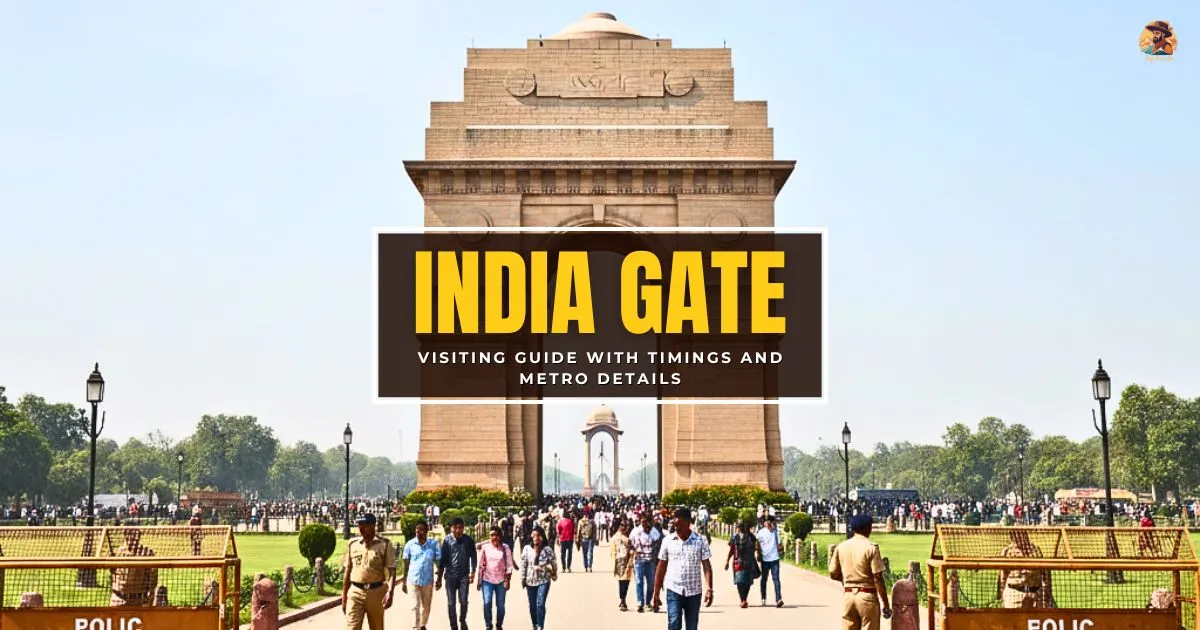
Most first-time visitors reach India Gate in Delhi, assuming it is always open, only to face barricades, long walking routes, or sudden access restrictions on arrival. This India Gate visiting guide gives clear, on-ground clarity about India Gate timings, today’s access reality, and the nearest metro route, because skipping this information is the most common reason visitors waste time or turn back disappointed.
Is India Gate Worth Visiting Today?
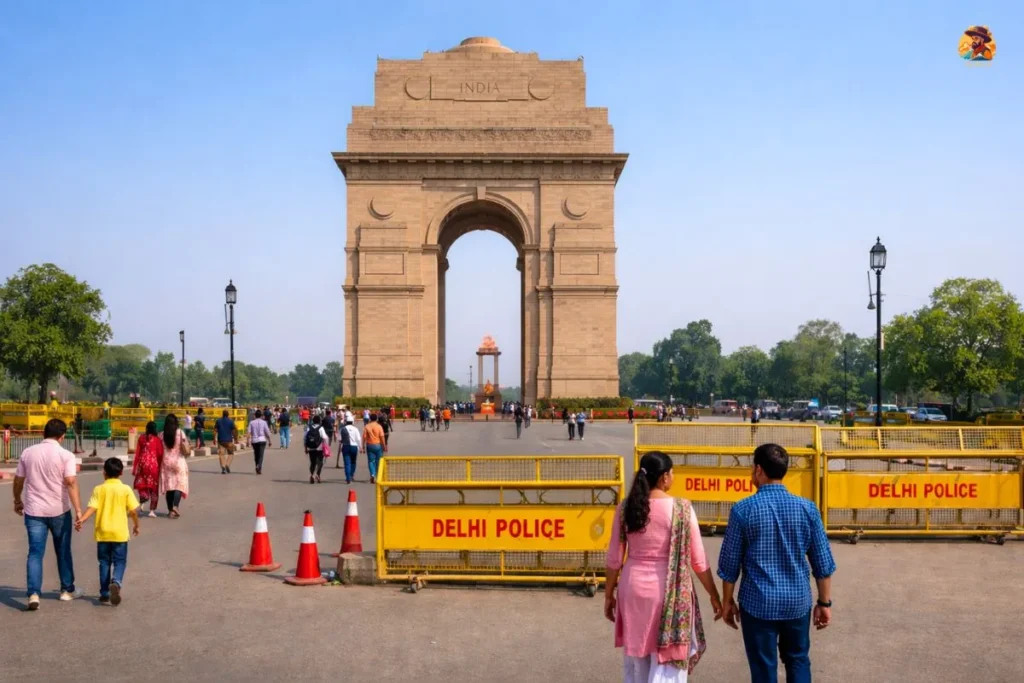
Most visitors reach the India Gate without checking whether the authorities allow public access that day, so their plans often fail on arrival. Instead of assuming open entry, it is safer to decide based on security movement, national events, and crowd pressure rather than fixed schedules.
Many people believe India Gate is always accessible because it is a public space, but access changes quietly during alerts and special days. Use the guidance below to decide clearly whether to go ahead, adjust timing, or skip altogether.
You should visit the India Gate if:
- It is a regular weekday with no visible security buildup.
- You feel comfortable walking longer distances when authorities place barricades.
- You plan to visit early morning or later in the evening.
You should avoid visiting the India Gate if:
- You are traveling with elderly family members or very young children
- You expect quick access without checks or extended walking
- You are visiting during national days or heightened security periods
Crowd levels and weather can still affect the experience, especially in winter afternoons and summer evenings. India Gate works best when you have time flexibility and realistic expectations, not a fixed or rushed plan.
This kind of unpredictability in access is common across Delhi’s central ceremonial zone, including areas around Rashtrapati Bhavan.
India Gate Timings, Entry Fee & Closing Time (Quick Visitor Snapshot)
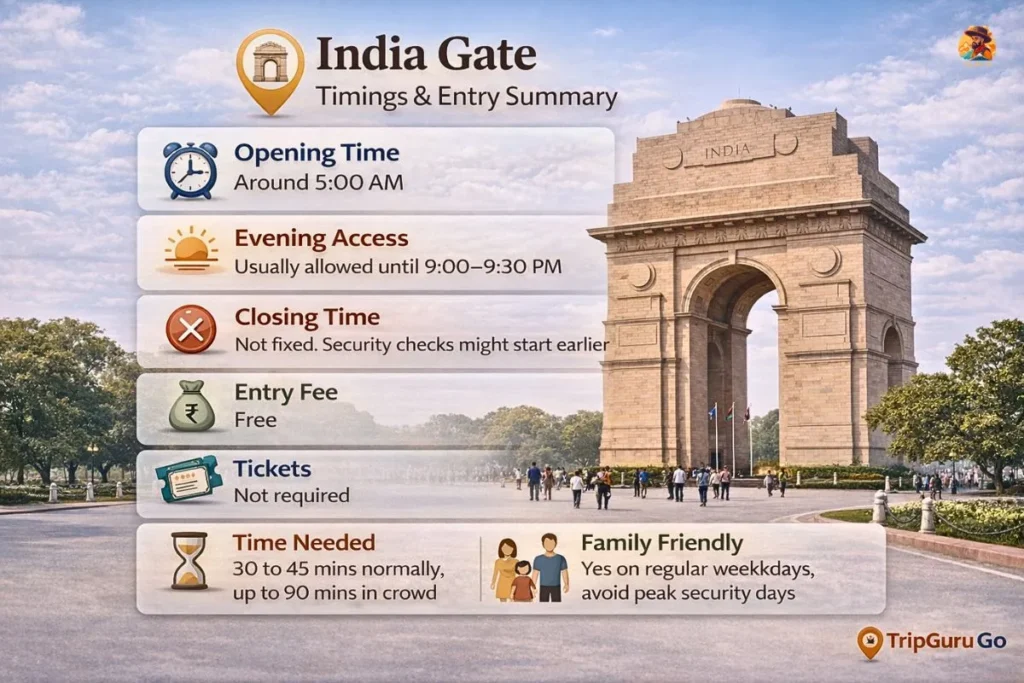
Most visitors check timings online but miss how closing and security pauses actually work on the ground.
This snapshot gives clear answers on India Gate timings, entry fee, and closing hours so you can plan without surprises.
India Gate Timings and Entry Details:
- Opening time (normal days): Around 5:00 AM
- Evening access: Usually allowed until 9:00 PM to 9:30 PM
- India Gate closing time: Not fixed, security checks often start earlier
- India Gate entry fee: Free
- India Gate tickets: Not required
- Time needed: 30 to 45 minutes normally, up to 90 minutes during crowds
- Family friendly: Yes on regular weekdays, avoid peak security days
Late evening plans are risky.
India Gate on Republic Day (26 January) – What You Must Know Before Going
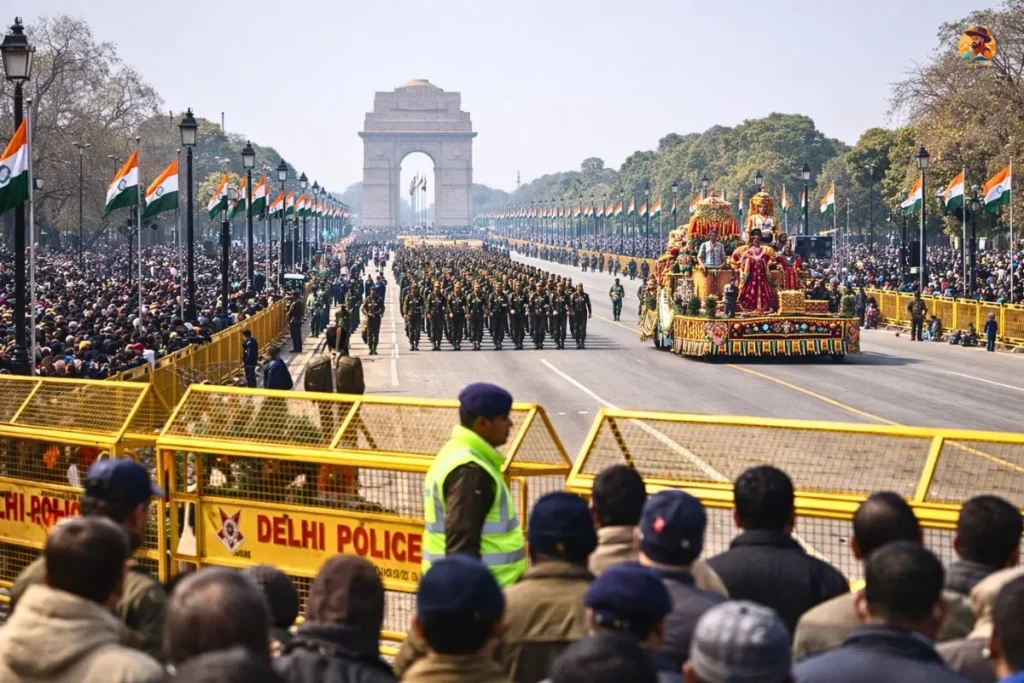
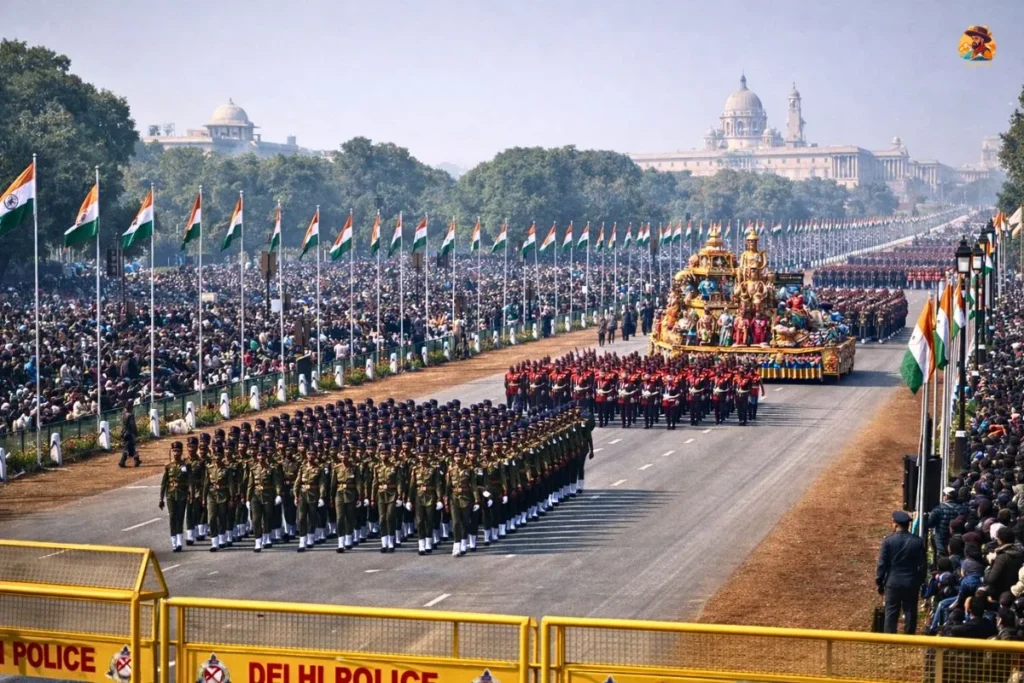
Many visitors arrive at India Gate on 26 January expecting a normal visit, but the police stop them several kilometers away without warning. Republic Day operates under special national security rules, which makes regular visiting assumptions unreliable on this date.
Can Tourists Visit India Gate on Republic Day?
Authorities restrict access to India Gate on Republic Day, so casual tourists cannot move freely near the monument. Entry rules depend on time and security zoning, which means early morning access may briefly appear possible and then close suddenly without notice.
Parade Visibility Truth Near India Gate
Many people expect to see the Republic Day parade from India Gate, but this expectation does not match ground reality. The parade takes place along Kartavya Path, and security forces keep India Gate inside a high-security zone where visitors cannot stop or view the area. Only visitors with official Republic Day parade tickets can enter approved viewing enclosures.
Road Closures, Barricades, and Security Checks
On 26 January, authorities enforce multiple road closures and stop private vehicles, taxis, and autos from entering India Gate. Even metro users should expect extended walking through police checkpoints, with movement controlled zone by zone rather than direct access.
Best Alternative Spots on 26 January
Kartavya Path viewing enclosures are the only reliable parade locations, and these require pre-issued official passes. The National War Memorial usually opens later in the day after security clearance, making it a more realistic visit option than India Gate itself.
Mini Summary – Republic Day Reality at India Gate
On Republic Day, India Gate does not function as a regular tourist attraction, and access remains restricted for most of the day. Parade viewing from the India Gate is not feasible despite common expectations. Long walking distances, layered barricades, and time-based closures are normal on 26 January. Visitors in Delhi that day get a better experience at Kartavya Path with valid passes or at the National War Memorial later in the afternoon.
How to Reach India Gate – Nearest Metro, Exit Gate & Walking Route
Many visitors assume the metro will drop them close to India Gate, but the real challenge begins after exiting the station. Reaching India Gate smoothly depends more on choosing the correct exit and following the walking route than on the station name alone.
India Gate Nearest Metro Station (Exact Answer)
Central Secretariat is the nearest and most practical metro station for India Gate, connected to both the Yellow Line and Violet Line. This station offers the clearest pedestrian alignment toward Kartavya Path on most normal days.
Before you exit the station, it helps to know why this route works better than nearby alternatives.
Why the Central Secretariat works best:
- Direct alignment toward Kartavya Path
- Fewer office-block diversions
- More predictable pedestrian movement
Which Metro Exit Gate to Use
Choosing the wrong exit can add unnecessary walking and confusion, even though you are technically at the correct station. At Central Secretariat, Exit Gate 5 usually keeps you oriented toward India Gate instead of fenced government zones.
Once you come out, small directional mistakes can quietly increase walking distance.
After exiting Gate 5:
- Face toward Kartavya Path
- Walk straight instead of following random crowds
- Avoid turning toward government office complexes
Walking Distance, Shade & Police Barricades
The actual walking distance from the metro to India Gate is usually around 1.8 to 2 kilometers, taking 25 to 30 minutes at a steady pace. Most of this stretch has limited shade, which becomes noticeable during midday heat.
On busy days, police redirect pedestrians here without advance notice, which can increase walking distance unexpectedly.
Walking reality to expect:
- Limited shade for most of the route
- Occasional police redirection
- Longer walks on weekends or security-heavy days
Autos, Cabs & Parking Reality
Many visitors expect autos or cabs to reach the India Gate, but the police stop them far away. Parking availability changes frequently, especially during weekends or national events.
Knowing this in advance helps set realistic expectations before you book transport.
What usually happens on the ground:
- Autos and cabs stop 800 meters to 1.5 kilometers away
- Final access is almost always on foot
- Authorities may block parking without prior notice
Mini Summary – Reaching India Gate Without Confusion
Central Secretariat is the most reliable metro station for India Gate, with Exit Gate 5 offering the clearest walking direction. Expect a 25 to 30-minute walk with limited shade and possible barricade diversions. Autos, cabs, and parking rarely reach the monument itself, so planning mentally for walking avoids the most common visitor frustration.
Crowd Reality at India Gate (Morning vs Evening vs Weekends)
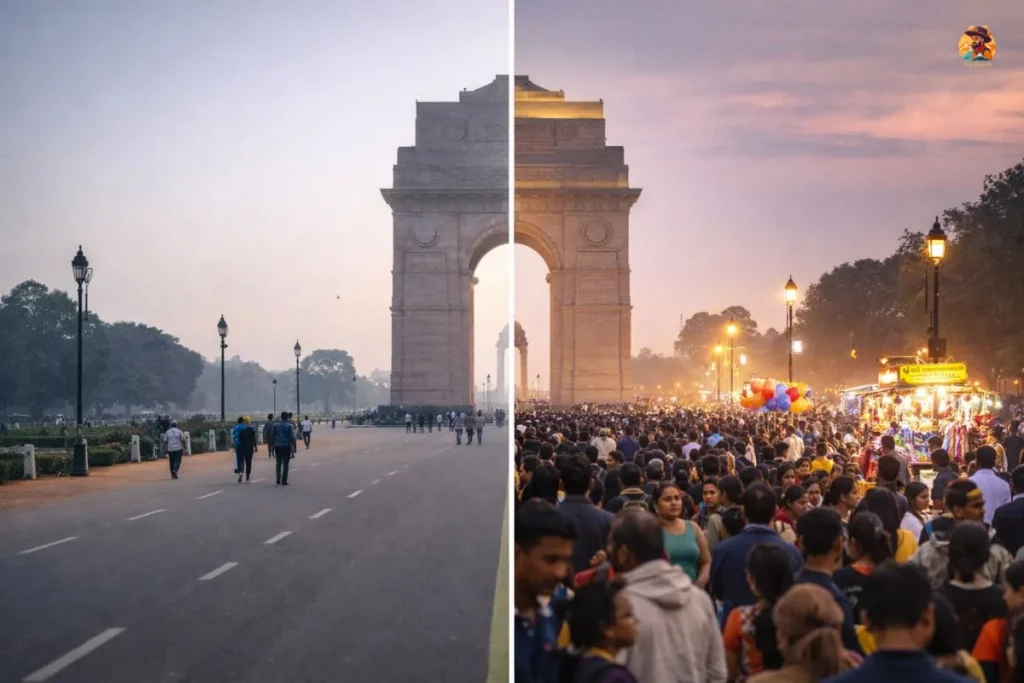
Evenings feel festive at India Gate, but the crowd density quietly drains energy faster than most visitors expect. If you are deciding which time is best to visit the India Gate, understanding crowd behavior matters more than atmosphere or photos.
Morning Calm vs Evening Rush
Many visitors assume evenings are better because of lighting and activity, but mornings offer a far calmer experience.
In early hours, walking feels easier and open, while an evening visit to the India Gate often means slow movement, noise, and waiting for space.
What actually changes during the day:
- Morning hours allow smoother walking and quicker exits
- Evenings attract families, vendors, and large local groups
- Simple things like photos or crossing paths take longer after sunset
Weekend vs Weekday Reality
Weekdays feel more predictable, especially outside holidays and school breaks.
On weekends, the India Gate crowd increases sharply from late afternoon, and movement slows near lawns and central paths.
Crowd difference you will notice:
- Weekdays support relaxed pacing and flexible timing
- Weekends feel congested, especially between 5 PM and 8 PM
- Security checks and foot movement slow as numbers rise
National Days and Special Events Warning
On national days, the usual crowd pattern disappears, and security control takes priority.
What feels like a celebration from afar often becomes restricted movement, barricades, and long walking routes on the ground.
Expectation vs Reality at India Gate
Most people expect India Gate to feel like an open public space at all times, but the experience depends heavily on timing. India Gate feels most comfortable during early mornings on normal weekdays, not during peak evenings or national events.
Travelers looking for quieter historical spaces often prefer places like Agrasen Ki Baoli, where crowd pressure feels very different.
History of India Gate (Only What First-Time Visitors Should Know)
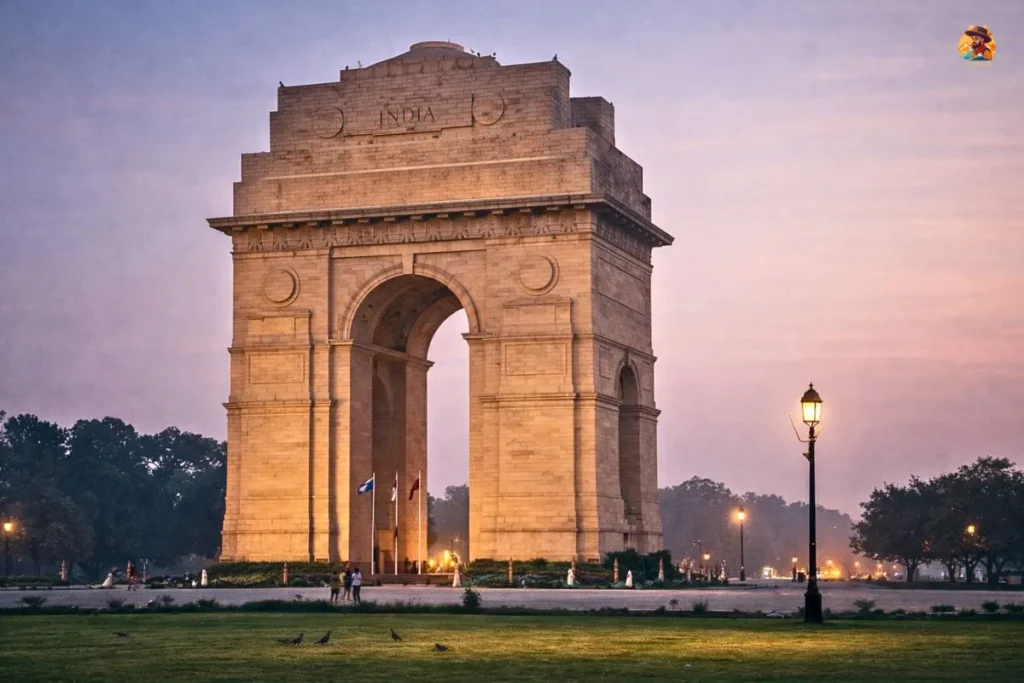
Most people read about the India Gate before visiting, yet many still feel disconnected when standing there in person. This usually happens because history is remembered as dates and names, not as the reason the monument exists.
The British government built India Gate as a war memorial to honor Indian soldiers who died during World War I and the Third Anglo-Afghan War. Sir Edwin Lutyens designed the monument, and the authorities inaugurated it in 1931, which explains its purpose and colonial-era design style.
Planners intentionally designed the monument as an open public memorial, not as a decorative structure. They created its scale and layout to support shared remembrance in a civic space, not an enclosed setting.
Unlike enclosed Mughal-era monuments like Humayun’s Tomb, planners designed India Gate as an open civic memorial.
Food, Restaurants & Facilities Near India Gate
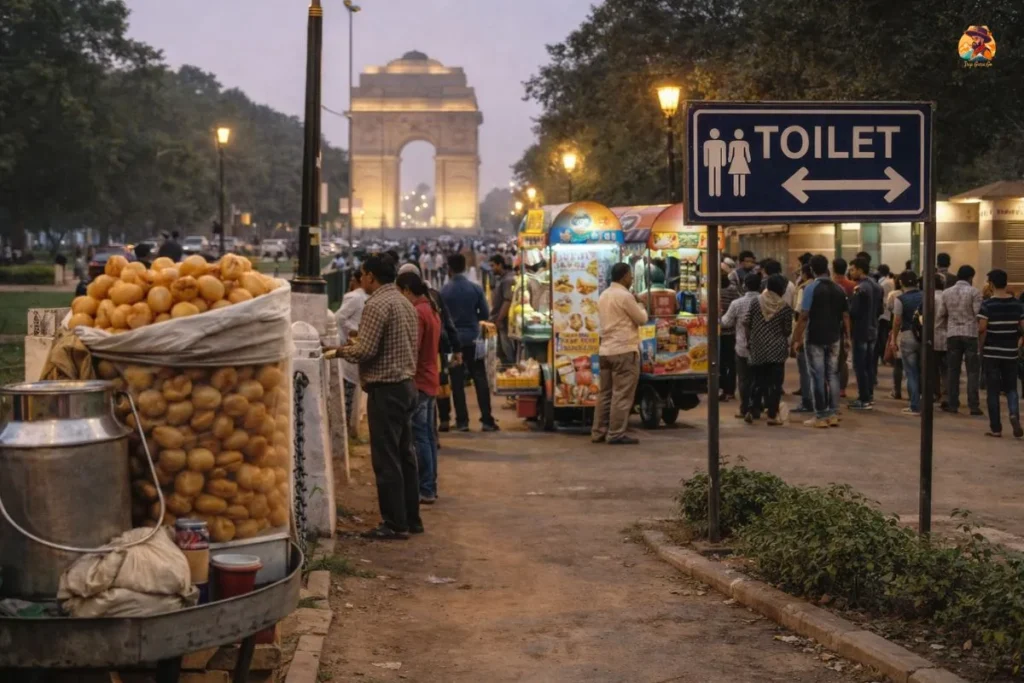
Many visitors assume food and facilities work like a public park setup near India Gate, but that assumption often breaks on arrival. This section separates what visitors can sometimes access from what authorities always restrict, so planning stays realistic.
Food and Vendor Availability (What You May Find)
Food availability near the India Gate depends heavily on crowd size and security control. On busy evenings, vendors may appear around outer areas, while on quieter or restricted days, they can disappear completely.
Availability pattern to expect:
- Vendors appear mostly in the evening
- Morning visits often have no food options nearby
- No permanent food stalls inside the core area
For a proper meal, Connaught Place remains the most reliable nearby option via metro or cab.
Toilets and Basic Facilities (Know the Limits)
You can find public toilets near India Gate, but only in a few scattered spots. During evenings and weekends, queues are common, and temporary closures happen during cleaning or security checks.
Limitations to plan for:
- Limited number of toilets
- Waiting time increases after sunset
- Cleanliness varies with crowd pressure
What to Carry Before You Arrive
Because both food and facilities are inconsistent, carrying essentials reduces stress. This matters more when walking distance increases due to barricades or crowd control.
Helpful items to carry:
- Water bottle, especially in warm weather
- Light snacks for children or elderly companions
- Tissues and sanitizer
Expectation vs Reality Around India Gate
Visitors expect reliable food and facilities near a major landmark. In reality, India Gate prioritizes security and crowd control, not visitor convenience.
Nearby Places You Can Combine With India Gate (Same Day Plan)
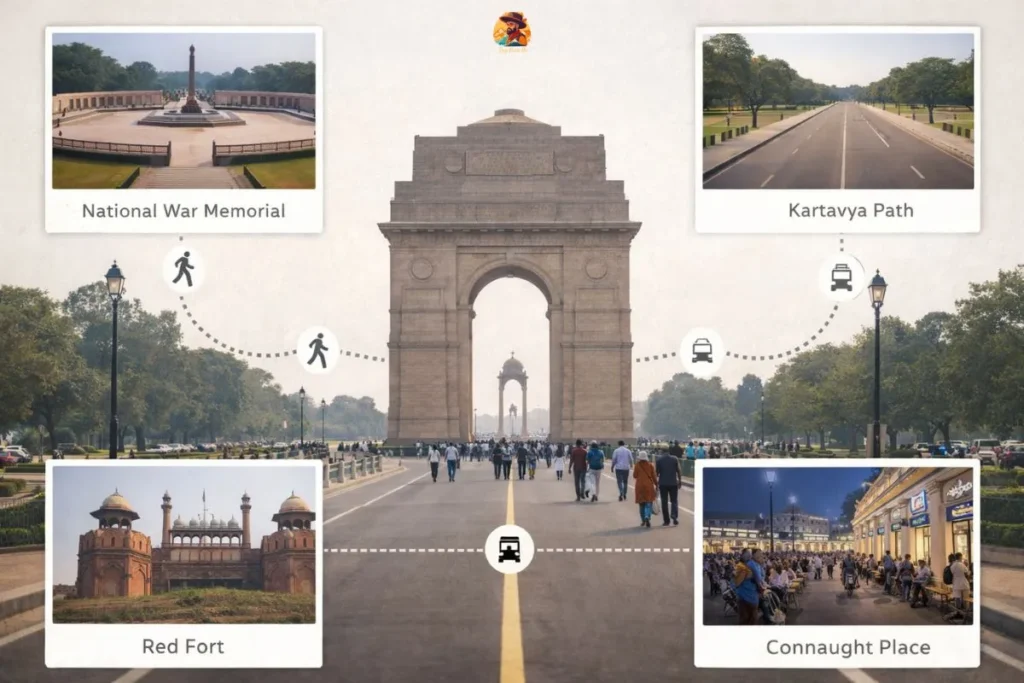
Poor sequencing wastes half a day in central Delhi, even when places look close on the map. Not everything fits in one day, and planning fewer places in the right order saves both energy and time. If you only plan India Gate and the National War Memorial in one visit, that is a complete and perfectly reasonable day plan.
Best Places to Combine With India Gate (Low Effort)
- National War Memorial
Walk: 5–10 minutes
Combine: Always yes
You can easily pair this place with the India Gate, and our National War Memorial guide explains the walking route. - Kartavya Path
Walk: Direct connection
Combine: Yes, if time allows
This works as a short walk before or after the India Gate, and our Kartavya Path visitor guide helps avoid restricted stretches.
Places You Should Combine Only With Care (Metro Required)
- Red Fort / Lal Qila
Metro: Required
Combine: Only if you start early
This stop needs time and energy, which is why our Red Fort Delhi visiting guide recommends morning visits only. - Chandni Chowk
Metro: Same zone as Red Fort
Combine: Only with the Red Fort, not with the India Gate
Trying to add Chandni Chowk after India Gate usually leads to exhaustion, which is explained clearly in the Chandni Chowk travel guide. - Connaught Place
Metro or cab: Short ride
Combine: Evening food stop only
This works better as a relaxed end to the day, and café zones are covered in the Connaught Place market guide.
Best Same-Day Order (Least Tiring)
- Morning: Red Fort → Chandni Chowk
- Afternoon: India Gate → National War Memorial
- Evening (optional): Connaught Place
Any other order usually increases walking, waiting, and metro fatigue.
What NOT to Do (Most Common Mistakes)
- Do not plan Red Fort after the India Gate in the evening
- Do not add Chandni Chowk late in the day
- Do not assume all central Delhi places are walkable
Expectation vs Reality
Visitors expect central Delhi landmarks to connect easily in one loop. In reality, only the National War Memorial and Kartavya Path combine smoothly with India Gate, while everything else needs careful metro timing.
India Gate Photos, Drawing Spots & What Not to Carry
Security checks quietly ruin photography plans at India Gate, especially when visitors arrive with restricted gear and realize it only at the checkpoint. If you are planning India Gate photos or carrying material for India Gate drawing, knowing what usually works on the ground matters more than creative intent.
Photography Rules at India Gate
You can take casual photos in open areas, but crowds and security zones reduce how long you can stop for pictures.
What usually works without trouble:
- Mobile phones and small handheld cameras
- Quick shots while moving, not setting up
- Early mornings and normal weekdays
Drones, Tripods & Restricted Items
Security teams strictly prohibit drones near India Gate and may question or confiscate them if visitors carry one. In the evening, they also stop even small tripods, especially when crowds increase, and limit stationary setups.
Items that commonly get stopped:
- Drones of any size
- Tripods and camera stands
- Large camera bags on crowded days
India Gate Drawing Spots (Ground Reality)
Many sketching visitors expect to sit close to the monument, but long stationary activity near the central area is often restricted. Outer walkways or lawn edges usually work better for the India Gate drawing, as long as you remain flexible and follow security instructions.
What helps sketching go smoothly:
- Small notebooks instead of large boards
- Choosing less crowded edges
- Being ready to shift spots if asked
Expectation vs Reality for Photos at India Gate
Visitors expect photography to be unrestricted in a public space. In reality, security priorities override convenience, and flexibility matters more than equipment or setup time.
Final Tips for Visiting India Gate
India Gate looks easy to visit, but the real experience depends on timing, crowd levels, and security conditions. Early mornings feel calm and comfortable, while evenings and weekends bring heavy crowds and longer walking. On Republic Day, access stays restricted, so Kartavya Path or the National War Memorial works better. Central Secretariat Metro remains the most practical route because vehicles rarely reach the monument. Food and toilet facilities are limited, so carrying water and essentials helps. With realistic expectations and smart planning, your India Gate visit can stay smooth, meaningful, and stress-free.
Those who love writing about cultural travel and local traditions can contribute through our write for us travel blog guidelines.
FAQs About India Gate
Yes, India Gate is usually accessible on normal days, but entry depends on live security conditions and crowd control. Access routes or walking distance can change suddenly due to police barricades or official movement.
Early morning is the best time if you want fewer crowds and easier movement. Evenings feel lively but involve heavier crowds, longer walking, and slower security checks.
Delhi Metro generally operates on 26 January, but some stations and exit gates near central Delhi may be closed or restricted. Expect longer walks and controlled exits around Central Secretariat and nearby areas.
Parking near India Gate is unreliable and often blocked, even on normal days. Using the metro is usually the safest option to avoid last-minute parking closures.
Most visitors walk 1.5 to 2 kilometers, especially when coming by metro or cab. Walking distance increases on busy days or during security restrictions.
No, there is no entry fee, and no tickets are required to visit the India Gate. This applies only to the monument area and not to nearby attractions with separate rules.
Yes, India Gate is generally safe during normal days with visible police presence. Crowded evenings and national days can feel overwhelming for elderly visitors and small children.
Security staff usually allow light snacks and water bottles. They stop large bags, alcohol, or suspicious items during checks.
Public toilets are available near the India Gate area, but are limited in number. During evenings and weekends, queues and cleanliness issues are common.
Tripods are often restricted, especially during crowded hours or security alerts. Handheld cameras and mobile phones usually face no issues.
India Gate remains accessible late into the evening on normal days, but access depends on crowd control and security checks. Late-night visits are unpredictable, and sudden restrictions can limit entry without prior notice.
India Gate is one of several important historical places in Delhi, where visiting conditions depend on timing, access, and crowd behavior.

Hi, I am Manoj Kumar, the voice behind Trip Guru Go. I am a travel researcher, SEO content expert, and founder of this blog. With over 12 years of experience in digital travel research, I simplify complex destinations into real, helpful, and trustworthy guides.
Every article I write is backed by local sources, real traveler experiences, and deep fact-checking. Even if I have not visited every place personally, I never share anything without strong on-ground insight.
I do not sell travel packages or promote anything paid. My only goal is to help you travel smarter — with zero fluff, 100% honesty, and a deep focus on your safety and experience.