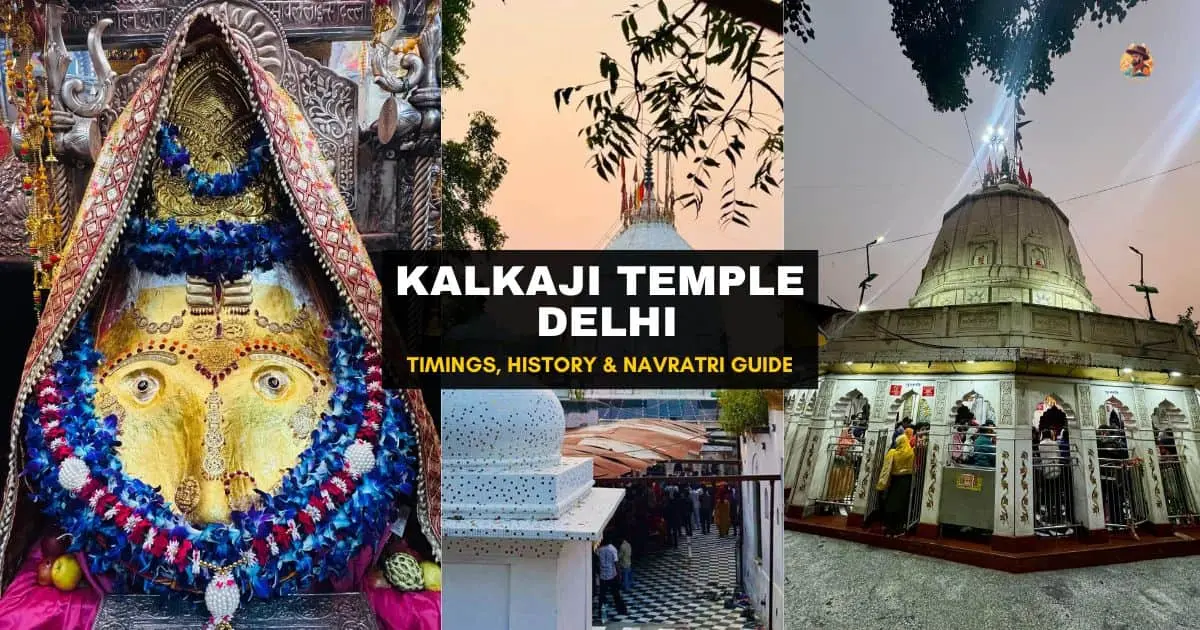
I still remember my first visit to the Kalkaji Temple in Delhi. The city outside was barely awake, but the temple grounds were already alive. Aarti bells echoed through the still air, and the fragrance of fresh marigolds mixed with warm incense drifted from the sanctum. As I joined the line of devotees, the early morning light fell softly on the temple’s shikhara. In that moment, it felt as if the entire city had paused to breathe with me.
In the heart of Delhi stands a Shakti Peeth where every prayer feels heard. Kalkaji Mandir in Delhi is not just a temple; it is a space where you can stand among hundreds and still find a moment of personal peace. During Navratri, the transformation is striking — the air thick with the sound of bhajans, the glow of countless diyas, and the collective devotion of thousands. If you love exploring sacred places like this, check out my complete guide to Famous Temples in Delhi, where I have shared other divine spots you must visit.
🕰 Kalkaji Temple Timings – Darshan, Aarti & Best Hours
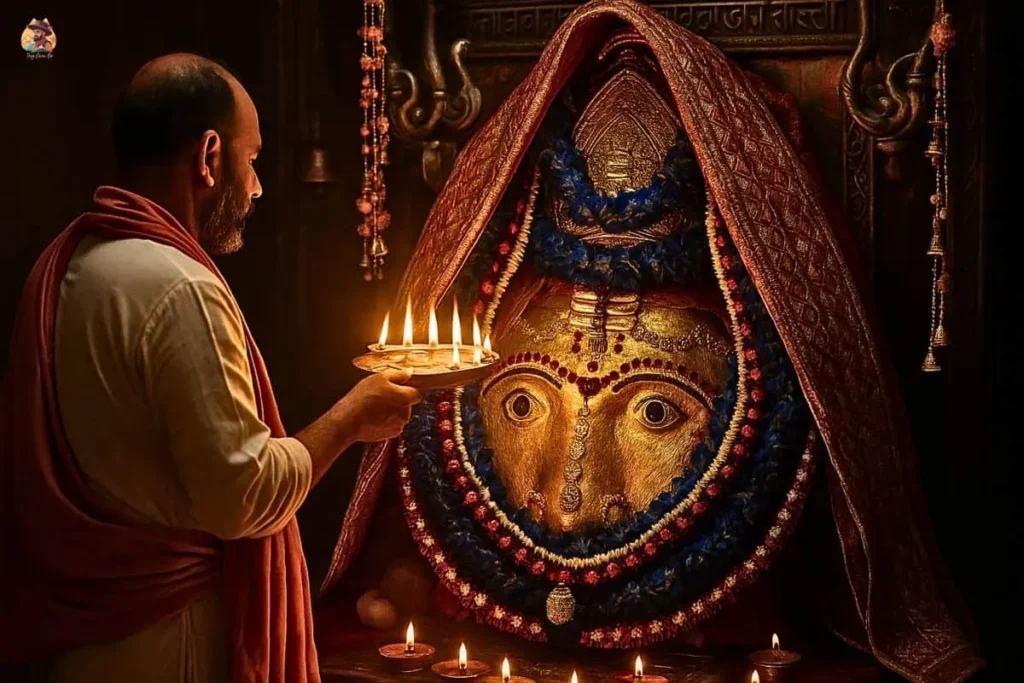
The temple opens early, and if you arrive before most visitors, you will experience its calmest form. I once reached just as the gates were opening and was greeted by a priest who placed the first prasad of the day in my hands. It was still warm, and somehow, it made the morning feel even more sacred.
Here is the schedule I have followed on my visits, based on the latest local updates and notice boards:
Verified Regular Timings:
- Opening Time: 4:00 AM (summer) / 4:30 AM (winter)
- Morning Aarti: 6:30–7:00 AM (summer & winter)
- Afternoon Break: 1:00 PM to 3:00 PM (temple closed)
- Evening Aarti: 8:30–9:00 PM (slight seasonal variations)
- Closing Time: 11:30 PM
(Aarti timings can shift slightly during festivals or seasonal schedule updates — always check the day’s local notice board for accuracy.)
Weekday vs Weekend:
- Weekdays are quieter and ideal if you want an unhurried darshan.
- Sundays draw larger crowds, and while the wait is longer, the festive energy can be worth it.
Festival Hours:
- During Navratri, Diwali, and other major festivals, the temple often remains open through the night.
- The Kalkaji Mandir Navratri aarti fills the complex with a golden glow from thousands of diyas, while flower garlands sway gently in the evening breeze.
Local Tip: If you want the best view of the morning aarti, stand near the eastern side of the courtyard. As the sun rises, its first rays light up the idol — a sight most visitors never notice.
📜 History & Legends – Which Part of Sati Fell Here?
Shakti Peetha & Mythological Significance
Kalkaji Mandir holds a sacred place among the 51 Shakti Peethas of the Indian subcontinent. According to legend, when Goddess Sati sacrificed herself in the yajna fire, Lord Shiva, overcome with grief, carried her body across the world. To calm him, Lord Vishnu used his Sudarshan Chakra to cut the body into pieces, which fell at different places. It is believed that Sati’s right foot fell here at Kalkaji, making this spot one of the most powerful centres of divine feminine energy.
I first heard this from a priest sitting near the sanctum. His voice was steady, almost lost in the rhythm of the temple bells, as he said, “Every grain of this soil is touched by the Goddess.” Standing there, it was hard not to feel the weight of that belief.
Legends of Goddess Kali’s Victory
Mythology tells of a time when the gods, troubled by demons, sought help from Goddess Parvati. She appeared as Goddess Kaushiki, who fought fiercely but faced Raktabija, a demon whose spilled blood created more of his kind. From Kaushiki’s eyebrows emerged Goddess Kali, who drank his blood and ended the battle. After her victory, Kali is believed to have chosen this site to reside. Some stories even say the Pandavas prayed here before the Kurukshetra war.
Historical Timeline
- Worship at this site is believed, as per local lore, to date back over 3,000 years.
- The first temple structure was built in 1764 by the Marathas.
- In 1816, the shrine was repaired under the patronage of the Peshkar of Akbar II.
- Delhi’s merchants and bankers funded 20th-century expansions.
- The sanctum still houses the black stone idol of Goddess Kalka, considered Swayambhu (self-manifested).
📍 Kalkaji Temple Location & How to Reach
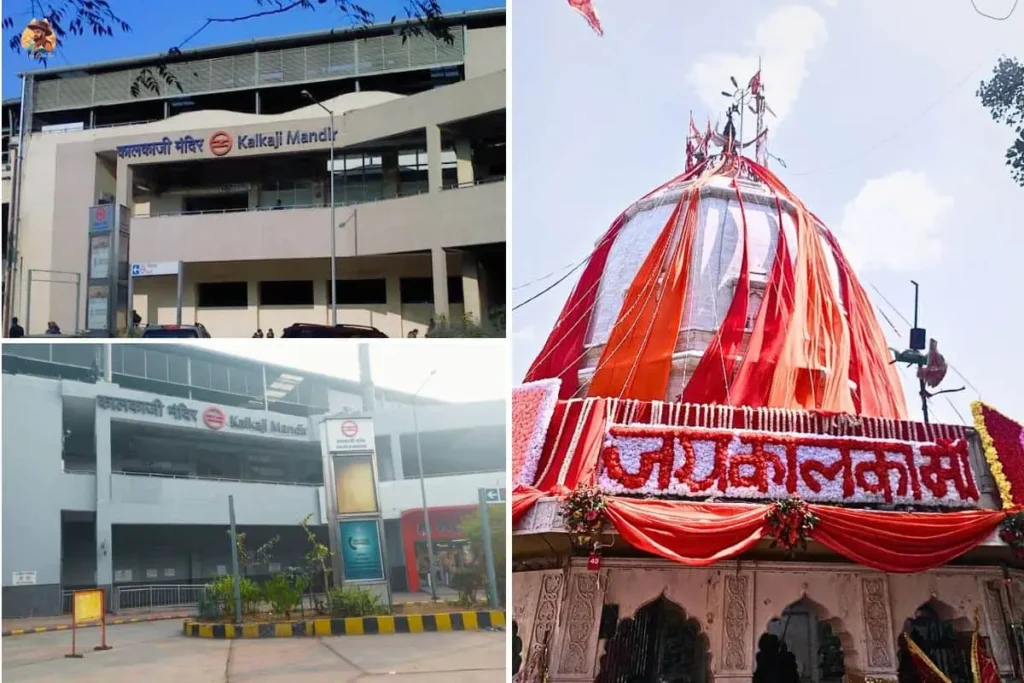
Kalkaji Temple stands in the heart of South Delhi, a short walk from Nehru Place’s busy lanes. On my first visit, even before the temple came into view, I could hear the rhythmic clang of bells and smell the faint aroma of incense drifting over the crowd. The road leading up to the gates was lined with flower vendors, each holding garlands draped over their arms, calling out softly to passing devotees.
Location Details:
- Address: Kalkaji, New Delhi – 110019
- Nearest Landmark: Nehru Place
If you are travelling by metro, Kalkaji Mandir Metro Station on the Violet and Magenta Lines is the closest stop. I usually take Exit Gate 2 and enjoy the short 5-minute walk to the temple — passing small prasad stalls and hearing the buzz of morning conversations.
Other Travel Options:
- Bus: DTC buses from ISBT Kashmere Gate, Connaught Place, and South Delhi stop at Nehru Place; from there, a quick auto ride gets you to the temple.
- Auto/Cab: On regular days, drop-offs are allowed at the main gate; during Navratri and weekends, be ready to walk 200–300 metres after traffic restrictions.
Find it on Google Maps:
You can easily navigate using the live map below. Just tap for real-time directions to Kalkaji Temple, Delhi, from your current location.
🎉 Festivals & Best Time to Visit
During Navratri, the temple transforms into a glowing beacon of devotion. Thousands of diyas light up the marble courtyard, and the air carries the scent of fresh marigolds and burning camphor. I still remember walking in on a Sharad Navratri evening at nearly 10 PM and finding the same charged energy I had seen that morning — voices singing bhajans, children weaving through the crowd, and the Goddess’s idol bathed in golden light.
Best Times to Visit:
- Early Mornings (5:30–6:00 AM): Peaceful darshan, cooler weather.
- Winter Mornings: Soft sunlight, calmer crowd.
- Monsoon Evenings: Marble floor cool underfoot, rain-washed air.
Navratri Tip:
- Visit on weekday mornings to avoid the heaviest rush.
📸 Temple Complex, Architecture & Atmosphere
Stepping into the temple complex, the first thing that draws you in is the Garbhagriha — the sanctum housing the black stone idol of Goddess Kalka, draped in red cloth and silver ornaments. Believed to be Swayambhu (self-manifested), the idol has an unshakable presence. I remember standing there during the evening aarti, the sound of conch shells vibrating in my chest, the light of dozens of oil lamps dancing across the marble.
Highlights of the Complex:
- White marble floors and pillared corridors enclose the main courtyard.
- Smaller shrines to various deities along the outer walls.
- Photography is allowed in outer areas; it’s best to avoid cameras inside the sanctum.
The aarti atmosphere is unforgettable — bells ringing in unison, rhythmic chanting, and the warm glow of oil lamps making the marble shimmer. In that moment, surrounded by hundreds of voices, I felt a sense of quiet that no amount of city noise could break.
🎟 VIP Pass, Entry Rules & Dress Code
Kalkaji Temple is free for general darshan, but during major festivals like Navratri or Diwali, VIP passes are issued for quicker access. These are usually available at the temple’s official counters or administration office for a limited period.
- Foreign visitor etiquette: Cover shoulders and knees before entering.
- Footwear: Remove shoes at the designated stand before stepping inside.
- Photography: Not allowed inside the sanctum; take photos only in the outer areas.
- Offerings: Flowers, prasad, and coconuts are common; avoid plastic packaging.
🛍 Nearby Attractions & Markets
I step out of Kalkaji Temple, and the city shifts tone. The sacred bells fade, and the buzz of South Delhi returns. Within a few minutes, you can move from quiet prayer to calm gardens or lively markets.
Very close by
- Lotus Temple – A peaceful walk of about 10–12 minutes from Kalkaji Mandir, roughly 1 km. The path cuts through quiet lanes and opens into green lawns.
- Nehru Place Market – Right next to Kalkaji. Known for electronics, books, and classic street snacks like chaat and cold coffee at multiple stalls.
- Astha Kunj Park – The green belt between Kalkaji Mandir, Lotus Temple, and Nehru Place. Ideal for a short break after darshan.
A short hop away
- ISKCON Temple (East of Kailash) – About 3 km from Kalkaji Mandir. I usually take the metro one stop to Kailash Colony and a short auto from there.
For food lovers nearby
- CR Park Markets 1 & 2 (Chittaranjan Park) – Famous for Bengali sweets and snacks. Try Kamala Sweets or Annapurna Sweets for mishti doi and sandesh. It is a quick ride from Kalkaji.
- Nehru Place street food – Multiple chaat counters and quick bites around the market; perfect for a fast, budget-friendly snack post-darshan.
I often walk first to the Lotus Temple for ten quiet minutes, then ride to CR Park for warm sandesh. It feels like a gentle arc from prayer to comfort food, all in one loop through South Delhi.
🌸 Local Tips for First-Time Visitors
If this is your first darshan at Kalkaji Temple, a little preparation can make it smoother and far more enjoyable. I have learned these tips over several visits, sometimes the hard way.
Best time for darshan
- Early mornings between 5:30 and 8:00 AM are the most peaceful. The marble is still cool underfoot, and the air carries the scent of fresh flowers.
- During Navratri or other festivals, arrive at least an hour before aarti to avoid the longest queues.
What to carry
- A small water bottle and some cash for offerings.
- Buy flowers and prasad from outside stalls for a better variety and price.
What to avoid
- Large bags, as security checks are strict and can slow you down.
- Unnecessary valuables — the temple gets crowded, especially near the main gates.
Safety awareness
- Keep your belongings close in festival crowds.
- Politely decline anyone offering “VIP entry” outside official counters.
When you step out after an early morning visit, with the first rays of sun touching the shikhara, you will understand why so many people come here not just for blessings, but for a sense of calm before the day begins.
Travel focused brands can connect with our audience through our write for us opportunities.
📞 Kalkaji Temple Delhi – Contact Details
- Full Address: Ma Anandmayee Marg, NSIC Estate, Block 9, Kalkaji, New Delhi – 110019
- Phone Number: +91-11-2643 2250 (as per local listings; timings for calls may vary)
- Google Maps: Search “Kalkaji Mandir” for live directions from your location
💭 Closing Reflection – Why Kalkaji Temple Stays in My Heart
Every time I walk into Kalkaji Temple at dawn, the city’s chaos seems to pause. The marble floor feels cool under my feet, the smell of incense mixes with the morning air, and the sound of temple bells flows through the courtyard.
For me, this temple is not only about prayers — it is about that rare, quiet moment when the world slows down. If you visit, I hope you find your own moment here, just as I have, time and again.
❓ FAQs – Everything You Need to Know About Kalkaji Temple Delhi
Over the years, readers and friends have asked me the same questions about Kalkaji Mandir. Here are the most common ones, answered from my personal visits and the latest local updates.
It is one of the 51 Shakti Peethas, believed to be where Goddess Sati’s right foot fell. Devotees visit for blessings, especially during Navratri.
It is one of the 51 Shakti Peethas, believed to be where Goddess Sati’s right foot fell. Devotees visit for blessings, especially during Navratri
Both the Violet Line and the Magenta Line stop at Kalkaji Mandir Metro Station, just a short walk to the temple.
Local belief says the right foot of Goddess Sati fell at this spot.
Yes. The temple is open every day, from early morning until late evening.
Morning Aarti: Around 6:30 AM
Evening Aarti: Around 8:30 PM
(Timings may vary slightly with seasons and festivals)
Yes, but only during major festivals like Navratri, from official temple counters.
Photography is permitted in outer areas, but not inside the sanctum.
Between 5:30–8:00 AM for a peaceful visit, or during festival evenings for the vibrant crowd experience.
Roughly 1 km — about a 10–12 minute walk.
Yes. It is safe for all visitors. Just dress modestly, respect customs, and keep valuables secure in crowds.

Hi, I am Manoj Kumar, a travel researcher and SEO content expert writing for Trip Guru Go, focused on Delhi and nearby travel destinations.
Being from Delhi NCR, I understand the travel preferences, routes, budgets, and experiences that travelers from this region actually look for. Every article I write is backed by local insights, real traveler experiences and detailed research to provide accurate and useful travel information.