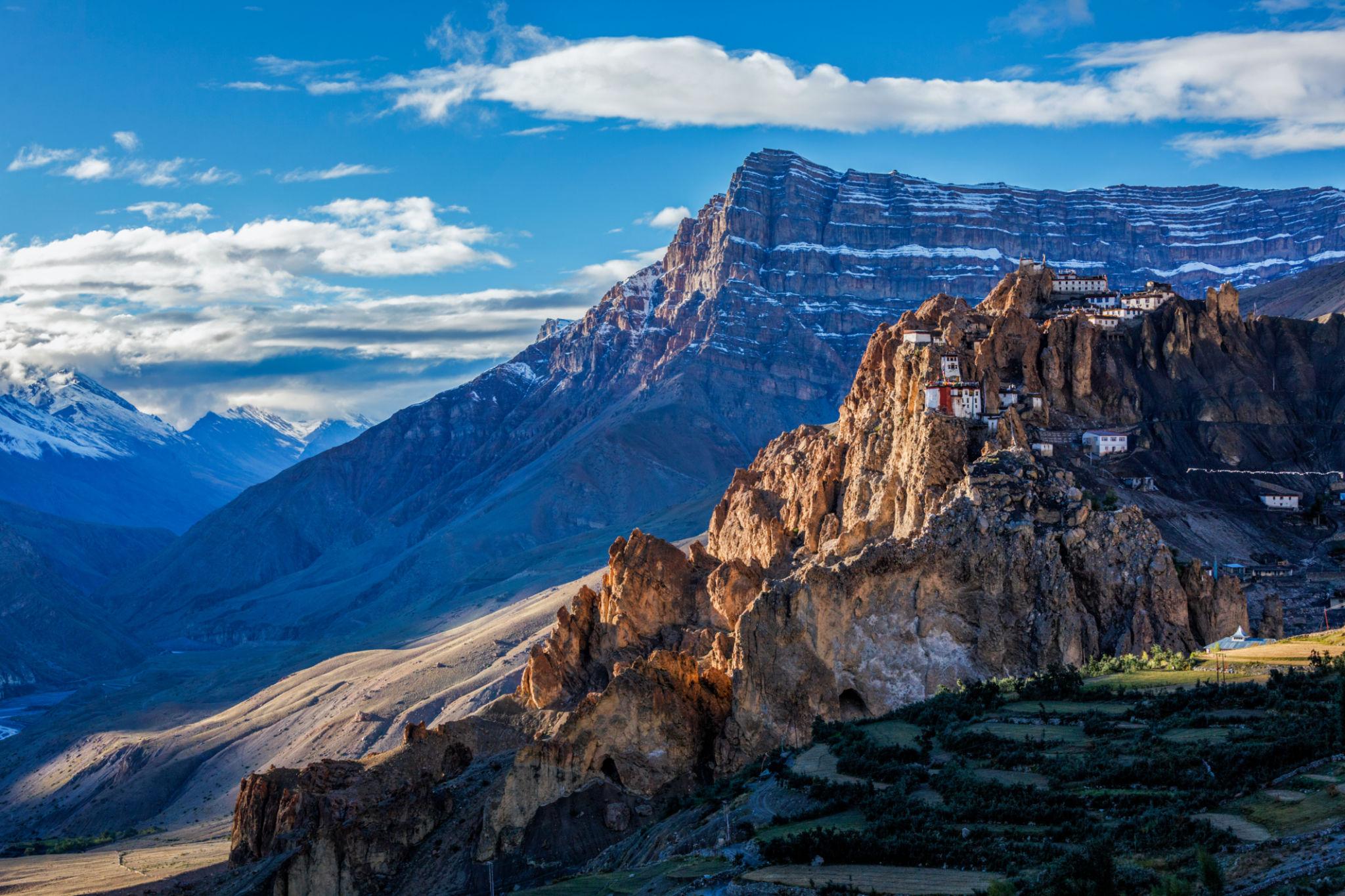
Some places in Spiti Valley make you stop and admire the view, and Dhankar Monastery is one of them. Built on a cliff at 3,894 metres, this beautiful monastery overlooks the meeting point of the Spiti and Pin Rivers. Surrounded by mountains and built with traditional mud-brick walls, it is one of the most unique places to visit in Spiti.
Many people travel between Tabo and Kaza without stopping here, but they miss one of the valley’s biggest highlights. Dhankar is known for its amazing views, peaceful atmosphere, and over 1,000 years of history. Whether you want to learn about its Buddhist heritage, enjoy the scenery, or simply spend some quiet time in the mountains, this guide will help you plan your visit with ease. If you’re planning a complete Spiti trip, don’t forget to check out our Spiti Valley Travel Guide for everything you need to know before you go.
Dhankar Monastery: Quick Facts at a Glance
| Detail | Information |
| Location | Dhankar Village, Lahaul & Spiti, Himachal Pradesh |
| Altitude | 3,894 meters (12,774 feet) |
| Distance from Kaza | ~35 km |
| Distance from Tabo | ~35 km |
| Best Time to Visit | May to September |
| Entry Fee | Nominal / No fixed fee (donations accepted) |
| Trek to Dhankar Lake | ~1 to 1.5 hours one way |
| Nearest Airport | Bhuntar Airport, Kullu |
| Nearest Railway Station | Joginder Nagar / Kalka |
Join our Spiti Valley Batches
 Group Trip
19 September
Group Trip
19 September
Spiti Valley Short Circuit Trip
 Group Trip
19 September
Group Trip
19 September
Spiti Valley Full Circuit Trip
History of Dhankar Monastery: More Than Just a Gompa
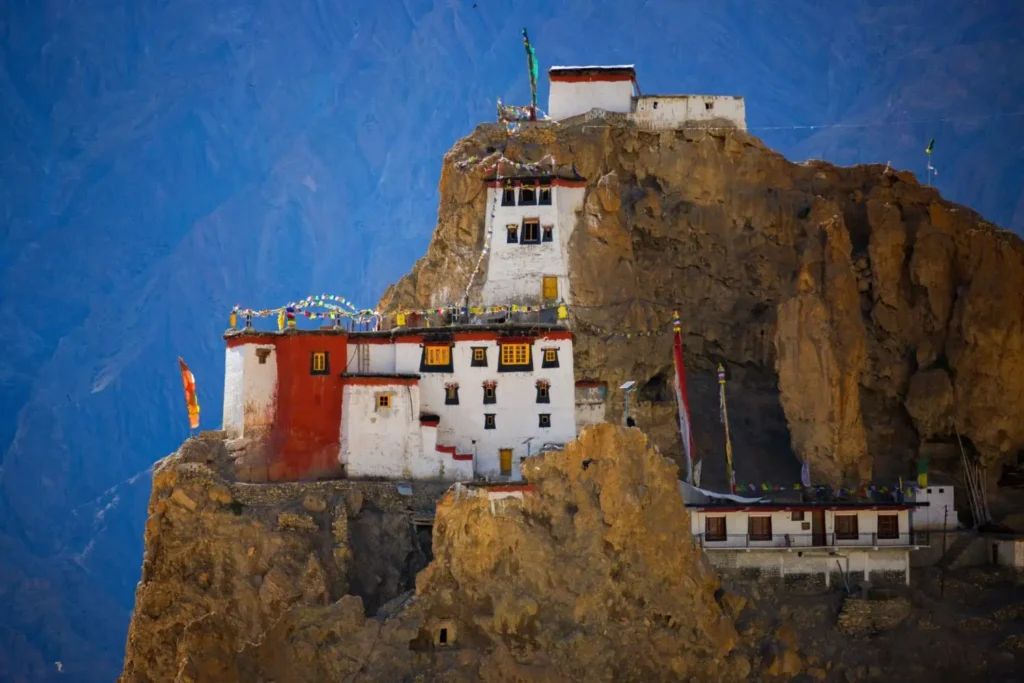
Dhankar Monastery is believed to have been founded around the 11th century, making it one of the older gompas in the Spiti Valley. But what sets it apart from most other Buddhist monasteries in the region is its dual role through history: it was simultaneously a center of Buddhist learning and a fortified military stronghold.
The name itself tells the story. In the local Spitian language, ‘dhank’ means cliff and ‘kar’ means fort or citadel. The monastery was quite literally built to defend, perched on a rocky promontory from which the Chosgyals the traditional rulers of Spiti could monitor trade routes and repel threats from rival kingdoms.
During the 17th century, Dhankar served as the political capital of the Spiti Valley. The Chosgyals governed from here, and the monastery complex housed both monks and royalty under the same roof a remarkable fusion of spiritual and temporal power that was common in Himalayan Buddhist kingdoms of that era.
Today, portions of the old gompa are considered structurally at risk due to centuries of earthquake activity and weathering. Conservation efforts have been underway, making every visit feel like a timely encounter with a living piece of history that might not look the same decades from now.
What’s Inside Dhankar Monastery?
The monastery complex at Dhankar consists of two distinct structures the old gompa clinging to the cliff above the village, and a newer white-and-red monastery built at a lower elevation.
The Old Dhankar Gompa
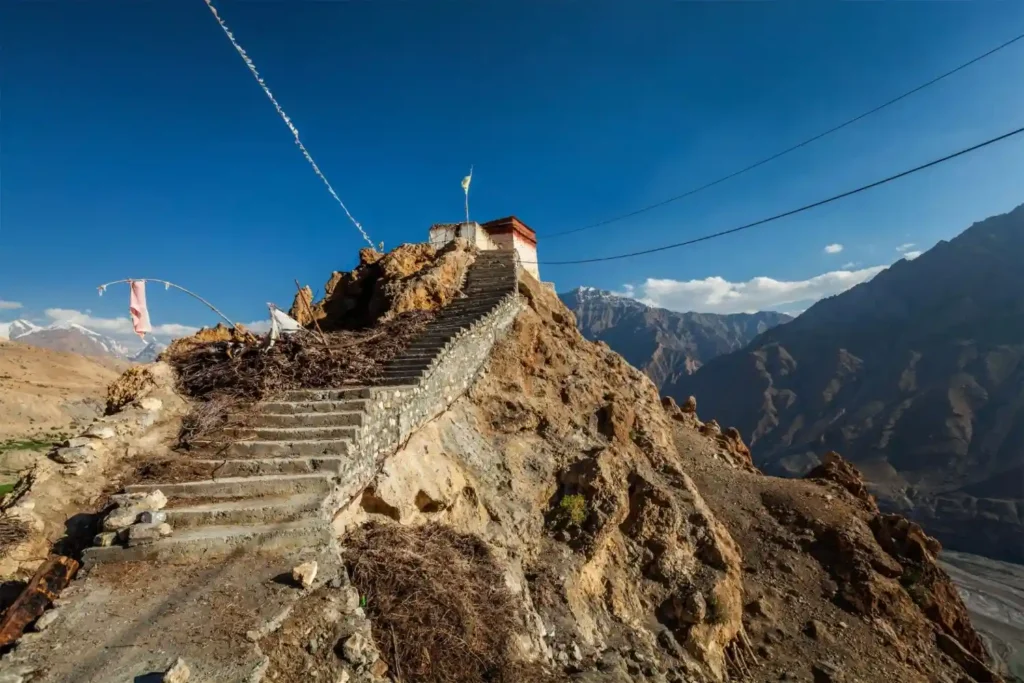
This is the one that makes your breath catch. Built directly into the rockface, the ancient gompa houses centuries-old murals, thangkas, and sacred statues. The walls are weathered and time-worn, but that’s precisely what gives them their haunting beauty. Inside you’ll find prayer halls with low ceilings and the faint smell of butter lamps the kind of space that makes you whisper without being asked.
The views from the old monastery are staggering. Standing on the ramparts, you look out over a 360-degree panorama of bare Himalayan ridges, with the deep valley floor carved by the Spiti and Pin rivers far below.
The New Dhankar Monastery
Built to accommodate the growing monastic community, the new monastery operates as the active center of Buddhist practice in Dhankar. Monks conduct daily prayers here, and the interiors are brighter and more contemporary than the old gompa but they still follow traditional Buddhist architectural design. Visiting during morning prayers gives you a sense of how alive this tradition remains.
Best Time to Visit Dhankar Monastery
Dhankar is accessible from late May through September. This is when the roads from Shimla and Manali are open, the skies are clear, and the landscape is at its most dramatic without being blocked by winter snowfall.
| Month | Weather | Road Condition | Suitability |
| May | Cool, some snow on high passes | Opening up | Good — fewer crowds |
| June | Pleasant, 10–22°C days | Fully open | Excellent |
| July – August | Warmer, occasional rain | Open but watch for landslides | Good — lush landscape |
| September | Clear skies, cooler nights | Good | Excellent — best visibility |
| October onwards | Cold, snowfall possible | Closing down | Not recommended |
Pro tip: June and September are the sweet spots roads are clear, footfall is lower than peak July-August, and the light for photography is extraordinary at both sunrise and sunset. If you’re driving in from Shimla, check our Shimla to Spiti Valley route guide for road conditions and key stops.
How to Reach Dhankar Monastery
By Road from Kaza
Kaza is the main hub of Spiti Valley, located roughly 35 km from Dhankar. Shared jeeps and taxis run between Kaza and Dhankar regularly. The road is narrow and unpaved in sections but the drive takes around 45–60 minutes and is scenic throughout. If you’re building a full circuit, our 10-day Spiti Valley summer trip itinerary from Delhi includes Dhankar as a natural stop between Tabo and Kaza.
By Road from Tabo
Tabo is roughly equidistant from Dhankar about 35 km in the opposite direction. If you’re doing the classic Spiti circuit from Shimla, Tabo comes before Kaza, making Dhankar a natural first stop after Tabo. Shared jeeps are available; hiring a private taxi gives you more flexibility to stop along the way.
By Air
The nearest airport with regular commercial flights is Bhuntar Airport near Kullu. From there, you’ll need to travel by taxi or bus to Kaza via Manali, which takes around 8–10 hours depending on road conditions. Then follow the Kaza–Dhankar route above.
By Train
The closest major railway stations are Joginder Nagar and Kalka. From either point, take a bus or hire a taxi to Shimla or Manali and proceed to Spiti by road. This is a multi-day journey, so plan accordingly.
Dhankar Lake Trek: Is It Worth It?
absolutely yes. The Dhankar Lake trek is one of the most accessible and rewarding high-altitude walks in Spiti, and it’s something most visitors overlook.
| Trek Detail | Information |
| Starting Point | Dhankar Monastery (old gompa) |
| Distance | ~2.5 km one way |
| Altitude Gain | ~300 meters |
| Time Required | 1 to 1.5 hours (ascent), 45–60 min (descent) |
| Difficulty | Easy to Moderate |
| Best Season | June to September |
The trail begins near the old monastery and climbs steadily through open terrain. As you gain height, the valley opens up below you the Spiti and Pin rivers come into full view, and the scale of the surrounding landscape becomes clear in a way it simply doesn’t from the road.
At the top sits Dhankar Lake, a small, glassy high-altitude lake that mirrors the surrounding peaks on clear days. There’s no tourism infrastructure here no tea stalls, no crowds in most of the season. Just the lake, the wind, and the mountains.
Carry your own water and wear sturdy shoes. The trail involves loose gravel in stretches, and altitude can affect you more than expected even on short treks at this elevation.
Exploring Dhankar Village
The village below the monastery is tiny a cluster of traditional Spitian homes built with mud bricks and timber, adapted to the harsh terrain and extreme winters. Walking through Dhankar village on a quiet afternoon is one of those experiences that doesn’t photograph well but stays with you for a long time.
You’ll likely see children playing in narrow lanes, elders sitting outside in the sun, and small plots of farmed land carved into the hillside. The residents here are warm and unhurried a pace of life that feels worlds away from anywhere else you’ve been.
Dhankar village is also a reminder of what Spiti looked like before tourism reached its current levels. It hasn’t been polished or optimised for visitors, and that rawness is its biggest draw.
Places to Explore Near Dhankar
1. Lhalung Village
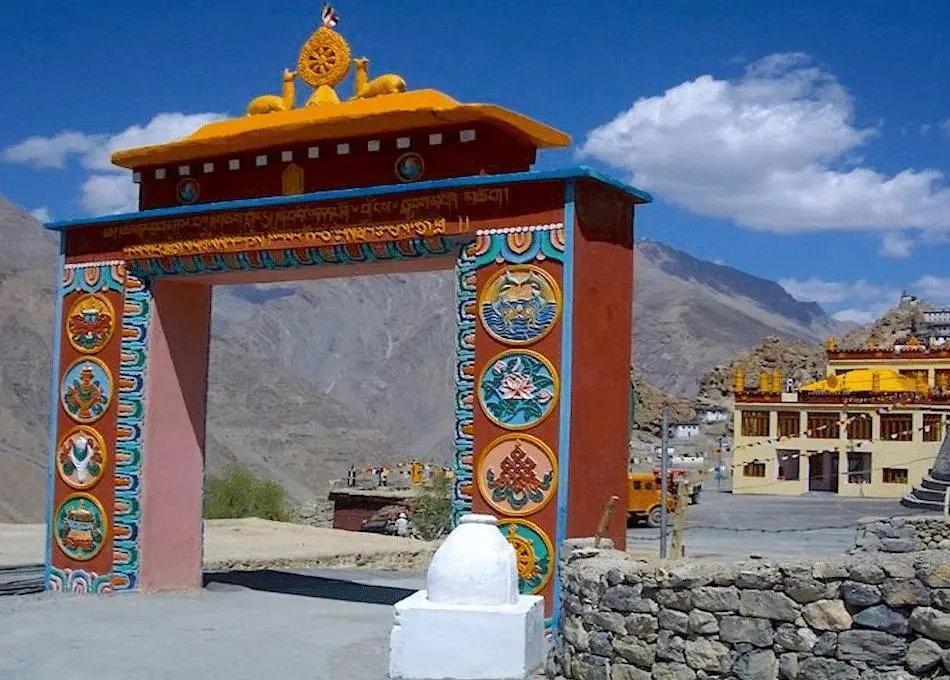
A short drive from Dhankar, Lhalung is known for the ancient Kungri Gompa and, more unusually, a view of a ‘hanging glacier’ that appears to cling to the mountainside above the village. The drive itself is scenic and the village is even quieter than Dhankar.
2. Tabo Monastery
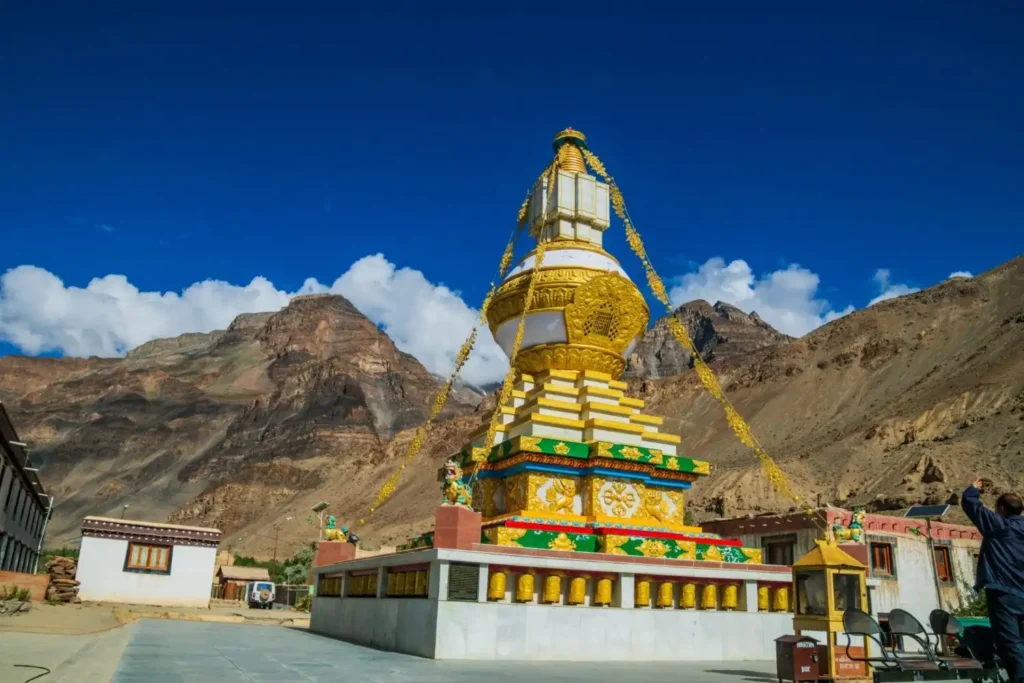
Often called the ‘Ajanta of the Himalayas,’ Tabo Monastery is one of the oldest continuously operating Buddhist monasteries in India, dating back to 996 CE. The murals and stucco sculptures inside are extraordinary. It’s around 35 km from Dhankar and usually visited on the same Spiti circuit.
3. Pin Valley
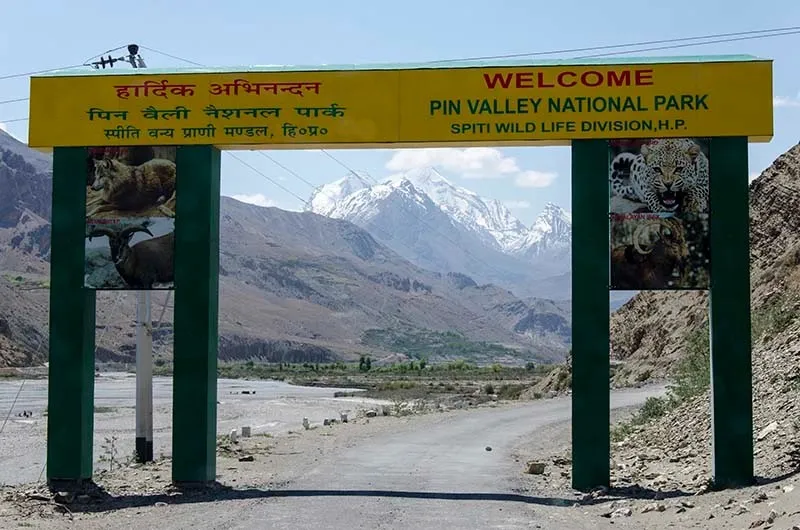
The Pin Valley National Park begins near the confluence of the Pin and Spiti rivers visible from Dhankar itself. A drive into Pin Valley takes you into even more remote terrain, with a chance of spotting snow leopards and ibex in the right season. Spiti as a whole is remarkably safe for independent travellers read our guide on whether Spiti Valley is safe for solo female travellers before you plan your trip.
Where to Stay and Eat in Dhankar
Dhankar is a village with no hotels in the conventional sense. What you’ll find are a handful of homestays and small guesthouses run by local families clean, basic, and genuinely warm. These typically include bedding, blankets, and home-cooked meals.
Food options centre around local Spitian and Tibetan staples: thukpa (noodle soup), momos, dal-rice, and sometimes tsampa (roasted barley). It’s simple, filling, and exactly what your body needs at altitude.
Book accommodation in advance if visiting between June and September — Dhankar is small and fills up quickly with travellers doing the Kaza–Tabo circuit during peak season.
Important Tips Before You Visit Dhankar Monastery
• Acclimatise in Kaza or Tabo for at least a day before heading to Dhankar altitude sickness is real at 3,894 metres.
• Dress in layers. Even in summer, mornings and evenings are cold.
• Carry cash. There are no ATMs in Dhankar; the nearest is in Kaza.
• Respect monastery rules remove footwear before entering prayer halls, avoid loud conversations inside.
• Sunrise and sunset from Dhankar are extraordinary. If you’re staying overnight, plan to be outside at both.
• The Dhankar Lake trek is best done in the morning when visibility is clearest.
Comparing Spiti with other Himalayan destinations? Check our Spiti vs Ladakh comparison guide to decide which route suits you better.
Frequently Asked Questions
What is Dhankar famous for?
Dhankar is famous for its dramatic cliffside monastery overlooking the confluence of the Spiti and Pin rivers. It’s also known for the Dhankar Lake trek and its role as the former capital of the Spiti kingdom during the 17th century. The combination of history, architecture, and raw natural beauty makes it one of the most memorable stops on any Spiti Valley itinerary.
What is the specialty of Dhankar Monastery?
What makes Dhankar Monastery unique is its dual identity as both a Buddhist gompa and a historic fortress. Founded around the 11th century, it was built on a cliff edge not just for spiritual purposes but for strategic defense. The ancient murals and thangkas inside the old gompa, combined with the panoramic views from its walls, make it unlike any other monastery in Spiti.
Can we stay in a monastery in Spiti Valley?
Some monasteries in Spiti do offer basic dormitory-style accommodation, particularly Key Monastery near Kaza. Dhankar Monastery itself doesn’t have formal lodging, but the village right below has homestays and guesthouses run by locals that are comfortable and affordable. Staying in the village actually gives you the advantage of experiencing the monastery at dawn and dusk without rushing.
Is Dhankar Lake worth visiting?
Yes, without a doubt. The Dhankar Lake trek is one of the most rewarding short treks in Spiti accessible, scenic, and far less crowded than better-known trails. The lake at the top reflects the surrounding peaks on clear days, and the views across the Pin-Spiti valley during the ascent are extraordinary. If you’re already in Dhankar, there’s no reason to skip it.
What is the altitude of Dhankar Monastery?
Dhankar Monastery sits at approximately 3,894 meters (12,774 feet) above sea level. At this altitude, mild altitude sickness symptoms like headaches and fatigue are common for those arriving from lower elevations. Spending time acclimatising in Kaza or Tabo before visiting is strongly recommended.
How far is Dhankar from Kaza?
Dhankar is approximately 35 kilometres from Kaza, Spiti’s main town. The drive takes around 45–60 minutes by road and is scenic throughout. Shared jeeps and private taxis are both available from Kaza.
What is the best time to visit Dhankar Monastery?
The best time to visit Dhankar Monastery is between late May and September. June and September are particularly good months roads are fully open, the weather is pleasant, crowds are manageable, and the skies are clear enough for the stunning views that Dhankar is known for.

Abdullah Khan specializes in adventure travel across Spiti Valley and the high-altitude regions of Himachal Pradesh. He writes about road trips, bike expeditions, hidden villages, monasteries, and offbeat Himalayan experiences. His guides focus on route planning, acclimatization, travel safety, and the best experiences across Spiti Valley.