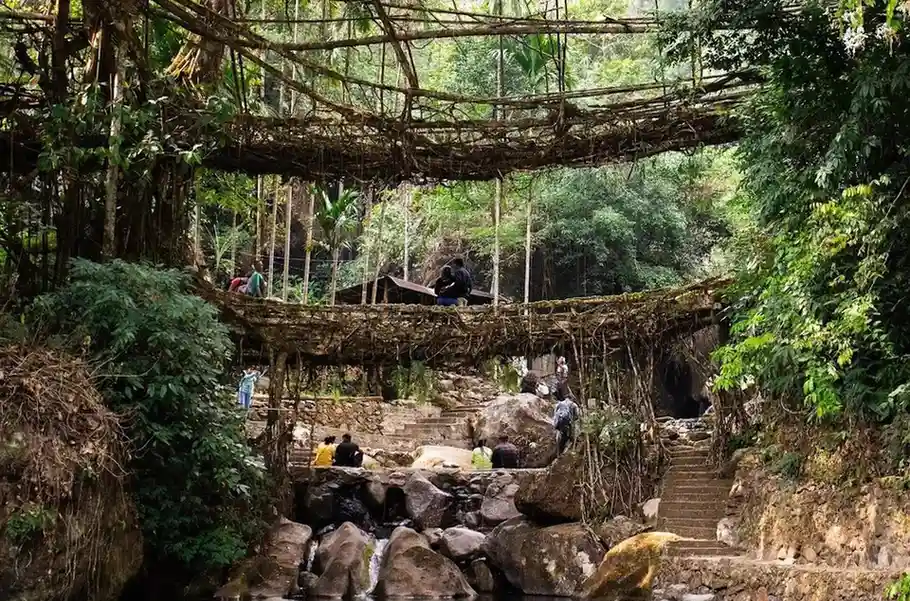
The Double Decker Root Bridge is one of the most famous tourist attractions in Meghalaya. Located in Nongriat Village near Cherrapunji, this amazing bridge is made from the living roots of rubber trees instead of cement or steel. It is a great example of how nature and people have worked together for many generations.
Reaching the bridge is an adventure. The trek starts from Tyrna Village and takes you through around 3,500 stone steps, beautiful forests, hanging suspension bridges, and small streams. Many visitors also continue their trek to the stunning Rainbow Falls.
This guide covers everything you need to know before visiting the Double Decker Root Bridge, including the trek route, entry fee, timings, best time to visit, travel tips, nearby attractions, and more. Before planning your trip, check out our Ultimate Visitor Handbook for complete Meghalaya travel information.
Quick Facts About the Double Decker Root Bridge
| Details | Information |
| Location | Nongriat Village, East Khasi Hills, Meghalaya |
| Famous For | Living Double Decker Root Bridge |
| Trek Starting Point | Tyrna Village |
| Distance from Shillong | Around 65 km |
| Distance from Cherrapunji | Around 20 km |
| Distance from Guwahati | Around 170 km |
| Trek Distance | Around 3 km (One Way) |
| Total Steps | Around 3,500 |
| Trek Difficulty | Moderate |
| Trek Time | 2–3 Hours (One Way) |
| Round Trip Time | 4–6 Hours |
| Entry Fee | ₹20–₹50 (Approx.) |
| Best Time to Visit | October to April |
| Nearby Attraction | Rainbow Falls |
| Nearest Airport | Guwahati Airport |
| Nearest Railway Station | Guwahati Railway Station |
Where Is the Double Decker Root Bridge?
The Double Decker Root Bridge is located in Nongriat Village in the East Khasi Hills district of Meghalaya. It is around 20 km from Cherrapunji (Sohra) and can only be reached by trekking from Tyrna Village, the last point connected by road.
The trek passes through lush green forests, small villages, suspension bridges, and beautiful streams before reaching the bridge. Because of its natural beauty and unique design, it is one of the most visited places in Meghalaya.
Approximate Distances
| Starting Point | Distance |
| Tyrna Village | Around 3 km Trek |
| Cherrapunji (Sohra) | Around 20 km |
| Shillong | Around 65 km |
| Dawki | Around 82 km |
| Guwahati | Around 170 km |
Most travellers include the Double Decker Root Bridge in their Shillong–Cherrapunji–Nongriat itinerary.
Why Is the Double Decker Root Bridge Famous?
The Double Decker Root Bridge is famous because it is one of the few two-level living root bridges in the world. Instead of using cement, iron, or steel, the bridge is made from the living roots of rubber trees. Over the years, the roots have grown stronger and formed a safe bridge that is still used today.
Meghalaya is also known as the “Abode of Clouds” because of its green hills, beautiful waterfalls, caves, and living root bridges. You can learn more about the state’s nickname in our guide on The Abode of Clouds – Meghalaya.
A Unique Living Bridge
Unlike normal bridges, this bridge is alive. The tree roots continue to grow every year, making the bridge stronger instead of weaker.
Two Bridges in One
The Double Decker Root Bridge has two levels built one above the other. The upper bridge was created later to help people cross the river safely during the rainy season when the water level becomes high.
Built by the Khasi People
The local Khasi community carefully guided the roots across the stream many years ago. It took several years for the roots to grow into a strong bridge that could support people.
A Beautiful Trek
The journey to the bridge is just as exciting as the destination. Along the way, you’ll walk through forests, cross hanging suspension bridges, pass clear streams, and enjoy amazing views of the Khasi Hills.
The Story Behind the Double Decker Root Bridge
Many years ago, the Khasi people needed a safe way to cross rivers during the rainy season. Wooden bridges were often damaged by heavy rain, so they found a better solution.
They started using the roots of rubber fig trees (Ficus elastica) to grow natural bridges. The young roots were guided across the river using hollow bamboo and areca nut trunks. As the roots grew, they joined together and became strong enough for people to walk on.
Over time, another level of roots was grown above the first bridge. This created the famous Double Decker Root Bridge, which is now one of Meghalaya’s most popular attractions.
Even today, the bridge continues to grow naturally and stands as a wonderful example of the Khasi people’s traditional knowledge and their close connection with nature.
How to Reach the Double Decker Root Bridge
The Double Decker Root Bridge is located in Nongriat Village, but there is no direct road to the bridge. First, you need to reach Tyrna Village, which is the starting point of the trek. From Tyrna, you’ll have to walk around 3 km through forests, suspension bridges, and nearly 3,500 stone steps to reach the bridge.
From Shillong (Around 65 km)
Shillong is the most common starting point for the trek.
- Distance: Around 65 km
- Travel Time: Around 2 hours
You can hire a private taxi or drive to Tyrna via Cherrapunji.
From Cherrapunji (Around 20 km)
Many travellers stay in Cherrapunji the night before the trek.
- Distance: Around 20 km
- Travel Time: 40–50 minutes
Private taxis are easily available from Cherrapunji to Tyrna.
From Guwahati (Around 170 km)
Visitors arriving by flight or train usually start from Guwahati.
- Distance: Around 170 km
- Travel Time: Around 5–6 hours
It is recommended to stay overnight in Shillong or Cherrapunji before starting the trek.
Tyrna Village – Trek Starting Point
Tyrna is the last village connected by road. Here you’ll find parking, small cafés, washrooms, local guides, and a few shops selling snacks and drinking water.
If you’re travelling by taxi, ask the driver to wait or arrange your return pickup in advance because taxis are not always available after the trek.
Double Decker Root Bridge Trek Guide
The trek to the Double Decker Root Bridge is one of the most exciting experiences in Meghalaya. The trail passes through lush green forests, beautiful streams, Khasi villages, hanging suspension bridges, and thousands of stone steps before reaching Nongriat Village.
Although the return climb is challenging, the amazing views along the way make the trek completely worth the effort.
Trek Overview
| Details | Information |
| Trek Starting Point | Tyrna Village |
| Trek Distance | Around 3 km (One Way) |
| Total Steps | Around 3,500 |
| Trek Difficulty | Moderate |
| One-Way Trek Time | 2–3 Hours |
| Round Trip Time | 4–6 Hours |
Complete Trek Route
Tyrna Village (Starting Point)
Your trek begins from Tyrna Village, where you’ll find the parking area and the main entrance to the trail. Before starting, carry enough drinking water and wear comfortable trekking shoes because the journey involves thousands of steps.
Stone Steps (Around 2.5 km to the Bridge)
The first part of the trek is a long downhill walk on well-built stone steps. Although going down is easy, remember that you’ll have to climb the same steps while returning.
Take short breaks whenever needed and enjoy the beautiful forest views along the way.
Nongthymmai Village (Around 1.8 km to the Bridge)
After walking for about 45 minutes, you’ll reach Nongthymmai Village, a small Khasi village surrounded by greenery.
The village is known for one of Meghalaya’s longest Single Root Bridges. You’ll also find small cafés where you can buy tea, lemon water, Maggi, biscuits, and other light snacks before continuing your trek.
Suspension Bridges (Around 1 km to the Bridge)
The next part of the trail takes you across two hanging suspension bridges built over clear streams.
These bridges are one of the highlights of the trek. They offer beautiful views of the valley and are perfect for photography. Although they move slightly while walking, they are safe and regularly used by both villagers and tourists.
Single Root Bridge (Around 5 Minutes Before the Main Bridge)
Just before reaching Nongriat, you’ll come across a beautiful Single Root Bridge.
Many visitors stop here for a few minutes to click photos and enjoy the peaceful surroundings before continuing towards the main attraction.
Double Decker Root Bridge
A short walk from the Single Root Bridge brings you to the famous Double Decker Root Bridge.
Built from the living roots of rubber trees, this two-level bridge is surrounded by crystal-clear water and thick forests. Most visitors spend 30–60 minutes here relaxing, taking photographs, and enjoying the peaceful atmosphere.
Rainbow Falls (Around 1.5 km from the Double Decker Root Bridge)
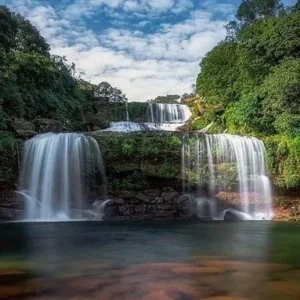
If you have enough time and energy, continue your trek to Rainbow Falls, one of the most beautiful waterfalls in Meghalaya.
- Distance: Around 1.5 km
- Extra Trek Time: Around 1–2 hours (One Way)
The trail is more challenging than the main trek and includes rocky paths and stream crossings. On sunny days, you can often see a rainbow forming near the waterfall, which gives Rainbow Falls its name.
Start your trek early in the morning if you plan to visit Rainbow Falls, so you can return to Tyrna before sunset.
Entry Fee and Timings
| Details | Information |
| Entry Fee | ₹20–₹50 per person (Approx.) |
| Parking Fee | Extra |
| Opening Time | 6:00 AM |
| Closing Time | 5:00 PM |
| Best Time to Start Trek | Before 8:00 AM |
Some local rules may change during festivals or village events, so it’s always a good idea to check the latest information before your visit.
Best Time to Visit the Double Decker Root Bridge
The bridge is open throughout the year, but some seasons offer a better trekking experience.
October to April (Best Time)
This is the best time to visit because the weather remains pleasant and the trekking trail is usually dry.
During these months, you can enjoy:
- Comfortable trekking weather
- Clear views
- Better photography
- Safer walking conditions
May to September (Monsoon)
The monsoon makes the forests greener and the waterfalls more beautiful. However, frequent rainfall can make the stone steps slippery.
If you’re visiting during this season:
- Wear trekking shoes with good grip.
- Carry a raincoat or poncho.
- Walk slowly on wet steps.
- Start your trek early to avoid heavy afternoon rain.
Things to Do at the Double Decker Root Bridge
The Double Decker Root Bridge is more than just a trekking destination. Once you reach Nongriat Village, you can enjoy several activities surrounded by forests, waterfalls, and crystal-clear streams.
Walk Across the Living Root Bridge
The main highlight of the trek is walking across the Double Decker Root Bridge. Built from the living roots of rubber trees, the bridge is strong enough for people to cross and continues to grow naturally every year.
Visit Rainbow Falls
If you have enough time, continue your trek to Rainbow Falls, located around 1.5 km from the bridge. The waterfall is known for its clear blue water and the rainbow that often appears on sunny days.
Relax Near the Natural Pools
Several natural pools with crystal-clear water are located near the bridge. Many visitors spend some time here relaxing after completing the trek.
Enjoy Nature
The trek passes through dense forests, streams, hanging bridges, and peaceful Khasi villages. It’s a great place to enjoy nature and take a break from busy city life.
Photography
The bridge and its surroundings offer plenty of beautiful photography spots.
Popular places include:
- Double Decker Root Bridge
- Suspension Bridges
- Rainbow Falls
- Forest Trail
- Natural Pools
- Nongriat Village
Morning hours usually offer the best lighting for photography.
Facilities Available
Basic facilities are available near Tyrna Village and Nongriat.
Parking
Parking is available near the trek entrance in Tyrna Village.
Food Stalls
Small local cafés and stalls are available along the trekking route.
You’ll find:
- Maggi
- Tea
- Coffee
- Lemon Water
- Biscuits
- Soft Drinks
Washrooms
Basic washroom facilities are available at a few points during the trek and near Nongriat Village.
Homestays
Several homestays are available in Nongriat if you wish to stay overnight and explore Rainbow Falls the next morning.
How Much Does a Trip to the Double Decker Root Bridge Cost?
The total cost depends on your travel style. Here’s a rough estimate for a day trip.
| Expense | Approximate Cost |
| Entry Fee | ₹20–₹50 |
| Parking | ₹30–₹100 |
| Taxi from Cherrapunji | ₹2,000–₹3,500 |
| Food & Snacks | ₹200–₹500 |
| Local Guide (Optional) | ₹500–₹1,000 |
If you’re planning a longer holiday, check our Meghalaya Trip Cost Guide to estimate your complete travel budget.
Travel Tips
These simple tips will help you enjoy a safe and comfortable trek.
Before the Trek
- Start your trek before 8:00 AM.
- Wear trekking shoes with good grip.
- Carry at least 2 litres of drinking water.
- Pack light to make climbing easier.
- Carry enough cash, as online payments may not work everywhere.
During the Trek
- Walk at your own pace.
- Take short breaks whenever needed.
- Stay on the marked trail.
- Do not throw plastic waste.
- Respect the local Khasi community.
- Avoid rushing while climbing back.
What to Pack for the Double Decker Root Bridge Trek
Packing the right things can make your trek easier and more enjoyable. Since you’ll be walking for several hours and climbing around 3,500 steps, it’s best to carry only the essentials.
Must-Carry Items
| Item | Why You Need It |
| Trekking Shoes | Provide good grip on stone steps and wet paths. |
| Drinking Water | Carry at least 2 litres to stay hydrated. |
| Raincoat or Poncho | Weather can change quickly, especially during the monsoon. |
| Energy Bars or Dry Fruits | Gives you quick energy during the trek. |
| Sunscreen & Sunglasses | Protects you from the sun while walking. |
| Cap or Hat | Helps on sunny days. |
| Power Bank | Mobile charging options are limited. |
| Basic First-Aid Kit | Useful for small cuts or blisters. |
| ORS Packets | Helps prevent dehydration. |
| Extra Clothes | Carry if you plan to swim near the natural pools or Rainbow Falls. |
| Cash | Small cafés and parking may not accept online payments. |
Tip: Carry a light backpack. A heavy bag can make the return climb much more tiring.
Who Can Do This Trek?
The Double Decker Root Bridge trek is suitable for most healthy travellers. Although the trail is well-maintained, climbing back up nearly 3,500 stone steps requires good stamina.
Beginners
Even first-time trekkers can complete the trek by walking slowly and taking regular breaks. Start early in the morning to avoid the afternoon heat.
Children
Children above 8–10 years can usually complete the trek with adult supervision. Younger children may find the long staircase tiring.
Senior Citizens
Fit senior citizens who regularly walk or exercise may be able to complete the trek. However, they should take frequent breaks and avoid rushing.
People with Health Problems
The trek is not recommended for people with serious knee pain, heart problems, breathing issues, or other medical conditions that make climbing difficult.
Do You Need a Guide?
No. Most visitors complete the trek without a guide because the route from Tyrna to Nongriat is well-marked and easy to follow.
When Should You Hire a Guide?
Hiring a local guide can make your trip more interesting.
A guide can:
- Share the history of the Living Root Bridges.
- Explain Khasi traditions and local culture.
- Help you find the best photo spots.
- Guide you safely to Rainbow Falls.
Guide Charges
Guide charges usually range between ₹500 and ₹1,000 for a small group.
Mobile Network and Internet
Mobile network is available in Tyrna Village, but the signal becomes weaker as you move deeper into the forest.
Network Availability
| Network | Coverage |
| Jio | Works in some areas but may be weak near Nongriat. |
| Airtel | Limited coverage during the trek. |
| BSNL | Available at a few locations. |
Internet Tips
Internet speed is generally slow around Nongriat, so it’s a good idea to:
- Download offline maps before starting the trek.
- Inform your family if you’ll be out of network coverage.
- Keep important phone numbers saved offline.
Common Mistakes to Avoid
Many visitors make small mistakes that make the trek more difficult than necessary.
Mistakes You Should Avoid
- Starting the trek late in the morning.
- Wearing slippers or shoes with poor grip.
- Carrying a heavy backpack.
- Not carrying enough drinking water.
- Ignoring the weather forecast during the monsoon.
- Throwing plastic bottles or food wrappers on the trail.
- Trying to climb back too quickly without taking breaks.
- Skipping breakfast before starting the trek.
Photography Tips
The Double Decker Root Bridge is one of the most beautiful photography spots in Meghalaya.
Best Time for Photography
The best time for photography is early morning, when the light is soft and there are fewer visitors.
Photography Tips
- Carry a waterproof cover for your phone or camera.
- Be careful while taking photos near wet rocks and streams.
- Avoid blocking the bridge for other visitors.
- Respect other travellers while clicking pictures.
Drone Rules
Always check local rules before flying a drone, as drone photography may be restricted in some areas.
Responsible Tourism
The Double Decker Root Bridge is a living natural structure that has been protected by the Khasi community for generations.
How You Can Help
- Do not litter along the trekking trail.
- Carry reusable water bottles whenever possible.
- Stay on the marked path.
- Do not damage or climb on the living roots.
- Avoid playing loud music.
- Respect local traditions and village rules.
- Support local cafés, guides, and homestays by buying local products and services.
Is the Double Decker Root Bridge Safe?
Yes, the Double Decker Root Bridge is generally safe for visitors who are reasonably fit. The trail is well-marked and is used daily by both tourists and local villagers.
However, the return climb can be tiring because of the 3,500 stone steps, so walk at a comfortable pace and stay hydrated.
Can women travel alone in Meghalaya? Read our complete Meghalaya Safety Guide for Solo Female Travellers before planning your trip.
Safety Tips
- Wear shoes with good grip.
- Avoid trekking after sunset.
- Carry enough drinking water.
- Watch your step during the monsoon.
- Keep children under supervision.
- Follow local instructions.
- Avoid trekking if you have serious knee or heart problems.
Nearby Attractions
Rainbow Falls (Around 1.5 km)
One of the most beautiful waterfalls in Meghalaya, known for its crystal-clear water and colourful rainbow on sunny days.
Cherrapunji (Around 20 km)
Famous for waterfalls, caves, viewpoints, and pleasant weather. Most visitors stay here before the trek.
Nohkalikai Falls (Around 15 km)
India’s tallest plunge waterfall and one of Meghalaya’s most popular tourist attractions.
Mawsmai Cave (Around 18 km)
A limestone cave with beautiful rock formations and a short walking trail.
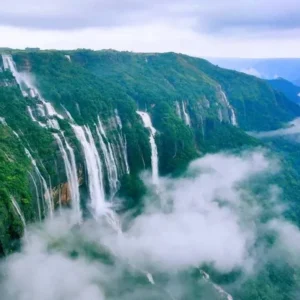
Seven Sisters Falls (Around 16 km)
A seasonal waterfall that looks spectacular during the monsoon.
Dawki (Around 82 km)
Known for the crystal-clear Umngot River, boating, and the India–Bangladesh border.
Conclusion
The Double Decker Root Bridge is one of the most unique places to visit in Meghalaya. From the exciting trek through forests and suspension bridges to the peaceful surroundings of Nongriat Village, every part of the journey offers a memorable experience. Although the climb back is challenging, the natural beauty and the chance to see this incredible living bridge make the effort worthwhile.
If you have enough time, don’t miss Rainbow Falls to make your trip even more rewarding.
Explore More of Meghalaya with TripGuruGo
The Double Decker Root Bridge is just one of the many amazing attractions in Meghalaya. From beautiful waterfalls and caves to peaceful villages and scenic road trips, there’s something for every traveller.
At TripGuruGo, you’ll find detailed travel guides, itineraries, budget tips, and practical advice to help you plan a smooth and memorable Meghalaya trip.
Frequently Asked Questions (FAQs)
Where is the Double Decker Root Bridge located?
The bridge is located in Nongriat Village, East Khasi Hills district, Meghalaya.
How many steps are there to reach the Double Decker Root Bridge?
Visitors need to climb around 3,500 stone steps during the trek.
How difficult is the trek?
The trek is moderate and is suitable for people with a reasonable level of fitness.
How long does the trek take?
It usually takes 2–3 hours one way and 4–6 hours for the complete round trip.
What is the entry fee?
The entry fee is usually ₹20–₹50 per person.
What is the best time to visit?
The best time to visit is October to April, when the weather is pleasant and the trekking trail is less slippery.
Can I visit Rainbow Falls on the same day?
Yes. If you start early in the morning, you can visit both the Double Decker Root Bridge and Rainbow Falls on the same day.
Is the trek suitable for children and senior citizens?
The trek is long and includes thousands of steps, so it may be difficult for young children, senior citizens, and people with knee problems.
Do I need a guide?
No. The trekking route is well-marked, but hiring a local guide can be helpful if you’re visiting for the first time.
Are food and washrooms available?
Yes. Small cafés, food stalls, and basic washroom facilities are available near Tyrna Village and Nongriat.
Can I swim near the bridge?
Yes. Some natural pools near the bridge are suitable for swimming, but always be careful, especially during the monsoon.
Is one day enough for the Double Decker Root Bridge trek?
Yes. Most travellers complete the trek in one day, but staying overnight in Nongriat allows you to explore Rainbow Falls at a relaxed pace.
Apurv jain is a travel seo and content writer who specializes in creating well-researched and engaging travel content. His work focuses on destinations, itineraries, travel guides, and practical tips that help readers plan memorable and hassle-free journeys.