Planning a trip to Northeast India often introduces you to one fascinating phrase—“Meghalaya, the Abode of Clouds.” But have you ever wondered why this beautiful state earned such a poetic name? The answer lies in its unique geography, extraordinary rainfall, mist-covered mountains, and landscapes where clouds don’t just float above the sky—they drift through valleys, villages, forests, and waterfalls. From the lush Khasi Hills to the rain-soaked cliffs of Cherrapunji and Mawsynram, clouds are a constant companion across Meghalaya throughout the year.
However, Meghalaya is much more than just clouds and rain. It is a land of living root bridges, sacred forests, crystal-clear rivers, ancient caves, colourful tribal traditions, and one of the world’s few matrilineal societies. This guide explains the true meaning behind Meghalaya’s famous nickname, explores the science that creates its magical weather, and introduces the culture, landscapes, and traditions that make the “Abode of Clouds” one of India’s most extraordinary destinations.
Meghalaya at a Glance
| Details | Information |
| Meaning of Meghalaya | Abode of Clouds |
| Derived From | Sanskrit |
| Coined By | Dr. S. P. Chatterjee |
| Statehood | 21 January 1972 |
| Capital | Shillong |
| Famous For | Clouds, Rainfall, Living Root Bridges, Waterfalls |
| Major Tribes | Khasi, Garo & Jaintia |
| Best Time to Visit | October to April |
What Does Meghalaya Mean?
The word Meghalaya comes from two Sanskrit words:
- Megh = Clouds
- Alaya = Home or Abode
Together, Meghalaya literally translates to “The Abode of Clouds.”
The name perfectly reflects the state’s natural landscape. Throughout the year, thick clouds cover its hills, forests, waterfalls, and valleys, creating an atmosphere unlike anywhere else in India.
The name was popularised by renowned geographer Dr. S. P. Chatterjee during the 1930s while describing this unique hill region. Decades later, when Meghalaya officially became a separate state in 1972, the poetic name remained—and today it is recognised across the world as the “Abode of Clouds.”
Why is Meghalaya Called the Abode of Clouds?
The nickname isn’t simply poetic—it’s scientifically accurate.
Meghalaya lies directly in the path of moisture-laden monsoon winds travelling from the Bay of Bengal. As these winds reach the towering Khasi, Garo, and Jaintia Hills, they are forced to rise rapidly. During this upward movement, the moist air cools, condenses, and transforms into thick clouds, mist, and heavy rainfall.
Unlike many mountain regions where clouds remain high above the peaks, Meghalaya’s clouds often descend to ground level. They drift across roads, forests, villages, waterfalls, and mountain slopes, creating the dreamy landscapes for which the state is famous.
This continuous interaction between mountains, forests, and monsoon winds is the primary reason Meghalaya truly deserves the title “The Abode of Clouds.”
How Meghalaya’s Geography Creates Endless Clouds
One of the biggest reasons behind Meghalaya’s unique climate is its geographical location.
The state sits between the plains of Assam to the north and Bangladesh to the south. This strategic position places its mountain ranges directly in the path of the southwest monsoon.
As warm, moisture-rich winds collide with the steep hills, they rise quickly, cool down, and release enormous amounts of moisture in the form of clouds and rain—a process known as orographic rainfall.
Three major hill ranges shape Meghalaya’s landscape:
Khasi Hills
The Khasi Hills receive some of the highest rainfall in the world and are home to famous destinations such as Shillong, Cherrapunji, and Mawlynnong.
Dense forests, waterfalls, and mist-covered valleys dominate this region throughout much of the year.
Jaintia Hills
Located in eastern Meghalaya, the Jaintia Hills are famous for their limestone caves, rivers, waterfalls, and rich tribal heritage.
The region also produces the world-famous Lakadong Turmeric, known for its exceptionally high curcumin content.
Garo Hills
Western Meghalaya is covered by the beautiful Garo Hills.
This region is known for:
- Dense forests
- Wildlife sanctuaries
- Rivers
- Traditional villages
- Adventure tourism
Compared to the Khasi Hills, Garo Hills receive slightly less rainfall but remain incredibly green throughout the year.
A Land of Hills, Rain, and Rivers
Meghalaya is nestled between Assam in the north and Bangladesh in the south, creating one of the most unique geographical settings in India. The state is divided into three major hill regions the Khasi Hills, Jaintia Hills, and Garo Hills—each named after the indigenous tribal communities that have lived here for centuries.
Its dramatic landscape is shaped by deep valleys, rolling hills, countless rivers, dense forests, and some of India’s tallest waterfalls. The combination of high elevations and moisture-laden monsoon winds transforms Meghalaya into a lush green paradise for much of the year.
Two of the world’s wettest places—Sohra (Cherrapunji) and Mawsynram are located here, each receiving well over 11,000 mm of annual rainfall. This extraordinary rainfall feeds spectacular waterfalls like Nohkalikai Falls, fills crystal-clear rivers, and creates the cloud-covered scenery that has made Meghalaya famous across the world.
Why Does Meghalaya Receive So Much Rain?
Meghalaya’s incredible rainfall is the result of a perfect combination of geography and climate.
Every year, powerful monsoon winds travel inland from the Bay of Bengal, carrying enormous amounts of moisture. When these winds encounter Meghalaya’s steep hills, they rise rapidly and cool almost immediately.
This rapid cooling causes water vapour to condense into dense clouds before falling as heavy rainfall.
The process repeats continuously throughout the monsoon season, which explains why places like Mawsynram and Cherrapunji regularly record some of the highest rainfall figures on Earth.
Without these unique mountain ranges, Meghalaya would never have earned its famous nickname.
The Wettest Places on Earth
One of Meghalaya’s greatest claims to fame is that it is home to two of the rainiest places on the planet.
| Place | Annual Rainfall (Approx.) | Famous For |
| Mawsynram | 11,800+ mm | Wettest Place on Earth |
| Sohra (Cherrapunji) | 11,000+ mm | Waterfalls & Living Root Bridges |
Despite receiving extraordinary rainfall, both destinations remain among Meghalaya’s biggest tourist attractions.
Visitors travel here to witness:
- Towering waterfalls
- Dense cloud cover
- Deep valleys
- Limestone caves
- Living Root Bridges
- Endless green landscapes
For photographers and nature lovers, these locations perfectly capture why Meghalaya is celebrated as the Abode of Clouds.
Clouds That Touch the Ground
In many parts of the world, clouds remain high above the mountains. Meghalaya is different.
Here, clouds frequently descend into the valleys, drift through forests, wrap around waterfalls, and even pass directly across roads and villages. During the early morning and late afternoon, entire landscapes can disappear beneath a blanket of mist before clearing again within minutes.
This ever-changing scenery creates a magical atmosphere where mountains seem to float above the clouds, making every journey through Meghalaya feel like travelling through the sky.
Whether you’re standing at Laitlum Canyon, overlooking Nohkalikai Falls, or driving through the Khasi Hills, witnessing clouds at eye level is an experience that few places on Earth can offer.
The Cultural Beauty Behind the Clouds
While Meghalaya’s clouds and landscapes attract millions of travellers every year, its cultural heritage is equally fascinating. The state is home to vibrant tribal communities that have preserved their traditions, languages, festivals, and way of life for generations.
Unlike many other parts of India, Meghalaya offers visitors the chance to experience a unique blend of indigenous customs, close-knit communities, and a lifestyle that remains deeply connected to nature. Every village, festival, and local tradition reflects the respect people here have for their land and heritage.
Meghalaya’s Unique Matrilineal Society
One of Meghalaya’s most distinctive cultural features is its matrilineal system, followed by the Khasi, Jaintia, and Garo tribes.
In this tradition:
- Family lineage is traced through the mother’s side.
- Property is usually inherited by the youngest daughter.
- Children take their mother’s family name.
- Women play a central role in preserving family traditions.
However, it’s important to understand that matrilineal does not mean matriarchal. While women inherit family property and hold an important place within society, leadership roles in politics and village administration are often shared or held by men. This balance has made Meghalaya one of India’s most culturally unique states.
Languages & Ethnic Diversity
Meghalaya is home to several indigenous communities, each with its own language, traditions, and cultural identity.
The three major tribal communities include:
Khasi Community
The Khasi people primarily inhabit the Khasi Hills and are well known for their rich traditions, music, and matrilineal society.
Garo Community
The Garo tribe mainly lives in western Meghalaya and is recognised for colourful festivals, agriculture, and traditional dance forms.
Jaintia Community
The Jaintia people are concentrated in eastern Meghalaya and are famous for their cultural heritage, sacred traditions, and production of Lakadong turmeric.
Although English is the official language, Khasi, Garo, and Pnar (Jaintia language) are widely spoken throughout the state. Visitors often appreciate the warmth and hospitality shown by local communities, making Meghalaya one of the friendliest destinations in Northeast India.
Sacred Forests, Living Root Bridges & Natural Wonders
Nature isn’t simply admired in Meghalaya—it’s deeply respected and protected.
Mawphlang Sacred Forest
One of the finest examples of this relationship is the Mawphlang Sacred Forest.
For centuries, local communities have preserved this ancient forest through traditional beliefs. Cutting trees, removing plants, or disturbing wildlife inside the forest is considered sacred and is strongly discouraged.
As a result, Mawphlang has become one of India’s richest biodiversity hotspots, with centuries-old trees, medicinal plants, rare orchids, and countless species of birds and insects.
Living Root Bridges
Perhaps no attraction represents Meghalaya’s harmony with nature better than its famous Living Root Bridges.
Instead of using steel or concrete, local Khasi communities carefully guide the aerial roots of rubber fig trees across streams over several decades. As the roots grow stronger, they naturally form bridges capable of supporting dozens of people.
Some of these remarkable bridges are over 100 years old, while others continue to grow stronger every year.
The most famous among them is the Double Decker Living Root Bridge at Nongriat, one of Meghalaya’s most visited attractions.
Meghalaya’s Incredible Cave Systems
Meghalaya is also known as one of India’s premier cave exploration destinations.
The state’s limestone landscape has created hundreds of natural caves, attracting travellers, researchers, and adventure enthusiasts from around the world.
Some of the most famous caves include:
- Mawsmai Cave – Easy to explore and ideal for first-time visitors.
- Liat Prah Cave – One of Asia’s longest cave systems.
- Siju Cave – Known for its impressive limestone formations and bat colonies.
These underground wonders add another dimension to Meghalaya’s already diverse landscape.
Festivals That Celebrate Nature and Tradition
Life in Meghalaya is closely connected to nature, agriculture, and community celebrations. Throughout the year, colourful festivals bring villages alive with music, dance, traditional attire, and rituals passed down through generations.
Some of the state’s most celebrated festivals include:
Shad Suk Mynsiem
A traditional Khasi thanksgiving festival celebrating peace, prosperity, and gratitude through graceful dance performances.
Behdeinkhlam
One of the most important festivals of the Jaintia community, celebrated to drive away disease, negativity, and ensure a good harvest.
Wangala
The Garo community celebrates Wangala after the harvest season with energetic drum performances, folk dances, and prayers dedicated to the Sun God.
These festivals offer visitors a wonderful opportunity to experience Meghalaya’s living traditions and warm community spirit.
Wildlife & Biodiversity
Meghalaya’s forests are home to an astonishing variety of wildlife and plant species.
The state’s biodiversity includes:
- Rare orchids
- Colourful butterflies
- Clouded leopards
- Hoolock gibbons
- Hornbills
- Wild elephants
- Medicinal plants
Protected forests and wildlife sanctuaries such as Balpakram National Park and Nokrek National Park help preserve this incredible natural heritage.
For birdwatchers, photographers, and wildlife enthusiasts, Meghalaya remains one of Northeast India’s richest ecological regions.
Shillong — The Scotland of the East
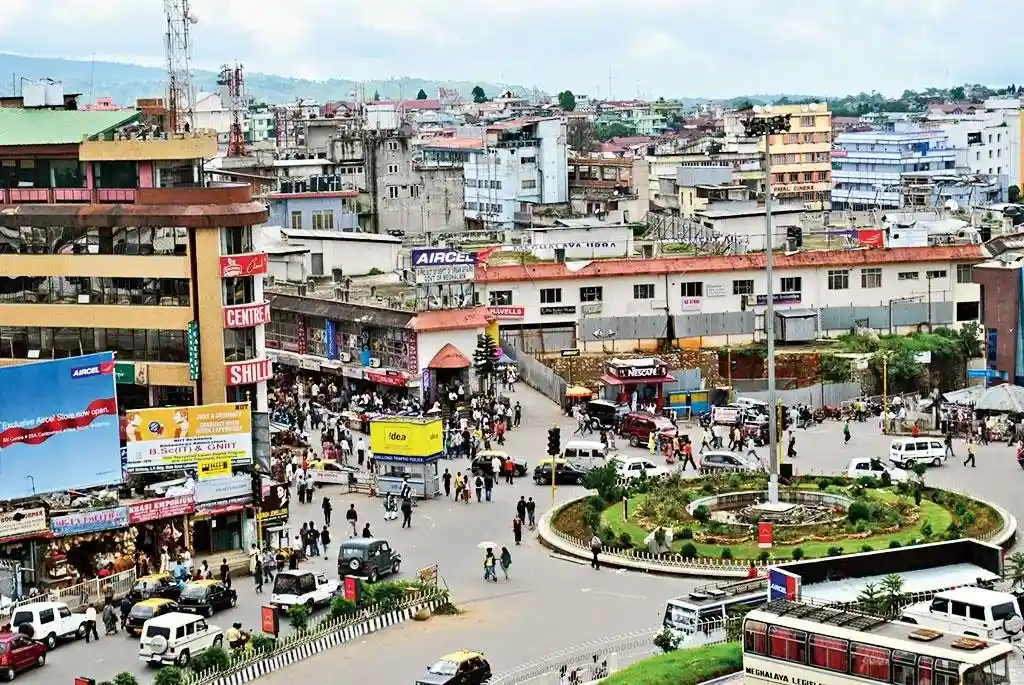
The capital city Shillong is often called the “Scotland of the East”, thanks to its rolling hills, pleasant climate, colonial-era architecture, and picturesque landscapes.
Beyond its natural beauty, Shillong is also recognised as one of Northeast India’s educational and cultural centres. Prestigious institutions such as North-Eastern Hill University (NEHU) and IIM Shillong attract students from across the country.
The city is equally famous for its lively music culture, charming cafés, bustling markets, and vibrant nightlife, making it an essential stop for anyone visiting Meghalaya.
Meghalaya’s Food & Local Flavours
Meghalaya’s cuisine reflects its tribal heritage, locally grown produce, and traditional cooking techniques.
Some must-try dishes include:
- Jadoh – A traditional Khasi rice and meat dish.
- Dohneiiong – Pork cooked with black sesame.
- Tungrymbai – Fermented soybean preparation.
- Bamboo Shoot Dishes – Popular across tribal communities.
- Pumaloi – Steamed powdered rice.
The state is also famous for its:
- Sweet pineapples
- Oranges
- Organic honey
- Lakadong Turmeric
- Ryndia silk products
Exploring Meghalaya’s local food is an experience that adds another layer to understanding its culture and traditions.
Meghalaya’s Economy & Sustainable Living
Despite its mountainous terrain, Meghalaya has a thriving rural economy that is deeply connected to nature. Agriculture remains the backbone of the state, with most local communities relying on farming, horticulture, and forest-based livelihoods.
Some of Meghalaya’s major agricultural products include:
- Rice
- Maize
- Potatoes
- Pineapples
- Oranges
- Ginger
- Black Pepper
The state is especially famous for Lakadong Turmeric, grown mainly in the Jaintia Hills. With one of the highest curcumin contents in the world, it is exported across India and internationally.
Meghalaya is also known for its eco-friendly handicrafts made from bamboo and cane, along with the traditional Ryndia silk, which is handwoven by local artisans. In recent years, organic farming and sustainable tourism have gained popularity, helping protect the state’s fragile ecosystem while supporting local communities.
Meghalaya’s Geological Importance
Meghalaya isn’t just famous for its landscapes—it also holds global geological significance.
Scientists named one chapter of Earth’s history the Meghalayan Age, which began approximately 4,200 years ago following a major global climatic event. Evidence of this ancient climate change was first discovered inside Mawmluh Cave near Sohra (Cherrapunji), making Meghalaya an important location in geological research.
This remarkable discovery placed the state on the global scientific map and highlighted its contribution to understanding Earth’s climatic history.
Best Places That Truly Represent the “Abode of Clouds”
If you want to experience why Meghalaya is called the Abode of Clouds, these destinations should be at the top of your itinerary.
Shillong
The capital city welcomes visitors with cool weather, pine-covered hills, beautiful cafés, and viewpoints where clouds often roll across the valleys.
Cherrapunji (Sohra)
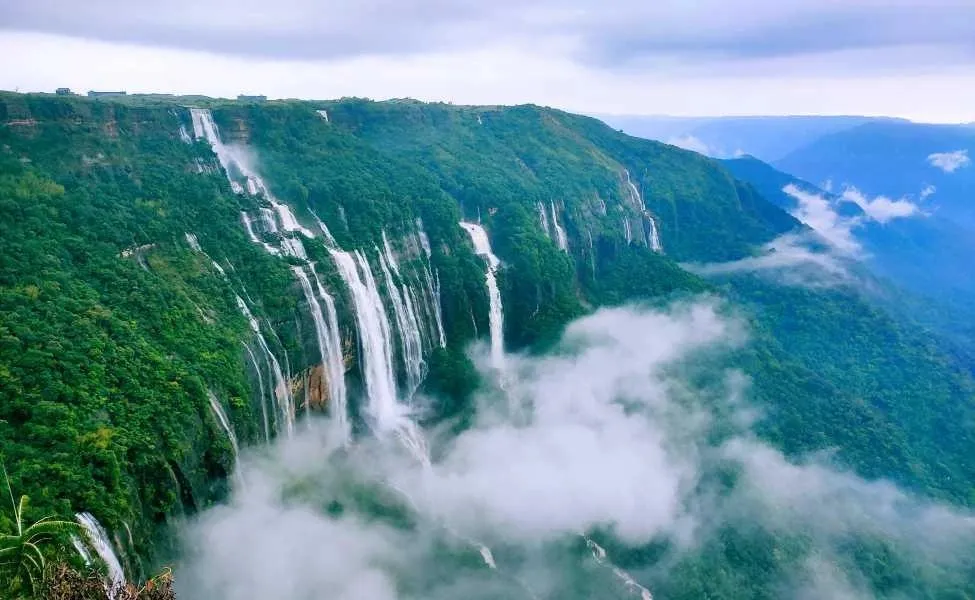
Known for its dramatic cliffs, caves, waterfalls, and living root bridges, Sohra offers some of Meghalaya’s most breathtaking cloud-filled landscapes.
Mawsynram
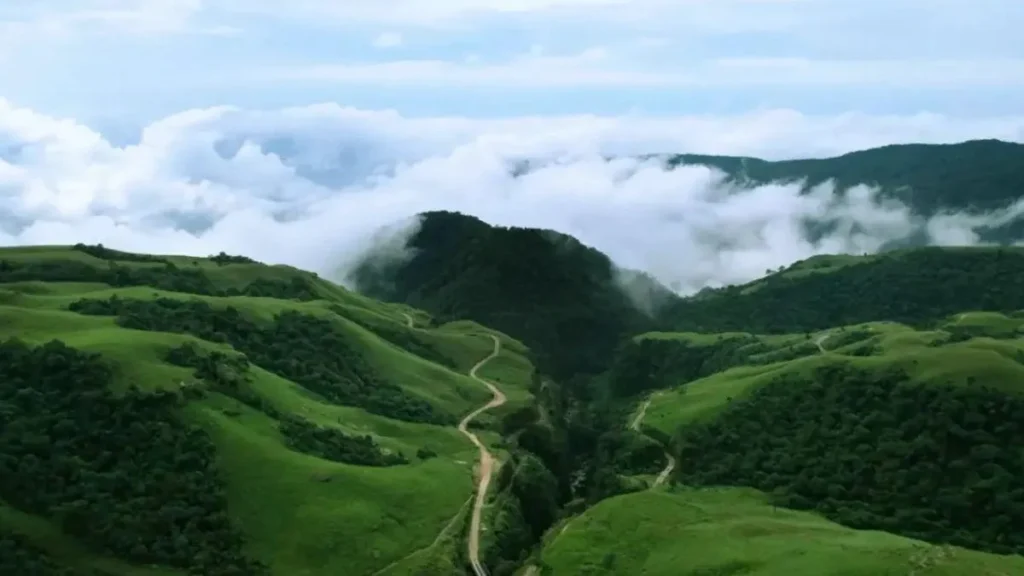
Recognised as the wettest place on Earth, Mawsynram experiences heavy rainfall almost every year and perfectly showcases Meghalaya’s mist-covered environment.
Dawki
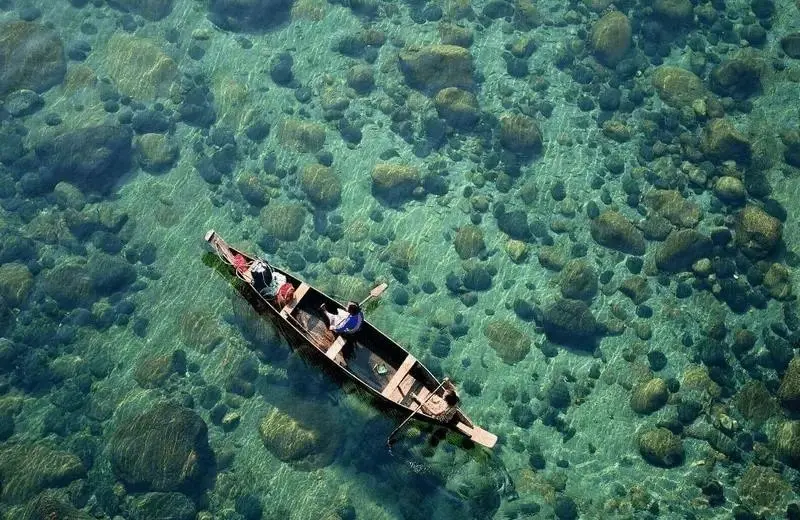
Famous for the crystal-clear Umngot River, Dawki becomes even more magical during the early morning when clouds float gently above the surrounding hills.
Mawlynnong
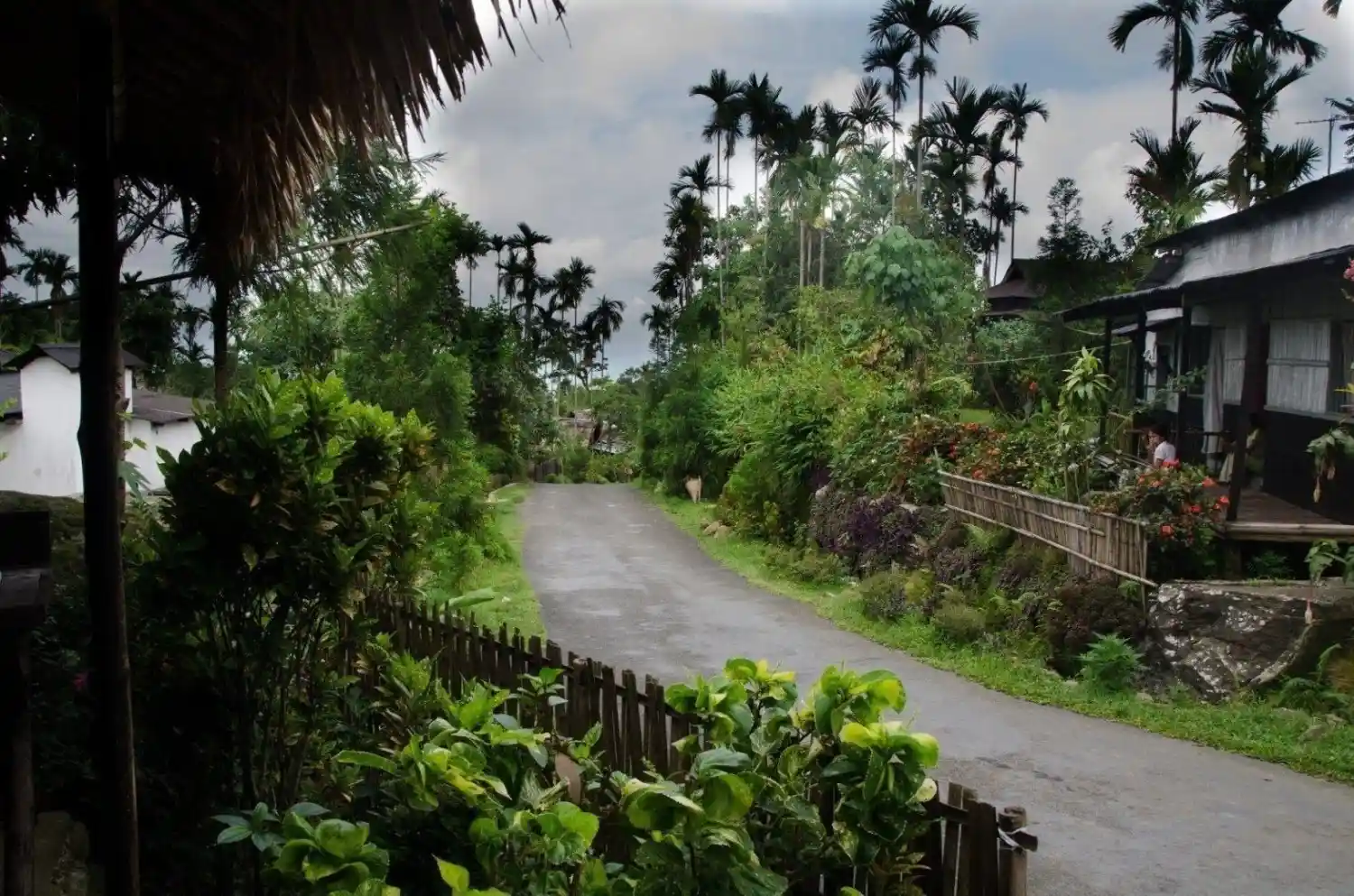
Popularly known as Asia’s Cleanest Village, Mawlynnong combines natural beauty, traditional Khasi culture, and peaceful village life.
Laitlum Canyon
Laitlum Canyon offers one of the finest panoramic viewpoints in Meghalaya, where visitors often witness valleys disappearing beneath thick blankets of clouds.
Nohkalikai Falls
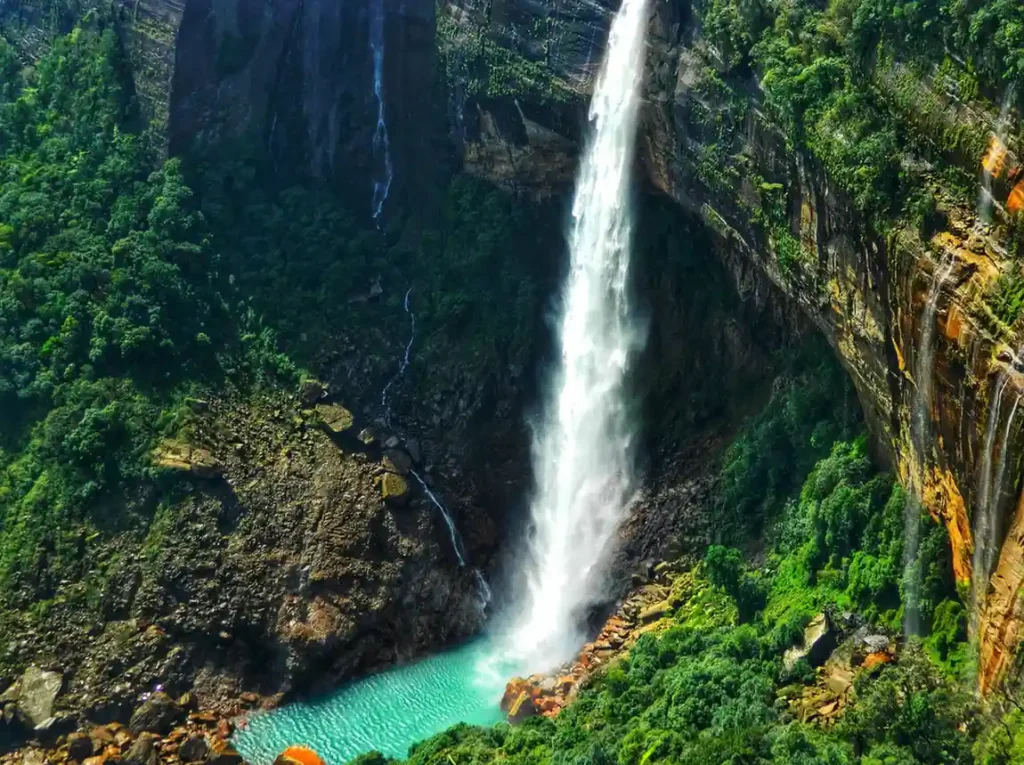
India’s tallest plunge waterfall becomes even more spectacular when clouds drift around the cliffs after rainfall.
Double Decker Living Root Bridge
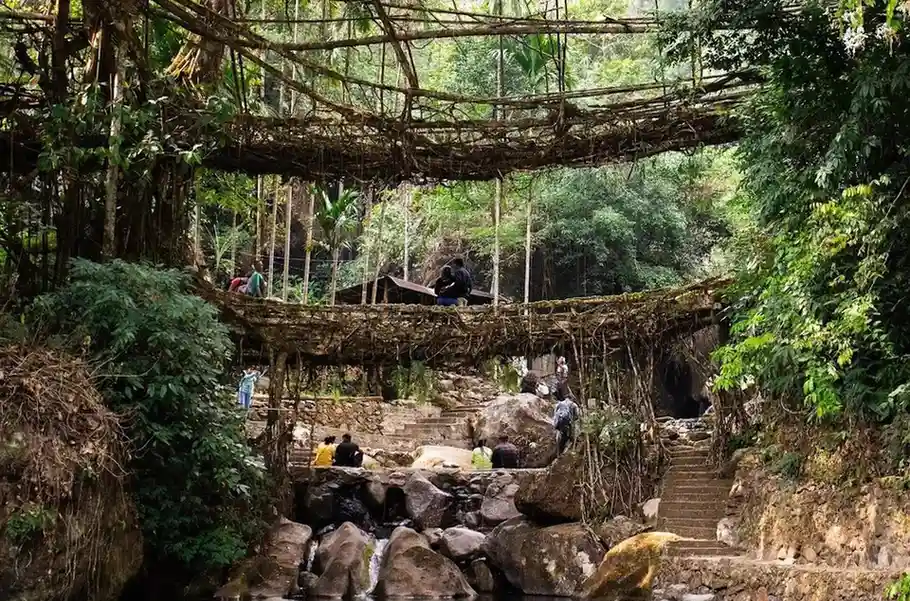
Hidden deep inside the forests of Nongriat, this iconic bridge surrounded by lush greenery and mist perfectly captures Meghalaya’s harmony between nature and human ingenuity.
Best Time to Experience Meghalaya’s Clouds
Although Meghalaya is beautiful throughout the year, the experience changes with every season.
| Season | Experience |
| October – February | Pleasant weather, clear skies with occasional morning mist |
| March – May | Comfortable temperatures and lush green landscapes |
| June – September | Peak monsoon season with dramatic clouds, waterfalls, and heavy rainfall |
If your goal is to witness Meghalaya’s famous cloud-covered scenery, the monsoon and post-monsoon months provide the most spectacular views. For comfortable sightseeing and road trips, October to March remains the best time to visit.
Interesting Facts About Meghalaya
Here are some fascinating facts that make Meghalaya one of India’s most unique states:
- The name Meghalaya literally means “Abode of Clouds.”
- It became India’s 21st state on 21 January 1972.
- Mawsynram is officially recognised as the wettest place on Earth.
- Cherrapunji continues to record some of the world’s highest annual rainfall.
- Meghalaya follows one of the world’s few matrilineal societies.
- The state is home to the famous Living Root Bridges, built entirely from living tree roots.
- Some of Asia’s longest limestone cave systems are found here.
- Meghalaya is famous for producing premium-quality Lakadong Turmeric.
- English serves as the official language, alongside Khasi, Garo, and Pnar.
- The Meghalayan Age in Earth’s geological timeline is named after discoveries made in Meghalaya.
Why Every Nature Lover Should Visit Meghalaya
Few destinations in India offer such a remarkable combination of waterfalls, caves, forests, rivers, mountains, wildlife, and indigenous culture within a single state.
Whether you’re watching clouds drift across Laitlum Canyon, trekking to a Living Root Bridge, boating on the crystal-clear Umngot River, or exploring ancient caves, Meghalaya constantly reminds visitors how closely nature and human life can coexist.
For photographers, trekkers, wildlife enthusiasts, and anyone looking to escape crowded tourist destinations, Meghalaya promises experiences that are difficult to find anywhere else in the country.
Travel Tips Before Visiting Meghalaya
A little preparation can make your Meghalaya trip far more enjoyable.
- Carry a raincoat or umbrella throughout the year.
- Wear comfortable walking or trekking shoes.
- Keep some cash for remote villages and local markets.
- Respect local customs and tribal traditions.
- Avoid littering in forests, caves, and waterfalls.
- Download offline maps before travelling to remote areas.
- Start sightseeing early to avoid afternoon fog during the monsoon.
- Carry warm clothing, especially during winter evenings.
Common Mistakes to Avoid
Avoid these common mistakes to make the most of your Meghalaya trip:
- Visiting only Shillong and skipping the rest of the state.
- Underestimating travel time on mountain roads.
- Ignoring weather forecasts during the monsoon.
- Wearing unsuitable footwear for trekking.
- Depending completely on digital payments.
- Skipping local food and cultural experiences.
- Rushing through destinations instead of spending enough time exploring.
Is Meghalaya Worth Visiting?
Absolutely.
Meghalaya is far more than a destination famous for clouds. It is a place where waterfalls disappear into mist, forests are protected through centuries-old traditions, rivers remain unbelievably clear, and local communities continue to preserve their unique culture with pride.
Whether you’re an adventure enthusiast, photographer, cultural explorer, or someone simply seeking peace in nature, Meghalaya offers an experience unlike any other destination in India. Every season reveals a different side of the state, making it a place worth visiting more than once.
Experience the Abode of Clouds with TripGuruGo
Meghalaya isn’t just a destination you visit—it’s a place you experience through its mist-covered hills, living root bridges, hidden waterfalls, vibrant tribal culture, and unforgettable road journeys. With TripGuruGo, you can explore the true essence of the Abode of Clouds through thoughtfully planned itineraries, comfortable stays, and hassle-free travel arrangements, allowing you to focus on creating memories while we take care of the planning.
Frequently Asked Questions
Why is Meghalaya called the Abode of Clouds?
Meghalaya receives heavy rainfall due to moisture-laden monsoon winds from the Bay of Bengal. These winds collide with the Khasi, Garo, and Jaintia Hills, creating dense clouds and mist that remain visible across the landscape for much of the year.
Who gave Meghalaya its name?
The name Meghalaya was popularised by renowned geographer Dr. S. P. Chatterjee during the 1930s. It later became the official name when the state was formed in 1972.
What does Meghalaya mean?
The word Meghalaya comes from Sanskrit, where “Megh” means cloud and “Alaya” means home or abode, together translating to “The Abode of Clouds.”
Which are the wettest places in Meghalaya?
Mawsynram and Sohra (Cherrapunji) are among the wettest places on Earth and receive exceptionally high annual rainfall.
Which tribes live in Meghalaya?
The three major indigenous communities are the Khasi, Garo, and Jaintia tribes.
What is Meghalaya famous for besides clouds?
The state is also known for its Living Root Bridges, sacred forests, waterfalls, caves, crystal-clear rivers, matrilineal society, wildlife, and rich tribal culture.
When is the best time to visit Meghalaya?
October to March is ideal for sightseeing, while June to September is perfect for witnessing lush landscapes, dramatic waterfalls, and the famous cloud-covered scenery.
Is Meghalaya suitable for first-time travellers?
Yes. Meghalaya is one of the best destinations in Northeast India for first-time visitors, offering a mix of nature, adventure, culture, and comfortable road connectivity.