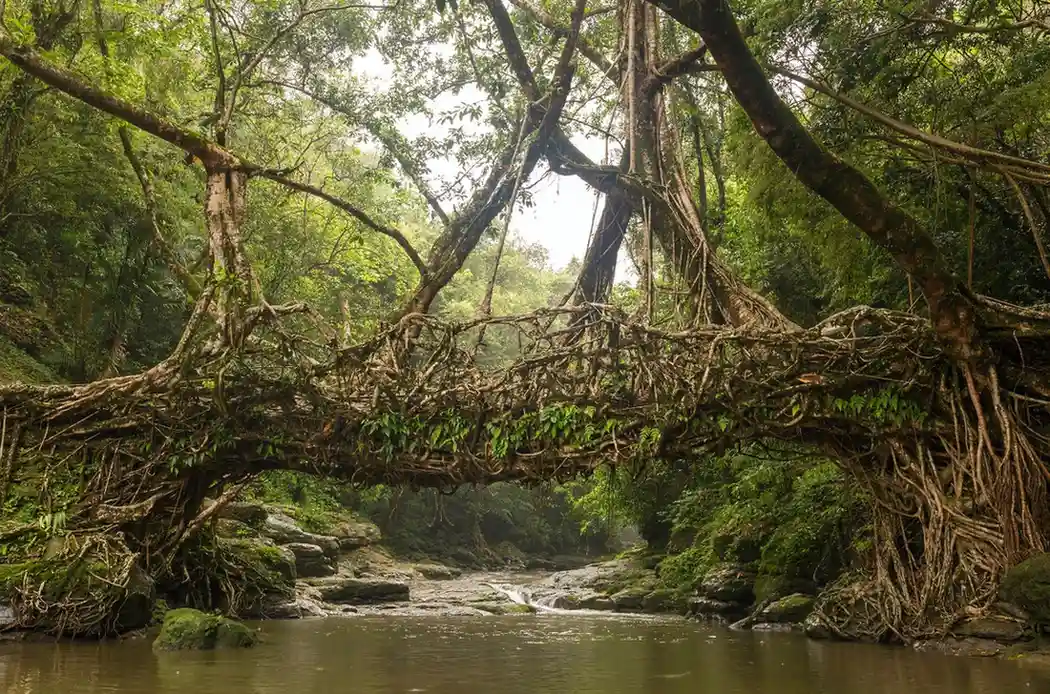
The Single Root Bridge is one of Meghalaya’s most amazing natural attractions. Located in Riwai Village, near the famous Mawlynnong Village, this living bridge is made from the roots of a rubber tree instead of wood or steel. It is over 300 years old and still used by local people today. Before exploring Meghalaya, check our Local travel guide to plan your journey with ease.
This guide covers everything you need to know before visiting the Single Root Bridge. You’ll learn about its location, the short forest walk, entry fee, best time to visit, how the bridge was built, travel tips, nearby attractions, and safety advice. Whether you’re visiting Mawlynnong or taking a road trip through Meghalaya, this guide will help you enjoy one of the state’s most unique places.
Quick Facts About the Single Root Bridge
| Details | Information |
| Location | Riwai Village, East Khasi Hills, Meghalaya |
| Famous For | Living Root Bridge |
| Age | Around 300 Years |
| Distance from Shillong | Around 75–78 km |
| Distance from Mawlynnong | Around 2 km |
| Trek Time | 10–15 Minutes |
| Trek Difficulty | Easy |
| Entry Fee | ₹40 per person |
| Best Time to Visit | October to May |
| Nearest Airport | Guwahati Airport |
| Nearest Railway Station | Guwahati Railway Station |
Where Is the Single Root Bridge?
The Single Root Bridge is located in Riwai Village, a small village in Meghalaya’s East Khasi Hills district.
It is only a few minutes from Mawlynnong Village, often called one of the cleanest villages in Asia. Because of this, most visitors explore both places on the same day.
The bridge is surrounded by thick forests, small streams, and peaceful walking trails, making it one of the easiest living root bridges to visit in Meghalaya.
Approximate distances:
- Mawlynnong to Single Root Bridge – 2 km
- Shillong to Single Root Bridge – 75–78 km
- Dawki to Single Root Bridge – 35 km
- Cherrapunji to Single Root Bridge – 85 km
- Guwahati to Single Root Bridge – 175 km
Why Is the Single Root Bridge Famous?
The Single Root Bridge is famous because it is not built with cement, iron, or wood.
Instead, it is made entirely from the living roots of a rubber tree that continue to grow every year.
This makes it one of the most unique bridges in India.
A Bridge That Is Still Alive
Unlike normal bridges, the Single Root Bridge is alive.
The roots continue to grow deeper and stronger with time, making the bridge even more stable every year.
As long as the tree remains healthy, the bridge can last for hundreds of years.
Built by Nature and People Together
The bridge is not completely natural.
Local Khasi people carefully guided the tree roots across a stream many years ago.
Nature did the growing, while people patiently shaped the roots until they became strong enough to walk across.
Easy Trek for Everyone
Unlike the famous Double Decker Living Root Bridge, reaching the Single Root Bridge is very easy.
Visitors only need to walk for around 10 to 15 minutes through a beautiful forest trail.
This makes it suitable for:
- Families
- Children
- Senior citizens
- First-time visitors
A Peaceful Nature Experience
The area around the bridge is quiet and relaxing.
You’ll hear birds, flowing water, and the sounds of the forest instead of traffic.
Many visitors spend time sitting near the stream and enjoying the fresh air.
The Story Behind the Single Root Bridge
Hundreds of years ago, people living in Meghalaya faced a big problem.
During the rainy season, rivers became very strong. Wooden bridges were often washed away or damaged because of the heavy rain.
Instead of rebuilding new bridges every few years, the Khasi and Jaintia tribes found a much smarter solution.
They decided to grow bridges instead of building them.
How Did They Grow a Bridge?
The local people planted rubber fig trees (Ficus elastica) near rivers and streams.
These trees produce long, flexible roots that grow above the ground.
Instead of letting the roots grow in different directions, villagers gently guided them across the stream using hollow trunks of areca nut (betel nut) trees.
The hollow trunks acted like natural pipes, helping the young roots grow safely toward the other side.
A Bridge Built with Patience
Growing a living root bridge is not a quick process.
It usually takes around 15 to 30 years before the roots become strong enough to support people.
The villagers knew they might never use the bridge themselves.
Still, they continued growing it so future generations could benefit.
This makes every living root bridge a gift from one generation to the next.
Why Does the Bridge Become Stronger?
Most bridges become weaker as they get older.
The Single Root Bridge is different.
As the roots continue to grow, they naturally join together and become thicker.
Every year, the bridge becomes stronger instead of weaker.
This is why many living root bridges in Meghalaya have survived for hundreds of years.
A Perfect Example of Living with Nature
The Single Root Bridge shows how people can work with nature instead of changing it.
Instead of cutting trees, local communities used living trees to solve their everyday problems.
Even today, these bridges remind visitors of the wisdom, patience, and traditional knowledge of the Khasi people.
Best Time to Visit the Single Root Bridge
The bridge is open throughout the year, but some seasons offer a better experience.
October to May (Best Time)
This is the best time to visit.
During these months:
- Pleasant weather
- Dry walking trail
- Comfortable sightseeing
- Clear photography conditions
- Easy forest walk
This season is ideal for families and first-time visitors.
June to September (Monsoon)
The monsoon makes the forest look fresh and green.
Streams become fuller, and the surroundings become even more beautiful.
However, the trail can become slippery because of frequent rainfall.
If you visit during this season:
- Wear shoes with good grip.
- Carry a raincoat.
- Walk carefully on wet stone steps.
How to Reach the Single Root Bridge
The bridge is well connected by road and is usually visited along with Mawlynnong Village.
From Shillong
Shillong is the most common starting point.
- Distance: 75–78 km
- Travel Time: Around 2.5 hours
Private taxis and self-drive vehicles are the easiest options.
From Mawlynnong
The bridge is only about 2 km from Mawlynnong Village.
Most visitors drive to Riwai and then take the short forest walk to reach the bridge.
From Dawki
Many travellers include the Single Root Bridge while travelling between Dawki and Shillong.
- Distance: Around 35 km
- Travel Time: Around 1 hour
This route is popular because it allows visitors to explore multiple attractions in one day.
From Guwahati
Visitors arriving by train or flight usually begin from Guwahati.
- Distance: Around 175 km
- Travel Time: 5 to 6 hours
Many travellers stay overnight in Shillong before visiting Mawlynnong and the Single Root Bridge.
Entry Fee and Timings
Visitors need to purchase an entry ticket before walking to the bridge.
| Details | Information |
| Entry Fee | ₹40 per person |
| Trek Time | 10–15 Minutes |
| Parking | Available near the entrance |
The bridge is best visited during daylight hours when the forest trail is safe and photography conditions are better.
Trek to the Single Root Bridge
One of the best things about visiting the Single Root Bridge is that it doesn’t require a long or difficult trek.
From the parking area in Riwai Village, visitors only need to walk for about 10 to 15 minutes to reach the bridge.
The trail is surrounded by thick greenery, small streams, and fresh mountain air, making the short walk enjoyable for visitors of all ages.
Is the Trek Difficult?
No. The trek is very easy and can be completed by almost everyone.
The trail includes:
- Well-maintained stone steps
- Forest pathway
- Small bridges
- Gentle downhill and uphill sections
Unlike the Nongriat trek, this walk does not involve thousands of steps.
It is suitable for:
- Families with children
- Senior citizens
- Couples
- First-time trekkers
Wear comfortable shoes, especially during the rainy season, as some sections may become slippery.
Things to Do at the Single Root Bridge
Although the bridge is the main attraction, there are several activities that make your visit even more enjoyable.
Walk Across the Living Root Bridge
The highlight of your visit is walking across the bridge itself.
As you stand on the thick tree roots, you’ll notice how strong and stable they feel.
It is hard to believe that the bridge is completely made from living roots instead of concrete or steel.
Enjoy Nature
The area around the bridge is peaceful and full of greenery.
Spend a few minutes listening to the flowing stream, birds, and the sounds of the forest.
It is a great place to relax away from busy towns.
Photography
The Single Root Bridge is one of the most photogenic places near Mawlynnong.
Popular photography spots include:
- The bridge itself
- The flowing stream below
- Forest pathway
- Stone steps
- Tree roots
- Wooden viewpoints
Morning and late afternoon usually provide the best natural light.
Learn About Khasi Culture
Visiting the bridge also gives you a chance to understand the traditional knowledge of the Khasi people.
The bridge is not just a tourist attraction—it is a living example of how local communities have worked with nature for centuries.
Facilities Available
Basic tourist facilities are available near the entrance.
Parking
A parking area is available close to the walking trail.
From there, visitors begin the short walk to the bridge.
Small Food Stalls
Local stalls sell:
- Tea
- Coffee
- Soft drinks
- Packaged snacks
- Light refreshments
These are good places to relax before or after your visit.
Washrooms
Basic washroom facilities are available near the entrance area.
Souvenir Shops
Some local shops sell:
- Handmade bamboo products
- Local handicrafts
- Traditional souvenirs
Buying from these shops also supports the local community.
How Much Does a Trip to the Single Root Bridge Cost?
The total cost depends on your transport and itinerary.
If you’re planning a longer Meghalaya holiday, our Meghalaya Trip Cost guide can help you estimate your complete travel budget.
A rough estimate for visiting the Single Root Bridge is given below.
| Expense | Approximate Cost |
| Entry Ticket | ₹40 per person |
| Parking | Depends on vehicle type |
| Food & Snacks | ₹100–₹300 |
| Taxi from Shillong | Depends on your itinerary |
Travel Tips
These simple tips will help you enjoy a comfortable visit.
Before You Visit
- Visit early in the morning for fewer crowds.
- Wear comfortable walking shoes.
- Carry drinking water.
- Keep your camera or phone fully charged.
- Carry some cash for tickets and local purchases.
During Your Visit
- Stay on the marked walking trail.
- Avoid climbing on the roots.
- Do not leave plastic waste behind.
- Respect the local village and its traditions.
- Walk carefully during the monsoon.
Is the Single Root Bridge Safe?
Yes, the Single Root Bridge is considered very safe for visitors.
The short trek, well-maintained path, and regular tourist activity make it suitable for families, couples, and solo visitors.
However, basic precautions should always be followed.
Safety Tips
- Wear shoes with good grip.
- Walk slowly on wet stone steps.
- Avoid running on the bridge.
- Keep children under supervision.
- Do not damage or pull the living roots.
Women planning to explore Meghalaya on their own can also read our Meghalaya Safety Guide for Solo Female Travellers for practical safety tips, transport advice, and useful travel information.
Nearby Attractions
Mawlynnong Village (2 km from the Single Root Bridge)
Mawlynnong is one of Meghalaya’s most popular tourist destinations and is often called one of the cleanest villages in Asia. Most visitors explore the village before or after visiting the Single Root Bridge.
Why Visit?
- Clean village streets
- Beautiful gardens
- Local Khasi culture
- Traditional bamboo houses
- Local cafés and shops
Time Required: 1–2 Hours
Bangladesh View Point (3 km from the Single Root Bridge)
Located near Mawlynnong, the Bangladesh View Point offers wide views of the plains of Bangladesh from a bamboo skywalk.
On clear days, the view stretches far into the neighbouring country.
Why Visit?
- Beautiful border views
- Bamboo skywalk
- Great photography spot
- Peaceful surroundings
Time Required: 30–45 Minutes
Dawki (35 km from the Single Root Bridge)
Dawki is famous for the crystal-clear Umngot River and its floating boats. It is one of the most visited destinations in Meghalaya and can easily be combined with a visit to the Single Root Bridge.
Why Visit?
- Umngot River boating
- Crystal-clear water
- Dawki Suspension Bridge
- India–Bangladesh border
Time Required: Half Day
Pynursla (28 km from the Single Root Bridge)
Pynursla is a quiet town surrounded by forests and hills. It is a good stop for visitors travelling between Shillong and Mawlynnong.
Why Visit?
- Scenic mountain views
- Local markets
- Peaceful atmosphere
- Beautiful countryside drive
Time Required: 1 Hour
Conclusion
The Single Root Bridge is one of Meghalaya’s most fascinating natural attractions. Built from the living roots of rubber trees, it shows how the Khasi people used nature to solve everyday problems many generations ago. Even after hundreds of years, the bridge continues to grow stronger while serving as a symbol of patience, tradition, and sustainable living.
With its easy forest walk, peaceful surroundings, and location close to Mawlynnong, the Single Root Bridge is a perfect destination for families, couples, and first-time visitors. If you’re exploring East Khasi Hills, this unique living bridge deserves a place on your itinerary.
Discover More Hidden Gems with TripGuruGo
The Single Root Bridge is just one of the many amazing places waiting to be explored in Meghalaya. From peaceful villages and waterfalls to scenic road trips and living root bridges, every destination has its own story.
At TripGuruGo, you’ll find simple travel guides, practical tips, and detailed itineraries to help you plan every part of your journey. Explore more with TripGuruGo and make the most of your Meghalaya adventure.
Frequently Asked Questions (FAQs)
Where is the Single Root Bridge located?
The Single Root Bridge is located in Riwai Village, near Mawlynnong in the East Khasi Hills district of Meghalaya.
Why is the Single Root Bridge famous?
It is famous because it is made from the living roots of a rubber tree. The bridge is over 300 years old and continues to grow stronger every year.
How far is the Single Root Bridge from Shillong?
The bridge is around 75–78 km from Shillong and can be reached in about 2.5 hours by road.
Is the trek to the Single Root Bridge difficult?
No. The bridge can be reached through a short 10 to 15-minute forest walk, making it suitable for visitors of all ages.
What is the entry fee for the Single Root Bridge?
The entry fee is ₹40 per person.
What is the best time to visit the Single Root Bridge?
The best time to visit is October to May, when the weather is pleasant and the walking trail remains dry.
Can children and senior citizens visit the Single Root Bridge?
Yes. Since the walk is short and easy, the bridge is suitable for families, children, and most senior citizens.
Can I visit Mawlynnong and the Single Root Bridge on the same day?
Yes. The bridge is only about 2 km from Mawlynnong, and most travellers visit both places on the same trip.
How old is the Single Root Bridge?
The bridge is believed to be around 300 years old and is still used by local people and visitors.
How were the living root bridges made?
The Khasi people guided the young roots of rubber fig trees (Ficus elastica) through hollow areca nut trunks across streams. Over many years, the roots grew, joined together naturally, and formed a strong living bridge that continues to grow even today.
Apurv jain is a travel seo and content writer who specializes in creating well-researched and engaging travel content. His work focuses on destinations, itineraries, travel guides, and practical tips that help readers plan memorable and hassle-free journeys.