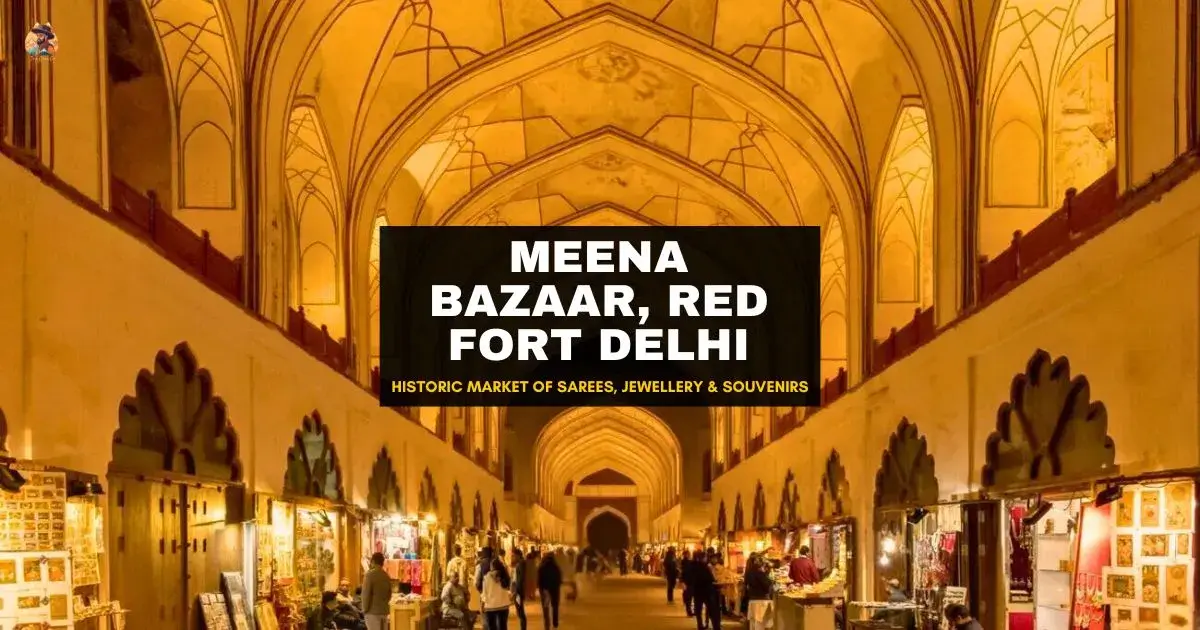
Meena Bazaar, Red Fort, Delhi, had always been more than a name on my list. Friends spoke of a place where the past still lingers in the air, and I wanted to see if it was true. Stepping in, I felt the stone floor press its coolness into my shoes. A faint swirl of spice and old dust touched my nose, while the echo of overlapping voices drifted between high arches. Somewhere ahead, a shop bell chimed, its ring fading into the hum of conversations. It was not simply a market — it was a living pause between centuries, and I had just walked into it.
Stepping Through Lahori Gate Into Meena Bazaar’s Past

Crossing Lahori Gate, the light shifted. It turned softer, filtering down in narrow beams that caught tiny motes of dust. The air felt heavier, carrying the scent of worn stone and polished brass. Before me stretched a vaulted corridor — Meena Bazaar inside the Red Fort, once called Bazaar-i-Musaqqaf and known today as Chhatta Chowk Red Fort.
A vendor near the entrance adjusted a stack of crimson fabric, his bangles clinking faintly. Two children ran past me, their laughter bouncing off the arched ceiling. From one stall came the flash of gold-embroidered dupattas; from another, the deep indigo of handwoven shawls. I stopped beside a display of meenakari bangles, their enamel catching the light in sudden bursts. The market was awake, breathing with the same rhythm it must have known four hundred years ago.
Meena Bazaar shines with Mughal-era charm. Explore its story and other iconic bazaars in the Delhi Local Markets Shopping Guide.
History of Meena Bazaar (Chhatta Chowk) – The Mughal-Era Covered Market
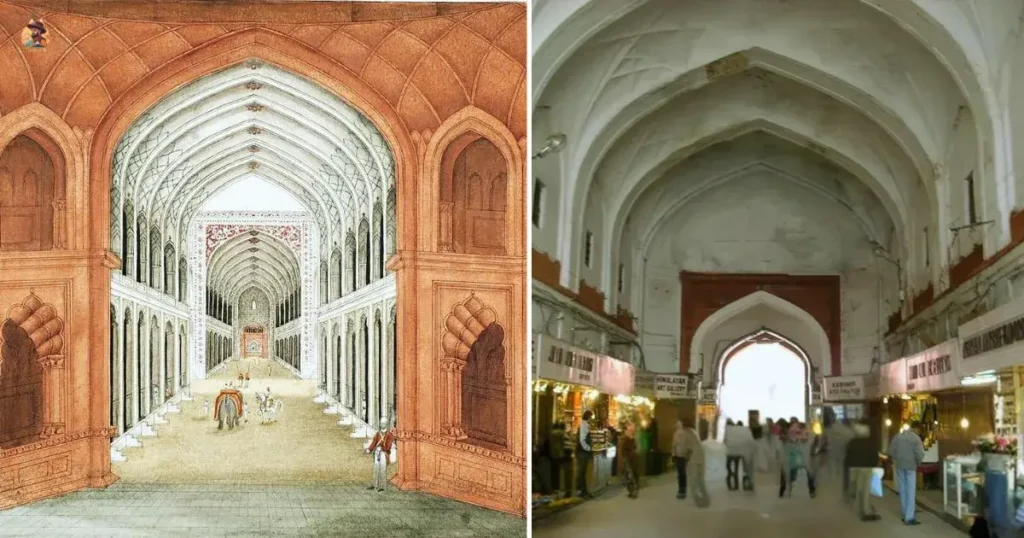
I had walked through plenty of old markets, but Meena Bazaar, Delhi’s history, felt different the moment I stepped inside. The air was cooler, as if the arched roof still trapped centuries of whispers. Standing under those vaults, I imagined what it might have been like in the 1600s when Shah Jahan ordered the Bazaar-i-Musaqqaf Red Fort to be built.
The Mughal-era market, the Red Fort, was not for ordinary people. It was a private shopping street for royal women, where emperors’ wives and daughters browsed silks, brocades, and precious stones. In the glow of oil lamps, traders would present carpets from Persia, shawls from Kashmir, and ornaments that looked like they had been stolen from the stars.
I paused at one of the thirty-two arched bays, now selling fabrics, and touched the cold stone wall. The surface was uneven, worn smooth in places by the hands of countless shopkeepers.
A few facts I learned during my visit:
- Built: 17th century under Shah Jahan’s reign
- Original purpose: Exclusive royal shopping for women of the Mughal court
- Design inspiration: Similar covered bazaars in Lahore and Peshawar
- Structure: 32 arched bays lined on both sides of the corridor
- Then vs Now: Once for royalty, now open to everyone, but still steeped in history
Even today, Chhatta Chowk is intact inside the Red Fort, preserved by the Archaeological Survey of India. The shops may sell different goods, but the hum of trade and the slow, curious footsteps of visitors keep their old heart beating.
What Meena Bazaar is Famous For Today

When I walked here for the first time, I expected only a handful of stalls. Instead, I found a living ribbon of colours and textures. Meena Bazaar, Delhi famous for more than one thing — it is a small world of heritage shopping in Delhi, just a few steps away.
Ethnic Wear & Bridal Outfits
The most striking sight is the fabric. Bright sarees ripple in the faint breeze from ceiling fans, bridal lehengas sparkle under yellow bulbs, and embroidered suits sit in tidy stacks. One shopkeeper invited me to see his latest arrival — a deep maroon anarkali with zardozi work so fine it looked like gold vines curling across the cloth.
You will find:
- Sarees: Banarasi, chiffon, and silk blends with heavy borders
- Lehengas: Bridal, semi-bridal, and light festive pieces
- Anarkalis & suits: Intricate embroidery and handwork
- Seasonal bargains: During Meena Bazaar Delhi sale events, prices drop noticeably
Bargaining here is an unspoken tradition. I learned quickly that a smile and patience can cut the price almost in half.
Traditional Jewellery & Accessories
Some stalls feel like treasure boxes. Kundan chokers, meenakari bangles, and silver anklets glimmer behind glass. A jeweller let me try on a pair of jhumkas, their tiny bells giving off the faintest chime when I moved.
Tips from my walk:
- Kundan and Meenakari are the most common Mughal-style designs here
- Silver jewellery lovers should also visit Dariba Kalan, just a short walk away
- Many shops offer matching sets with fabric purchases for bridal buyers
Handicrafts & Souvenirs
Tucked between fabric and jewellery stalls are tiny shops selling handcrafted keepsakes. I stopped at one corner and ran my fingers over a marble inlay box, cool and smooth, with patterns that looked like miniature flowers.
Popular picks include:
- Marble inlay work
- Brass vases and trays
- Miniature paintings of the Mughal courts
- Hand-painted bookmarks and coasters
These may not be as grand as the fort’s walls, but they carry the same essence — something you can take home, a piece of history that fits in your palm.
Meena Bazaar Location, Timings & Nearest Metro
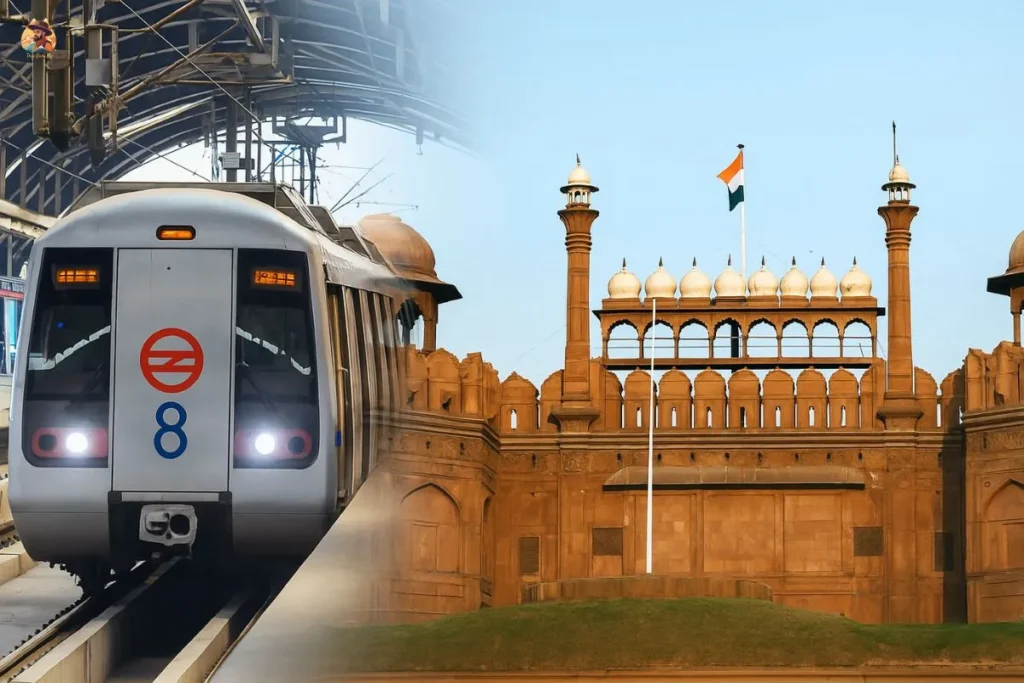
Delhi Metro near Red Fort – the closest metro station for easy travelI remember pausing just after the ticket check at Red Fort. Ahead of me, the arched roof of Meena Bazaar, Delhi location framed a long corridor buzzing with voices. The market sits right between Lahori Gate and Naubat Khana, so you cannot miss it. The moment you step inside, the sound changes — no traffic noise, just the murmur of shopkeepers and the soft shuffle of feet on stone. Being part of the Red Fort complex, Meena Bazaar connects you to one of the famous historical places in India.
During my visit, I found these details most useful:
- Exact spot: Inside the Red Fort, between Lahori Gate and Naubat Khana. I could see the Naubat Khana straight ahead from the market’s end.
- Meena Bazaar, Delhi timings: Same as Red Fort — 9:30 AM to 4:30 PM.
- Closed On: Mondays, when the fort itself rests.
- Entry fee: Covered in the Red Fort ticket; you do not pay extra to browse.
- Meena Bazaar, Delhi, nearest metro station: Lal Qila Metro (Violet Line).
I took the metro that day. From Lal Qila station, the walk to the fort was short but full of colour — hawkers selling sunglasses, the smell of samosas from a roadside cart, and a quick glimpse of Jama Masjid’s domes in the distance. By the time I reached the Lahori Gate, it felt like I had already travelled through half of Old Delhi.
Local Shopping Tips for Meena Bazaar Visitors
Half the charm of this market is in the way you shop. Some lessons I learnt on the go:
- Carry cash. A shop selling silver anklets refused my card, so I had to step out to find an ATM.
- Bargain with warmth. I was looking at a brocade dupatta when the seller quoted ₹2,000. I smiled, took my time, and we settled at ₹1,200 with tea in hand.
- Mix your plans. After shopping, I crossed into Chandni Chowk for parathas and hot jalebis — the perfect reward for tired legs.
- Time your visit. Before Diwali, Eid, or the wedding season, the collection grows richer, but so do the crowds.
Walking here is not about rushing from shop to shop. I stopped more than once to oversee a vendor folding sarees, his hands moving like he was handling something sacred.
Why Meena Bazaar is a Must-Visit for Foreign Tourists
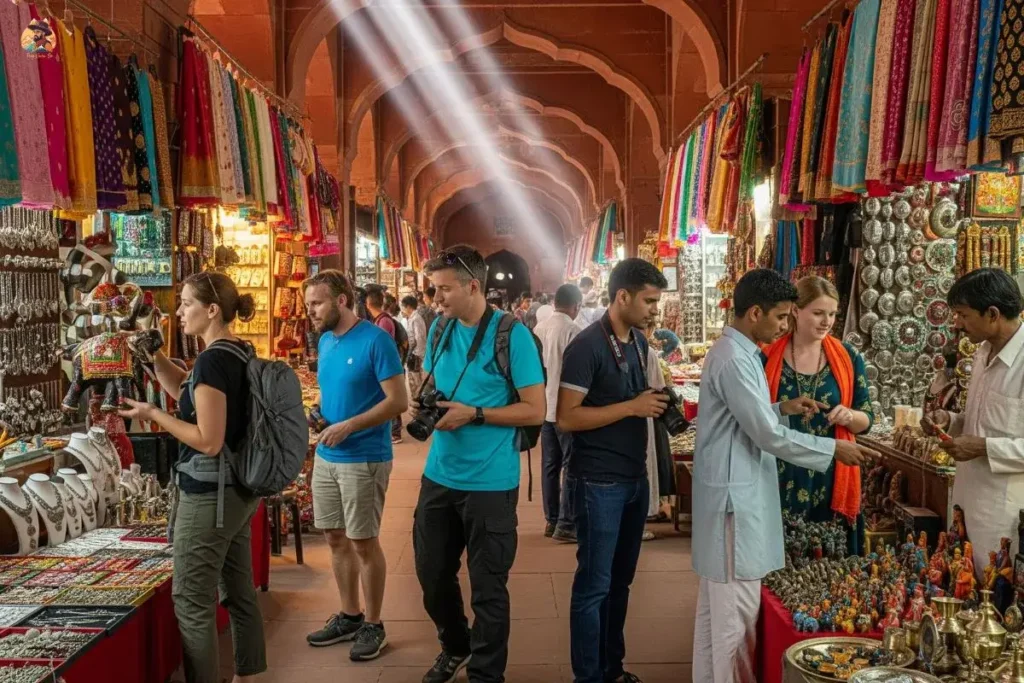
For travellers from abroad, this is not just another heritage bazaar in Delhi — it is a chance to shop inside a UNESCO World Heritage Site. I once saw a couple from Spain spend nearly an hour in one shop, choosing bangles under the shopkeeper’s patient guidance, while their guide told them stories of historic lanes in Delhi bazaar.
Here is what makes it special for international visitors:
- Architecture you can touch. The arched ceilings and faded Mughal motifs are photogenic, but running your hand along the cool stone brings the history closer.
- Conversations with locals. Many sellers are from families who have worked here for generations, and their stories are worth more than any purchase.
- Safe and easy to navigate. Being inside the Red Fort means the market feels secure, with clear walking paths for solo or group travellers.
It is rare to find a place where you can buy a silk scarf, take a world-class heritage photo, and hear a four-century-old story — all without leaving the same street. That is the magic of Delhi tourist shopping places like Meena Bazaar.
Best Photo Spots in Meena Bazaar, Red Fort
If you love photography, this covered bazaar inside the Red Fort is a playground. Every few steps offers a new frame — but the trick is knowing where to stand and when to click.
I usually start from the Lahori Gate side. The morning light falls diagonally here, hitting the fabrics on the right-hand stalls. That’s when you can capture the arched Mughal ceilings with rich colours spilling below.
- Central Corridor Shot: Stand in the middle and look straight down the lane. Wait until the crowd thins, then frame the repeating arches for a dramatic depth effect.
- Jewellery & Embroidery Close-Ups: Ask the vendor if you can photograph a display. The texture of a silver jhumka or the threads of zardozi work look best in soft afternoon light.
- Archway to Lahori Gate: From the Naubat Khana end, zoom in to capture the gate framed by the market’s arches. The mix of stone, fabric stalls, and people gives a layered story in one frame.
Tip from my last visit: Keep your shutter speed high. The market is busy, and small movements can blur your shot.
Nearby Attractions & Markets to Explore
After Meena Bazaar, you have some of the most iconic Old Delhi bazaars just minutes away. These spots are worth adding to your day:
- Chandni Chowk shopping: Known for spice and fabric lanes. The best time is before noon when the crowd is lighter. You can buy raw spices, fabrics for tailoring, or ready-made kurtas.
- Dariba Kalan for silver jewellery: A short walk from the bazaar. Go here for pure silver chains, earrings, and traditional designs. Many jewellers offer on-the-spot customisation.
- Daryaganj Sunday book market: Only on Sundays, from morning till afternoon. Perfect for rare books, vintage postcards, and old maps.
I usually follow this route — Meena Bazaar for heritage shopping, Chandni Chowk for fabrics, Dariba Kalan for jewellery, and if it’s Sunday, Daryaganj for books. This way, you cover a full Old Delhi experience without wasting time or retracing steps.
Final Word – A Heritage Walk With a Shopping Bag
Each time I leave Meena Bazaar Red Fort, I take home more than just purchases. I take with me the colours of bridal lehengas carefully folded by a patient shopkeeper, the sparkle of silver anklets catching the light, and the echo of footsteps under centuries-old arches.
Shopping here feels like walking through history with a bag in your hand. You may arrive looking for a saree or a small souvenir, but you leave carrying a story that blends the Mughal past with the energy of Old Delhi today.
If you have been to Meena Bazaar before, I would love to know what caught your attention. Was it the architecture, the fabrics, the jewellery, or the feeling of being part of a market that has been alive for more than 350 years? Share your story; every visit adds a new thread to the fabric of this timeless bazaar.
Meena Bazaar Red Fort Video Tour – Chhatta Chowk’s 300-Year-Old Market
🎯 More Delhi Market & Shopping Guides You Must Explore
Meena Bazaar is magical, but Delhi has many more gems waiting for you. Explore these next:
- 🛍️ Sarojini Nagar Market Delhi – Streetwear steals, trendy outfits, budget finds
- 🏛️ Chandni Chowk Market Delhi – Mughal-era lanes, fabrics, jewellery & street treats
- 🎨 Dilli Haat INA Delhi – Handicrafts, cultural food, artisan stalls
- 👗 Karol Bagh Market Delhi – Bridal wear, electronics, festive shopping
- 📚 Connaught Place Shopping Delhi – Mix of brands, local markets & café culture
- 🕰️ Chor Bazaar Delhi – Vintage finds, curios, antiques
- 🛒 Sadar Bazaar Delhi – Bulk buying, festive goods, perfumes
- 🧣 Lajpat Nagar Market Delhi – Ethnic clothing, dupattas, stitching shops
- 👟 Kamla Nagar Market Delhi – Youth fashion, casual wear, street style
- 🎒 Janpath & Tibetan Market Delhi – Boho bags, Tibetan crafts, souvenirs
- 📷 Khan Market Delhi – Bookstores, boutique shops, café ambience
- 💸 Bargaining Tips for Delhi Markets – Smart negotiating without stress
- 🌍 Safe Shopping Tips for Foreign Tourists in Delhi – Stay alert, shop safe, enjoy your spree
Delhi is a story written in markets — keep walking lanes, uncover treasures, and shop with joy using Trip Guru Go.
FAQs About Meena Bazaar Red Fort, Delhi
The Meena Bazaar in Delhi history that goes back to the 17th century, when it was built by Emperor Shah Jahan. Known at the time as Bazaar-i-Musaqqaf, it was a covered market designed exclusively for the Mughal royal women, selling silks, brocades, and precious jewellery from across the empire.
The Meena Bazaar Delhi address is inside the Red Fort complex, between the Lahori Gate and Naubat Khana, Old Delhi, Delhi 110006.
The Meena Bazaar Delhi timings are the same as the Red Fort — open from 9:30 AM to 4:30 PM, and closed every Monday.
The Meena Bazaar, Delhi, nearest metro station is Lal Qila Metro on the Violet Line. It’s roughly a 300-metre walk from the station to the Lahori Gate entrance.
Yes. Bargaining is a common part of bargain shopping in the Delhi culture. Prices often start high, so negotiate politely to get a better deal.
Some Meena Bazaar Delhi online stores exist under the same name as branded retail outlets. However, the historic market inside the Red Fort does not have an official online shopping platform.

Hi, I am Manoj Kumar, the voice behind Trip Guru Go. I am a travel researcher, SEO content expert, and founder of this blog. With over 12 years of experience in digital travel research, I simplify complex destinations into real, helpful, and trustworthy guides.
Every article I write is backed by local sources, real traveler experiences, and deep fact-checking. Even if I have not visited every place personally, I never share anything without strong on-ground insight.
I do not sell travel packages or promote anything paid. My only goal is to help you travel smarter — with zero fluff, 100% honesty, and a deep focus on your safety and experience.