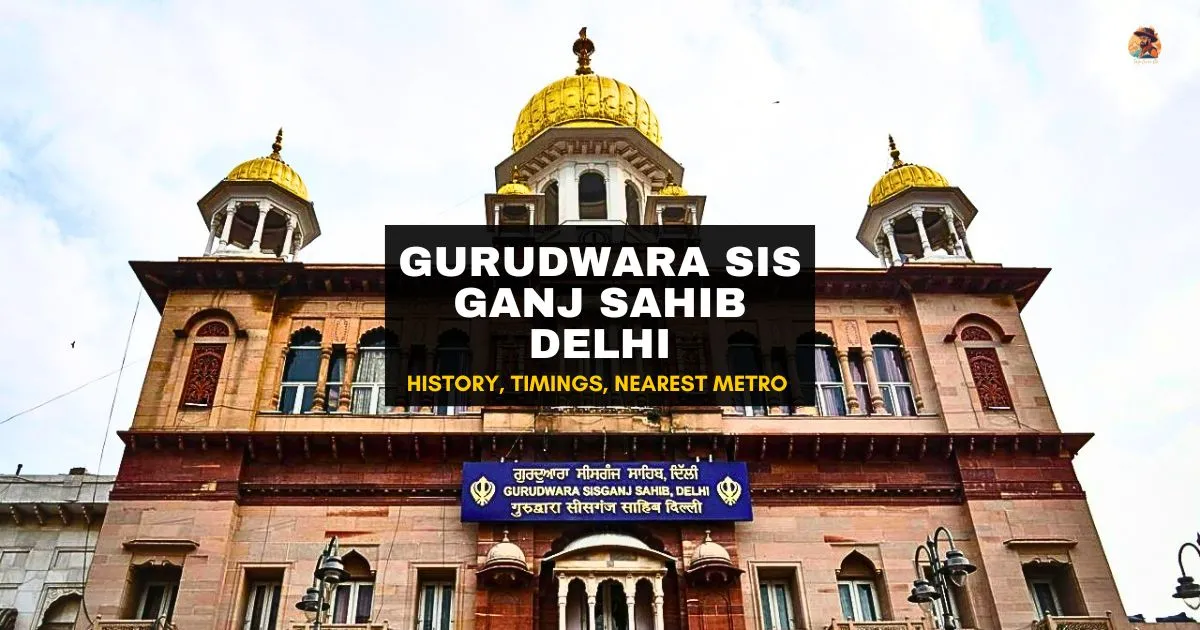
Gurudwara Sis Ganj Sahib, Delhi, has always pulled me into its timeless calm whenever I step into Chandni Chowk. For me, this Gurudwara feels like a living memory of sacrifice that breathes in every corner. In this guide, I will share its history, timings, langar hours, room booking details, and the nearest metro routes. I will also give you my personal experience and useful tips that help both local visitors and foreign travelers. If you are planning to visit, keep a small scarf handy to cover your head before you step inside. This updated travel guide covers its history, timings, langar, and room booking tips.
📋 Quick Info: Gurudwara Sis Ganj Sahib, Delhi
- Location: Chandni Chowk, Old Delhi
- Nearest Metro: Chandni Chowk (Yellow Line)
- Timings: 5:00 AM – 10:00 PM
- Langar Hours: 12 PM–2 PM, 7 PM–9 PM
- Entry Fee: Free for all
- Built In: 1783 by Baghel Singh
- Best Time to Visit: Morning 6–8 AM
Gurudwara Sis Ganj Sahib Delhi – A Sacred Landmark in Chandni Chowk

The first time I walked towards Gurudwara Sis Ganj Sahib, Delhi, the streets of Chandni Chowk were buzzing with life. Rickshaw bells clashed with the honking of cars, and vendors shouted about hot jalebis and spicy chaat. Yet, above this chaos, I heard the soft ringing of temple bells drifting through the air.
As I moved closer, the aroma of freshly cooked langar rose from the kitchens and mixed with the smell of roasted peanuts sold outside. It felt like the noise of Old Delhi slowly dissolved into something deeper. For a second, I forgot I was standing in one of Delhi’s busiest markets. At the entrance, I sensed how this Gurudwara was not just stone and structure but a space where faith touches everyday life.
🕰️ Gurudwara Sis Ganj Sahib History – Guru Tegh Bahadur’s Martyrdom
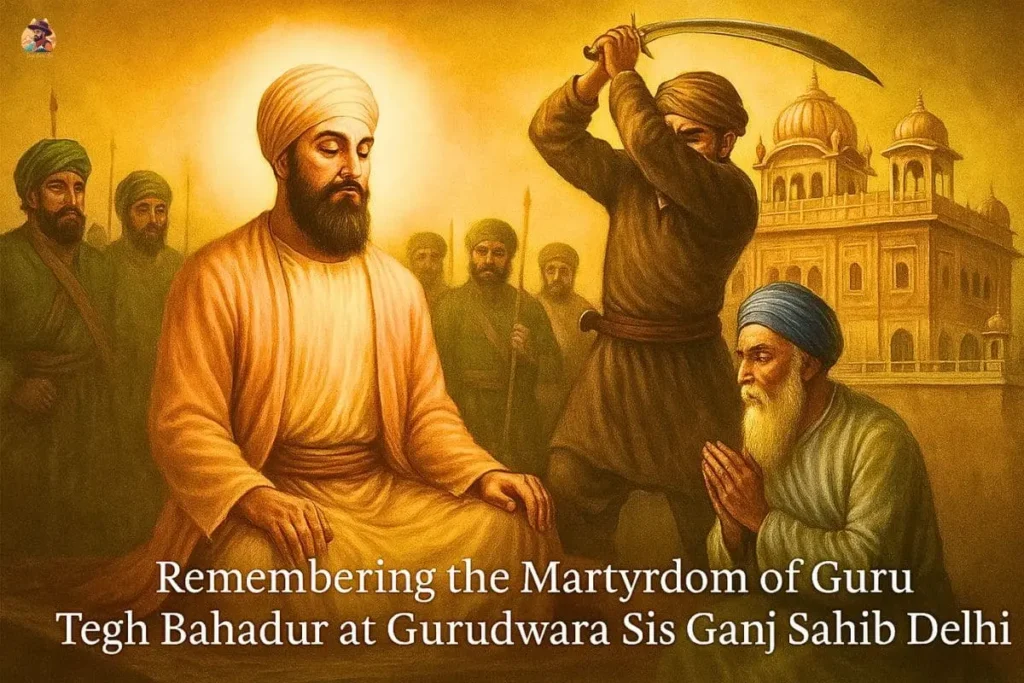
Every time I enter Gurudwara Sis Ganj Sahib, I pause for a moment. The air here carries the memory of 1675, when Guru Tegh Bahadur, the ninth Sikh Guru, was executed by the Mughal ruler Aurangzeb. He chose death rather than surrendering his principles, sacrificing his life not only for Sikhs but also for Kashmiri Pandits.
Key Moments in History:
- 1675: Guru Tegh Bahadur was martyred at this very site.
- After execution: His head was taken to Anandpur Sahib by Bhai Jaita; his body was cremated at Rakab Ganj Sahib.
- 1783: Sikh general Baghel Singh built Gurudwara Sis Ganj Sahib.
- Later years: Became a strong centre of Sikh identity and faith.
When I first read this history and then stood in the prayer hall, I felt a deep silence. For me, this place is not just a Gurudwara; it is a living textbook of resistance and freedom.
How to Reach Gurudwara Sis Ganj Sahib (Nearest Metro, Location & Maps)
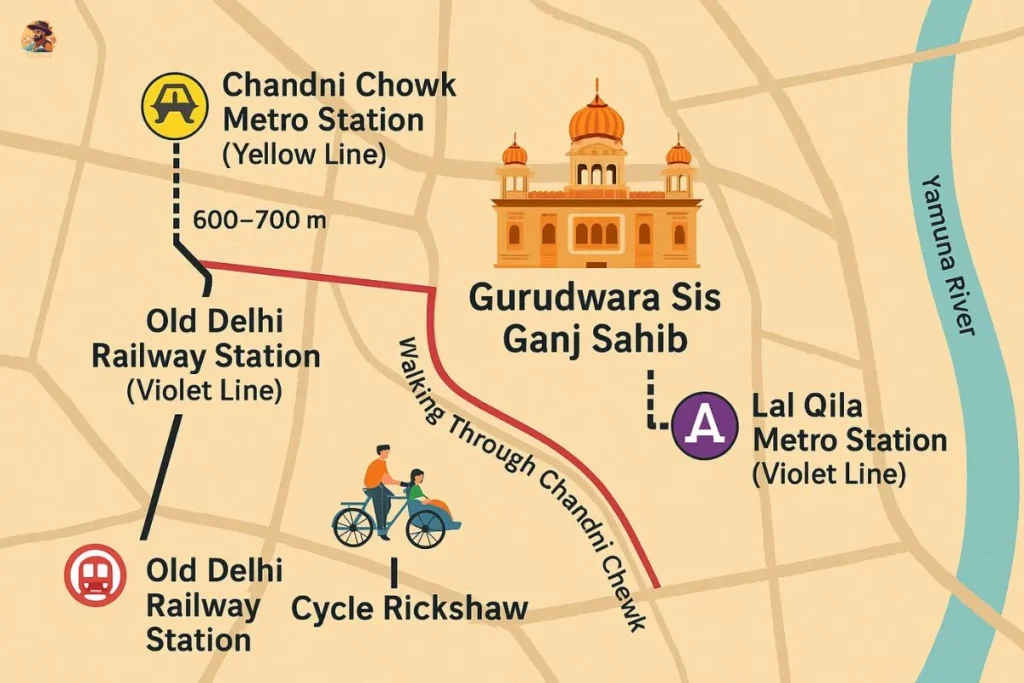
Reaching Gurudwara Sis Ganj Sahib is an experience in itself, because you walk through the colourful heart of Old Delhi.
🚇 By Metro:
- Chandni Chowk Metro Station (Yellow Line): The nearest metro, just 600–700 metres from the Gurudwara.
- Lal Qila Metro Station (Violet Line): Another option, around 900 metres away, good if you are coming from the Kashmere Gate side.
🚇 By Train:
- Old Delhi Railway Station: About 1 km away, with direct rickshaw rides available.
Other Options:
- Cycle rickshaw: Quick and cheap, usually ₹30–50 from nearby stations.
- By car: Roads are congested, and parking is very limited, so a metro or a rickshaw is more practical.
Walking Through Chandni Chowk:
I always prefer walking from the Chandni Chowk Metro. You pass spice shops, book sellers, and food stalls. The smell of hot jalebis mixes with the sight of the golden dome shining above the crowd. That walk itself feels like part of the pilgrimage.
📍 View Gurudwara Sis Ganj Sahib on Google Maps
Local Tip: The lanes outside are narrow and busy. If you are travelling with an elderly family member or in a wheelchair, take a rickshaw directly to the entrance gate instead of walking.
Gurudwara Sis Ganj Sahib Timings & Langar Hours
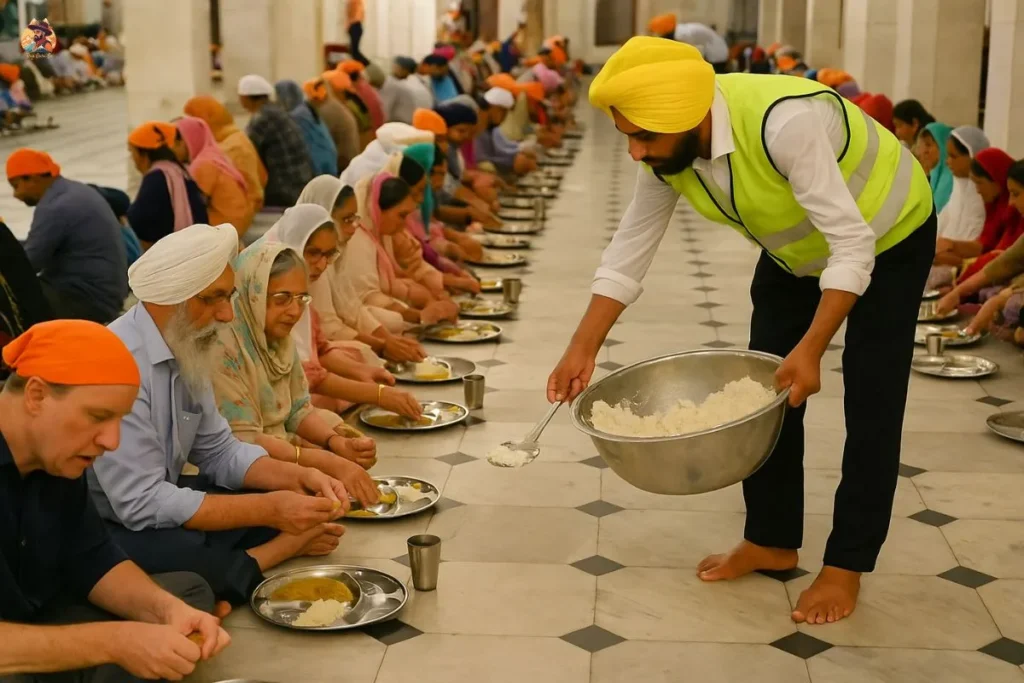
The first thing I learned after my first visit here was the importance of timing. I remember reaching before dawn one winter, waiting with devotees while the air smelled of incense and hot chai from nearby stalls.
⏰Daily Timings (Darshan Hours):
| Day | Opening Time | Closing Time |
| All Days | Around 5:00 AM | Around 10:00 PM |
👉 Note: The Gurudwara doors remain open round the clock for devotees, but main darshan and kirtan hours usually follow the above schedule.
Prayer & Kirtan:
- The day begins with Asa di Vaar and morning ardas.
- Evening prayers create a calm that feels even more special with the golden dome glowing above Chandni Chowk.
Langar Hours:
- Morning langar after daily prayers (late morning).
- Evening langar begins near sunset and continues till late.
What You Should Know:
- Weekends and Gurpurabs bring huge crowds; queues can take time.
- Best hours for a peaceful darshan: 6:00–8:00 AM.
- The langar is simple yet unforgettable. I still remember soft rotis brushed with ghee, served with dal and sabzi. Eating in silence with hundreds of others made me feel like time had stopped.
Room Booking & Stay at Gurudwara Sis Ganj Sahib
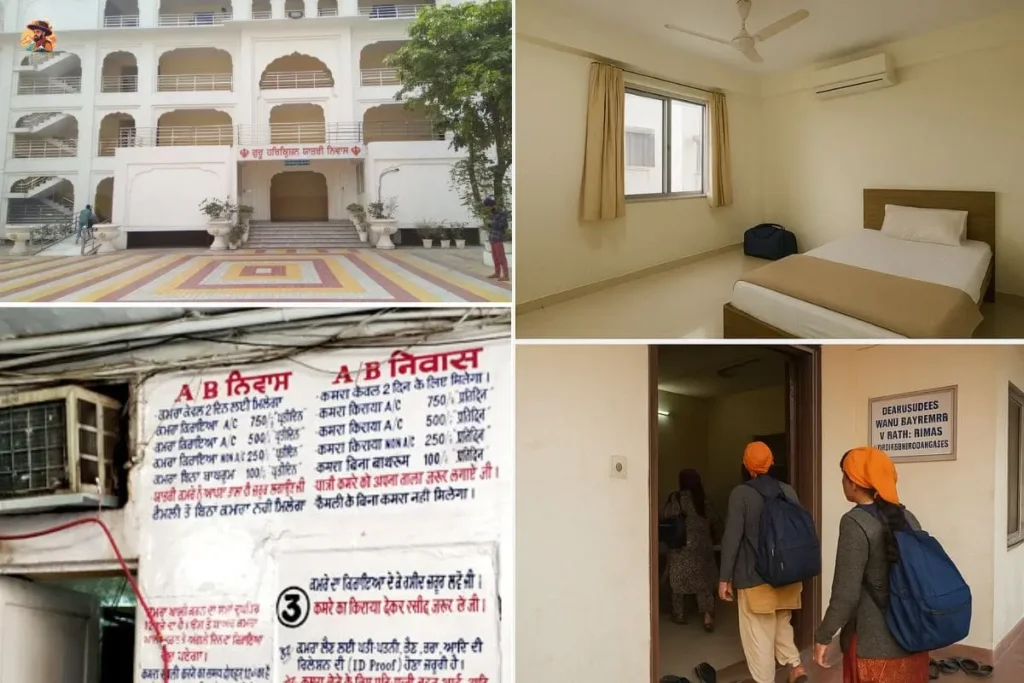
For many pilgrims, the Gurudwara is not just a place to visit but also a place to rest. I once enquired for a visiting friend, and what I found was very different from hotels.
Facilities at Yatri Niwas (Pilgrim Rooms):
- Basic rooms with clean bedding and fans.
- Shared bathrooms, simple arrangements, no luxury.
- Perfect for short stays if your purpose is spiritual, not touristic.
Booking & Donations:
- Rooms are booked directly at the Sarai office, not online.
- A voluntary donation is expected, usually around ₹100–₹500 per night. It is not mandatory, but it is deeply appreciated because it helps maintain the facilities for everyone.
- Foreign visitors are welcome but must show a valid ID (passport for non-Indians).
- During Gurpurabs or weekends, rooms fill up quickly, so it helps to enquire at least a day before.
Contact & Queries:
- For details, you can check with the Delhi Sikh Gurdwara Management Committee (DSGMC) office.
- Volunteers at the Gurudwara guide visitors kindly towards the right counter.
My Feeling:
Staying here is about sangat, not comfort. Waking to morning kirtan felt less like being a guest and more like being part of the community.
Spiritual Experience – Prayers, Langar & Live Kirtan
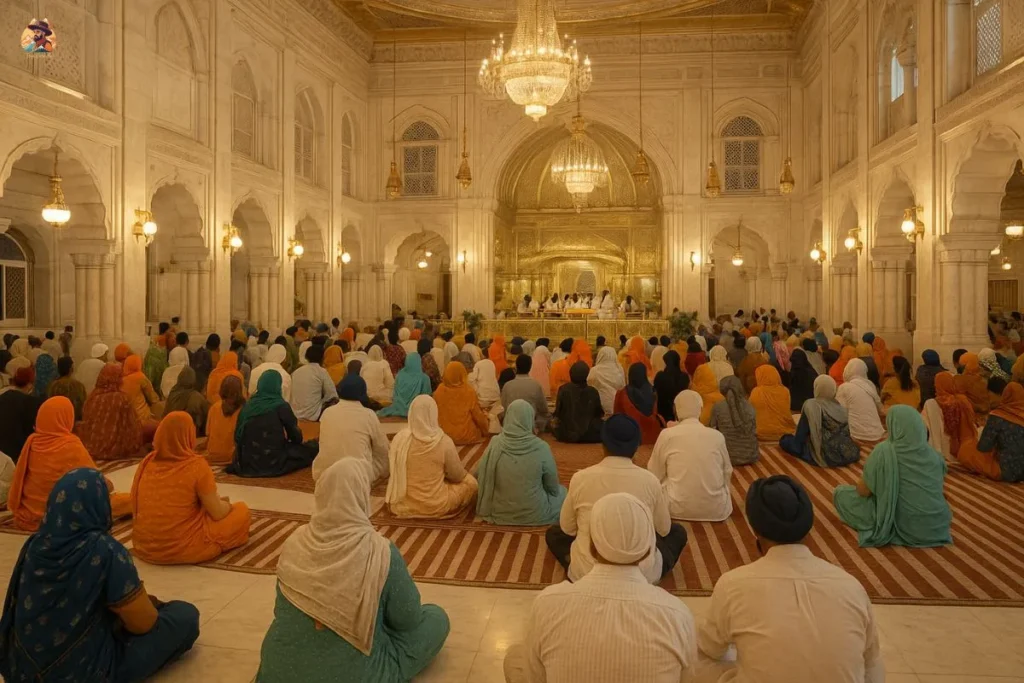
Inside Gurudwara Sis Ganj Sahib, the first thing I noticed was the sound of kirtan filling the marble hall. Tabla and harmonium blended with voices, and for a moment, Chandni Chowk’s chaos vanished.
- Prayers: The day starts with Asa di Vaar and morning ardas, creating a calm rhythm for the sangat.
- Langar: Simple dal, sabzi, and roti are served by volunteers. Sitting with hundreds of strangers who feel like family is an experience that stays with you.
- Live Kirtan: Devotees across the world tune in to the Gurudwara’s live kirtan stream, but listening inside the hall feels incomparable.
When I ate in the langar once, the warm roti brushed with ghee and the silence in the hall left me more full in heart than in stomach.
I found many moments here that deserved a photo, but knowing where and when to click matters.
- Best Spots: The golden dome above Chandni Chowk, the langar hall with rows of people eating, and the busy entrance street.
- Best Time: Early morning light after ardas, or evening lamps glowing over the dome.
- Etiquette: Photography is fine in the courtyard, but inside the prayer hall, keep your phone down and respect the silence.
Once, I raised my phone inside but quickly lowered it, seeing people deep in prayer. That moment taught me that some memories are better carried in the heart.
Gurudwara Sis Ganj Sahib for Foreign Tourists
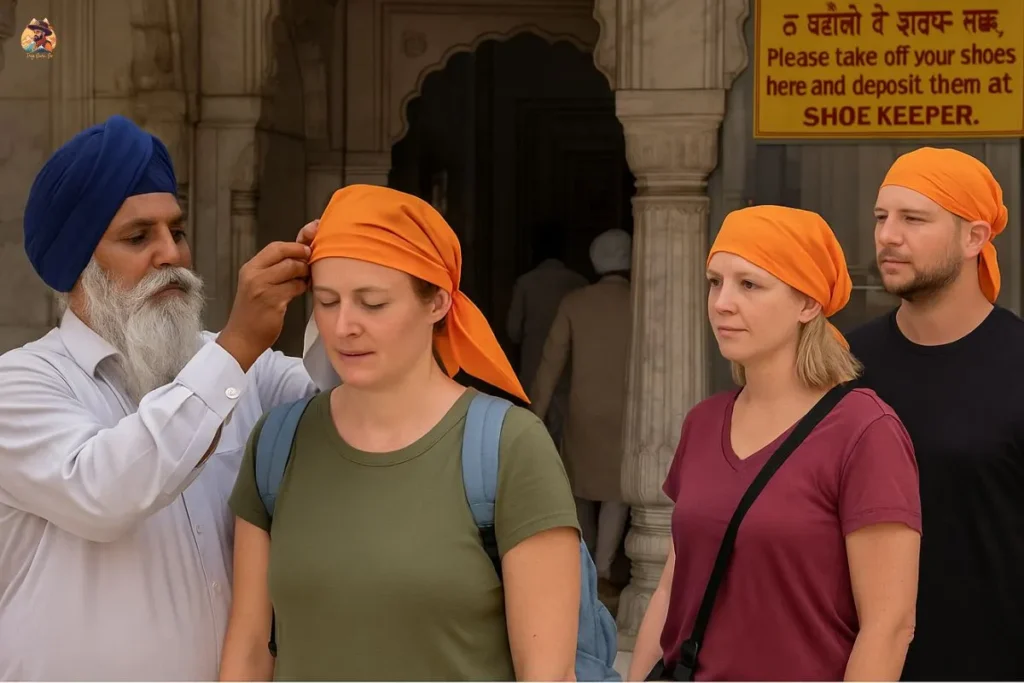
Many foreign friends ask me, “What should we know before visiting?” The answer is simple: a few courtesies make your visit smooth and respectful.
Cultural Etiquette (Do’s & Don’ts)
| ✔️ Do’s | ❌ Don’ts |
| Cover your head (scarves are available at the entrance). | Please refrain from taking photos inside the prayer hall. |
| Remove shoes before entry. | Do not skip washing hands before langar. |
| Dress modestly (shoulders & knees covered). | Do not expect luxury — Sarai rooms are simple and meant for pilgrims. |
I still remember watching a foreign traveler borrow a scarf from a sevadar at the gate. The sevadar tied it carefully on his head, and the man smiled with relief — a small gesture, but it showed how welcome everyone is here.
Practical Tips:
- Crowd safety: Keep belongings close in Chandni Chowk.
- Navigation: Use Chandni Chowk (Yellow) or Lal Qila (Violet) Metro.
- Langar: Join freely, sit cross-legged, and accept food with both hands.
- Donations: Voluntary, but help maintain facilities.
👉 Traveler’s Tip: Carry a light scarf — useful in Gurudwaras, temples, and mosques.
Sis Ganj Sahib vs Bangla Sahib Gurudwara
I am often asked, “Which Gurudwara is better to visit in Delhi — Sis Ganj Sahib or Bangla Sahib Gurudwara Delhi?” My honest answer: both are worth it, but they offer very different vibes.
Quick Comparison
| Aspect | Sis Ganj Sahib | Bangla Sahib |
| Heritage | Site of Guru Tegh Bahadur’s martyrdom (1675). | Linked to Guru Har Krishan’s healing miracle. |
| Atmosphere | Historical, intense. Step outside to rickshaw bells and market calls. | Calm, spacious, Sarovar adds serenity. |
| Location | Chandni Chowk, Old Delhi. | Connaught Place, Central Delhi. |
| Best For | History & culture seekers. | First-time visitors, families, peace-seekers. |
My Note:
For history, I head to Sis Ganj Sahib. For calm, I sit at Bangla Sahib. They are not rivals — both complete Delhi’s Sikh story, and I never skip either.
Best Time to Visit Gurudwara Sis Ganj Sahib
I have visited Sis Ganj Sahib at different hours and seasons, and every time felt unique. Still, some moments stand out more than others.
🕰️ Peaceful vs Crowded Hours
- Early mornings (5:30–8:00 AM): The marble floor is cool, kirtan is soft, and sangat is smaller. Perfect if you want silence.
- Evenings (after 6:00 PM): The Gurudwara glows with lamps, but expect long queues and bustle in Chandni Chowk.
Festivals & Gurpurab
- The most special time is November, during Guru Nanak Gurpurab. Chandni Chowk lights up, and every corner echoes with shabad. I still remember hearing hymns floating above the market noise, almost like the whole street was humming together.
Seasonal Feel
- Winter: The charm of hot langar in the cold air makes the visit unforgettable.
- Festive Season: Lights draped on the dome add magic to Old Delhi’s night sky.
- Weekends: Crowds are heavy; weekdays offer more breathing space.
If I had to pick just one moment, it would be a November evening during Gurpurab — Old Delhi at its most soulful.
Gurudwara Sis Ganj Sahib & Other Sikh Shrines
Sis Ganj Sahib is not just a standalone shrine; it is a doorway into the larger Sikh heritage journey.
Anandpur Sahib
- Located in Punjab, Anandpur Sahib is where Guru Gobind Singh founded the Khalsa in 1699.
- Devotees often connect Sis Ganj Sahib’s story of sacrifice with Anandpur Sahib’s spirit of courage.
- Together, they narrate the resilience of Sikh history.
Amritsar Golden Temple
- The Harmandir Sahib (Golden Temple) in Amritsar is the spiritual heart of Sikhism.
- Many pilgrims visit Sis Ganj Sahib in Delhi first, and then continue their journey to Amritsar.
- The contrast is striking: Sis Ganj Sahib surrounded by Chandni Chowk’s chaos, while the Golden Temple rests in calm waters.
Heritage Circuit Connection
I once met a family at Sis Ganj Sahib who were on their way to Amritsar after stopping in Delhi. They told me, “This feels like the first step of our journey, and Amritsar will be the destination.” Their words captured the essence of the heritage circuit: Delhi (Sis Ganj Sahib) → Anandpur Sahib → Amritsar (Golden Temple).
For me, standing here feels like opening the first chapter of a story that continues in Anandpur Sahib and ends in the shimmering lights of Amritsar.
Nearby Attractions Around Gurudwara Sis Ganj Sahib
After darshan at Sis Ganj Sahib, you can enjoy some iconic places nearby:
- Red Fort (5 mins walk): A Mughal-era fort that glows beautifully in the evening light.
- Jama Masjid (10 mins walk): India’s largest mosque; climb the minaret for panoramic views of Old Delhi.
- Paranthe Wali Gali (7 mins walk): Famous for its buttery, stuffed parathas — a must for food lovers.
- Khari Baoli (12 mins walk): Asia’s biggest spice market, where the air is thick with aroma and color.
- Dariba Kalan (10 mins walk): Old silver jewelry street, perfect for picking up souvenirs.
I usually end my visit with parathas at Paranthe Wali Gali in Chandni Chowk. After langar’s simplicity, it feels like a guilty little treat. If you want to continue your spiritual journey beyond Chandni Chowk, explore my guide on top temples to visit in Delhi for more peaceful and historic places.
Essential Visitor Tips for Gurudwara Sis Ganj Sahib
Visiting Sis Ganj Sahib is simple, but a few small tips can make your experience smoother.
- Free entry: No tickets are needed; the Gurudwara is open to everyone.
- Carry a scarf/dupatta: You will need it to cover your head before entry.
- Cash for donation: Voluntary, but appreciated for langar and upkeep. Keep small notes.
- Avoid peak hours: Early mornings or late afternoons are calmer for darshan.
⚠️ Karnal Keyword Clarification:
Some travelers search “Sis Ganj Sahib Karnal” by mistake. The historic Gurudwara Sis Ganj Sahib is only in Chandni Chowk, Delhi. Karnal has other Sikh shrines, but not this one.
I once forgot to carry a scarf and had to borrow one at the entrance. Since then, I have always kept a spare cotton scarf in my bag.
My Experience & Final Word
Inside Gurudwara Sis Ganj Sahib, the chaos of Chandni Chowk disappears into calm prayers and kirtan. The place always reminds me of Guru Tegh Bahadur’s sacrifice — a story of courage that still inspires today. If you visit, take a quiet moment inside, share langar with the sangat, and let this historic shrine touch your heart.
FAQs About Gurudwara Sis Ganj Sahib
The nearest is Chandni Chowk Metro Station (Yellow Line). Lal Qila Metro (Violet Line) is another option within walking distance.
Darshan usually runs from 5:00 AM to 10:00 PM. Langar is served around 12:00–2:00 PM and 7:00–9:00 PM.
Yes. The Gurudwara has simple Sarai (pilgrim rooms) on a donation basis. Enquire directly at the office.
In Gurudwara Sis Ganj Sahib, Entry is always free for everyone. No tickets are ever needed.
It stands on the site where Guru Tegh Bahadur was martyred in 1675 for protecting religious freedom. The shrine was built in 1783.
Photography is allowed in the outer courtyard. Inside the prayer hall, it is discouraged to maintain sanctity.
A simple vegetarian meal: dal, roti, sabzi, and kheer during special occasions.
The Gurudwara is about a 5-minute walk from the Red Fort, right in Chandni Chowk.
Yes. Everyone is welcome, including foreign visitors. Many even volunteer in seva.
The Gurudwara remains open, but the lanes of Chandni Chowk get quieter. Early mornings and evenings are safer.

Hi, I am Manoj Kumar, a travel researcher and SEO content expert writing for Trip Guru Go, focused on Delhi and nearby travel destinations.
Being from Delhi NCR, I understand the travel preferences, routes, budgets, and experiences that travelers from this region actually look for. Every article I write is backed by local insights, real traveler experiences and detailed research to provide accurate and useful travel information.