
My children had been asking for days, “Papa, when will you take us to Lal Qila?” Every time, I said “soon,” and every time, work got in the way. That morning felt different. I looked outside, felt the winter sun on my face, and decided — no office today. It was time for something real.
I live in Faridabad, and luckily, the metro line from there takes you straight to the Red Fort. I told my son, “Get ready. We are going.” His eyes sparkled. I even called his school and got his leave approved. My daughter joined in too, all excited.
Deep down, I was just as thrilled. It was not about sightseeing. It was about showing them something bigger — a place they had only seen in textbooks and TV. A place where our Prime Minister hoists the flag every Independence Day. A fort that holds the voice of India’s history.
Why This Visit Meant More Than Just Sightseeing
We reached around 9:30 AM. The sandstone walls glowed under the soft winter sun. The Indian flag above the Lahori Gate fluttered like it had a story to tell. A chaiwala across the street poured steaming tea into cups, while small groups of tourists clicked photos and adjusted shawls. There was calm, but also a sense of silent pride in the air.
I kept staring at the walls, wondering — how did they build this? No machines, no cranes, yet the Red Fort stands strong even after centuries. That thought stayed with me.
I did not want this day to be just a walk through a monument. I wanted it to be something they would remember. And for me too — a way to reconnect with history I had rushed past for years.
Now, through this guide, I will help you plan your own visit — with the same ease, curiosity, and awareness.
Inside This Travel Guide:
- Latest Red Fort ticket prices for Indians and foreigners
- Step-by-step metro route guide with last-mile tips
- Most Instagram-worthy photo spots and peaceful corners inside
- Details of the Light & Sound Show (timings, languages, experience)
- Honest tips to avoid common tourist mistakes
Take this as more than a checklist. Let it be your slow, real walk through time.

Red Fort Delhi Timings, Entry Ticket Price & Light and Sound Show (2025 Update)

As I walked past the CISF security gate and looked up at the massive Lahori Gate once again, a line of travelers stood beside me — families with kids, a group of foreigners holding cameras, and a quiet older couple. The morning sun had just begun to warm the stone pathway, and a staff member was gently sweeping the red dust off the ramp. This is when I noticed the rhythm of the Red Fort — it wakes up early, and so should you.
🗓️ Timings
- Open Days: Tuesday to Sunday
- Closed On: Mondays
- Opening Hours: 9:30 AM to 4:30 PM
- Recommended Time Slot: Visit before 11:30 AM for fewer crowds and better lighting
Red Fort closes its entry gates sharply at 4:30 PM, but the inner museums start clearing out around 4:00 PM. So, give yourself enough time if you want to explore all the main buildings peacefully.
🌤️ Seasonal Tip: Winter mornings (Oct–Feb) are the most pleasant. Summers can be harsh by 12 PM, and monsoon months may bring muddy patches in garden areas.
🎟️ Entry Ticket Prices (Indian & Foreign Visitors – 2025)
| Visitor Type | Entry Only | Entry + Museums |
| Indian Citizens | ₹35 | ₹56 |
| Foreign Nationals | ₹550 | ₹870 |
| Children (Below 15 Years) | Free | Free |
| SAARC / BIMSTEC Citizens | ₹35 | ₹56 |
💡 Travel Tip: Carry a valid photo ID, and foreigners must show their passport if asked during a security check or ticket verification.
❌ Mistake to Avoid: Do not arrive after 4:00 PM. Staff may restrict museum entry even if you hold a valid ticket.
You can book your Red Fort tickets in advance through multiple options. The official ASI ticket portal (https://asi.payumoney.com/quick/red) is the direct source, but apps like Paytm and BookMyShow are also convenient, especially for foreign travelers using international cards. Many local tour operators also offer skip-the-line entry bundled with guided tours and museum access, which can save time during busy hours.
🎆 Red Fort Light & Sound Show – Timings & Tickets

This is not just a show — it is a 50-minute emotional narration that lights up the walls of history. I attended the Hindi show one evening in winter, and the moment “Jai Hind” echoed through the fort, it gave me goosebumps.
| Language | Days Available | Timing (Varies Slightly by Season) |
| Hindi | Tues to Sun | 7:30 PM – 8:20 PM (approx.) |
| English | Tues to Sun | 8:30 PM – 9:20 PM (approx.) |
| Ticket Type | Price (Weekdays) | Price (Weekends) |
| Adults | ₹60 | ₹80 |
| Children (Aged 5+) | ₹20 | ₹30 |
🎟️ Tickets are available at the venue, on the ASI portal, or BookMyShow. Reach 20 minutes early to get good seats.
My Tip: The English version feels more dramatic for foreign visitors, while the Hindi one connects deeper with locals. Try the show in winter for a cozy, comfortable vibe.
How to Reach the Red Fort in Delhi – Metro, Auto, and Ride Tips
The day I visited the Red Fort, I took the Violet Line metro and got off at Lal Qila station. As I stepped out, a light winter fog hung over the road, and the faint hum of autos echoed through the lane. The entrance was barely a 4-minute walk from the station. It felt effortless — and honestly, in a city like Delhi, that is a blessing.
If you are planning your first visit, I highly recommend reaching the Red Fort by Delhi Metro. It is fast, clean, safe, and surprisingly affordable.
🚇 Nearest Metro Stations to Red Fort, Delhi
| Metro Station | Line | Walking Time | My Personal Note |
| Lal Qila | Violet Line | 3–5 mins | Closest station to the entrance |
| Chandni Chowk | Yellow Line | 10–12 mins | A bit crowded, needs a rickshaw ride |
💡 Travel Tip: If you are a foreign visitor, the Lal Qila metro is easier and less overwhelming than the Chandni Chowk.
🚖 Auto-Rickshaws, Cycle Rickshaws & E-Rickshaws
Outside both metro stations, you will find plenty of rickshaws waiting.
- Auto-rickshaws are quick and metered (but always confirm the fare).
- Authorities ban cycle rickshaws in parts of Old Delhi during peak hours, though they offer a local vibe.
- E-rickshaws are eco-friendly and ideal for short distances, like from the Chandni Chowk metro.
🚫 Rickshaw drivers often mislead tourists by saying their hotel is closed or the Red Fort is shut.
🚗 Uber, Ola & Ride Apps
If you are arriving by car or ride-share:
- Use Uber or Ola to avoid fare arguments.
- Set “Red Fort Parking” or “Lal Qila Ticket Counter” as your drop point.
- Morning is the best time for car arrivals — by noon, the road gets busy.
🧳 If you are carrying luggage, request the driver to drop you near the VIP Entry Side, which is closer to the cloakroom.
✈️ Coming from the Airport or New Delhi Railway Station?
- From IGI Airport:
Take the Airport Express Line to New Delhi → then the Yellow Line to Chandni Chowk → auto/e-rickshaw to the Red Fort
(Approx. 50–60 mins) - From New Delhi Railway Station:
The direct Yellow Line from Chandni Chowk is the best route
(Approx. 15–20 mins total travel time)
⚠️ Important Safety Tip: If it is your first time in India, be careful with prepaid taxi counters at airports and stations.
Do not hand over the payment voucher to the driver until you reach your hotel. Some drivers grab the voucher early, cancel the ride, or drive you elsewhere to keep the fare for themselves.
🗺️ Navigation Tip: Use Google Maps or the Delhi Metro Rail app for live directions. If you are unsure at any point, ask CISF guards at stations — they are extremely helpful.
History of Red Fort – From Shah Jahan to Independence Day Speeches
The first time I walked past the mighty walls of the Red Fort, I wondered what stories were still echoing behind them. These stones were not just architecture — they were witnesses. Armies fought battles, kings claimed crowns, leaders declared freedom, and the nation raises the tricolor here every year like a heartbeat.
Who Built the Red Fort and Why?
The Red Fort was built by Mughal Emperor Shah Jahan in 1639, when he shifted his capital from Agra to Shahjahanabad (now Old Delhi). He wanted more than just protection — he wanted poetry in stone, and that is exactly what this fort became.
Construction took nearly ten years, and the fort was originally known as Qila-e-Mubarak, meaning “The Blessed Fort”. It was built on the banks of the Yamuna River, which once flowed right beside its eastern walls. Over time, the river changed course, but the fort remained proud and timeless.
🧱 Was the Red Fort always red?
Actually, no. The original fort was covered in white lime plaster and marble. The British later painted large sections red due to damage and wear, and that is how it got its iconic look today.
A Symbol of Power, Poetry, and Resistance
The fort reflects the architectural blend of Persian, Timurid, and Indian styles, typical of the Mughal era’s finest work. Inside, you will find symmetry, delicate floral motifs, marble inlays, arched halls, and grand water channels designed with celestial imagination.
But Red Fort’s story goes beyond royalty. In 1857, the British captured it after the First War of Independence. The last Mughal emperor, Bahadur Shah Zafar, was tried here — a moment that ended an entire empire.
Later, in 1945–46, the fort hosted another historic moment — the INA Trials. Indian freedom fighters from Subhas Chandra Bose’s Indian National Army were put on trial here by the British. These trials sparked massive protests across India and turned the Red Fort into a symbol of defiance once again.
And then came 15th August 1947. India woke up to freedom. At sunrise, Pandit Jawaharlal Nehru stood at the Red Fort’s ramparts and raised the tricolor — a moment we still celebrate every year with the same pride.
Standing near the Lahori Gate during my visit, I imagined that morning — the flag rising, the crowd in silence, and history changing forever.
UNESCO World Heritage Status – What It Means Today
In 2007, UNESCO recognized the Red Fort as a World Heritage Site. It was not just for its beauty, but for its resilience — its ability to survive war, empire, rebellion, and time.
Today, some sections are under conservation. You may notice temporary barricades or restoration work happening in parts of the marble halls or gardens. But the spirit of the fort — the soul of Shah Jahan’s dream and India’s resistance — is alive in every echo.
🕊️ As I stood alone inside Diwan-i-Khas, I could feel the whispers of poems, betrayals, royal secrets, and silent strength. The past still breathes here.
What to See Inside the Red Fort Delhi – Top Attractions & Monuments
As I stepped through the Lahori Gate and into the massive courtyard, the noise of Old Delhi faded behind me. Inside, it felt calmer — like the fort had pulled a curtain between the city and its own world. Arched gateways opened into gardens, marble halls shimmered softly in the light, and every corner whispered a story. Here are the places inside the Red Fort that truly stayed with me:
Naubat Khana – The Welcome of the Emperors

Just after the main gate, you will see Naubat Khana, or the Drum House. This was where royal musicians once played to announce the emperor’s arrival. The sound of trumpets, drums, and shehnai once filled this arch.
🏛️ Insider Tip: The upper floor now houses the Indian War Memorial Museum, which displays military artefacts, swords, and colonial-era relics. It is easy to miss, but worth a quick walk-through.
Diwan-i-Aam – Where the Emperor Met the People

This was the Hall of Public Audience, where the emperor heard the grievances of the common people. The vast open-air hall has high columns, polished red sandstone, and a dignified stillness.
🎨 Look closely at the back wall — behind the throne, you will see fine pietra dura (inlay) work, including floral patterns and even a European figure believed to be Orpheus from Greek mythology.
Diwan-i-Khas – The Hall of Private Dreams


This is where the emperor met special guests and foreign ambassadors. Smaller than Diwan-i-Aam but more intimate, it is filled with carved white marble, delicate arches, and beautiful symmetry.
🦚 Historical Note: The legendary Peacock Throne once stood here — a masterpiece in gold and gems. It was looted by Nadir Shah in 1739 and taken to Persia. Standing here, I imagined the space glowing with that lost glory.
Moti Masjid – The Hidden Pearl

Tucked quietly behind the palaces, the Moti Masjid (Pearl Mosque) was built by Aurangzeb for private prayer. The structure is pure white marble, with three small domes and a peaceful inner courtyard.
✨ My Moment: I sat for a minute near the doorway. The only sound was the birds. For once, Delhi felt quiet.
Rang Mahal – Where the Queens Lived
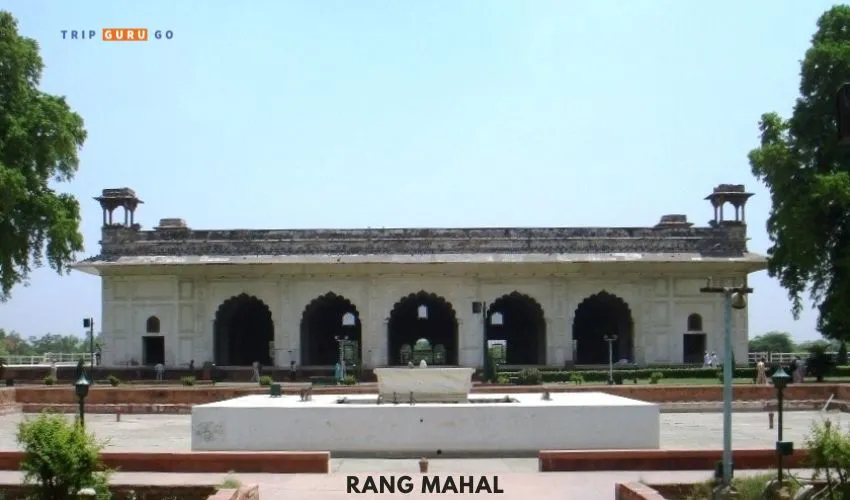
The Rang Mahal, or Palace of Colours, was home to the royal women. Its interiors were once decorated with mirrors, paintings, and scented water flowing through marble channels.
🌊 Tip: Look for the sunken marble stream in the middle — rose water used to flow here to cool the room and carry fragrance.
Hammam – The Royal Baths

The emperor and his family used these Turkish-style steam baths. Star-shaped holes in the ceiling allow light to filter through — marble lines the rooms, creating warmth, mist, and privacy.
Hayat Bakhsh Bagh – The Garden That Gave Life

At the northern end of the fort lies Hayat Bakhsh Bagh, which means “Life-Giving Garden”. It is quieter than other areas, with water channels, pathways, and birds resting near trees.
🏯 Do not miss the Zafar Mahal, the red sandstone pavilion in the center of the garden. You will also find the twin Sawan and Bhadon Pavilions, built to represent the rainy months — a Mughal celebration of nature.
Mumtaz Mahal – Home to the Red Fort Museum

This palace now houses the Red Fort Archaeological Museum. Inside are miniature paintings, Mughal robes, weapons, silverware, and royal documents. For history lovers, the Red Fort feels most personal here.
Nahr-i-Behisht – The Stream of Paradise
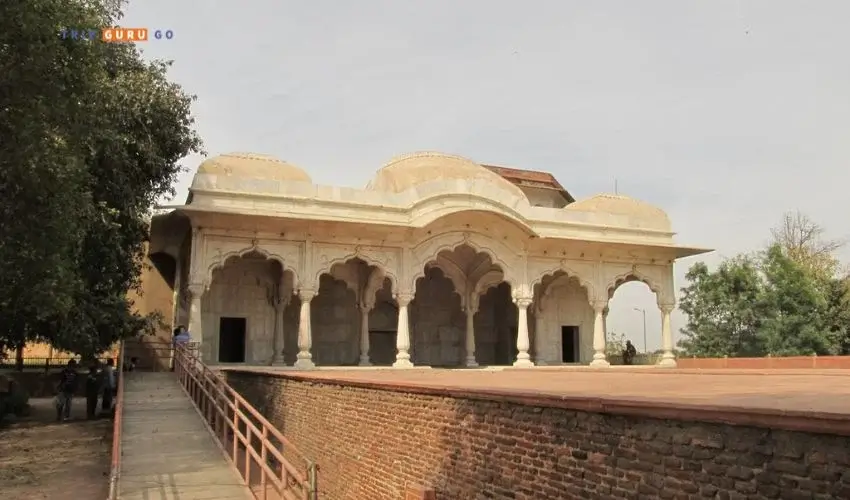
Running through the central axis of the palaces is the Nahr-i-Behisht, or “Stream of Paradise”. Once connected to the Yamuna River, it carried cool, fragrant water through marble channels, keeping rooms airy and spiritual.
📷 Look closely — even if dry, the channel still guides your eye like a thread tying all the buildings together.
🌇 Every corner of the Red Fort has its own mood. Touch the cold marble. Rest under the arches. Let your footsteps echo. This is not just sightseeing — it is remembering.
Camera, Toilets, Food, Luggage & Souvenir Tips
I reached the security gate with my DSLR slung over one shoulder and a small backpack on the other. A CISF guard waved me forward, scanned my ticket, and inspected every pocket. The rules are clear, yet some visitors still arrive unprepared. Here is everything you must know before you cross that line.
📷 Camera & Filming Rules
- Personal photos and videos are allowed in all open areas.
- Tripods, gimbals, and other professional gear need prior permission. 🚫 Drones are strictly prohibited inside the Red Fort premises — even for personal use.
- Keep lenses under 200 mm to avoid extra scrutiny.
- Flash is fine outdoors, but guards may stop you if it disturbs other visitors inside museums.
- Avoid leaning on fragile railings while framing shots; alarms can go off.
🌟 My Photo Tip: Stand near the arches of Diwan-i-Aam at 10 AM. Soft light pours in, and crowds remain thin.
🚻 Toilets & Drinking Water
| Facility Location | Why I Prefer It |
| Near Mumtaz Mahal Museum | Cleanest option: western seats, running water |
| Besides Naubat Khana | Accessible and easy to find |
| Behind Chatta Chowk corridor | Often overlooked, usually no queue |
- Carry tissues; dispensers run empty by noon.
- Water kiosks sell sealed bottles at MRP inside the fort.
🍴 Food & Snacks
- Outside food is officially not allowed past the gate. Small snacks like biscuits usually pass if sealed.
- An on-site canteen near the main courtyard serves samosas, sandwiches, chai, and cold drinks at fair prices.
- For a richer taste, step out later and walk to Paranthe Wali Gali or Karim’s in Chandni Chowk. Both lie ten minutes away by rickshaw.
❌ Mistake to Avoid: Skip street snacks right before the Light and Sound Show. Evening security can confiscate leftovers.
🎒 Luggage & Cloakroom
- Only small daypacks and handbags enter the fort. Large suitcases do not pass the scanner.
- A cloakroom sits beside the VIP entry lane, left of Lahori Gate. Open 9:00 AM–5:00 PM.
- When I visited in early 2025, I paid ₹20 per bag at the cloakroom. They accept only cash, and the staff will return your luggage only when you show the original token — no exceptions.
- Power banks and laptop chargers stay inside bags; guards allow them after the X-ray.
💼 Pro Tip: Place valuables inside a zip pouch before you hand over your bag. It speeds up retrieval later.
🛍️ Souvenirs at Chatta Chowk
Walk straight after Naubat Khana, and you enter Meena Bazaar Chatta Chowk, a roofed bazaar once used by royal ladies. Today, you find:
- Miniature marble Taj replicas typically range between ₹300 and ₹800, based on my visit. Prices may vary by season and material.
- Hand-embroidered pashmina stoles – ₹1,200 upward
- Silver-plated coins with Mughal motifs – bargaining starts at ₹150
- Mughal-era postcard sets – ₹50 for six
Always ask whether an item is fixed-price. If not, start with half the quote. Shopkeepers expect it, and smiling helps more than haggling hard.
🎁 My Favorite Buy: A small copper bookmark carved with the fort’s silhouette. It cost me ₹120 and now travels inside every guidebook I write.
Keep these rules and tips in mind, and you will glide through security, stay comfortable, and leave with memories instead of headaches. Ready for a deeper dive into Red Fort’s practical comforts? Next, I will share Foreigner Travel Tips and Cultural Etiquette that will keep your visit smooth and respectful.
Foreigner Travel Tips, Cultural Etiquette & Scams to Avoid at the Red Fort

When I stood near the Lahori Gate, I saw a foreign couple being followed by a local “guide” with no ID badge. He kept insisting that ASI approved him. This is exactly where many tourists — especially first-timers — feel overwhelmed. If you are visiting the Red Fort from abroad, I want to make your experience calm, informed, and scam-free.
🌐 General Safety & Cultural Etiquette
- 👕 Dress modestly: There is no strict dress code, but avoid sleeveless clothes or short skirts. Respect local culture, especially on national holidays.
- 🙏 Public affection is discouraged: Avoid hugging or kissing in public. It is considered disrespectful at heritage sites.
- 🧤 Shoes off in sacred zones: Remove footwear near the Moti Masjid and certain garden areas.
- 🤲 Right-hand matters: Use your right hand for giving, receiving, or eating. Avoid using the left — it is considered unclean.
- 👣 Feet etiquette: Feet are seen as impure in Indian culture. Do not point them at people or holy objects. If your foot touches someone, politely apologize.
🧣 I always carry a scarf and socks. The scarf helps in dusty areas, and socks are useful when I remove my shoes on hot stone floors.
🚫 Common Scams & How to Avoid Them
- 🧑🏫 “Official guide” fraud: Only hire guides wearing an ASI-issued photo ID. Avoid random men near the gate.
- 🎁 Souvenir trap: Inside Chatta Chowk, some stalls quote double to tourists. Always bargain unless the store clearly displays “Fixed Price”.
- 💳 Bargaining tip: If a shop says “No Bargaining”, respect that — especially at government emporiums.
- 🚖 Prepaid taxi scam (very common): At Delhi airport or railway station, never hand your voucher to the driver before reaching your hotel. Drivers may vanish once they have it.
- 🛺 Rickshaw restrictions: Cycle rickshaws are banned near Lahori Gate due to congestion and security. Use an electric auto or walk from Chandni Chowk Metro.
- 🍹 Do not accept food or drinks from strangers: Even if someone seems friendly, never accept free drinks, snacks, or chai — especially if you are solo. There have been cases of spiking.
👩🦰 Safety for Female Solo Travelers
If you are traveling alone, visit during daylight hours and stick to the main areas. I saw a solo foreigner sitting near the Diwan-i-Khas fountain — peaceful and safe. But avoid lingering near isolated garden corners like the Hayat Bakhsh Bagh in the evening.
📶 Language, Mobile & Digital Tips
- 💬 English is widely spoken at counters and souvenir stalls.
- 📶 Mobile signal: Jio and Airtel work well. No public Wi-Fi.
- 💸 Cash tips: Carry ₹100–₹200 in small notes for water, locker, and tips. Most stalls do not accept cards.
- 📱 Install Google Translate: Download the Hindi-English pack offline. It helps in markets or with drivers.
- 📍 SIM card tip: You can buy a prepaid tourist SIM at Delhi Airport or from authorized stores in Connaught Place.
Safety Guide – Common Scams, Taxi Tricks & What to Avoid
When I first visited the Red Fort, I felt a mix of excitement and caution. The beauty outside the Lahori Gate was powerful, but so were the distractions. If you are a first-timer in India, especially from another country, some things might feel overwhelming at first. But with a little awareness, you can enjoy your trip safely and confidently.
Let me walk you through a few real safety tips that will help you avoid scams, ride safely, and stay stress-free.
🧳 Hotel Switch Scams & Fake Guides
Some touts may approach you before you even reach the ticket counter. They often say things like,
“The fort is closed today” or “Let me take you to a better place”. They may also try to redirect you to a “better hotel” claiming your booking is cancelled or not safe.
🎯 What to Watch Out For:
- Anyone saying the Red Fort is closed (it rarely is unless it’s Monday)
- People offering to “help” without you asking
- Fake tourist guides do not wear an official ID badge
✅ My Advice:
Book hotels and tours in advance, and never trust strangers with your booking info. If you want a guide, go for an official ASI-registered guide only. Ask at the ticket counter or pre-book through a verified travel platform.
📌 Quick Tip: If someone approaches you saying, “Your hotel has shifted,” ignore it and call the hotel yourself.
🚖 Airport Cabs, Ride Apps & Fare Tricks
When you land at Delhi Airport or arrive at a railway station, be cautious about prepaid taxi booths or unofficial drivers. Some prepaid drivers ask for your voucher before reaching the hotel, then vanish halfway.
🎯 What to Watch Out For:
- Drivers asking for the prepaid slip early
- Cabs are taking long, unusual routes
- Fake app drivers at the pickup zone
✅ My Advice:
Always book through trusted apps like Uber or Ola. If you take a prepaid taxi from the airport, never hand over the voucher until you reach your destination.
📌 Quick Tip: Ask your hotel if they offer airport pickup. It saves hassle and is safer.
🌙 Night Safety, Solo Women Tips & Crowd Awareness
The Red Fort area is usually safe, especially during the day. But the outer streets and nearby Chandni Chowk can feel crowded or confusing after dark, especially for solo women.
🎯 What to Watch Out For:
- Overfriendly strangers offering “free help” after dark
- Unlit alleys or isolated areas around the fort complex
- Overcrowded spots near the outer wall gates after closing hours
✅ My Advice:
Stay on the main roads after 7:30 PM. Solo women should avoid isolated spots and keep hotel contact info handy. Wear modest clothing and avoid flashy jewelry.
📌 Cultural Tip: In India, public displays of affection are generally frowned upon. Also, use your right hand when offering or receiving anything, as the left is considered unclean. If your foot touches someone by mistake, say sorry — it’s seen as disrespect.
💬 Common Sense Tips That Help:
- 💧Do not accept food or drinks from strangers, even if they seem friendly. There have been real cases of drink-spiking.
- 💸 Carry ₹10 and ₹20 notes for the cloakroom (approx. ₹20–₹30 per bag), tips, or water.
- 🛍️ Always ask if prices are fixed. Many shops allow bargaining, but government emporiums or branded souvenir counters usually do not.
📌 Final Word: A little awareness goes a long way. Trust your instincts, ask for help only from officials, and keep your plans flexible but informed.
Food & Refreshments Near Red Fort – What I Tried, Loved & Avoided
After spending nearly three hours inside the Red Fort, my feet felt sore and my stomach louder than the crowds outside. I stepped out through Lahori Gate, turned towards Chandni Chowk, and within minutes. And I was surrounded by the smell of sizzling kebabs, hot parathas, and steaming chai.
Whether you are a street food lover or a cautious first-timer, here is what I honestly recommend, based on taste, hygiene, walkability, and value for money.
🥘 Trusted Food Options Nearby (5–10 Minutes Walk)
| Place | Food Type | Walk Time | Price Range | Ideal For |
| Karim’s (Jama Masjid) | Mughlai (Non-Veg) | 12 min | ₹250–₹400 | Authentic meat dishes |
| Al Jawahar | Mughlai (Non-Veg) | 12 min | ₹200–₹350 | Local food lovers |
| Haldiram’s (Chandni Chowk) | Vegetarian, Snacks | 10 min | ₹150–₹300 | Tourists, families |
| Shiv Misthan Bhandar | Chole Bhature, Lassi | 8 min | ₹80–₹150 | Street food fans |
| Jain Coffee House | Fruit Sandwich, Kulfi | 12 min | ₹100–₹200 | Offbeat foodies |
🧭 Tip for Foreigners: Stick to busy outlets, avoid street-side ice, and ask for “no chutney” if unsure about spice. Haldiram’s and Jain Coffee House offer cleaner seating and often have English menus.
💧 Safety Tips While Eating Near the Red Fort
- Drink only sealed bottled water – avoid refillable jugs.
- Avoid raw chutneys and ice unless the shop is trusted.
- Carry wet wipes or tissues – many stalls do not offer napkins.
- Wash hands or carry sanitizer – especially before eating with your hands.
- Carry ₹10–₹20 notes for water bottles, snacks, or cloakroom use.
🧵 Cultural Food Tips
- Always use your right hand while eating or giving money (the left hand is considered unclean in Indian tradition).
- Bargaining is common in small food stalls, but government-approved emporiums or Haldiram’s follow fixed pricing – respect their policy.
🚫 What I Avoided
I skipped the unknown street vendors selling pani puri and cut fruits under the sun. Even though they looked tempting, I did not want an upset stomach during my Delhi trip.
✅ Final Touches Added:
- ✔️ Walking times for food spots
- ✔️ Mention of veg-safe options for international visitors
- ✔️ Cloakroom cash advice reworded as a general tip
- ✔️ Clear safety and cultural etiquette integration
What to Carry & What to Avoid – My Packing Tips for Red Fort Delhi

When I walked through the majestic gates of the Red Fort on a sunny morning, I noticed something simple but powerful — people who had packed smart were enjoying more, while others looked tired, sunburned, or confused about the rules.
Here is everything you should carry (and avoid) to make your Red Fort visit smoother, safer, and more joyful:
✅ Essentials to Carry in Your Bag
- Water Bottle (preferably reusable): You will walk a lot, especially in hot weather.
- Valid Photo ID: Mandatory for both Indian and foreign visitors. Keep your passport or Aadhaar card handy.
- Sunscreen & Sunglasses: The red sandstone reflects sunlight strongly. Sun protection is a must in summer.
- Umbrella or Rain Poncho (July to September): Delhi’s sudden monsoon spells can drench you in minutes.
- Comfortable Footwear: You will cover nearly 2–3 km inside the fort. Avoid heels or slippery sandals.
- Power Bank & Fully Charged Phone: Mobile signal is strong, but the site is huge and great for photos.
- Scarf or Cap: Useful for both summer heat and covering your head respectfully at sacred spots nearby.
- Small Cash Notes (₹10/₹20/₹50): For water, snacks, tips, or using the cloakroom near the entrance gate after the security check.
❌ What Not to Carry or Wear
- Drones, Tripods, Selfie Sticks: These are strictly banned inside the Red Fort complex.
- Plastic Bags or Packaged Food: Security may ask you to discard these. Also, avoid littering this heritage site.
- Heavy Bags or Luggage: They slow you down and are not allowed past security. Use the cloakroom for ₹20 per bag.
- Revealing or Very Tight Clothes: While not officially restricted, Delhi’s cultural vibe is more conservative. Respectful clothing is appreciated.
- Large DSLR Lenses: You can bring a regular DSLR, but long zoom lenses may be stopped by security unless you have official permissions.
Quick Packing Table for Red Fort Visit
| ✅ Must Carry | ❌ Avoid Carrying |
| Photo ID (Passport/Aadhaar) | Drones, Tripods, Selfie Sticks |
| Reusable Water Bottle | Packaged Food & Drinks |
| Sunscreen, Sunglasses | Plastic Bags |
| Comfortable Shoes | Large Suitcases |
| Umbrella / Cap (Seasonal) | Loud Gadgets |
| Power Bank | Flash Photography Gear |
| Small Cash Notes (₹10–₹50) | Items Restricted at Security Check |
Cloakroom Policy (2025 Update)
| Item | Allowed? | Tip |
| Small Backpack | ✅ Yes | Must pass through CISF scan |
| DSLR Camera (Basic) | ✅ Yes | Avoid carrying long zoom or professional gear |
| Large Luggage/Suitcases | ❌ No | Use cloakroom near gate (₹20 per bag approx.) |
| Food Packets & Cold Drinks | ❌ No | Eat outside before entry |
My Tip: Travel light but smart. Delhi’s weather can flip in hours, and walking inside the Red Fort takes time. Prepare like a traveler, not just a tourist.
Extend Your Trip – Famous Places Near Red Fort Worth Visiting
The Red Fort is not just a destination — it is the gateway to Old Delhi’s soul. If you have 2–3 extra hours, walk with me to these nearby gems. Each one adds a new layer to your Delhi story.
Jama Masjid – Grand Architecture & Spiritual Calm

- Distance: 10 minutes on foot
- Time Needed: 30–45 minutes
As I stood on the marble steps of the Jama Masjid, I felt like time had slowed down. The call to prayer echoed through the courtyard, and pigeons fluttered above the minarets. You will need to remove your shoes and dress modestly. They offer robes at the entrance if needed. Climb the southern minaret for a quiet city view.
👉 Read more in the Jama Masjid Travel Guide
Chandni Chowk – Street Food, Sarees & Chaos

- Distance: 5–7 minutes via Gate 1
- Time Needed: 1 to 1.5 hours
This is where Old Delhi truly buzzes. I tasted jalebi dripping with syrup, and watched saree vendors shouting prices while cycle rickshaws dodged honking scooters. Stick to the main lanes, and explore Paranthe Wali Gali if your stomach agrees!
👉 Explore my Chandni Chowk Food & Market Guide
Raj Ghat – Peaceful Tribute to Mahatma Gandhi

- Distance: 10–12 minutes by auto
- Time Needed: 20–30 minutes
After the noise of Chandni Chowk, this was a breath of stillness. The black marble platform where Gandhiji was cremated stands in silent grace. Remove your shoes, walk slowly, and you will feel the energy shift.
👉 Visit this tribute in the Raj Ghat Delhi Guide (Coming Soon)
Sri Digambar Jain Lal Mandir – Birds, Belief & Simplicity

- Distance: 2–3 minutes from Red Fort Gate
- Time Needed: 15–20 minutes
Delhi’s oldest Jain temple sits right in front of the Red Fort. I visited the Bird Hospital inside — a healing space where injured birds are treated with love. No leather items allowed inside. The temple is peaceful and beautifully painted in red and gold.
👉 Learn more in the Lal Mandir & Bird Hospital Guide
Gurudwara Sis Ganj Sahib – Courage in Silence

- Distance: 8–10 minutes via Chandni Chowk
- Time Needed: 30 minutes
I walked in during the late afternoon when the Gurbani was playing softly in the background. They martyred Guru Tegh Bahadur here. Volunteers serve free langar daily — you sit with folded legs and eat alongside locals. Everyone must cover their head.
👉 Feel the devotion in Sis Ganj Sahib Gurudwara Guide
Visual Tip: Plan with the Map
To explore all these sites, you can use a Google Maps walking trail that starts at the Red Fort and ends at Raj Ghat. It will take around 3–4 hours with calm stops.
Red Fort, Delhi – Contact & Visitor Info
Address:
Netaji Subhash Marg, Chandni Chowk, New Delhi, Delhi – 110006
Main Help Desk (ASI Delhi Circle):
📞 +91-11-24654832
📞 +91-11-23277705
👉 Want to explore more heritage gems in the capital? Check out my curated list of top historical places in Delhi that go beyond the Red Fort.
Red Fort Video Guide: Tickets & Tour
Final Thought – Red Fort Is Not Just a Fort, It Is India’s Pride
As I stood beneath the fluttering Indian flag at the Lahori Gate, a quiet feeling came over me. The noise of the crowd faded for a moment. I imagined the emperors who once walked here in royal processions. I thought of the freedom fighters who dreamed of this flag flying free. And I felt proud, not just as a traveler, but as someone connected to this land.
The Red Fort is not just red walls and ancient arches. It is a living memory of power, struggle, art, and sacrifice. Whether you are from India or visiting from across the world, this fort will speak to you through its silence, its scars, and its strength.
Take your time here. Walk slowly. Look up. Listen. Because places like this are not just meant to be seen — they are meant to be felt. If the Red Fort inspired you, you will love this guide on famous historical places across India – from forts and stepwells to ancient temples that still echo with history.
🧭 Explore More Monuments That Reveal Delhi’s Past:
- Visit Humayun’s Tomb – A tranquil resting ground wrapped in red sandstone.
- Climb Qutub Minar – Delhi’s tallest tale in carved stone.
- Experience India Gate – A national tribute etched in granite.
- Walk through Rashtrapati Bhavan – The palace that now houses democracy.
- Explore Purana Qila – A fort older than empires that ruled Delhi.
- Descend into Agrasen Ki Baoli – A stepwell soaked in Delhi’s legends.
FAQs – What Foreign Tourists Often Ask About the Red Fort in Delhi
For foreign tourists, the entry fee to the Red Fort is ₹550 for the fort only and ₹870 if you want to include access to the museums inside. Children under 15 years of age can enter for free. Tickets can be purchased online or at the gate, but booking online is highly recommended to skip the queue.
Yes, you can book tickets online through the Archaeological Survey of India portal, the Paytm app, or BookMyShow. The BookMyShow platform is often easier for international card payments. Many foreign travelers prefer this method, especially if visiting during peak tourist season or weekends when lines at the Red Fort get longer. If you also want to attend the Light and Sound Show at the Red Fort, you can book those tickets online as well.
The Red Fort is open from 9:30 AM to 4:30 PM, Tuesday to Sunday. It remains closed on Mondays for weekly maintenance. It is best to visit before 11:30 AM to avoid crowds and heat, especially in the summer months. Entry gates close at 4:30 PM sharp, and the inner museums begin closing around 4:00 PM.
The closest metro station is Lal Qila Metro Station on the Violet Line, just a short walk from the Lahori Gate entrance. Alternatively, you can also get down at Chandni Chowk Metro Station (Yellow Line) and take a rickshaw or walk through the historic Chandni Chowk market. It is a good option if you want to combine your visit with the Jama Masjid and other nearby sites.
Yes, the Red Fort is generally safe for solo and women travelers, especially during the daytime. The presence of CISF security, metal detectors, and tourist police around the complex ensures a secure environment. However, like in any crowded area, stay aware of your belongings, avoid isolated corners near closing time, and do not accept food or drink from strangers.
Yes, the fort has well-maintained washrooms and filtered drinking water stations near key areas like the Diwan-i-Aam and museum blocks. Carry a small water bottle that you can refill. During busy days, expect a short queue outside restrooms, especially near the entry gate.
There is no strict dress code, but modest and comfortable clothing is recommended. Lightweight cotton outfits are best during summer. In winter, carry a light jacket. Since you will walk a lot, wear closed, comfortable footwear. Avoid sleeveless tops, extremely short dresses, or anything that might attract unwanted attention in a conservative public setting.
Yes, photography is allowed for personal use throughout the complex. However, drones, tripods, and selfie sticks are not permitted inside for safety and security reasons. If you plan a professional shoot or documentary, you must take prior permission from ASI or the relevant authorities.
A regular visit takes about 2 to 3 hours to cover the main buildings like Diwan-i-Aam, Diwan-i-Khas, Rang Mahal, and the museums. If you also plan to attend the light and sound show, budget an extra hour in the evening. Arrive early to explore peacefully, especially if you enjoy history or photography.
Yes, a few common scams include overpriced guides who claim to be “official”, tuk-tuk drivers insisting on switching hotels, or fake stories about monuments being closed to divert you to expensive shops. Always verify info through official signage and avoid guides who approach you aggressively outside the gate. Use ride apps like Uber/Ola instead of accepting random offers. You can read our full safety and scams guide for more details.


Hi, I am Manoj Kumar, the voice behind Trip Guru Go. I am a travel researcher, SEO content expert, and founder of this blog. With over 12 years of experience in digital travel research, I simplify complex destinations into real, helpful, and trustworthy guides.
Every article I write is backed by local sources, real traveler experiences, and deep fact-checking. Even if I have not visited every place personally, I never share anything without strong on-ground insight.
I do not sell travel packages or promote anything paid. My only goal is to help you travel smarter — with zero fluff, 100% honesty, and a deep focus on your safety and experience.