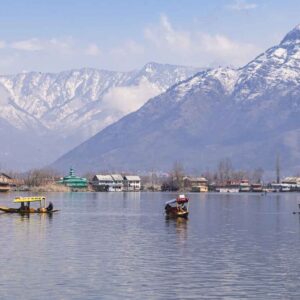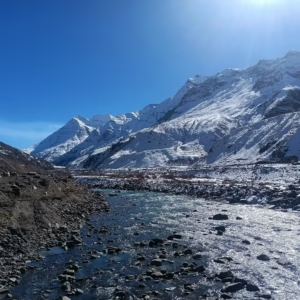
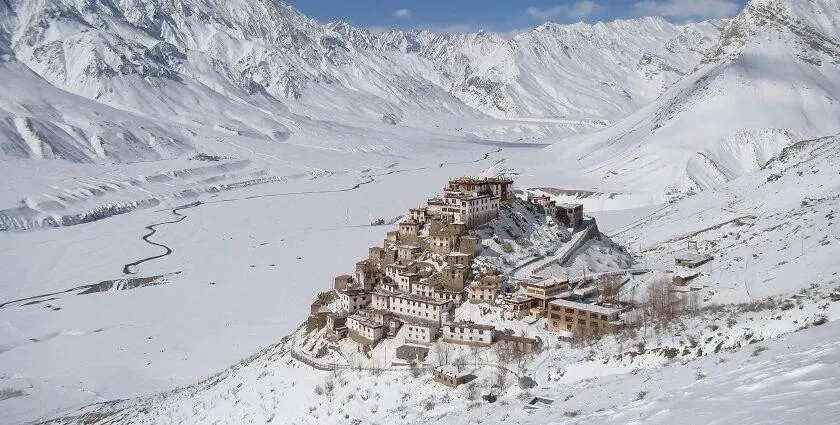
Imagine waking up in a village where everything outside your window is covered in snow. The roads are quiet, the mountains shine under the winter sun, and even the rivers look frozen. That’s what visiting Spiti Valley in February feels like.
Unlike the busy summer months, February lets you experience a completely different side of Spiti Valley. The valley becomes peaceful, untouched, and incredibly beautiful. Ancient monasteries wear a blanket of snow, villages become quieter, and if you’re lucky, you may even spot the elusive Snow Leopard roaming the mountains.
However, this beauty comes with challenges. February is still one of the coldest months of the year, temperatures often fall below -20°C, many hotels remain closed, and the Manali route stays blocked because of heavy snowfall.
If this is your first trip to Spiti, we recommend reading our Spiti Valley Travel Guide first. It explains everything from routes and accommodation to budgeting and travel planning.
In this guide, you’ll learn about February weather, snowfall, road conditions, the best places to visit, things to do, travel costs, accommodation, packing tips, safety advice, and everything else you need to plan an unforgettable winter adventure.
Quick Facts About Spiti Valley in February
| Information | Details |
| Season | Peak Winter |
| Temperature | -5°C to -30°C |
| Snowfall | Heavy in many areas |
| Road Status | Manali Route Closed |
| Best Route | Shimla → Kaza |
| Ideal Trip Duration | 7–9 Days |
| Difficulty Level | High |
| Accommodation | Mostly Homestays |
| Mobile Network | BSNL Works Best |
| ATM Availability | Kaza & Reckong Peo |
| Best For | Snowfall, Photography, Snow Leopard, Peaceful Travel |
Is Spiti Valley Worth Visiting in February?
If you’ve always wanted to experience a real Himalayan winter, February is one of the most exciting months to visit Spiti Valley. Snow covers the mountains, villages become quieter, and you’ll often find yourself standing in places where there are more prayer flags than tourists.
Unlike January, February usually offers slightly longer sunny hours, making sightseeing and photography a little more comfortable while still giving you the full winter experience. It’s also one of the best months for wildlife lovers because Snow Leopard sightings become more common around Kibber and nearby areas.
At the same time, this isn’t a trip for everyone. Freezing temperatures, limited facilities, and unpredictable weather mean you need proper planning before visiting.
Our Spiti Trips in February
 Group Trip
13 Jan 2027 (+4 dates)
Group Trip
13 Jan 2027 (+4 dates)
Winter Spiti 4×4 Expedition
 Group Trip
20 Nov ( +10 Date )
Group Trip
20 Nov ( +10 Date )
Winter Spiti Valley
Who Should Visit Spiti Valley in February?
February is perfect for travellers who:
- Want to experience snowfall.
- Love peaceful mountain destinations.
- Enjoy winter photography.
- Want to spot a Snow Leopard.
- Like adventure road trips.
- Prefer travelling away from tourist crowds.
Who Should Avoid Visiting in February?
February may not be the right time if you:
- Cannot tolerate freezing temperatures.
- Are travelling with very young children or elderly family members.
- Prefer luxury hotels and modern facilities.
- Want to travel through the Manali route.
- Have very limited travel time with no flexibility for weather delays.
Pros and Cons of Visiting Spiti Valley in February
| Pros | Cons |
| Beautiful snow-covered landscapes | Extremely cold weather |
| Fewer tourists | Manali route remains closed |
| Better chance of spotting Snow Leopards | Limited accommodation |
| Excellent winter photography | Road closures after snowfall |
| Peaceful monasteries and villages | Limited restaurants and transport |
Weather in Spiti Valley in February
February keeps Spiti Valley locked in winter, but the experience feels slightly different from January. Fresh snow still covers the mountains, frozen rivers continue to shape the landscape, and cold winds remind you that you’re travelling through one of India’s highest cold deserts. At the same time, longer daylight hours and occasional sunny afternoons make exploring nearby villages a little easier.
The weather can change quickly, so don’t let a bright morning fool you. A sunny afternoon can turn into a freezing evening within minutes, which is why proper winter clothing is essential throughout your trip.
Temperature in February
Daytime temperatures usually stay between -5°C and 5°C, depending on the weather and altitude.
During the night, temperatures commonly fall between -15°C and -25°C, while some higher villages can become even colder. Strong winds can also make the weather feel much colder than the actual temperature.
Does It Snow in February?
Yes. February continues to receive snowfall across many parts of Spiti Valley, making it one of the best months for travellers who want to experience a true Himalayan winter.
Fresh snowfall can happen at any time, while older snow continues to cover mountain slopes, villages, and open landscapes. This combination creates some of the most beautiful winter views of the year.
If your main goal is to enjoy snowfall, don’t miss our Best Time to Visit Spiti Valley guide. It compares every season and helps you choose the right month based on weather, road conditions, and the type of experience you’re looking for.
Can You Visit Spiti Valley in February?
Yes, but you can only reach Spiti Valley through the Shimla–Kinnaur route.
The popular Manali–Kaza road remains completely closed during February because Kunzum Pass receives heavy snowfall throughout winter. This means you’ll enter and leave Spiti Valley using the same route via Shimla, Reckong Peo, Nako, Tabo, and Kaza.
Road conditions can change overnight after fresh snowfall. That’s why it’s always a good idea to keep one or two extra days in your itinerary in case of unexpected delays.
Road Conditions in Spiti Valley in February
Driving through Spiti Valley in February is a completely different experience from travelling during summer. Although the Shimla route usually remains open, snowfall and icy roads can slow down your journey. Careful driving and checking the latest road updates before starting each day are extremely important.
Delhi to Shimla
The highway from Delhi to Shimla is usually in good condition. However, winter fog during early mornings can reduce visibility, so drive carefully.
Shimla to Reckong Peo
This section generally remains open throughout February. As you move higher into Kinnaur, you may come across snow-covered roads and icy patches, especially after fresh snowfall.
Reckong Peo to Kaza
This is the most challenging stretch of the journey. Black ice, snow-covered roads, and occasional road blockages are common, particularly around Nako and Malling Nallah. Start your drive after sunrise whenever possible because sunlight slightly softens the ice, making the roads safer.
Is the Manali Route Open in February?
No.
The Manali–Kaza route remains closed throughout February because heavy snowfall blocks Kunzum Pass. The road usually opens only after snow clearance begins in the summer months.
Best Route to Reach Spiti Valley in February
The Shimla–Kinnaur route is the only practical and reliable route for visiting Spiti Valley in February.
Recommended Route
Delhi
↓
Shimla
↓
Narkanda
↓
Kalpa
↓
Nako
↓
Tabo
↓
Kaza
This gradual climb helps your body adjust to the increasing altitude, reducing the risk of Acute Mountain Sickness (AMS). It is also the safest route because roads are maintained throughout winter whenever weather conditions allow.
Do You Need a Permit?
Most Indian travellers do not need a permit to visit the main tourist circuit of Spiti Valley. However, if you’re planning to visit restricted border areas near the India–China border, special permits may still be required.
Always check the latest permit rules before your trip, especially during winter when road access can change due to weather conditions.
Best Places to Visit in Spiti Valley in February
February transforms Spiti Valley into a place that feels almost untouched. Fresh snow covers the mountains, villages become quieter, and most tourist spots are free from crowds. Instead of rushing from one attraction to another, this is the time to slow down and enjoy the peaceful side of the Himalayas. While some high-altitude villages may become inaccessible after heavy snowfall, many of Spiti’s famous attractions can still be visited depending on road conditions.
Kaza
Kaza is more than just the main town of Spiti Valley—it’s where your winter adventure truly begins. Imagine stepping out on a crisp February morning to see snow-covered streets, white mountain peaks, and smoke rising from traditional homes. Most homestays, cafés, medical stores, and basic facilities that remain open during winter are located here, making Kaza the best base for your trip.
Key Monastery
Standing on top of a hill, Key Monastery looks even more magical during February. Thick snow surrounds the monastery, colourful prayer flags flutter in the cold wind, and the peaceful silence creates an unforgettable atmosphere. If you arrive during the morning prayers, you’ll experience one of the most memorable moments of your Spiti trip.
Kibber Village
Kibber is one of the most exciting places to visit in February. Apart from its breathtaking winter scenery, it’s also one of the best places in India to spot the elusive Snow Leopard. Wildlife photographers from around the world visit Kibber during winter hoping to catch a glimpse of this rare Himalayan predator.
Hikkim
Home to the world’s highest post office, Hikkim looks completely different in winter. The village is often covered in thick snow, making the journey itself an adventure. If the road is open, don’t miss the chance to send a postcard from one of the most unique post offices in the world.
Komic
Komic is one of the highest motorable villages in the world. In February, the village becomes incredibly peaceful, with snow covering the rooftops, fields, and surrounding mountains. It’s the perfect place to experience the slow and simple lifestyle of Spiti’s local communities.
Langza
The giant Buddha statue overlooking Langza becomes even more beautiful after fresh snowfall. On a clear day, the contrast between the white mountains, blue sky, and golden Buddha creates one of the most iconic views in Spiti Valley.
Tabo Monastery
Often called the “Ajanta of the Himalayas,” Tabo Monastery has stood for more than a thousand years. Visiting it during February feels even more special because there are very few tourists, allowing you to enjoy its peaceful surroundings without crowds.
Dhankar Monastery
Built dramatically on a cliff, Dhankar Monastery offers stunning views of the Spiti and Pin rivers. If weather conditions allow, it’s one of the most rewarding places to include in your February itinerary.
Top Things to Do in Spiti Valley in February
February isn’t about checking off tourist attractions—it’s about experiencing winter in one of the most remote regions of the Himalayas. Every day brings a different experience, whether it’s watching fresh snow fall outside your homestay or exploring centuries-old monasteries surrounded by white mountains.
Experience Fresh Snowfall
There’s something magical about watching snow slowly cover the rooftops, roads, and mountain slopes. If you’ve never experienced snowfall before, February offers one of the best opportunities to see Spiti Valley at its white and peaceful best.
If you’re unsure whether February is the right month for snow, read our Best Time to Visit Spiti Valley guide to compare every season before planning your trip.
Visit Ancient Monasteries
Winter is one of the best times to visit monasteries like Key, Tabo, and Dhankar because there are very few visitors. You can quietly explore these centuries-old buildings and experience the spiritual atmosphere without the usual tourist crowds.
Spot a Snow Leopard
February is considered one of the best months for Snow Leopard sightings. Heavy snowfall forces these elusive animals to lower elevations in search of prey, increasing your chances of spotting one around Kibber Wildlife Sanctuary and nearby villages.
While sightings are never guaranteed, joining a local wildlife guide gives you the best opportunity to witness this rare Himalayan predator in its natural habitat.
Celebrate Losar Festival
If you’re visiting during late February, you may get the chance to witness Losar, the Tibetan New Year. Villages come alive with traditional celebrations, colourful clothing, monastery ceremonies, Cham dances, and local cultural performances. It’s one of the most authentic cultural experiences you can have in Spiti Valley.
Enjoy Winter Photography
Snow-covered villages, frozen rivers, colourful monasteries, and crystal-clear skies make February one of the best months for landscape photography. Sunrise and sunset create beautiful golden light across the mountains, making almost every viewpoint picture-perfect.
Experience Local Village Life
Winter is the best time to understand how people actually live in Spiti Valley. Stay in a local homestay, enjoy freshly cooked meals around a warm bukhari, and spend time talking to families who continue their daily life despite freezing temperatures. It’s often these simple experiences that become the most memorable part of the trip.
Suggested 9-Day Itinerary
Planning a winter trip becomes much easier when you already have a day-by-day plan. Since road conditions in February can change after snowfall, it’s always a good idea to keep one or two extra buffer days. For a detailed route, sightseeing plan, accommodation suggestions, and travel tips, check out our complete Spiti Valley Itinerary Guide before finalising your trip.
Can You Ride a Bike in Spiti Valley in February?
Although February is slightly less harsh than January, a bike trip is still not recommended for most travellers.
The Manali–Kaza route remains closed because of heavy snowfall, while the Shimla route often has black ice, slippery roads, and freezing temperatures. These conditions make riding extremely risky, even for experienced bikers.
If you’re planning a bike trip to Spiti Valley during the summer season instead, choosing the right motorcycle and safety gear becomes much more important.
Where to Stay in Spiti Valley in February
Many hotels and camps remain closed during February, but local homestays continue welcoming travellers. Staying with a local family is not only more affordable but also gives you a chance to experience Spiti’s traditional lifestyle.
Most homestays provide simple rooms, warm blankets, home-cooked meals, and a bukhari (wood-burning stove) to keep guests warm. Since winter accommodation is limited, booking in advance is always a good idea.
Food and Water Availability
Food options become limited during February because many cafés and roadside restaurants close for winter. However, local homestays and a few eateries in Kaza continue serving fresh home-cooked meals like dal, rice, roti, vegetables, thukpa, momos, and butter tea.
Running water is another challenge during winter. Water pipes often freeze because of the extreme cold, so many homes rely on stored water and provide buckets of hot water when needed. Dry toilets are also common across several villages during this season.
Mobile Network and Internet
Network connectivity remains limited throughout Spiti Valley during February.
| Network | Coverage |
| BSNL | Best |
| Jio | Limited |
| Airtel | Limited |
| Vi | Very Limited |
Download offline maps before your journey because mobile internet may stop working after snowfall.
ATM and Cash Availability
ATMs are available in Reckong Peo and Kaza, but winter weather can affect cash availability. Carry enough cash before entering Spiti Valley because UPI and card payments may not work in many places due to poor network connectivity.
Packing List for Spiti Valley in February
Packing properly is one of the most important parts of planning a winter trip. February temperatures can change quickly, so wearing multiple layers is much more effective than carrying a single heavy jacket.
| Clothing | Essentials |
| Heavy down jacket | Government ID |
| Thermal wear | Medicines |
| Fleece jacket | Sunglasses |
| Waterproof gloves | Sunscreen (SPF 50+) |
| Woollen cap | Power bank |
| Waterproof snow boots | Torch |
| Woollen socks | Water bottle |
| Neck warmer | Lip balm |
Winter Clothing Checklist
Carry:
- Heavy down jacket
- Two sets of thermal innerwear
- Waterproof snow boots
- Woollen socks
- Balaclava or monkey cap
- Waterproof gloves
- UV-protection sunglasses
- Sleeping bag (optional but recommended)
- Extra power bank
Keeping your feet dry and protecting exposed skin from the cold is just as important as staying warm. Snow reflection can also cause severe sunburn, so sunscreen and sunglasses are essential even during winter
Biggest Challenges of Visiting Spiti Valley in February
A February trip to Spiti Valley is incredibly rewarding, but it also comes with challenges that many first-time travellers underestimate. Knowing what to expect will help you prepare better and avoid unpleasant surprises during your journey.
Extreme Cold
February temperatures often stay below freezing throughout the day, while nights can drop to -20°C or even lower in some areas. Batteries drain quickly, water freezes, and even simple outdoor activities become difficult if you’re not dressed properly.
Frozen Water Supply
One of the biggest surprises for winter visitors is the lack of running water. Water pipes freeze in many villages, so hotels and homestays usually store water in advance. Instead of regular showers, you’ll often receive a bucket of hot water for basic use.
Power Cuts
Heavy snowfall and harsh weather can occasionally disrupt electricity for several hours. Most homestays have backup arrangements, but carrying a fully charged power bank, torch, and spare batteries is highly recommended.
Limited Facilities
Many restaurants, camps, bike rentals, and tourist services remain closed during winter. While Kaza continues to provide essential facilities, don’t expect the same level of convenience available during the summer season.
Driving in Spiti Valley During February
Driving through Spiti in winter is an unforgettable experience, but it’s also one of the most demanding road trips in India.
Black Ice
Even when roads appear dry, a thin layer of invisible ice—known as black ice—can make vehicles skid without warning. This is especially common during early mornings and after sunset.
Snow-Covered Roads
Fresh snowfall can temporarily block roads, particularly around Nako, Malling Nallah, and higher-altitude villages. Road-clearing teams usually restore connectivity, but delays are common after heavy snowfall. Keeping one or two buffer days in your itinerary is always a smart decision.
Is a 4×4 Vehicle Necessary?
Although local taxis regularly operate on the Shimla–Kaza route, travellers driving their own vehicles should ideally use a 4×4 SUV with good ground clearance. Snow chains may also be required depending on recent weather conditions.
Spiti Valley Trip Cost in February
Winter travel can actually be more affordable than the peak tourist season because accommodation prices are generally lower. However, transport costs may increase if roads become difficult or you need to hire local taxis.
Estimated Budget
| Expense | Approximate Cost |
| Accommodation | ₹800–₹2,500 per night |
| Food | ₹400–₹800 per day |
| Shared Transport | ₹12,000–₹18,000 |
| Private Taxi | ₹30,000–₹60,000+ |
| Miscellaneous | ₹3,000–₹5,000 |
For a detailed breakdown of transport, accommodation, fuel, permits, and hidden expenses, read our Spiti Valley Trip Cost Guide.
Altitude Sickness (AMS) in February
Cold weather doesn’t reduce the risk of altitude sickness. In fact, dehydration caused by the dry mountain air can make symptoms worse.
Common Symptoms
- Headache
- Nausea
- Dizziness
- Fatigue
- Loss of appetite
How to Prevent AMS
- Spend a night in Shimla or Kalpa before reaching Kaza.
- Stay hydrated throughout your journey.
- Avoid alcohol during the first few days.
- Ascend gradually whenever possible.
- Consult your doctor before taking medicines like Diamox.
Safety Tips for Visiting Spiti Valley in February
Winter in Spiti is beautiful, but a little preparation can make your trip much safer.
Before You Leave
- Check the latest weather forecast.
- Confirm road conditions before starting your journey.
- Carry enough cash.
- Download offline maps.
- Keep essential medicines with you.
During Your Trip
- Start driving early in the morning.
- Avoid travelling after sunset.
- Keep your fuel tank at least half full.
- Carry snacks and drinking water.
- Inform your hotel before visiting remote villages.
- Always keep one or two buffer days in your itinerary.
Final Thoughts
Spiti Valley in February isn’t for everyone—but that’s exactly what makes it so special. If you dream of snow-covered landscapes, peaceful monasteries, frozen rivers, and a Himalayan adventure far from the crowds, February offers an experience few places in India can match.
The weather may test your patience, but the memories you create here will stay with you forever. Plan well, travel responsibly, and let Spiti’s winter magic surprise you at every turn.
Frequently Asked Questions
Is February a good time to visit Spiti Valley?
Yes. February is ideal for travellers who want to experience snowfall, peaceful landscapes, and Spiti’s authentic winter atmosphere.
Does it snow in Spiti Valley in February?
Yes. February is one of the snowiest months, and many villages remain covered in fresh snow throughout the season.
Which route is open in February?
The Shimla–Kinnaur–Kaza route usually remains open, while the Manali–Kaza Highway stays closed due to heavy snowfall.
Can I drive my own car to Spiti Valley in February?
Yes, but a 4×4 SUV is strongly recommended because of snow, black ice, and unpredictable road conditions.
Is a bike trip possible in February?
For most travellers, no. The extreme cold and slippery roads make winter biking unsafe.
How many days are enough for a February trip?
A 7–9 day itinerary, along with one or two buffer days, is ideal for exploring Spiti Valley in February.
Are hotels open in February?
Yes. Most camps remain closed, but several hotels and local homestays in Kaza and nearby villages continue operating throughout the winter.

Abdullah Khan specializes in adventure travel across Spiti Valley and the high-altitude regions of Himachal Pradesh. He writes about road trips, bike expeditions, hidden villages, monasteries, and offbeat Himalayan experiences. His guides focus on route planning, acclimatization, travel safety, and the best experiences across Spiti Valley.