
You arrive expecting a pretty hill station, some snow, some chai, some mountain views. Then you find yourself strapped into a paragliding harness at 2,500 metres, launching off a cliff, and realising that you have been living far too carefully.
That is what Manali does. It finds the part of you that forgot how to be fearless and drags it back out.
The adventure scene here has grown significantly in the last five years. Better equipment, more professional operators, newer routes that tourists rarely discover. But with that growth has also come shortcuts cheaper operators, poorly maintained gear, guides who skip safety briefings to move the queue faster.
This guide covers the 10 best adventure activities in Manali what each one actually feels like, when to do it, what it costs, and how to make sure you do it safely. If this is your first time in the region, our Manali Tourism Guide is a good starting point for general planning, stays, and sightseeing.
1. Paragliding — Fly Over the Kullu Valley

Best location: Dobhi (better than Solang for serious flyers)
Best time: March to June and September to November
Cost: ₹2,000 to ₹3,500 for tandem flights
Paragliding in Manali is one of those activities that sounds terrifying until you are actually in the air, at which point it becomes the most peaceful thing you have ever done.
Most tourists head straight to Solang Valley because it is close to town and heavily marketed. Solang is fine. But Dobhi, a lesser-known launch site, offers higher altitude takeoffs, longer flight times, and views across the Kullu Valley that Solang simply cannot match. Experienced flyers and those who ask around end up at Dobhi. The rest queue at Solang with 300 other people on a Saturday afternoon.
Tandem flights last 15 to 25 minutes under normal conditions. When thermals cooperate, you can stay up for 30 minutes or more. Your pilot handles all the technical work. Your job is to run off the edge when told, trust the harness, and try not to grip the instructor’s arms hard enough to cut off circulation.
Morning slots between 9 and 11 AM are calmer and better suited for first-timers. Afternoon thermals are stronger, which means more lift but also more turbulence and acrobatic possibilities if you want them.
What to wear: Layers regardless of season. Temperature at altitude drops considerably even on warm days.
Who it suits: Anyone from 6 to 65. Weight limit typically 35 kg to 120 kg. Check with your specific operator.
2. River Rafting on the Beas — Read the River Before You Book
Best stretch: Pirdi to Jhiri (14 km)
Best time: May to June for maximum intensity, September for calmer water
Cost: ₹800 to ₹1,500 per person
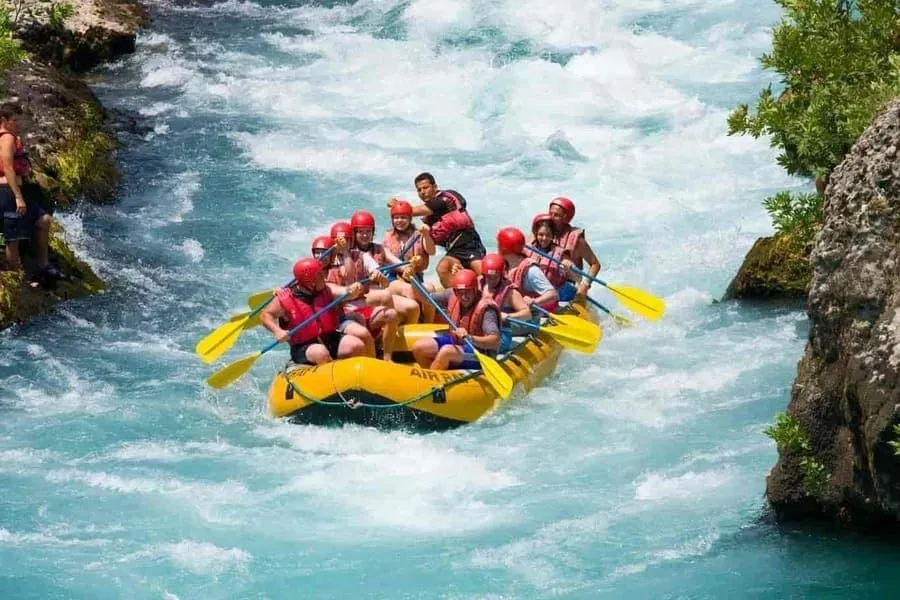
The Beas River is not the same river in May as it is in September. In May, snowmelt from higher altitudes floods the river with glacial water. Currents that ran at Grade II a month earlier push up to Grade III and beyond. The water is fast, cold, and genuinely unforgiving.
By September, the river settles. Water levels drop, rapids calm, and the experience becomes more about the scenery apple orchards on the banks, traditional village houses, the odd local fisherman ignoring your screaming group entirely.
The standard 14-kilometre stretch hits 8 to 10 major rapids and takes between 60 and 90 minutes depending on water levels and group experience. Between rapids, the river flattens and you get a chance to breathe, look around, and pretend you were never scared.
Book afternoon slots between 2 and 4 PM. Morning runs use water straight from overnight snowmelt, which is significantly colder. The sun has usually done some work by afternoon.
Leave your phone in the car. Waterproof cases are unreliable in proper rapids, and the experience is better when you are not trying to film it anyway.
Who it suits: Anyone above 14 years with basic swimming familiarity. You do not need to be a strong swimmer life jackets are mandatory, but comfort near water helps.
What to carry: A full change of clothes, a towel, and something sweet for after. The adrenaline drop hits about 20 minutes after you step off the raft.
3. Skiing and Snowboarding — Go Past the Main Crowd
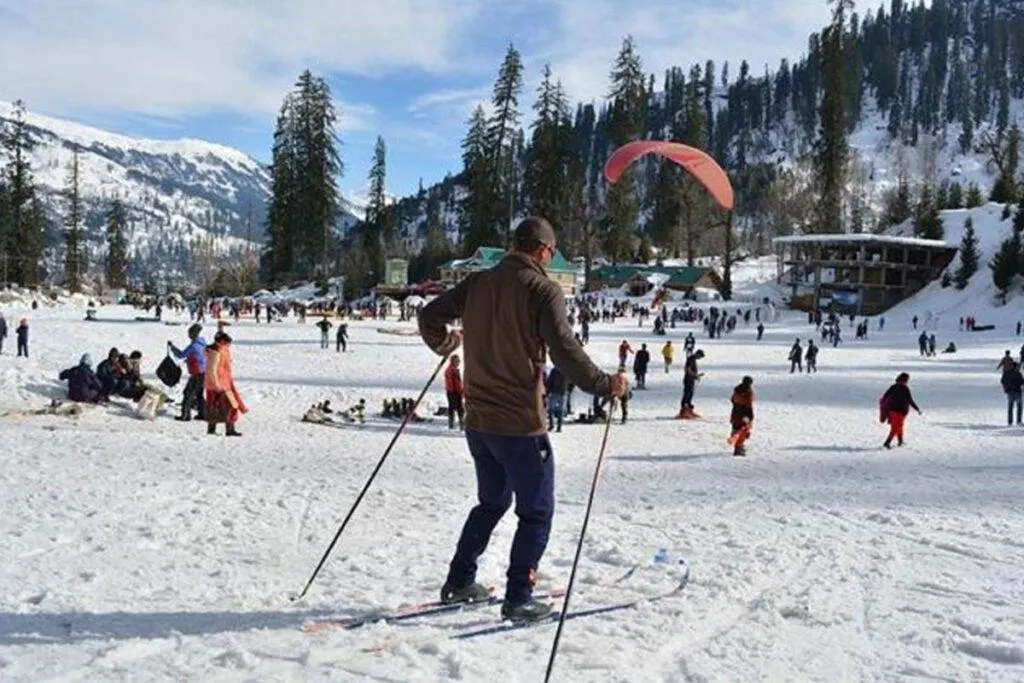
Best location: Solang Valley (far end, away from the main slopes)
Best time: January to February
Cost: ₹500 to ₹1,500 per session plus equipment rental
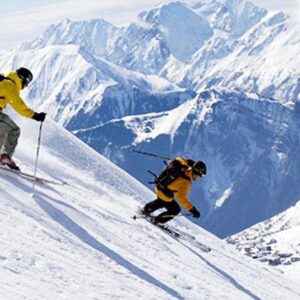
Every winter, Solang Valley transforms into a snow sports ground that attracts thousands of visitors, most of whom have never skied before and rent gear from the first shop they find. The result is lovable chaos people sliding sideways, children falling happily, ski instructors exercising extraordinary patience.
The main slopes get genuinely crowded. But the far end of the valley operates at a different pace. A handful of experienced local instructors run smaller, quieter sessions there. These are people who have been teaching snow sports for over a decade, working with everyone from five-year-olds to complete beginners in their sixties.
Even if you have skied before, hiring an instructor for at least a half-day makes sense in Manali. The slopes here have their own character, and local guides know which sections are well-groomed and which ones have hidden rough patches that catch experienced skiers off guard.
First-timer advice: Do not try to teach yourself. Two hours with a proper instructor is worth more than two days of trial and error. Your knees will thank you.
Equipment: Rent from established shops, not from whoever approaches you on the slope. Check boots for fit, bindings for function, and poles for damage before you pay.
4. Trekking — Bhrigu Lake in September Is Something Else
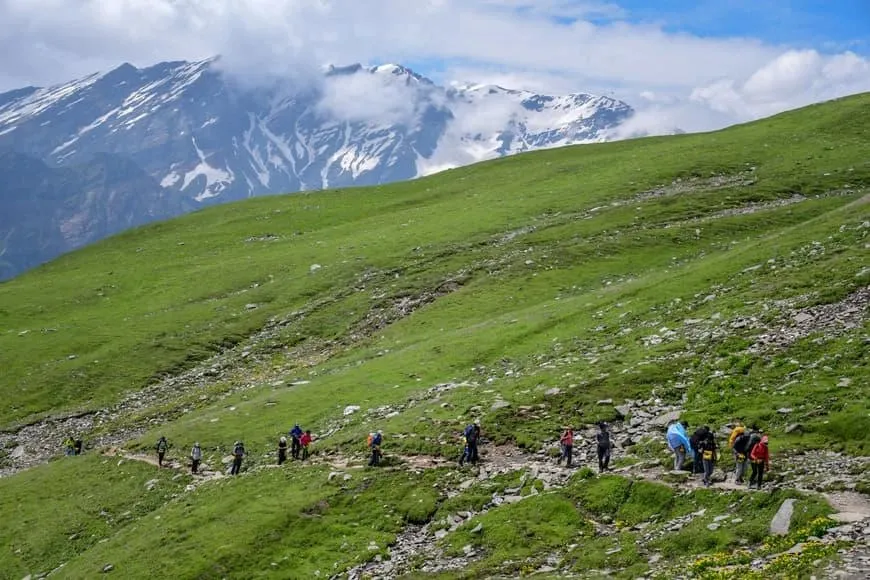
Best trek: Bhrigu Lake (2 to 3 days)
Also excellent: Hamta Pass, Beas Kund, Chandratal
Best time: May to June and September to October
Cost: ₹3,000 to ₹8,000 depending on duration and operator
Manali sits at the base of some of the finest trekking terrain in the Indian Himalayas. Hamta Pass connects Kullu Valley to Lahaul. Beas Kund takes you to the glacial source of the Beas River. Pin Parvati is one of the most challenging high-altitude crossings in Himachal.
The standard itinerary covers the trek in 2 days with a camp at Rola Kholi around 3,300 metres. Taking 3 days allows for proper acclimatisation and a more relaxed experience.
Altitude affects people unpredictably. Fit, athletic people struggle while their out-of-shape friends manage fine. Spending a day at around 2,500 metres before starting the climb makes a real difference to how your body responds higher up.
Fitness level needed: Moderate. If you can climb 5 floors without stopping to rest, you are ready for beginner to moderate treks. Bhrigu Lake and Beas Kund fall in this range. Hamta Pass requires slightly more endurance.
What to carry: Layered clothing, waterproof jacket, trekking shoes (not sneakers), at least 2 litres of water capacity, sunscreen, and basic medication including altitude sickness tablets if recommended by your doctor.
5. Zorbing — The Most Joyful

Location: Solang Valley
Best time: Year-round (wet zorbing above 15°C only)
Cost: ₹300 to ₹500 per ride
Zorbing is difficult to explain with dignity. You climb inside a large transparent plastic ball and roll down a hill. That is the entire activity. Your brain spends the whole ride trying to establish which direction is up, and never quite succeeds.
There are two versions. Dry zorbing is pure tumbling inside the ball. Wet zorbing involves water being added before you get in, turning the inside into a frictionless slide that adds a chaotic layer to the chaos.
Children find this hysterically funny. Adults usually scream, then also find it hysterically funny. The videos look ridiculous, which is part of the appeal.
Choose an operator who inspects the ball before each run, maintains the slope properly, and actually checks the internal harness system. These details are easy to overlook when the activity seems silly, but they matter on a slope.
Who it suits: Everyone. Genuinely suitable for all ages, fitness levels, and comfort levels with adventure. If someone in your group refuses every other activity, they will do zorbing.
6. Mountain Biking — Off the Highway, Into the Villages
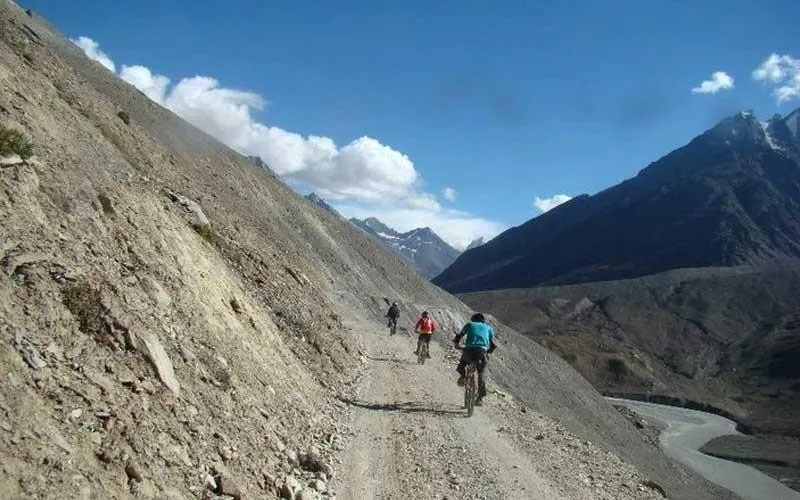
Best routes: Manali to Naggar via old Kullu road (22 km), shorter village loops for beginners
Best time: April to October
Cost: ₹1,500 per day for quality bike rental
The main highway between Manali and Kullu is not where mountain biking happens. The real routes run through village roads that were being used long before the highway existed through apple orchards, past small temples, between houses where locals wave at passing cyclists because they are genuinely pleased to see someone using those roads.
The Manali to Naggar route on the old Kullu road covers about 22 kilometres of mixed terrain. Smooth forest sections, climbs that will punish your legs, flat stretches through orchards, and a descent into Naggar with views that make the hard parts immediately forgivable.
Altitude changes everything about cycling at this elevation. The thin air means your lungs work harder for the same effort. First-timers who cycle regularly at sea level are consistently surprised by how quickly they get winded. Shorter routes of 10 to 12 kilometres make more sense for newcomers.
Start early. 7 AM gives you cool air, empty roads, and golden morning light through the forests. Afternoon riding in summer is significantly harder due to heat and traffic.
What to check on rental bikes: Functioning brakes (both), tyre pressure, gear shifting, and seat height. Do not ride a bike with weak brakes on mountain descents. Non-negotiable.
7. Camping — Away from the Crowd Completely
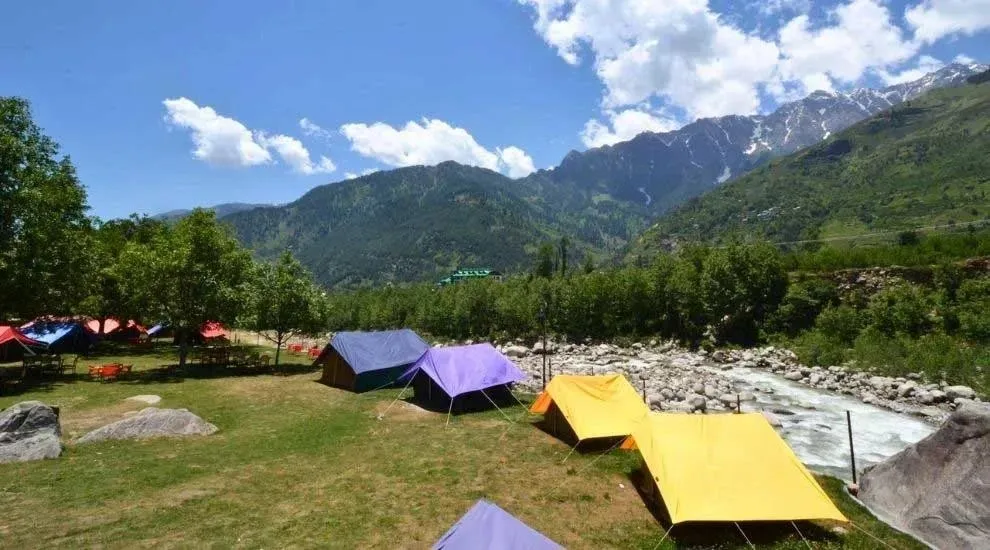
Best location: Tirthan Valley (50 km from Manali), or riverside meadows beyond Prini
Best time: March to June and September to November
Cost: ₹1,500 to ₹3,000 per person per night including meals
Solang Valley is camping with hundreds of tents packed together, music competing from multiple camps, people awake until 2 AM. It is an outdoor party with sleeping bags.
Real camping near Manali means waking up to bird calls instead of an alarm, no mobile signal, a river audible from inside your tent, and a sky so dark at night that the Milky Way is not just visible but genuinely shocking.
For camping closer to Manali, riverside meadows beyond Prini village offer a quieter setup than Solang — still accessible, but without the party atmosphere.
What to bring: Warm layers for nights even in summer, a reliable torch, any personal medications, and a book. That is genuinely all you need. Leave the bluetooth speaker behind.
8. Ziplining — Ninety Seconds of Pure Speed
Location: Solang Valley
Best time: Year-round except during heavy snowfall
Cost: ₹500 to ₹1,000 depending on line length
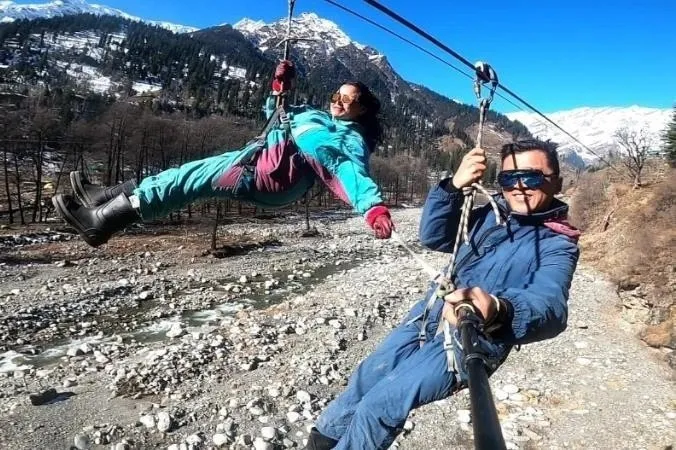
There are short ziplines and proper ziplines in Solang. The short ones — 100 metres or so — are done in 15 seconds and feel like a gentle introduction. The longer 500-metre lines are different. You hit around 80 kilometres per hour, fly over a forest canopy and across the Solang stream, and reach the landing platform having experienced something your nervous system will discuss with you for the rest of the day.
The flight lasts about 90 seconds. In those 90 seconds: the valley spreads below you, the peaks surround you, the wind is louder than anything else, and the harness — which felt flimsy when you first put it on — proves itself completely reliable.
Some people close their eyes the whole way. Others cannot stop screaming. Both responses are entirely appropriate.
Book the longer line. The short one is a warmup. The 500-metre run is the actual experience.
Afternoon tip: Afternoon light falls better on your face for photos and videos. Morning light comes from behind, creating shadows. If documentation matters to you, go after noon.
9. Rock Climbing and Rappelling — The Activity That Changes How You Think About Edges
Best location: Vashisht cliffs (15 minutes from town)
Best time: March to June and September to November
Cost: ₹800 to ₹1,500 for a half-day session with instructor
Rock climbing and rappelling are different activities that often get booked together, and for good reason they complement each other well.
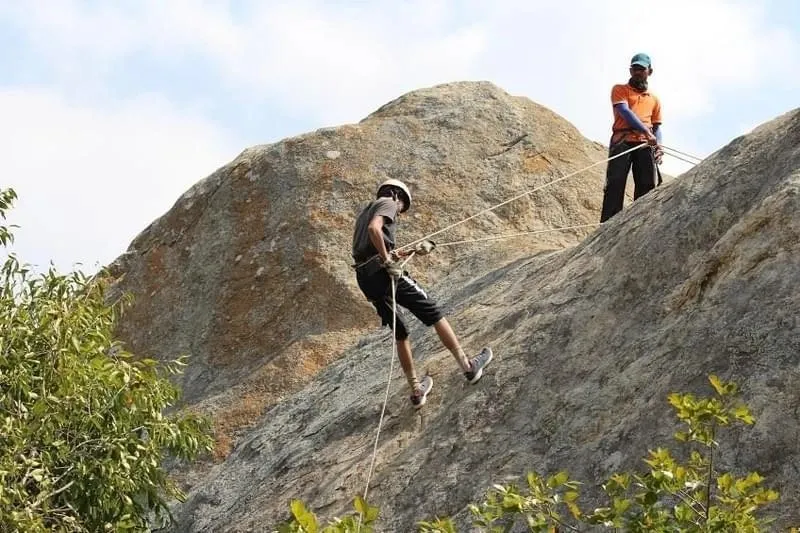
Climbing teaches you to read a rock face, find holds, and trust your grip. Rappelling teaches you to lean backward over an edge and walk down a vertical surface while your entire brain screams that this is wrong. Both activities reset your relationship with height in ways that are hard to explain until you have done them.
The first backward lean in rappelling is the hardest part. Once you commit and begin descending, the logic of it becomes clear. The rope holds. The technique works. You finish with a specific kind of quiet confidence that stays for a while after.
Morning sessions (8 to 11 AM) are ideal. The rock is cool, conditions are calm, and you finish before the afternoon heat warms the cliff face.
While you’re in Vashisht, it’s also worth combining the activity with a visit to the area’s famous hot springs and temple
Fitness needed: Upper body strength helps but matters less than technique. A good instructor will get beginners up routes that look intimidating from the ground.
10. ATV Rides — The Proper Off-Road Version
Location: Solang Valley (off-road trail, not circular track)
Best time: Year-round
Cost: ₹800 to ₹1,500 for the full trail
Most ATV operations in Solang run circular tracks. You pay, ride in circles for 10 minutes, return to the start. It is fine for young children. For everyone else, it is underwhelming.
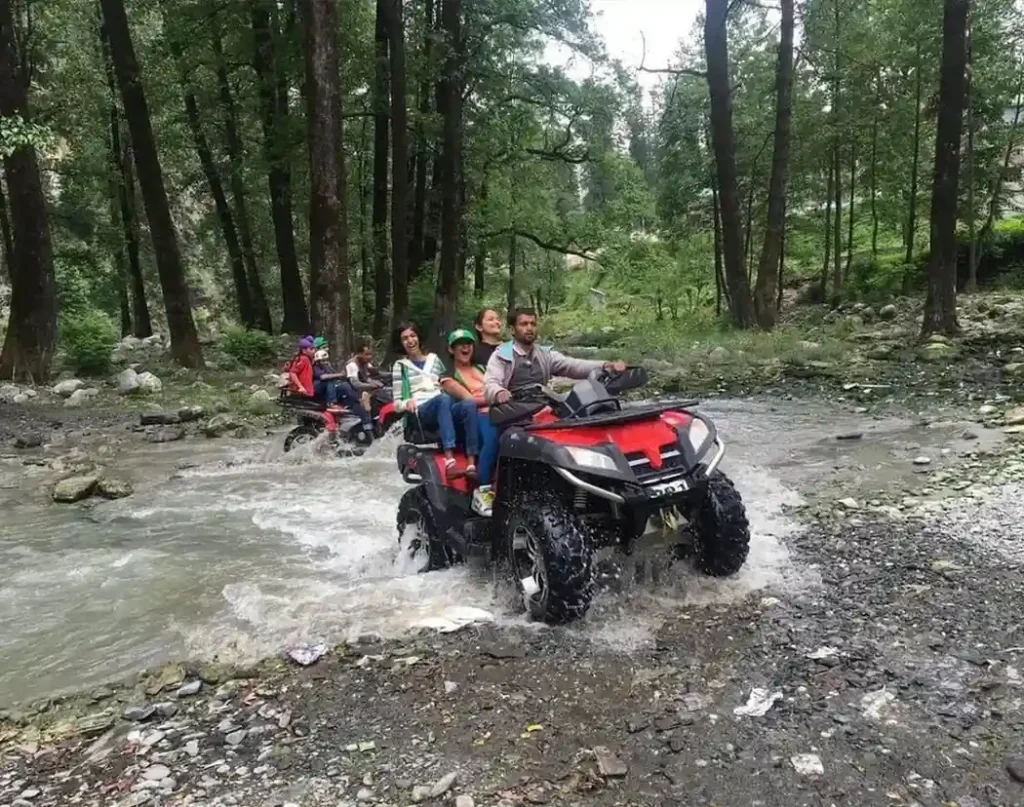
The better operators have mapped out actual off-road trails that go through forest, cross water sections, climb rocky gradients, and cover 25 minutes of terrain that actually changes as you move through it. Uphill sections that require throttle control. Muddy stretches that require balance. Stream crossings that are more fun than they have any right to be.
The ATVs used for these trails are 200cc four-wheelers with automatic transmission. Five minutes of instruction and most people have the basics. The controls are simple throttle on the right, brake on the left. What changes is how you respond to terrain that responds back.
Going in pairs makes the whole experience better. The mild competition adds energy to every section.
Wear closed shoes. The trail gets muddy and loose footwear creates real problems. Sandals and flip-flops will get you turned away by any sensible operator.
A Note on Safety
Adventure activities carry real risk. The difference between a good operator and a bad one is not always obvious from a roadside board or a price list.
Before booking any activity in Manali, check for:
- Certified instructors with verifiable credentials, not just someone who claims experience
- Equipment that is inspected before each use, not just at the start of the season
- A safety briefing that is thorough and specific, not rushed through to save time
- Insurance coverage included in the activity cost, not sold as an optional extra
- An operator who will cancel or postpone in bad weather without pressuring you to continue
Avoid the cheapest option without asking why it is cheap. Shortcuts on safety equipment and trained staff are where the price difference usually hides.
How to Combine These Activities in Manali
2-day adventure plan:
- Day 1 morning: Paragliding at Dobhi. Afternoon: River rafting on the Beas.
- Day 2: Rock climbing and rappelling at Vashisht, followed by ziplining at Solang.
3-day plan with trekking:
- Day 1: Acclimatisation. Short mountain bike ride. Evening at Old Manali.
- Day 2: Bhrigu Lake trek Day 1 of 2.
- Day 3: Trek Day 2, return to Manali. ATV or zorbing on arrival back.
Family-friendly combination: Zorbing and ATV rides for all ages. Ziplining for anyone above 10 years. Paragliding for adults. Short Beas Kund trail for light trekking.
Conclusion
Manali’s adventure scene offers more than it ever has better operators, a wider range of activities, more accessible trails. But it also demands more awareness from travellers. Choose operators who take safety seriously. Book in advance during peak months. Start activities early in the day. And stay flexible, mountain weather changes fast, and no activity is worth doing in unsafe conditions.
FAQ
What is the best time for adventure activities in Manali?
March to June and September to November offer the best overall conditions for most activities paragliding, rafting, trekking, and rock climbing. Skiing and snowboarding are best from January to February, while zorbing and ATV rides run year-round.
Which adventure activity in Manali is best for beginners?
Zorbing, ATV rides, and tandem paragliding require no prior experience and are suitable for almost everyone. River rafting and rock climbing with an instructor are also beginner-friendly, while skiing and trekking benefit from at least a half-day of guided instruction.
Is paragliding in Manali safe?
Yes, when booked with certified operators who use inspected equipment and provide a proper safety briefing. Dobhi and Solang Valley are the two main launch sites, with Dobhi offering longer flights and fewer crowds.
How many days do I need for adventure activities in Manali?
A 2-day plan covers paragliding, rafting, rock climbing, and ziplining. For trekking (such as Bhrigu Lake), plan for at least 3 days including acclimatisation. Combining multiple activities works best over a 3-5 day stay.
Is river rafting in the Beas River dangerous?
The Beas River is more intense in May-June due to glacial snowmelt, reaching Grade III rapids, while September offers calmer water suited for first-timers. Life jackets are mandatory, and basic swimming familiarity is recommended.
Do I need to book adventure activities in advance?
During peak season (May-June and September-October), booking in advance is strongly recommended as good operators get fully booked, especially for paragliding and trekking.
What should I check before booking an adventure activity operator in Manali?
Look for certified instructors, regularly inspected equipment, a thorough safety briefing, included insurance, and an operator willing to cancel in bad weather. Avoid choosing based on price alone.

Anshra Zafar explores the mountains of Himachal Pradesh & Uttrakhand and writes detailed travel guides about Manali, Kasol, Sissu, Jispa.chopta and kedarnath trek She focuses on scenic road trips, backpacking experiences, café culture, snowfall destinations, and adventure activities in the Himalayas. Her content helps travelers plan smooth and memorable mountain journeys.