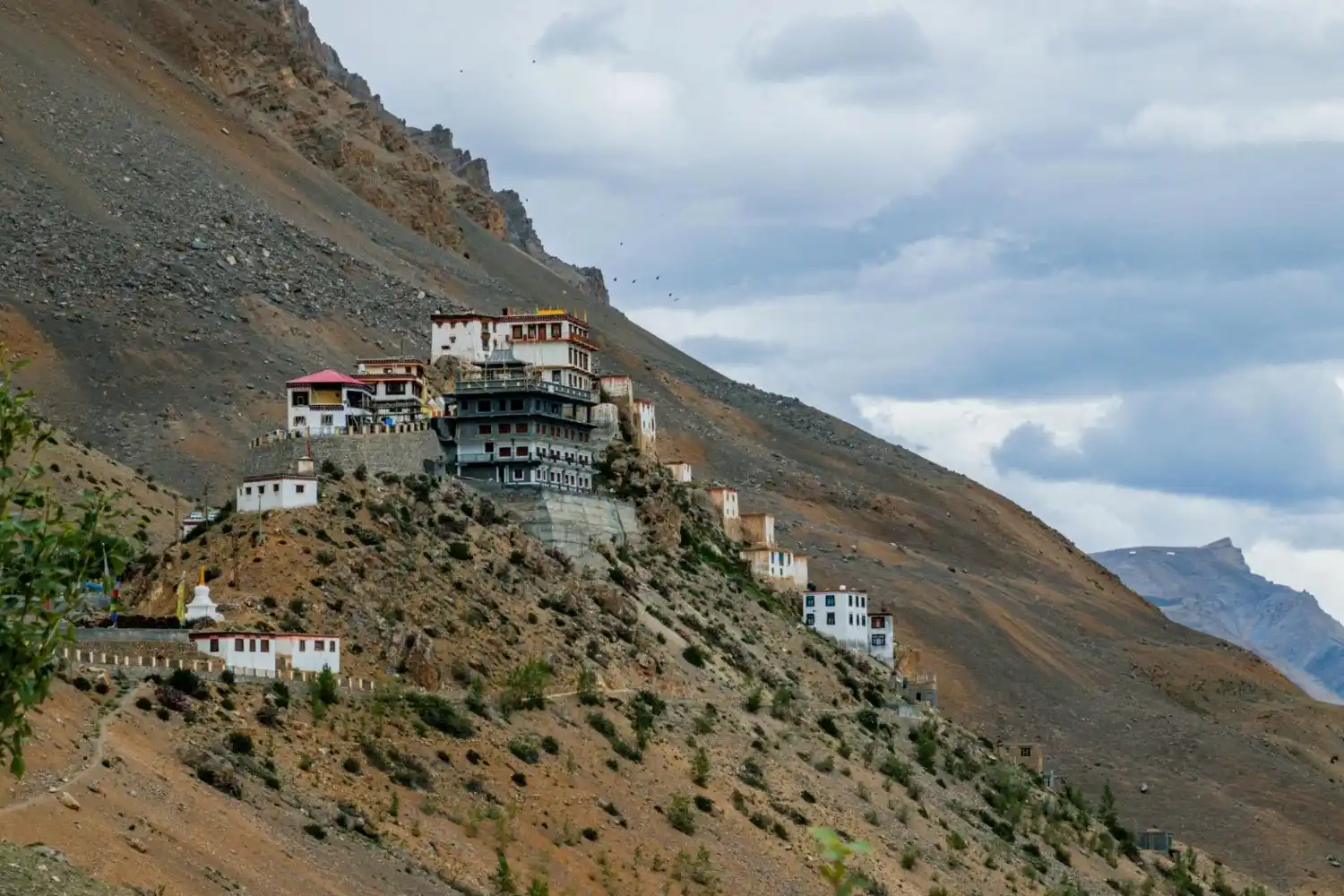
There are very few places in Spiti Valley that travelers recognize instantly. Key Monastery is one of them. Even if you’ve never visited Spiti before, chances are you’ve already seen a photograph of this monastery somewhere. For first-time visitors planning their trip, a Beginner’s Guide to Spiti can help explain why places like Key Monastery become the highlight of the journey.
But here’s something most photos fail to capture. The feeling.
The first glimpse of Key Monastery is often unexpected. You’re driving through barren mountains, looking out at the Spiti River below, when suddenly a cluster of white buildings appears stacked against a mountain slope. At first glance, it doesn’t even look real. The monastery seems to grow directly out of the mountain. And the closer you get, the more impressive it becomes.
Perched at approximately 13,668 feet above sea level, Key Monastery isn’t just the largest monastery in Spiti Valley. It’s one of those places that perfectly captures everything travelers come to Spiti for: dramatic landscapes, ancient culture, spiritual atmosphere, and complete silence. Some people stop here for thirty minutes. Others spend half a day. The difference usually depends on how much they’re willing to slow down.
Why Visit a Key Monastery?
Most travel guides describe Key Monastery as an important Buddhist monastery. That’s true. But it doesn’t explain why travelers remember it long after returning home.
What makes Key Monastery special isn’t just its history. It’s the setting. Imagine standing on a mountain overlooking an entire valley. Below you, the Spiti River cuts through the landscape. Ahead of you, barren mountains stretch endlessly into the distance. Behind you stands a monastery that has survived invasions, earthquakes, harsh winters, and centuries of change. The entire place feels timeless.
Where is the Key Monastery Located?
Key Monastery is located around 14 kilometers from Kaza, the administrative center of Spiti Valley. The monastery sits above the village of Kibber and overlooks some of the most beautiful landscapes in the region.
Distance from Major Places
• Kaza to Key Monastery: 14 km
• Kibber to Key Monastery: 9 km
• Tabo to Key Monastery: 62 km
• Nako to Key Monastery: 110 km
• Manali to Key Monastery: 210 km
• Shimla to Key Monastery: 430 km
Most travelers visit Key Monastery as part of a day trip covering Key Monastery, Kibber Village, and Chicham Bridge. This combination creates one of the best sightseeing circuits in Spiti Valley and is often featured among the Iconic Places to Visit in Spiti Valley for travelers exploring the region.
Our Upcoming Spiti Trips
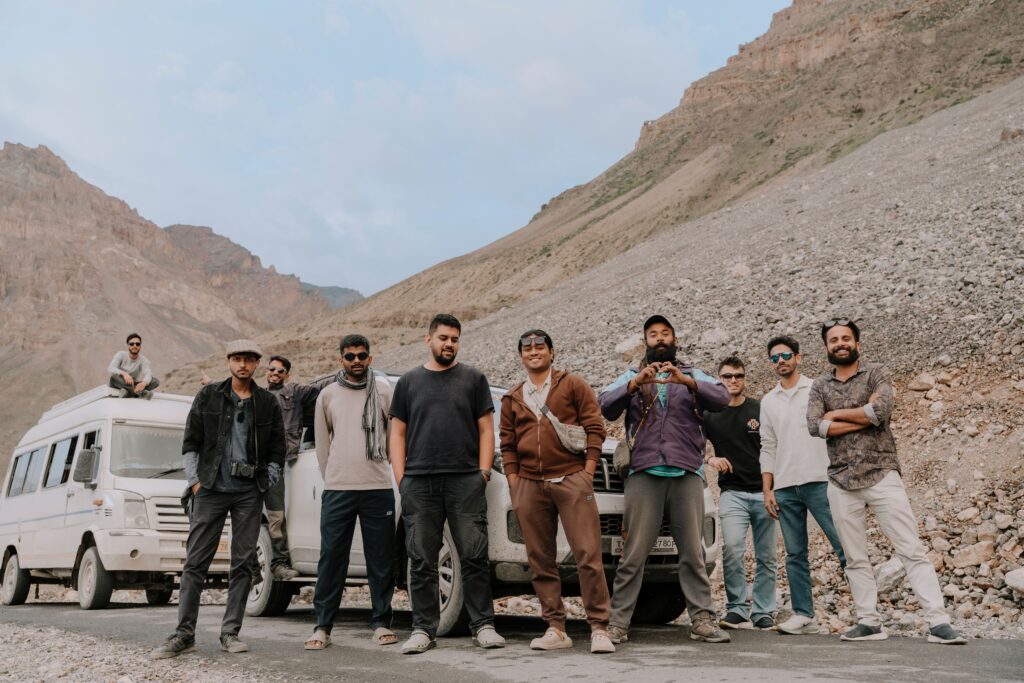 Group Trip
26 September
Group Trip
26 September
Spiti Valley Short Circuit Trip
 Group Trip
26 September
Group Trip
26 September
Spiti Valley Full Circuit Trip
The Journey from Kaza to Key Monastery
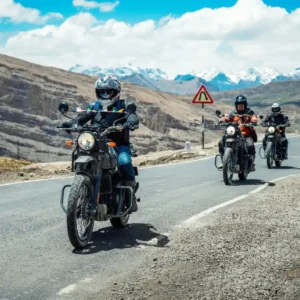
One of the best parts of visiting Key Monastery is the drive itself. Many travelers reach Spiti through the Route Shimla, which allows gradual acclimatization before continuing toward Kaza and Key Monastery. The road begins gently from Kaza and gradually climbs higher into the mountains.
The further you go, the wider the valley becomes. Every turn offers a new perspective. The river looks smaller. The mountains look bigger. And the monastery slowly begins appearing in the distance. Many travelers mention stopping multiple times along this route simply to take photographs not because they planned to, but because the views make it impossible not to.
The road conditions are generally good by Spiti standards. However, mountain driving experience is still helpful. During winter months, snow and ice can affect accessibility.
First Impressions of Key Monastery
The first thing most travelers notice is the architecture. Unlike modern buildings, Key Monastery looks like it evolved naturally over centuries. The structure appears layered almost like several buildings were added one after another as the monastery expanded. From a distance, it resembles a fortress. And historically, that’s not far from the truth.
Over the centuries, the monastery faced invasions, attacks, and natural disasters. Many parts were rebuilt multiple times. Yet despite all those changes, the monastery still retains its original character. Standing in front of it feels like stepping into another era.
Exploring Inside Key Monastery
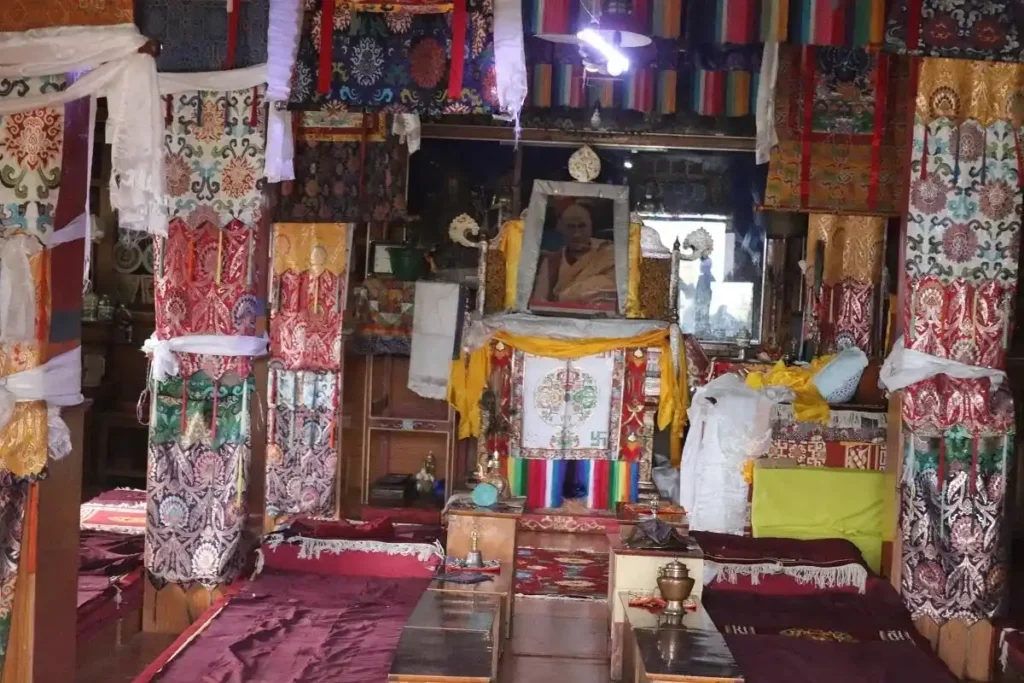
Walking inside Key Monastery feels completely different from looking at it from outside. The atmosphere changes immediately. The noise disappears. The pace slows down. You’ll find prayer halls, ancient scriptures, Buddhist artwork, monk quarters, meditation spaces, and historic murals.
Many visitors are surprised by how simple everything feels. There are no flashy displays. No elaborate tourist attractions. Just centuries of Buddhist culture preserved in its natural form. You might hear monks chanting. You might see students attending classes. Or you might simply find yourself sitting quietly, absorbing the atmosphere. For many travelers, these quiet moments become the highlight of their visit.
What Surprised Me Most About Key Monastery
It Feels Much Bigger in Real Life
Photographs don’t capture its scale properly. The monastery dominates the hillside. And the surrounding valley makes it look even more dramatic.
It’s Surprisingly Peaceful
Despite being one of Spiti’s most famous attractions, Key Monastery still feels calm. You don’t feel rushed. You don’t feel crowded. You feel present.
The Views Are Just as Good as the Monastery
Many people visit the monastery itself. But the views from the monastery are equally memorable.
Things Nobody Tells You Before Visiting
Altitude Can Affect You
At nearly 13,700 feet, some visitors experience mild headaches, faster breathing, or reduced energy. Take your time. Walk slowly. Stay hydrated.
The Sun is Intense
The weather may feel cool. The sunlight is not. Carry sunscreen.
You’ll Spend More Time Than Planned
Most people think they’ll spend thirty minutes here. Many end up staying for two hours or more.
Photography at Key Monastery
If you’re interested in photography, Key Monastery is one of the best locations in Spiti Valley.
Best Photography Opportunities
• Sunrise Soft golden light on the monastery walls.
• Early Morning Fewer visitors and crystal-clear skies.
• Sunset Warm tones spread across the valley.
• Drone Photography The aerial view of Key Monastery has become one of the most iconic images of Spiti Valley. Many of the famous photographs you see online are taken from above.
Nearby Places You Shouldn’t Skip
1. Kibber Village
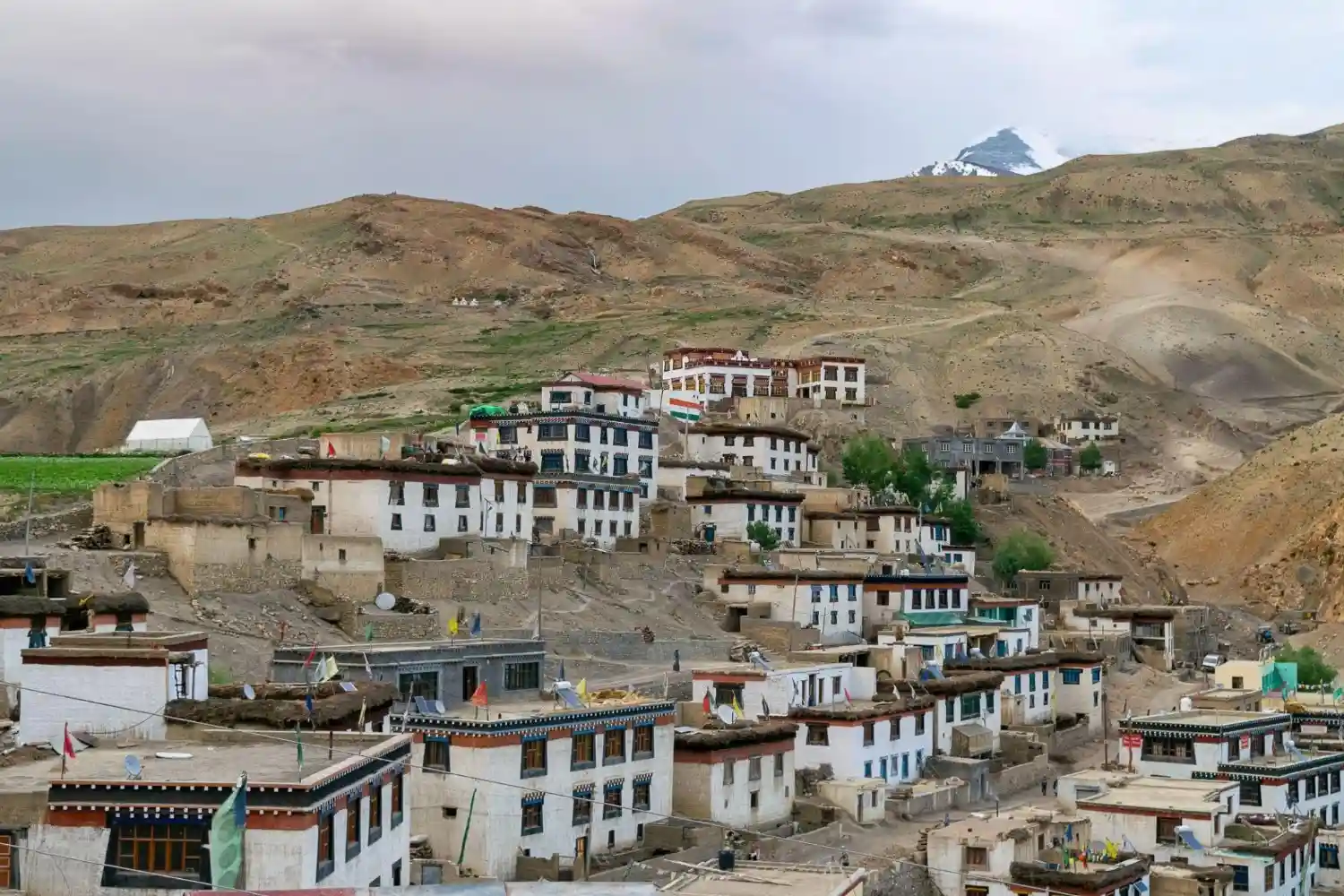
One of the highest inhabited villages in the world. Known for traditional houses, mountain views, and snow leopard territory. Travel time from Key Monastery: 15 minutes.
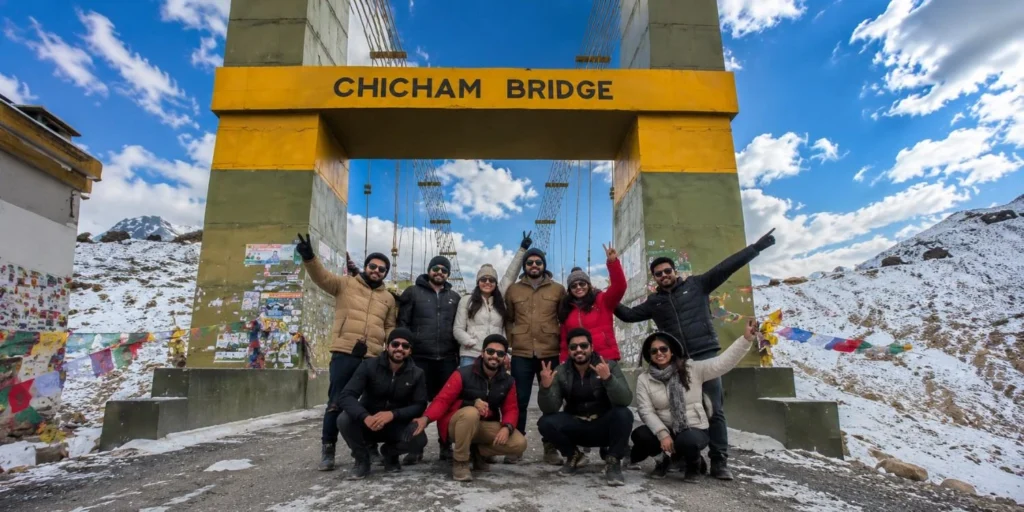
2. Chicham Bridge
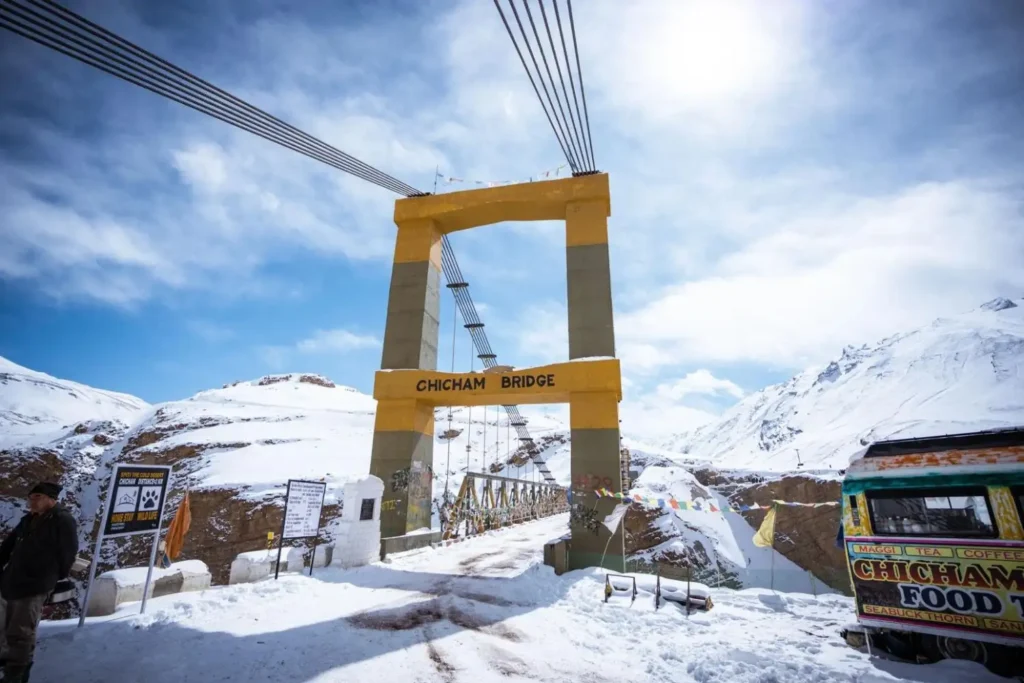
One of Asia’s highest suspension bridges. Standing above a deep gorge, it’s one of the most thrilling viewpoints in Spiti Valley. Travel time from Key Monastery: 25 minutes.
3. Kaza
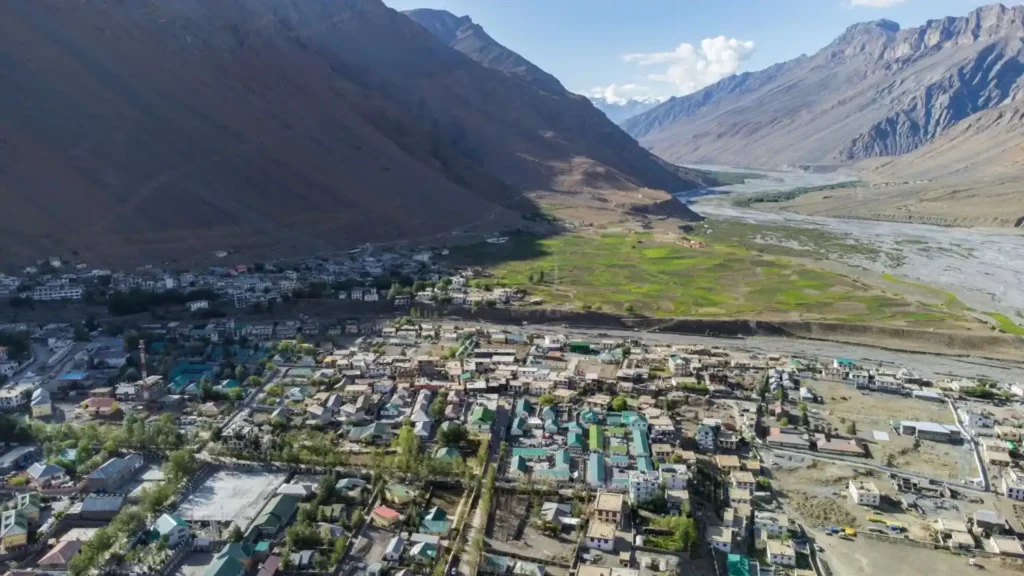
Kaza is the perfect base for accommodation, food, fuel, and local exploration in Spiti Valley. Most travelers use Kaza as their main hub before visiting nearby attractions and villages. Travel time from Key Monastery to Kaza: approximately 30 minutes.
Food Options Near Key Monastery

There are limited food options at the monastery itself. Most travelers eat in Kaza, Kibber, or local cafés nearby. Popular choices include momos, thukpa, Maggi, butter tea, and Tibetan bread. Many travelers combine their monastery visit with lunch in Kaza afterward.
Best Time to Visit Key Monastery
Summer (May to June)
Pros: Pleasant weather, snow visible on surrounding peaks. Cons: More tourists.
Monsoon (July to September)
Pros: Best accessibility, comfortable temperatures. Cons: Peak season.
Autumn (October)
Pros: Clear skies, fewer crowds. Cons: Colder temperatures.
Winter (November to March)
Pros: Snow-covered landscapes, unique photography opportunities. Cons: Extreme cold, possible road closures.
Who Should Visit a Key Monastery?
• Solo Travelers
• Photographers
• Spiritual Travelers
• Families
• First-Time Visitors to Spiti Valley
Common Traveler Mistakes
Rushing Through the Visit
Spend time here. Sit quietly. Observe. The experience improves when you slow down.
Ignoring Altitude
Take it easy if you’ve recently arrived in Spiti.
Visiting Midday Only
Early morning and evening provide better light and atmosphere.
Not Combining It with Nearby Attractions
Visit Kibber and Chicham Bridge on the same day.
Suggested Key Monastery Itinerary
• Morning Leave Kaza after breakfast.
• 9:00 AM Reach Key Monastery. Explore the monastery. Spend time enjoying the views.
• 11:00 AM Drive to Kibber Village.
• 12:30 PM Visit Chicham Bridge.
• Afternoon Return to Kaza for lunch and local exploration.
Final Thoughts
Every destination in Spiti Valley offers something different. Chandratal offers beauty. Tabo offers history. Dhankar offers dramatic landscapes. But Key Monastery offers perspective.
It reminds you how small you are compared to the mountains around you. It reminds you that some places don’t need activities, entertainment, or luxury to leave an impression. Sometimes all you need is a hilltop monastery, a valley stretching endlessly into the distance, and enough time to sit quietly and appreciate where you are.
Frequently Asked Questions
Is Key Monastery worth visiting?
Absolutely. It is one of the most iconic and memorable places in Spiti Valley.
How much time should I spend at Key Monastery?
At least 1–2 hours.
Can beginners visit Key Monastery?
Yes. The road is accessible from Kaza.
Is photography allowed?
Generally yes in outdoor areas, but respect monastery rules inside.
What is the altitude of Key Monastery?
Approximately 13,668 feet.
How far is Key Monastery from Kaza?
Around 14 kilometers.
Is Key Monastery suitable for families?
Yes.
Can I visit Key Monastery in winter?
Yes, weather permitting.
Is there an entry fee?
Usually no, though donations are appreciated.
What should I carry?
Water, sunscreen, warm clothing, sunglasses, and a camera.

Abdullah Khan specializes in adventure travel across Spiti Valley and the high-altitude regions of Himachal Pradesh. He writes about road trips, bike expeditions, hidden villages, monasteries, and offbeat Himalayan experiences. His guides focus on route planning, acclimatization, travel safety, and the best experiences across Spiti Valley.