If you are planning a Meghalaya trip, you will probably keep at least one or two days for Cherrapunji, also known as Sohra. Located around 54 km from Shillong, this hill town is known for its waterfalls, limestone caves, green valleys and living root bridges.
But your Cherrapunji experience depends a lot on when you visit. During the rainy months, waterfalls carry more water, but fog and heavy rain can sometimes hide the views. The drier months are better for walking, trekking and spending more time outdoors.
You can explore caves, stop at waterfall viewpoints, trek to Nongriat or simply enjoy the road journey from Shillong. This Cherrapunji travel guide will help you decide when to visit, which places to cover, how many days to stay and how to plan your trip without rushing.
Cherrapunji Travel Guide at a Glance
| Travel Detail | Information |
| Location | East Khasi Hills, Meghalaya |
| Distance from Shillong | Around 54 km |
| Also Known As | Sohra |
| Best Time to Visit | October to May for easier sightseeing |
| Ideal Trip Duration | 2 days |
| Famous For | Waterfalls, caves and living root bridges |
| Best Time for Waterfalls | Rainy months |
| Best Time for Trekking | Drier months |
| Nearest Major Airport | Guwahati Airport |
| Main Base for Travellers | Sohra |
Why Visit Cherrapunji?
Cherrapunji works well for different types of travellers because you can plan your days according to your interests and fitness.
If you are travelling with family, you can focus on places such as Nohkalikai Falls, Mawsmai Cave, Eco Park and Seven Sisters Falls. Most of these can be reached by road, followed by short walks.
If you enjoy trekking, keep a full day for the Double Decker Living Root Bridge in Nongriat. This is not a quick sightseeing stop. You have to walk down thousands of steps and climb them again while returning.
The weather also changes the type of trip you will have. During the rainy season, waterfalls usually have stronger water flow. At the same time, fog may cover viewpoints and walking paths can become slippery.
During the drier months, you may not see every waterfall at its strongest, but sightseeing and trekking are usually easier.
The best way to plan Cherrapunji is to decide what matters more to you: waterfalls, trekking, caves or easy sightseeing.
Best Time to Visit Cherrapunji
There is no single month that works for every traveller. Your best time depends on what you want to do.
October to February
If you want comfortable sightseeing and trekking, this period is a good choice.
Rainfall is generally lower, which makes it easier to walk around caves, viewpoints and trekking routes. The weather can become cool, especially in the morning and evening.
This is also a better period for travellers planning the Nongriat trek because the paths are generally easier to manage than during heavy rain.
The only thing to remember is that some seasonal waterfalls may carry less water during the dry months.
Choose this period if trekking and easy sightseeing are your priorities.
March to May
March to May offers a good balance for general sightseeing.
The surroundings start becoming greener and you may get some rain without facing the continuous heavy showers of the main rainy season.
This period works well for families, couples and first-time visitors who want to explore waterfalls, caves and viewpoints.
Keep a raincoat or umbrella with you because the weather can change during the day.
June to September
These are the main rainy months in Cherrapunji.
If you are coming mainly to see waterfalls, this period gives you a better chance of seeing them with strong water flow.
However, travelling during heavy rain requires more flexibility.
Fog can cover viewpoints without warning. Roads may become slower, outdoor paths can get slippery and trekking can be more difficult.
If waterfalls are your priority, consider the rainy season. If trekking and easier road travel matter more, choose the drier months.
Best Places to Visit in Cherrapunji
You do not need to cover every attraction in one trip. Choose places according to your available time, the weather and how much walking you are comfortable doing.
1. Nohkalikai Falls
Distance from central Sohra: Around 5 to 7 km
Nohkalikai Falls is one of the easiest major attractions to include in your Cherrapunji sightseeing plan.
The main viewpoint can be reached by road, so you do not need a long trek to see the waterfall.
The experience changes with the season. During the rainy months, the water flow is usually stronger. However, heavy fog can sometimes completely cover the view.
During clearer weather, you can spend some time at the viewpoint and explore the nearby stalls.
Best for: First-time visitors and photography
Time required: Around 1 hour
Travel tip: If thick fog covers the complete view, ask nearby locals about current visibility before waiting for too long.
2. Mawsmai Cave
Distance from central Sohra: Around 6 km
If this is your first time exploring a cave, Mawsmai Cave is a practical place to start.
The visitor section takes you through limestone passages. Some areas are open enough to walk comfortably, while other sections can become narrow.
You may need to bend or carefully squeeze through certain parts.
The floor can become wet and slippery, especially during rainy weather. Wear shoes with a good grip instead of smooth sandals.
If you are uncomfortable in narrow or closed spaces, keep this in mind before entering.
Best for: First-time cave visitors and families with older children
Time required: Around 1 hour
Travel tip: Keep your hands free while walking through narrow sections.
3. Seven Sisters Falls
Distance from central Sohra: Around 4 to 5 km
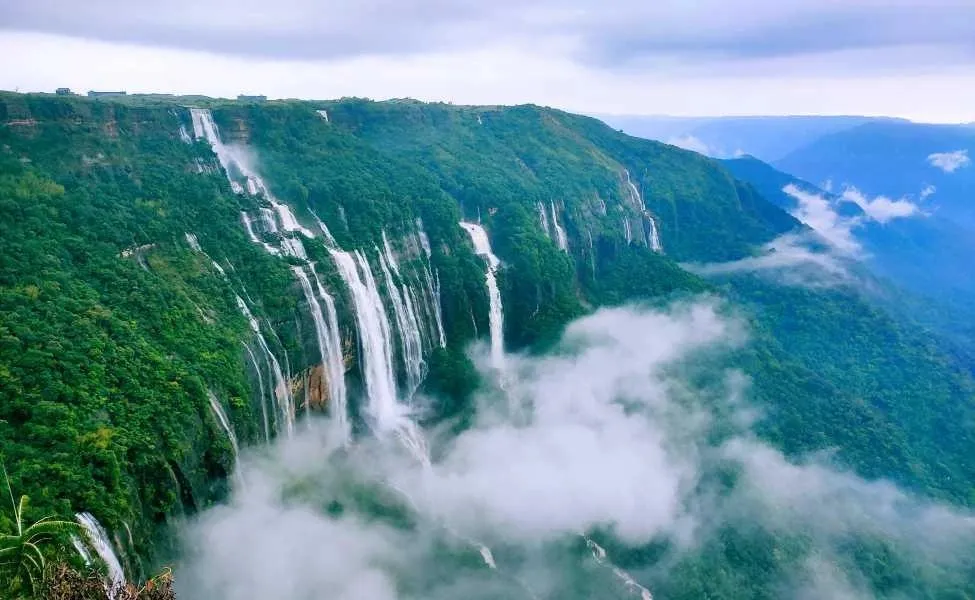
Seven Sisters Falls is best viewed when there has been enough rainfall.
During the rainy season, several streams can be seen falling down the long cliff face. During dry periods, the water flow may reduce considerably.
This is mainly a viewpoint stop, so you can easily combine it with Mawsmai Cave and nearby attractions.
The weather can change quickly here. On a foggy day, you may reach the viewpoint and see very little.
Best for: Roadside sightseeing and rainy-season trips
Time required: Around 30 minutes to 1 hour
Travel tip: Keep your schedule flexible if visibility is poor.
4. Wei Sawdong Falls
Distance from central Sohra: Around 13 to 15 km
Wei Sawdong Falls requires more effort than the major roadside viewpoints.
The route towards the falls includes a steep descent, with bamboo steps and pathways in some sections. Going down may feel manageable, but the climb back can be tiring.
Rain can make the route slippery.
Wear proper shoes and avoid carrying unnecessary bags.
This place may not be suitable for elderly travellers or anyone who has difficulty walking on steep paths.
Best for: Active travellers
Time required: Around 2 to 3 hours
Travel tip: Check the current access conditions locally before starting the descent.
5. Dainthlen Falls
Distance from central Sohra: Around 10 to 12 km
Dainthlen Falls can be included if you want to add another waterfall without doing a long trek.
The area around the falls has open rocky sections. During wet weather, these rocks can become slippery.
Do not walk too close to the edge just to take photographs.
You can combine Dainthlen Falls with other nearby sightseeing stops depending on your route.
Best for: General sightseeing
Time required: Around 1 hour
Travel tip: Stay on safe walking areas, especially after rainfall.
6. Arwah Cave
Distance from central Sohra: Around 4 km
If you want a different cave experience after Mawsmai, you can consider Arwah Cave.
The walk towards the cave and the cave route itself can feel less straightforward than Mawsmai. Some sections may be wet, so proper footwear is important.
The cave is also known for fossil impressions visible on some rock surfaces.
If you have time for only one cave and prefer an easier first experience, choose Mawsmai. If you are comfortable with more walking, Arwah can be added to your plan.
Best for: Travellers interested in caves and geology
Time required: Around 1 to 2 hours
Travel tip: A proper torch can be useful if permitted and needed in darker sections.
7. Double Decker Living Root Bridge
The Double Decker Living Root Bridge is located in Nongriat village and requires a proper trek.
Most travellers begin from Tyrna village, which is around 15 to 20 km from central Sohra depending on your starting point.
The route involves a long descent using thousands of steps.
Going down is only half the journey.
The real challenge for many travellers is climbing back up.
Keep enough drinking water and wear comfortable shoes with good grip. Start early so you have enough daylight and can take breaks whenever needed.
Do not plan several other major sightseeing stops after the trek.
Best for: Active travellers and trekkers
Time required: Most of the day
Travel tip: Walk at your own pace. Do not rush just because other trekkers are moving faster.
8. Mawkdok Dympep Valley Viewpoint
Mawkdok Dympep is located on the road between Shillong and Cherrapunji.
This makes it an easy stop while travelling towards Sohra rather than a separate day trip.
You can stop for valley views and a short break before continuing your journey.
Adventure activities such as ziplining may operate in the area depending on weather and current conditions.
Best for: Road trip stops and short breaks
Time required: Around 30 minutes to 1 hour
Travel tip: If you want to try an activity, check the current price and safety instructions before booking.
9. Eco Park
Eco Park is an easy place to add if you are travelling with family or do not want every stop to involve a trek.
The park has open spaces and viewpoints. What you can see depends heavily on the weather.
On a clear day, you can spend some relaxed time walking around. During thick fog, the views may be limited.
Best for: Families and easy sightseeing
Time required: Around 1 hour
Travel tip: Keep this as a flexible stop rather than the main attraction of your day.
10. Thangkharang Park
Thangkharang Park is another option for travellers looking for an easy sightseeing stop.
It works better for a relaxed trip than an itinerary packed with adventure activities.
The views depend on weather and visibility, so keep this in mind during the rainy season.
Best for: Families and slower sightseeing
Time required: Around 1 hour
Travel tip: Combine it with nearby places instead of making a separate long journey only for the park.
Best Things to Do in Cherrapunji
Explore a Limestone Cave
Walking through a limestone cave is one of the main activities you can try in Cherrapunji.
For beginners, Mawsmai Cave is a good starting point. If you want a slightly different experience, you can consider Arwah Cave.
Wear shoes with good grip because cave floors can be wet.
Trek to a Living Root Bridge
A living root bridge trek is very different from normal sightseeing.
You need enough time, comfortable shoes and reasonable fitness.
If you are going to the Double Decker Living Root Bridge, keep most of the day free. Do not treat it like a one-hour attraction.
Spend Time Exploring Waterfalls
Instead of trying to visit every waterfall, choose them according to the season.
Nohkalikai Falls is easy to include on most trips. Seven Sisters Falls is more dependent on rainfall, while Wei Sawdong requires more physical effort.
This will help you create a better plan instead of spending the entire day moving from one waterfall to another.
Try Ziplining at Mawkdok
If ziplining is operating during your visit, you can consider trying it while travelling between Shillong and Cherrapunji.
Check the weather, current price and safety instructions before participating.
Try Khasi Food
While travelling around Sohra, you can look for local Khasi dishes such as Jadoh, along with simple rice and meat-based meals.
Food options can be more limited once you move away from the main town, so carry some snacks on long sightseeing or trekking days.
Enjoy the Shillong to Cherrapunji Road Journey
Do not treat the Shillong to Cherrapunji drive as only a transfer.
There are viewpoints and short stops along the route, including Mawkdok Dympep.
Start early so you can stop without worrying about reaching Sohra too late.
How to Reach Cherrapunji
From Shillong
Cherrapunji is around 54 km from Shillong.
The drive usually takes around 1.5 to 2 hours, but weather and traffic can increase travel time.
You can hire a private taxi, look for shared transport or use a suitable self-drive vehicle.
A private taxi is more convenient if you want to stop at viewpoints along the way.
From Guwahati
Many travellers coming from other parts of India first reach Guwahati.
From Guwahati, you can travel towards Shillong and then continue to Cherrapunji.
The total road distance is roughly 145 to 160 km, depending on your exact starting point and route.
If you are travelling directly after a flight, keep enough time for traffic.
By Air
For most travellers, Guwahati Airport is the practical airport because it has wider flight connectivity.
From the airport, you can hire a taxi towards Shillong or travel directly to Cherrapunji depending on your itinerary.
By Train
Cherrapunji does not have a railway station.
The most commonly used major railway station is Guwahati Railway Station.
From there, continue by road towards Shillong and then Sohra.
How Many Days Are Enough for Cherrapunji?
1 Day
One day is enough if you only want to cover major roadside attractions.
You can choose places such as Nohkalikai Falls, Mawsmai Cave, Seven Sisters Falls and one or two nearby viewpoints.
Do not add the Double Decker Living Root Bridge trek to an already packed one-day sightseeing plan.
2 Days
For most first-time travellers, two days are better.
Use one day for waterfalls, caves and viewpoints.
Keep the second day for the Nongriat trek or slower sightseeing.
3 Days
Three days work well if you do not want to rush.
You can keep separate time for regular sightseeing, trekking and less crowded parts of the Sohra area.
Suggested 2-Day Cherrapunji Itinerary
Day 1: Waterfalls, Caves and Viewpoints
Start your day early.
Visit Nohkalikai Falls first if visibility is good.
Continue towards Mawsmai Cave and Seven Sisters Falls.
Depending on available time and weather, add Eco Park or another nearby stop.
Keep the evening relaxed and prepare for the next day’s trek.
Day 2: Double Decker Living Root Bridge Trek
Leave early for Tyrna village.
Begin the trek towards Nongriat and the Double Decker Living Root Bridge.
Take enough water and light snacks.
Do not rush your return journey. The climb back can take more energy than the descent.
Once you return, keep the rest of your evening free.
Where to Stay in Cherrapunji
If this is your first trip, staying around central Sohra is convenient for general sightseeing and access to restaurants.
Homestays can be useful for travellers looking for a simple stay.
Resorts may offer more facilities but can be located away from the main market area.
If the Nongriat trek is the main focus of your trip, you can also check accommodation closer to the Tyrna side.
Before booking, check road access, parking, breakfast timings and distance from the places you actually plan to visit.
What to Pack for a Cherrapunji Trip
Carry a raincoat or umbrella, even if you are not travelling during the main rainy season.
Wear shoes with a good grip for caves and wet walking paths.
Keep extra socks because wet feet can make a full sightseeing day uncomfortable.
Carry a light jacket for cooler evenings.
For trekking, keep a small backpack, water bottle and basic snacks.
A power bank is useful during long sightseeing days.
Keep personal medicines and basic first-aid items.
During the rainy months, use a waterproof cover for your phone and important belongings.
Important Travel Tips for First-Time Visitors
Start early. Cherrapunji has many attractions spread across different routes, and road travel takes time.
Do not plan only according to distance. A short distance on a map can take longer because of hilly roads and weather.
Check the weather before starting a long trek.
Keep rain protection with you.
Wear shoes with proper grip, especially for caves and waterfall areas.
Never move close to a waterfall edge for photographs.
Carry some cash for small shops, parking and places where digital payments may not work.
Mobile connectivity may be weaker in some remote areas.
Do not try to visit ten places just because they appear close on a map.
During heavy rain, check current road and attraction conditions locally.
Follow signs and safety instructions.
If you cannot find a waste bin, carry your waste until you find one.
Common Mistakes to Avoid
One of the biggest mistakes is treating the Nongriat trek like a normal sightseeing stop. Keep a separate day for it whenever possible.
Do not add too many waterfalls to one day. Choose a few that fit your route.
Remember that waterfall flow changes with the season.
Do not wear footwear with poor grip.
Starting your day late can make the entire itinerary feel rushed.
Do not depend completely on online opening times. Conditions can change locally.
Carry rain protection even when the morning looks clear.
During the rainy season, do not expect every viewpoint to have clear visibility.
Finally, check travel time carefully before adding places outside Sohra to the same day.
Final Thoughts
Cherrapunji can be a quick sightseeing trip or a slower two to three-day stay. If you only want to see the main waterfalls and caves, one full day can work. But if the Double Decker Living Root Bridge is part of your plan, keeping at least two days is a much better option.
You can plan your Meghalaya trip independently or with Trip Guru Go, but keep your schedule flexible because weather can change your plans in Sohra.
Choose places according to your fitness and the season. Start early, keep enough time between stops, and do not force too many places into one itinerary.
Frequently Asked Questions
1. How many days are enough for Cherrapunji?
Two days are enough for most first-time visitors. Keep one day for waterfalls, caves and viewpoints, and another for the Double Decker Living Root Bridge trek. If you are not planning the trek, one full day can cover several major attractions.
2. What is the best time to visit Cherrapunji?
October to May is generally better for easier sightseeing and walking. The rainy months are better for stronger waterfall flow but can bring fog, slippery paths and travel delays. Choose the season based on whether you prefer waterfalls or easier outdoor activities.
3. What are the best places to visit in Cherrapunji?
Popular places include Nohkalikai Falls, Mawsmai Cave, Seven Sisters Falls, Arwah Cave, Wei Sawdong Falls and the Double Decker Living Root Bridge. Choose your places according to the season and your fitness instead of trying to cover everything.
4. Is one day enough for Cherrapunji?
Yes, one day can be enough for major roadside attractions such as Nohkalikai Falls, Mawsmai Cave and Seven Sisters Falls. However, do not combine a packed sightseeing day with the Double Decker Living Root Bridge trek.
5. How far is Cherrapunji from Shillong?
Cherrapunji is around 54 km from Shillong. The road journey usually takes about 1.5 to 2 hours, depending on traffic and weather. Starting early gives you more time for stops along the route.
6. How can I reach Cherrapunji from Guwahati?
You can travel from Guwahati towards Shillong and then continue to Cherrapunji by road. Private taxis are the most convenient option, while shared transport may also be available for parts of the journey.
7. Is the Double Decker Living Root Bridge trek difficult?
The trek requires reasonable fitness because it involves a long staircase route. Going down can feel easier, but the return climb is tiring. Start early, carry enough water and walk at a pace that feels comfortable.
8. Can families visit Cherrapunji?
Yes. Families can easily focus on accessible places such as Nohkalikai Falls, Mawsmai Cave, Eco Park and other viewpoints. Families with elderly members or young children should carefully consider steep treks such as Nongriat and Wei Sawdong.
9. Which cave is best for first-time visitors?
Mawsmai Cave is generally the easier choice for first-time visitors because the tourist section is more straightforward. However, some passages are narrow, so people uncomfortable in tight spaces should consider this before entering.
10. Is Cherrapunji worth visiting during monsoon?
Yes, especially if you want to see waterfalls with stronger water flow. However, heavy rain can cause fog, slippery paths and slower road travel. Keep your itinerary flexible and avoid unsafe trekking conditions.
11. Which waterfalls are famous in Cherrapunji?
Nohkalikai Falls, Seven Sisters Falls, Dainthlen Falls and Wei Sawdong Falls are among the commonly visited waterfalls around Cherrapunji. Their appearance and water flow can change significantly with the season.
12. What should I carry for a Cherrapunji trip?
Carry a raincoat, umbrella, shoes with good grip, extra socks, a light jacket, water bottle, power bank and basic medicines. During the rainy months, keep your phone and important belongings inside waterproof covers.
13. Is Cherrapunji and Sohra the same place?
Yes. Sohra is the local and official name commonly used for the town that is widely known as Cherrapunji. You may see both names used on travel websites, maps and local signs.
14. Can I visit Cherrapunji from Shillong in one day?
Yes. A day trip from Shillong is possible if you start early and focus on major attractions. However, staying overnight gives you more time and is better if you plan to trek to Nongriat.
15. Where should I stay in Cherrapunji?
Central Sohra is convenient for first-time visitors who want easier access to sightseeing areas and food options. If trekking is your main plan, you can also look for accommodation closer to the Tyrna side.
Apurv jain is a travel seo and content writer who specializes in creating well-researched and engaging travel content. His work focuses on destinations, itineraries, travel guides, and practical tips that help readers plan memorable and hassle-free journeys.