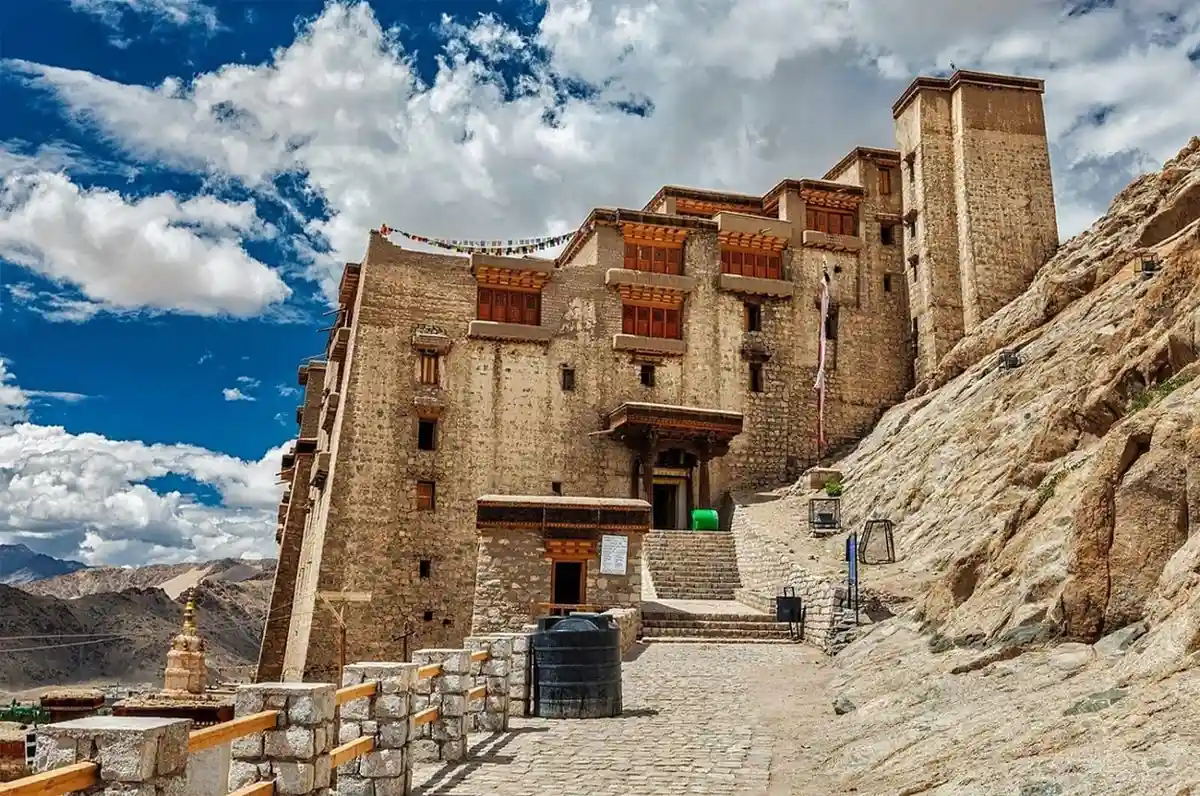
Standing proudly above Leh town, Leh Palace is one of Ladakh’s most iconic historical landmarks. Built during the 16th century by King Sengge Namgyal, this nine-storey palace once served as the royal residence of the Namgyal dynasty and remains a remarkable example of medieval Tibetan architecture. Although time has weathered parts of the structure, its narrow corridors, ancient prayer rooms, museum, and panoramic rooftop views continue to attract thousands of visitors every year.
If you’re planning a Ladakh itinerary, Leh Palace deserves a place on your list. Besides offering fascinating insights into Ladakh’s royal heritage, it also provides breathtaking views of Leh town, the Stok Kangri range, and Namgyal Tsemo Monastery. Before planning your journey, it’s worth exploring our complete Ladakh travel guide from Delhi, which explains the best routes, transport options, and travel tips for reaching Ladakh comfortably.
Brief Overview
| Quick Information | Details |
| Built By | King Sengge Namgyal |
| Construction Period | 16th Century |
| Timings | 9:00 AM – 5:00 PM* |
| Entry Fee | ₹25 (Indian), ₹100 (Foreign Nationals)* |
| Altitude | Approximately 3,500 metres |
| Ideal Visit Duration | 1–2 Hours |
| Best Time of Day | Early Morning |
| Distance from Leh Market | Around 2 km |
| Walking Difficulty | Moderate Uphill Walk |
| Parking | Available near the base area |
| Last Stretch | Short uphill walk |
| Suitable for Children | Yes |
| Suitable for Senior Citizens | Moderate (Steep steps inside) |
| Wheelchair Accessible | No |
Timings and ticket prices may change occasionally depending on ASI regulations.
No trips found.
Why Visit Leh Palace?
Leh Palace is much more than an old royal building. It combines history, architecture, photography, and some of the finest panoramic views in Ladakh.
Visitors come here to:
- Explore one of Ladakh’s oldest royal palaces.
- Admire traditional Tibetan-style architecture.
- Visit the museum showcasing ancient artefacts and royal collections.
- Capture panoramic photographs of Leh town.
- Enjoy spectacular sunrise or morning views.
- Experience Ladakh’s royal heritage in one place.
Unlike many monuments where the attraction is limited to the exterior, Leh Palace offers an immersive experience as you climb through different levels, discovering prayer halls, corridors, balconies, and viewpoints.
History of Leh Palace
Leh Palace was constructed in the early 17th century by King Sengge Namgyal, one of Ladakh’s most influential rulers. The palace served as the official residence of the Namgyal royal family for several centuries and symbolised the kingdom’s growing power and prosperity.
The design of the palace was inspired by Tibet’s famous Potala Palace in Lhasa. Its massive mud-brick walls, wooden balconies, narrow windows, and multi-level layout reflect the close cultural and architectural ties between Ladakh and Tibet during that period.
However, the palace’s royal life came to an end during the Dogra invasion in the 19th century. Following the conflict, the royal family shifted their residence to Stok Palace, located across the Indus River, leaving Leh Palace largely abandoned.
Today, the Archaeological Survey of India (ASI) maintains the monument, preserving it as one of Ladakh’s most important historical attractions.
Architecture of Leh Palace
The architecture of Leh Palace remains one of its biggest highlights.
Built almost entirely using stone, mud bricks, timber, and wood, the palace was designed to withstand Ladakh’s harsh mountain climate. Despite being centuries old, much of its original construction still survives today.
Nine-Storey Design
One of the palace’s most impressive features is its towering nine-storey structure.
The layout was carefully planned:
- Lower floors housed storage rooms and stables.
- Middle levels contained administrative sections.
- Upper floors served as royal residences.
- Higher sections included prayer halls and private chambers.
Each level offers a slightly different perspective of the palace and surrounding mountains.
Traditional Tibetan Influence
The palace displays several classic elements of Tibetan architecture.
These include:
- Thick mud-brick walls
- Wooden window frames
- Small ventilation openings
- Flat rooftops
- Intricately carved wooden balconies
- Narrow staircases connecting different levels
These features helped regulate indoor temperatures during both harsh winters and sunny summers.
Rooftop Views
Reaching the upper terraces is one of the most rewarding parts of the visit.
From the rooftop, visitors can enjoy panoramic views of:
- Leh town
- Stok Kangri Range
- Namgyal Tsemo Monastery
- Shanti Stupa (from a distance)
- Snow-covered Himalayan peaks
Morning light creates the best conditions for photography, especially before crowds arrive.
Museum Inside Leh Palace
Several sections of the palace have been converted into a small museum managed by the Archaeological Survey of India.
Although compact, the museum provides valuable insight into Ladakh’s royal and cultural history.
Highlights of the Museum
Visitors can explore:
- Ancient Buddhist thangkas
- Royal ornaments
- Traditional jewellery
- Ceremonial costumes
- Historical manuscripts
- Decorative weapons
- Wooden artefacts
- Paintings dating back several centuries
These collections help visitors understand the lifestyle, beliefs, and artistic traditions of Ladakh’s former royal families.
What to See Inside Leh Palace
Every floor of the palace offers something different.
Royal Living Quarters
The upper levels once served as the private residence of the Namgyal kings and their families.
Although many rooms are now empty, visitors can still appreciate the original layout and architectural details.
Prayer Rooms
Small Buddhist prayer halls inside the palace preserve Ladakh’s strong spiritual heritage.
You’ll notice:
- Prayer niches
- Ancient murals
- Buddhist symbols
- Traditional wooden ceilings
Narrow Passageways
The palace features narrow staircases, interconnected rooms, and hidden corridors that provide a glimpse into medieval Himalayan architecture.
Walking through these passages feels like stepping back several centuries
Windows Overlooking Leh
One of the simplest yet most memorable experiences is standing beside the palace windows overlooking Leh town.
These openings frame spectacular views of the old city below and surrounding mountain ranges.
Khatok Chenmo (Victory Tower)
One of the lesser-known highlights inside Leh Palace is Khatok Chenmo, often referred to as the Victory Tower.
Built to commemorate Ladakh’s military victory over Balti forces, this section reflects the kingdom’s historical importance and strategic strength.
Although many visitors walk past it quickly, it’s worth spending a few minutes appreciating its historical significance and architectural details.
Is Leh Palace Worth Visiting?
Absolutely.
Whether you’re interested in history, architecture, photography, or simply enjoying panoramic mountain views, Leh Palace offers a complete cultural experience.
Unlike modern attractions, the palace allows visitors to explore centuries-old rooms, admire traditional Tibetan craftsmanship, and understand Ladakh’s royal past—all while overlooking one of the most beautiful towns in the Himalayas.
Timings of Leh Palace
Leh Palace is open throughout the week, making it easy to include in your Ladakh itinerary regardless of your travel dates.
| Details | Information |
| Opening Days | Monday to Sunday |
| Opening Time | 9:00 AM |
| Closing Time | 5:00 PM |
| Recommended Visit | 9:00 AM – 11:00 AM |
| Average Visit Duration | 1–2 Hours |
Morning is the best time to visit because the weather remains pleasant, the sunlight is ideal for photography, and you’ll encounter fewer visitors compared to the afternoon.
Leh Palace Entry Fee
The Archaeological Survey of India (ASI) charges a nominal entry fee for visitors.
| Visitor Category | Entry Fee |
| Indian Citizens | ₹25 |
| Foreign Nationals | ₹100 |
| Children | As per current ASI guidelines |
Since ticket prices may change over time, it’s always a good idea to confirm the latest rates before your visit.
Best Time to Visit Leh Palace
Although Leh Palace remains open for most of the year, your overall experience depends heavily on the season.
If you’re still deciding when to travel, our complete month-by-month guide to visiting Ladakh explains the weather, road conditions, and ideal travel months in detail.
Summer (May to September)
This is considered the best season to visit Leh Palace.
Why Visit?
- Pleasant weather
- Clear mountain views
- Comfortable sightseeing
- Ideal photography conditions
- All roads remain accessible
Average Temperature:
15°C–25°C
Autumn (October)
October offers crisp air, fewer tourists, and beautiful golden landscapes surrounding Leh.
Best For
- Photography
- Peaceful sightseeing
- Couples
- Scenic walks
Winter (November to February)
Winter transforms Leh into a snow-covered destination. While Leh Palace remains open, freezing temperatures make sightseeing more challenging.
Best For
- Snow lovers
- Winter photography
- Off-season travel
Best Time of Day to Visit Leh Palace
The time of day can greatly affect your experience.
Morning (Recommended)
9:00 AM – 11:00 AM
Why?
- Soft sunlight
- Better photographs
- Pleasant weather
- Fewer crowds
- Comfortable uphill walk
Afternoon
Suitable if you’re exploring nearby attractions on the same day, but expect stronger sunlight during summer.
Sunset
The palace itself doesn’t offer a classic sunset viewpoint, but late afternoon still provides beautiful lighting across Leh town.
How to Reach Leh Palace from leh city
Leh Palace sits on a hill overlooking Leh town, approximately 2 kilometres from Leh Market.
If you’re planning your first Ladakh holiday, our complete guide on reaching Ladakh from Delhi explains the best travel routes, flights, and road trip options before you arrive in Leh.
From Leh Market
Walking Distance:
Around 20–30 minutes
Many visitors choose to walk through Leh’s old streets before climbing towards the palace.
By Taxi
Private taxis are easily available throughout Leh.
Travel Time:
Approximately 10 minutes
This is the most convenient option for families and senior travellers.
By Auto-Rickshaw
Auto-rickshaws occasionally operate around Leh town and can drop you near the base of the palace.
Final Climb
Regardless of how you reach the base, you’ll need to walk uphill for the final stretch.
Wear comfortable shoes, especially if you’re still acclimatising to Ladakh’s altitude.
Walking Difficulty & Accessibility
Although the palace isn’t an extremely difficult attraction, visitors should be prepared for moderate physical activity.
Walking Difficulty
Moderate
Expect:
- Uphill pathways
- Uneven stone surfaces
- Narrow staircases
- Multiple levels without lifts
Is Leh Palace Suitable for Senior Citizens?
Yes, but only if they are comfortable walking uphill and climbing stairs.
Those with knee problems or breathing difficulties may find the upper floors challenging due to the altitude.
Is Leh Palace Wheelchair Friendly?
Unfortunately, no.
The steep pathways, historic staircases, and uneven flooring make wheelchair access difficult.
Photography Tips
Leh Palace is one of Ladakh’s best photography locations.
For the best shots:
- Visit before 10 AM.
- Carry a wide-angle lens if using a DSLR.
- Capture rooftop panoramas.
- Photograph the palace from Leh’s old town streets.
- Include prayer flags and mountain ranges in your compositions.
Avoid climbing onto restricted walls or fragile sections of the monument.
Things to Know Before Visiting Leh Palace
A little preparation makes your visit much more enjoyable.
- Spend at least 48 hours in Leh before climbing to higher viewpoints to acclimatise properly.
- Carry a reusable water bottle.
- Wear comfortable walking shoes.
- Bring sunglasses and sunscreen.
- Respect museum photography rules.
- Avoid touching ancient murals and artefacts.
- Carry cash for tickets, as digital payments may not always be available.
- Leh Palace itself does not require an Inner Line Permit. However, if you’re planning to visit destinations like Nubra Valley, Pangong Lake, or Tso Moriri after Leh, make sure you obtain the necessary permits beforehand. You can follow our complete Ladakh Inner Line Permit Guide to understand the latest permit process, required documents, fees, and online application steps.
Places to Visit Near Leh Palace
Leh Palace is surrounded by several attractions that can easily be explored on the same day.
| Attraction | Distance | Why Visit? |
| Namgyal Tsemo Monastery | 1 km | Ancient monastery with panoramic views |
| Leh Market | 2 km | Shopping, cafés, and local culture |
| Shanti Stupa | 3 km | Iconic white stupa overlooking Leh |
| Hall of Fame Museum | 5 km | Indian Army museum showcasing Ladakh’s history |
| Sankar Monastery | 3 km | Peaceful monastery known for Buddhist art |
| Spituk Monastery | 8 km | Historic monastery overlooking the Indus Valley |
Suggested 2-Hour Leh Palace Itinerary
If you’re short on time, here’s an easy plan to explore the palace comfortably.
First 30 Minutes
- Walk through the entrance.
- Explore the lower levels.
- Visit the museum.
Next 45 Minutes
- Climb towards the upper floors.
- Explore royal chambers.
- Visit the prayer rooms.
Final 45 Minutes
- Spend time on the rooftop.
- Capture panoramic photographs.
- Walk around the surrounding viewpoints before returning to Leh Market.
Travel Through Ladakh’s Royal Heritage with TripGuruGo
Leh Palace isn’t just a historic monument—it’s one of the best places to understand Ladakh’s royal legacy while enjoying spectacular views over the Himalayan landscape. Whether you’re exploring ancient monasteries, planning a cultural day in Leh, or combining the palace with destinations like Nubra Valley and Pangong Lake, TripGuruGo helps you build a well-planned Ladakh itinerary with reliable transport, comfortable stays, and local travel insights for a seamless experience.
Frequently Asked Questions
Is Leh Palace worth visiting?
Yes. Leh Palace is one of Ladakh’s most important historical landmarks, offering fascinating architecture, a museum, and panoramic views of Leh town.
How much is the entry fee for Leh Palace?
The entry fee is generally ₹25 for Indian citizens and ₹100 for foreign nationals, though prices may change as per ASI regulations.
What are the timings of Leh Palace?
Leh Palace is usually open daily from 9:00 AM to 5:00 PM.
How much time is needed to explore Leh Palace?
Most visitors spend 1 to 2 hours exploring the museum, palace interiors, and rooftop viewpoints.
Is parking available at Leh Palace?
Parking is available near the base area, but visitors need to walk uphill to reach the entrance.
Can senior citizens visit Leh Palace?
Yes, but they should be prepared for steep pathways and multiple staircases inside the palace.
Is Leh Palace wheelchair accessible?
No. Due to its historic structure and uneven stairways, the palace isn’t wheelchair friendly.
Do I need a permit to visit Leh Palace?
No. Leh Palace does not require an Inner Line Permit. However, if you’re continuing your journey to places like Nubra Valley or Pangong Lake, you’ll need one. Check our detailed Ladakh Permit Guide before planning those destinations.

Anjali is a travel content writer who creates informative and engaging articles about destinations, travel tips, itineraries, and travel experiences. She enjoys simplifying travel information to help readers plan their journeys with confidence while discovering new places and cultures.