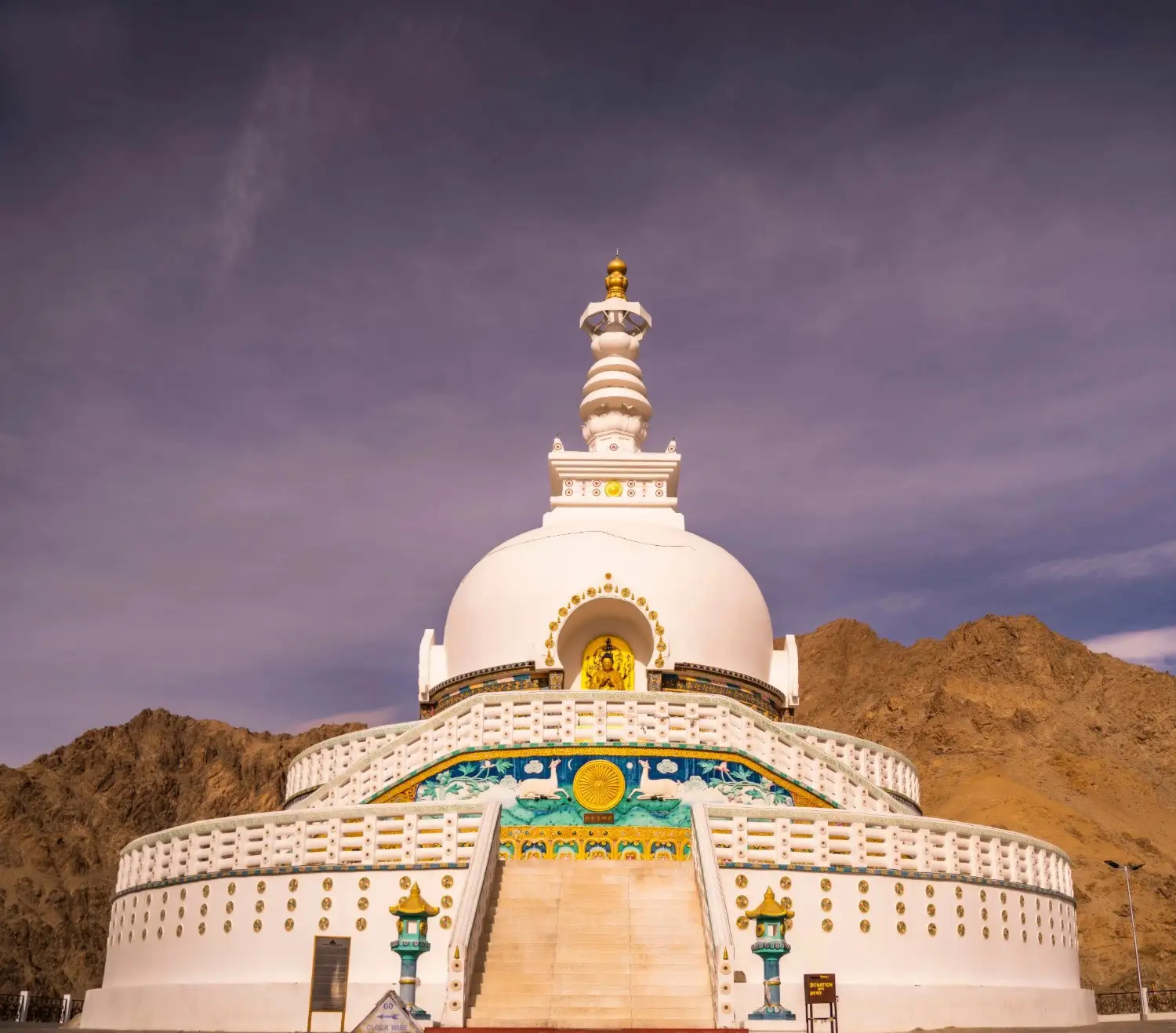
Shanti Stupa is one of the most iconic landmarks in Leh, Ladakh. Perched high above the town, this beautiful white-domed monument attracts travellers from around the world for its peaceful atmosphere, breathtaking mountain views, and unforgettable sunrise and sunset experiences. Whether you’re visiting Ladakh for spiritual exploration, photography, or sightseeing, Shanti Stupa deserves a place on your itinerary.
Besides its stunning location, the stupa represents peace, unity, and the spread of Buddhism. Many travellers visit early in the morning for meditation, while others arrive before sunset to watch the entire Leh Valley glow under golden Himalayan light.
If you’re visiting Ladakh for the first time, our Ladakh tour guide can help you plan your route, understand permits, choose the right itinerary, and prepare for a smoother journey.
Whether you’re visiting for the panoramic mountain views, peaceful Buddhist atmosphere, or the famous sunset over Leh, planning your visit properly can make the experience even more memorable. Here’s everything you should know before heading to Shanti Stupa.
Shanti Stupa Leh at a Glance
| Details | Information |
| Builder | Bhikshu Gyomyo Nakamura (Japan, Nipponzan Myohoji Buddhist Order) |
| Local Partner | Kushok Bakula Rinpoche |
| Consecrated By | 14th Dalai Lama |
| Year of Inauguration | 1991 |
| Purpose | Celebrate 2,500 years of Buddhism and promote world peace |
| Elevation | 3,609 metres (11,841 feet) |
| Location | Changspa, Leh |
| Distance from Leh Market | Around 5 km |
| Entry Fee | Free |
| Timings | Approximately 5:00 AM – 9:00 PM |
History of Shanti Stupa Leh
The story of Shanti Stupa began in 1983, when Japanese Buddhist monk Bhikshu Gyomyo Nakamura envisioned building a monument that would spread the message of peace across the Himalayas.
The project was completed with the support of Ladakhi Buddhists and the respected spiritual leader Kushok Bakula Rinpoche, who played a significant role in bringing the vision to life.
After several years of construction, the monument was inaugurated by the 14th Dalai Lama in August 1991.
Today, the stupa stands not only as a religious monument but also as an international symbol of harmony, compassion, and friendship between India and Japan.
It was built to commemorate 2,500 years of Buddhism, while encouraging peace and understanding among people from different cultures and backgrounds.
Architecture of Shanti Stupa
One of the first things visitors notice is the brilliant white dome standing against the dramatic brown mountains of Ladakh.
The structure has two beautifully designed levels.
Lower Level
The lower section contains beautifully carved relief panels illustrating important events from the life of Lord Buddha, including his birth and enlightenment.
Prayer wheels and peaceful surroundings create a calm atmosphere for visitors who wish to spend a few quiet moments here.
Upper Level
The upper platform houses a golden Buddha statue along with additional Buddhist artwork.
From this level, visitors enjoy uninterrupted panoramic views of:
- Leh Town
- Namgyal Tsemo Monastery
- Stok Kangri range
- Zanskar Mountains
- Indus Valley
The viewing platform is one of the highest and most scenic points within Leh town.
Why Visit Shanti Stupa?
Although Ladakh has many monasteries and Buddhist sites, Shanti Stupa offers a unique combination of spirituality and spectacular scenery.
Visitors come here for several reasons.
Incredible Panoramic Views
The stupa overlooks the entire Leh Valley, making it one of the best viewpoints in the region.
During clear weather, you can see snow-covered peaks stretching across the horizon.
Peaceful Environment
Unlike busy tourist markets, the atmosphere around Shanti Stupa feels calm and relaxing.
Many visitors spend time sitting quietly while enjoying the mountain breeze and peaceful surroundings.
One of Leh’s Best Sunset Points
As the sun slowly disappears behind the mountains, golden light spreads across Leh town and the surrounding valleys.
The white dome gradually changes colour with the evening light, creating one of the most photographed scenes in Ladakh.
Beautiful Night Views
After sunset, the illuminated stupa contrasts beautifully against the dark Himalayan sky while the lights of Leh town sparkle below.
Night photography is especially rewarding during clear weather.
Weather, Wind and Visibility Factors
Because of its elevated location, weather conditions at Shanti Stupa can feel quite different from the streets of Leh Market.
Morning hours usually offer the calmest weather with excellent visibility.
Afternoons remain pleasant during summer, although sunlight can become strong due to the high altitude.
Evenings often bring cooler temperatures and stronger winds, particularly during spring and autumn.
Winter visits are still possible, but cold winds and occasional snowfall make warm clothing essential.
Clear skies after sunrise and before sunset provide the best mountain visibility throughout the year.
Best Time to Visit Shanti Stupa Leh
The main tourist season generally runs from May to September, when pleasant weather and clear skies make sightseeing much more comfortable.
Each season offers a different experience.
| Season | Typical Visit Experience | Planning Suggestion |
| May–June | Pleasant weather and crystal-clear mountain views | Excellent for first-time visitors |
| July–August | Peak tourist season with lively atmosphere | Visit early morning or near sunset to avoid crowds |
| September | Comfortable weather and beautiful golden light | One of the best months for photography |
| Winter | Cold temperatures with strong winds | Suitable only for well-prepared winter travellers |
If you’re planning your overall itinerary, understanding the ideal time to visit Ladakh will help you experience Shanti Stupa under the best weather conditions.
How to Reach Shanti Stupa from Leh Town
Shanti Stupa is located just a short distance from Leh’s central market area.
Travellers can reach the monument in several convenient ways depending on their comfort level and fitness.
Best Ways to Reach
| Approach Option | Best For | Practical Tip |
| Cab or Taxi to Near Base | Families and senior travellers | Best choice for sunrise or sunset visits |
| Walking from Leh | Fit travellers who have already acclimatized | Carry water and walk slowly |
| Ride + Short Climb | Most first-time visitors | Saves energy while still enjoying the final approach |
You can also combine your visit with Leh Palace and Leh Market to comfortably cover all three attractions within half a day.
How to Reach Shanti Stupa Leh
There are four practical ways to reach the monument.
By Auto-Rickshaw
- Fare: ₹80–₹120 one way from Leh Market
- Travel Time: 10–15 minutes
- Easily available near the Main Bazaar
By Taxi
- One-way Fare: ₹200–₹350
- Shared Taxi: ₹50–₹80 per seat during peak season
Taxis remain the most convenient option for families and visitors with limited time.
By Rented Scooter or Bike
Many travellers rent scooters while exploring Leh.
- Travel Time: 12–15 minutes
- Parking available near the staircase
- Scooter Rental: ₹600–₹900 per day
Rental charges may vary depending on the season, vehicle type, demand, and rental operator.
On Foot
Walking to Shanti Stupa is popular among travellers who have already spent a day or two acclimatizing in Leh.
- From Changspa: 15–20 minutes walk plus the 500-step climb
- From Leh Market: 45–55 minutes
Pro Tip
If climbing stairs is difficult, ask your driver to take the upper parking road on the northern side. This significantly reduces the number of steps required before reaching the main viewing area.
Timings, Entry and Current Visitor Information
One of the best things about visiting Shanti Stupa is that it’s accessible to everyone. There is no entry fee, making it one of the most popular attractions in Leh for both domestic and international travellers.
Visitor Information
| Details | Information |
| Opening Hours | Approximately 5:00 AM – 9:00 PM |
| Entry Fee | Free |
| Average Visit Duration | 45 minutes to 1.5 hours |
| Best Visit Time | Sunrise or 45–60 minutes before sunset |
| Photography | Allowed |
Although the stupa generally remains open throughout the day, timings may occasionally vary because of weather conditions, maintenance work, or local administrative updates.
If you’re planning a tight itinerary, it’s always a good idea to confirm the latest timings with your hotel, local taxi driver, or tourism information centre before heading there.
Sunset hours are particularly popular, so arriving 20–30 minutes early gives you enough time to park, climb the steps, and find a good viewing spot before the crowds increase.
Photography Tips at Shanti Stupa
Shanti Stupa is one of the most photogenic locations in Leh. Whether you’re carrying a professional camera or simply using your smartphone, a little planning can help you capture some incredible photographs.
Arrive Before Golden Hour
The soft golden light just before sunset creates beautiful colours across the white stupa, Leh town, and the surrounding mountains.
Morning photography is equally rewarding, with fewer visitors and crisp Himalayan light.
Use a Wide-Angle Lens
A wide-angle frame allows you to capture the monument together with the vast mountain ranges and Leh Valley.
Capture the Upper Viewing Platform
The upper terrace offers one of the finest panoramic viewpoints in Leh. From here, you can photograph Namgyal Tsemo Monastery, Leh Palace, distant mountain ranges, and the colourful rooftops of Leh town.
Respect Prayer Areas
Many visitors come here for meditation and prayer. Avoid blocking prayer spaces or disturbing people while taking photographs.
Carry Light Equipment
Since some walking and stair climbing are involved, carrying minimal camera gear makes the visit much more comfortable.
Night Photography
After sunset, the illuminated white dome creates beautiful long-exposure opportunities. If you’re carrying a tripod, make sure it remains stable because strong mountain winds are common during the evening.
Sunrise vs Sunset – Which Is Better?
Many travellers wonder whether they should visit Shanti Stupa at sunrise or sunset.
Both experiences are beautiful but offer completely different atmospheres.
Sunrise
Early mornings are peaceful and relatively crowd-free. The soft morning light slowly illuminates the white stupa while the surrounding mountains begin to glow.
It’s the perfect time for meditation, photography, or simply enjoying the silence.
Sunset
Sunset is undoubtedly the most popular time to visit.
As the sun moves behind the mountains, the Leh Valley turns golden before gradually fading into shades of orange, pink, and purple. Once darkness sets in, the illuminated monument stands out beautifully against the night sky while the lights of Leh sparkle below.
If you enjoy photography, sunset usually offers the most dramatic lighting conditions.
Family, Senior and Acclimatization Planning
Although Shanti Stupa is suitable for visitors of all ages, its high altitude and stairway require a little planning.
If this is your first day in Leh, avoid rushing towards the top. Walk slowly, take frequent breaks, and stay hydrated.
| Traveller Type | Suggested Strategy | Benefit |
| First-day Leh Visitors | Spend a short time and avoid climbing too quickly | Helps reduce altitude-related discomfort |
| Families with Children | Visit before sunset and arrive early | Less crowded and more relaxed |
| Senior Travellers | Take a taxi to the upper parking area | Reduces walking and stair climbing |
| Photographers | Reach at least one hour before sunset | Better lighting and fewer obstructions |
Because the monument sits at an elevation of over 3,600 metres, visitors should always remain aware of altitude-related symptoms. Walking slowly, drinking enough water, and avoiding unnecessary exertion are simple but effective precautions.
Nearby Attractions to Combine with Shanti Stupa
One of the biggest advantages of visiting Shanti Stupa is that several of Leh’s most popular attractions are located within a short driving distance. If you start your sightseeing early, you can comfortably cover these places in a single day.
| Attraction | Distance from Shanti Stupa | Approx. Travel Time | Why Visit |
| Leh Palace | 2.5 km | 8–10 minutes | Historic royal palace with panoramic views of Leh. |
| Leh Main Bazaar | 5 km | 12–15 minutes | Best place for shopping, cafés, handicrafts, and local food. |
| Hall of Fame Museum | 6 km | 15–20 minutes | Indian Army museum showcasing Ladakh’s military history and the Kargil War. |
| Magnetic Hill | 28 km | 40–45 minutes | Famous gravity-defying optical illusion and scenic highway stop. |
| Shey Palace | 17 km | 30–35 minutes | Former royal residence featuring a magnificent copper-gilded Buddha statue. |
| Thiksey Monastery | 21 km | 35–40 minutes | One of Ladakh’s largest monasteries, renowned for its stunning architecture and giant Maitreya Buddha statue. |
| Stok Palace Museum | 18 km | 35–40 minutes | Historic palace displaying royal artefacts and Ladakhi heritage. |
| Sindhu Ghat | 16 km | 30–35 minutes | Peaceful riverside location on the banks of the Indus River, ideal for a short stop. |
Many travellers combine Leh Palace, Shanti Stupa, and Leh Main Bazaar in a half-day city tour, while those with more time often continue towards Shey Palace, Thiksey Monastery, and Stok Palace for a deeper exploration of Ladakh’s history and Buddhist heritage.
Practical Visitor Tips
To make your visit comfortable, keep these points in mind:
- Wear comfortable walking shoes with good grip.
- Carry drinking water, especially during summer.
- Wear sunglasses and sunscreen because UV rays are strong at high altitude.
- Dress in layers, as temperatures can change quickly.
- Avoid running or climbing stairs too fast.
- Visit early morning or before sunset for the best weather and photography.
- Respect local customs and maintain silence near prayer areas.
- Help keep the monument clean by avoiding littering.
Conclusion
Standing peacefully above Leh town, Shanti Stupa is much more than a famous tourist attraction. It beautifully combines spirituality, history, architecture, and breathtaking Himalayan scenery into one unforgettable experience. Whether you’re watching the sunrise over snow-capped mountains, capturing golden-hour photographs, or simply enjoying a quiet moment overlooking the Leh Valley, every visit feels special.
Its rich Buddhist heritage, panoramic viewpoints, and easy accessibility make it one of the most rewarding places to visit in Ladakh. Taking time to explore the monument slowly, appreciate its peaceful surroundings, and combine it with nearby attractions like Leh Palace and Hall of Fame will make your city tour even more memorable.
Discover More with TripGuruGo
Planning a trip to Ladakh becomes much easier when you have reliable information. At TripGuruGo, we create detailed travel guides covering destinations, monasteries, mountain passes, local experiences, seasonal travel tips, permits, and practical planning advice to help you explore Ladakh with confidence.
Whether you’re visiting Shanti Stupa for its incredible sunset views or planning a complete Leh sightseeing itinerary, TripGuruGo helps you travel smarter and make the most of every moment in the Himalayas.
Frequently Asked Questions
What is Shanti Stupa famous for?
Shanti Stupa is famous for its peaceful atmosphere, Buddhist significance, panoramic views of Leh, and spectacular sunrise and sunset viewpoints.
Is there an entry fee for Shanti Stupa?
No. Entry to Shanti Stupa is completely free.
How many steps are there to reach Shanti Stupa?
Visitors using the walking route from Changspa typically climb around 500 stone steps to reach the monument.
What is the best time to visit Shanti Stupa?
Early morning and sunset are considered the best times because of pleasant weather, fewer crowds, and beautiful lighting.
How far is Shanti Stupa from Leh Market?
Shanti Stupa is located approximately 5 km from Leh Market and can be reached within 10–15 minutes by taxi or auto-rickshaw.
Can senior citizens visit Shanti Stupa?
Yes. Senior travellers can take a vehicle to the upper parking area, significantly reducing the number of steps required to reach the monument.

Anjali is a travel content writer who creates informative and engaging articles about destinations, travel tips, itineraries, and travel experiences. She enjoys simplifying travel information to help readers plan their journeys with confidence while discovering new places and cultures.