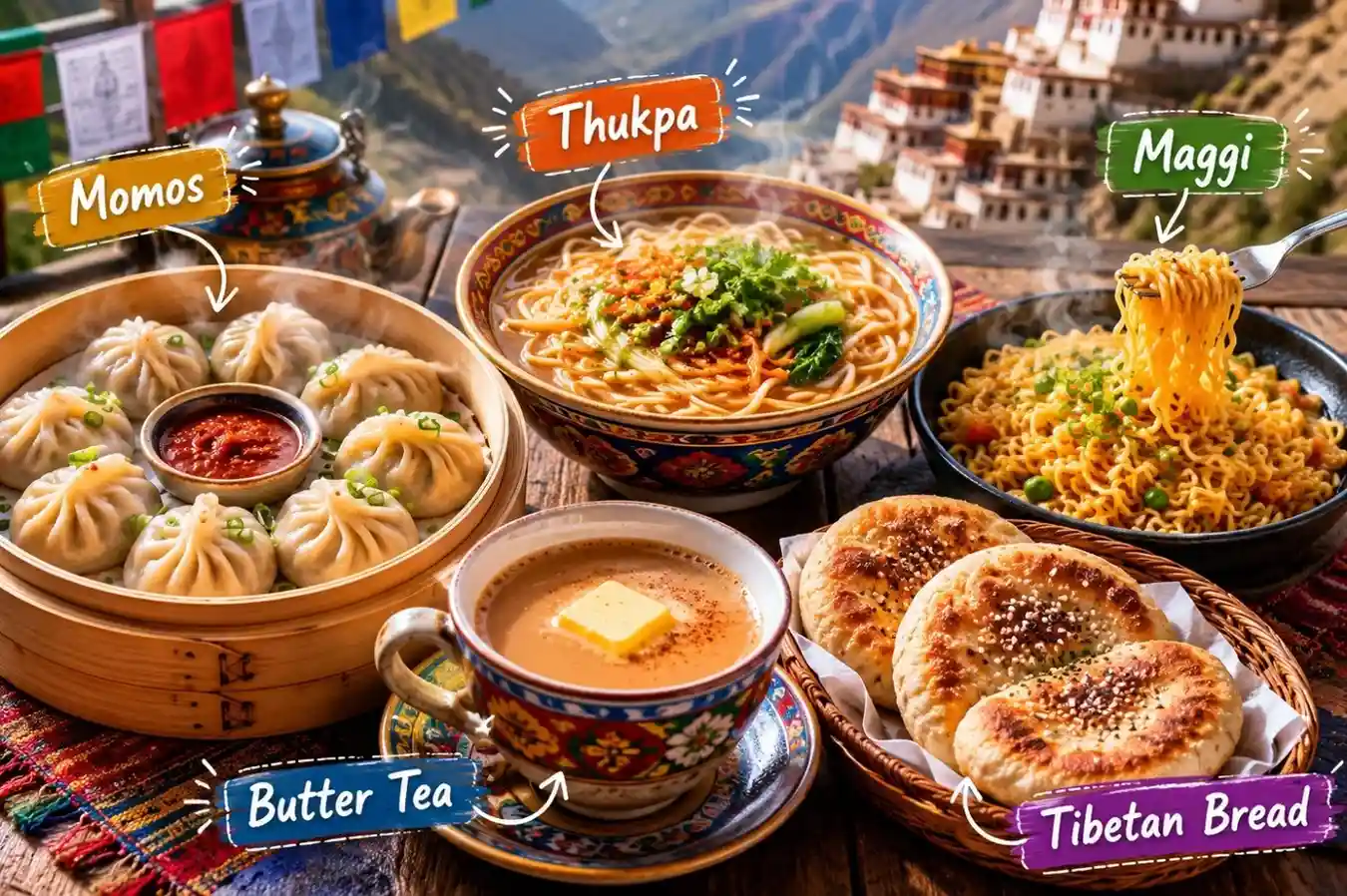
A trip to Ladakh is not only about mountains, lakes, and bike rides. It is also a great place to enjoy simple, fresh, and tasty local food.
Ladakhi food is made to suit the cold weather and high altitude. Most dishes are warm, filling, and cooked with local ingredients that have been used for many years. From a hot bowl of Skyu after a long journey to freshly steamed Momos in Leh Market, every meal gives you a taste of Ladakh’s local culture.
Leh also has many cafés, family restaurants, and roadside dhabas where you can enjoy traditional Ladakhi food as well as Indian, Tibetan, and Continental dishes.
If you’re planning your trip, don’t miss our complete Ladakh Trip Guide from Delhi to plan your route, budget, and itinerary.
In this guide, you’ll learn about the best food in Ladakh, must-try local dishes, traditional drinks, famous restaurants, budget-friendly dhabas, and useful food tips for every traveller.
What Makes Ladakhi Food Special?
The food in Ladakh is very different from what you find in most parts of India.
The region has a cold climate, high mountains, and a short farming season. Because of this, local people prepare food that is warm, healthy, and gives enough energy for the day.
Most traditional dishes use simple ingredients, but they are rich in taste and nutrition.
Many recipes have been passed down through generations and are still prepared in the traditional way.
Key Characteristics of Ladakhi Food
Hearty and Warming Food
Ladakh has long winters and cold temperatures for most of the year.
That is why most local dishes are served hot.
Noodle soups, stews, breads, and barley-based meals help keep the body warm and provide energy during cold weather.
These meals are simple but very satisfying after spending time outdoors.
Meat-Based Cuisine
Meat is an important part of traditional Ladakhi food.
Since farming is limited in many areas, local people depend on animals that can survive in the mountains.
Popular meats include:
- Yak
- Sheep
- Goat
- Mutton
- Chicken
Many traditional dishes are prepared using meat because it provides protein and helps keep the body warm.
Today, vegetarian options are also widely available in Leh.
Dairy Products
Milk and dairy products are commonly used in Ladakhi cooking.
Many local recipes include:
- Butter
- Cheese
- Curd
- Milk
Yak butter is especially popular and is used in famous drinks like Butter Tea.
These dairy products provide extra nutrition during the cold winter months.
Barley is the Traditional Staple
Barley has been grown in Ladakh for hundreds of years.
It is one of the oldest and most important crops in the region.
Local people use barley to prepare:
- Bread
- Flour
- Porridge
- Traditional drinks
Many old Ladakhi recipes still use barley as the main ingredient.
Tibetan Influence
Ladakhi food has a strong Tibetan influence.
Many dishes that are now famous in Ladakh originally came from Tibetan cooking.
Popular examples include:
- Momos
- Thukpa
- Butter Tea
- Noodle dishes
- Steamed breads
Today, these foods are enjoyed by both local people and tourists.
Must-Try Traditional Dishes in Ladakh
If you want to experience Ladakh properly, make sure you try its traditional food.
Some dishes are available almost everywhere in Leh, while others can be found in local homes and traditional restaurants.
Skyu
Skyu is one of the most famous traditional dishes in Ladakh.
It is a thick and filling soup made with handmade wheat dough, fresh vegetables, and a rich broth.
Some restaurants also prepare Skyu with mutton.
What Makes Skyu Special?
The handmade dough pieces are thick and soft, making the soup very filling.
Common vegetables include:
- Potato
- Carrot
- Turnip
Skyu is often served during winter because it keeps the body warm.
If you try only one traditional Ladakhi dish, Skyu should be your first choice.
Chutagi
Chutagi is another traditional Ladakhi comfort food.
It is similar to Skyu but uses handmade bow-shaped pieces of wheat dough instead of round pasta.
The dough is cooked in a thick vegetable broth.
Some restaurants also prepare a non-vegetarian version.
Why Try Chutagi?
Chutagi is light, healthy, and perfect for cold weather.
Its homemade pasta and rich soup make it one of the favourite meals among local families.
Thukpa
Thukpa is one of the most popular foods in Leh.
Originally from Tibet, it has become a part of everyday life in Ladakh.
It is a hot noodle soup served with vegetables or meat.
Types of Thukpa
You can choose:
- Vegetable Thukpa
- Chicken Thukpa
- Mutton Thukpa
The soup is usually prepared with garlic, ginger, onions, carrots, spinach, and local spices.
It is one of the best meals after a long day of sightseeing or bike riding.
Momos
Momos are loved by both locals and tourists.
These soft dumplings are filled with vegetables or meat and served with spicy chutney.
Almost every café and restaurant in Leh serves fresh momos.
Types of Momos
Popular options include:
- Vegetable Momos
- Paneer Momos
- Chicken Momos
- Mutton Momos
You can order them either steamed or fried.
Freshly steamed momos remain the most popular choice.
Khambir
Khambir is a traditional Ladakhi bread.
It is thicker than regular bread and has a crispy outer layer with a soft inside.
People usually eat it with butter, vegetables, curry, or Butter Tea.
Many local bakeries still prepare Khambir every morning.
Pava
Pava is another traditional bread made mainly from barley flour.
It is rich in nutrition and forms an important part of everyday meals in many Ladakhi homes.
How is Pava Eaten?
People usually enjoy Pava with:
- Soup
- Butter
- Tea
- Vegetable curry
Its simple taste makes it a perfect side dish.
Tsampa
Tsampa is roasted barley flour.
It has been a staple food in Ladakh for many generations.
Local people mix it with:
- Butter Tea
- Milk
- Water
to prepare a quick and healthy meal.
It is easy to carry and provides plenty of energy.
Tingmo
Tingmo is a soft steamed bread that is served with curries and stews.
Unlike fried bread, Tingmo is light and fluffy.
It is commonly served with:
- Vegetable curry
- Chicken curry
- Mutton curry
Many Tibetan restaurants in Leh include Tingmo on their menu.
Yak Meat Dishes
Yak meat is one of the unique foods that you can try in Ladakh.
Yaks are well suited to the cold mountains, making their meat a common part of the local diet.
Popular Yak Dishes
You may find:
- Yak Curry
- Yak Stew
- Yak Roast
- Yak Meat Soup
Yak meat is lean, slightly different in taste from beef, and is considered a local speciality.
Yarkhandi Pulao
Yarkhandi Pulao is one of the most famous traditional rice dishes in Ladakh.
It is prepared using rice, meat, dry fruits, and mild spices.
The combination of sweet and savoury flavours makes it different from regular pulao found in other parts of India.
Several traditional restaurants in Leh serve this dish.
Vegetarian Food in Ladakh
Many people think Ladakh is only famous for meat dishes.
That is not true.
Vegetarian travellers can easily find good food throughout Leh.
Popular Vegetarian Dishes
Some of the best vegetarian foods include:
- Skyu
- Vegetable Thukpa
- Vegetable Momos
- Chutagi
- Tingmo
- Khambir
- Dal Rice
- Rajma Rice
- Mixed Vegetable Curry
- Fried Rice
- Noodles
Most cafés and restaurants also serve North Indian meals.
Non-Vegetarian Food in Ladakh
People who enjoy meat will find plenty of choices.
Popular Non-Vegetarian Dishes
You should try:
- Chicken Thukpa
- Mutton Thukpa
- Chicken Momos
- Mutton Momos
- Yak Curry
- Yak Stew
- Yarkhandi Pulao
- Mutton Curry
Fresh meat is available in most restaurants during the tourist season.
Is Food in Ladakh Spicy?
Traditional Ladakhi food is usually mild.
Most dishes focus on fresh ingredients instead of strong spices.
However, if you like spicy food, many restaurants in Leh also prepare North Indian and Chinese dishes with more spices according to your preference.
Traditional Drinks to Try in Ladakh
Food in Ladakh is incomplete without trying its traditional drinks.
Some drinks help keep the body warm, while others are made from fresh fruits grown in the region.
Butter Tea (Gur Gur Chai)
Butter Tea, also called Gur Gur Chai, is the most famous traditional drink in Ladakh.
It is prepared using:
- Tea leaves
- Yak butter or cow butter
- Salt
- Milk
- Water
Unlike regular tea, Butter Tea has a salty taste.
It may taste different if you are trying it for the first time, but it is an important part of Ladakhi culture.
Why is Butter Tea Popular?
Butter Tea helps people stay warm during the cold winter months.
It also provides energy, which is useful in the high-altitude climate of Ladakh.
Many local families drink it several times a day and often serve it to guests as a welcome drink.
Chang
Chang is the traditional local drink made from fermented barley.
It has been prepared in Ladakh for many generations.
People usually enjoy Chang during:
- Local festivals
- Family celebrations
- Traditional gatherings
It has a mild taste and lower alcohol content than many other alcoholic drinks.
If you drink alcohol, trying Chang gives you a chance to experience Ladakh’s local traditions.
Apricot Juice
Ladakh is famous for its sweet apricots.
Fresh apricot juice is one of the best drinks to try during summer.
The juice is naturally sweet and refreshing.
You can also buy:
- Dried apricots
- Apricot jam
- Apricot squash
These products are popular souvenirs from Ladakh.
Sea Buckthorn Juice
Sea Buckthorn, also called Leh Berry, grows in the cold desert of Ladakh.
The bright orange berries are rich in Vitamin C and antioxidants.
Sea Buckthorn juice has a slightly sour taste and is known for its health benefits.
Many cafés and local shops in Leh sell fresh bottles of this juice.
Best Restaurants in Leh
Leh has restaurants for every budget.
Whether you want traditional Ladakhi food or modern cafés, you’ll find many good places to eat.
Namza Dining
Namza Dining is one of the best places to try traditional Ladakhi food.
The restaurant serves local dishes in a beautiful traditional setting.
Must-Try Dishes
- Yarkhandi Pulao
- Skyu
- Thukpa
- Ladakhi Platter
- Momos
It is a great place if you want to experience authentic Ladakhi flavours.
The Tibetan Kitchen
The Tibetan Kitchen is one of the oldest and most popular restaurants in Leh.
It is known for serving fresh Tibetan and Ladakhi food.
Popular Dishes
- Mutton Momos
- Vegetable Momos
- Thukpa
- Fried Rice
- Noodles
The outdoor seating area also offers beautiful views.
Gesmo Restaurant
Gesmo Restaurant is a favourite among both tourists and locals.
It serves Ladakhi, Tibetan, Indian, and Continental food.
Best Things to Try
- Skyu
- Momos
- Thukpa
- Breakfast
- Fresh Bakery Items
The prices are reasonable, making it a good option for families.
Tsas by Dolkhar
If you’re looking for a premium dining experience, Tsas by Dolkhar is one of the best choices.
The restaurant focuses on fresh local ingredients and serves modern Ladakhi dishes.
It is surrounded by an apple orchard, making the atmosphere peaceful and relaxing.
Lehvenda Café
Lehvenda Café is popular for coffee, desserts, and light meals.
It also serves several Ladakhi dishes along with Indian and Continental food.
It is a nice place to relax after exploring Leh Market.
Chopsticks Noodle Bar
Chopsticks Noodle Bar is a popular choice for people who enjoy Asian food.
Along with noodles and fried rice, the restaurant also serves traditional Ladakhi dishes.
It is especially famous for:
- Crispy Chilli Potatoes
- Momos
- Noodles
- Rice Bowls
FoodyPi
FoodyPi is a popular restaurant located near the petrol pump in Leh.
It is known for its fresh food and mountain views.
Popular Dishes
- Momos
- Fried Rice
- Noodles
- Coffee
- Snacks
Best Local Dhabas in Ladakh
Roadside dhabas are an important part of every Ladakh road trip.
These small eateries serve fresh food at affordable prices.
Highway Dhabas
While travelling towards:
- Nubra Valley
- Pangong Lake
- Tso Moriri
- Lamayuru
you’ll find many local dhabas.
Most serve simple meals like:
- Dal Rice
- Rajma Rice
- Maggi
- Omelette
- Tea
- Paratha
The food is freshly prepared and perfect for hungry travellers.
Village Homestays
Many homestays also serve homemade Ladakhi meals.
This is one of the best ways to experience local cooking.
Meals often include:
- Skyu
- Khambir
- Vegetable Curry
- Dal
- Rice
- Butter Tea
Street Food in Leh Market
Leh Market has plenty of small food stalls.
You can easily enjoy tasty snacks while shopping.
Popular Street Food
Some of the best options include:
- Momos
- Thukpa
- Maggi
- Spring Rolls
- Fried Rice
- Chowmein
- Tea
- Coffee
Evening is the best time to explore the food stalls.
What Should You Eat in Leh?
If you’re visiting Leh for the first time, try these dishes.
Local Food Checklist
- Skyu
- Chutagi
- Thukpa
- Momos
- Khambir
- Pava
- Tingmo
- Yarkhandi Pulao
- Yak Curry
- Butter Tea
- Apricot Juice
- Sea Buckthorn Juice
Trying these foods will give you a complete taste of Ladakhi cuisine.
How Much Does Food Cost in Ladakh?
Food prices in Ladakh are reasonable.
Approximate costs are:
| Food Item | Average Price |
| Tea | ₹30–₹60 |
| Butter Tea | ₹80–₹150 |
| Momos | ₹120–₹250 |
| Thukpa | ₹150–₹300 |
| Skyu | ₹200–₹350 |
| Dal Rice | ₹180–₹300 |
| Yarkhandi Pulao | ₹350–₹700 |
| Coffee | ₹120–₹250 |
Prices may vary depending on the restaurant and tourist season.
Food Tips for Solo Female Travellers
Ladakh is generally a safe place for solo female travellers, and most cafés and restaurants in Leh are clean and welcoming.
Still, following a few simple tips can make your trip even better.
Useful Food Tips
- Eat at clean and busy restaurants.
- Drink bottled or filtered water.
- Avoid eating very heavy meals on your first day because of the high altitude.
- Carry snacks during long road trips.
- Inform your hotel if you have any food allergies.
You can also read our complete guide on Is Ladakh Safe for Solo Female Travellers?.
Do You Need Any Food Permits?
No.
You do not need any special permit to eat at restaurants or cafés in Ladakh.
However, if you’re travelling to places like Nubra Valley, Pangong Lake, or Tso Moriri, you may need an Inner Line Permit.
You can learn more in our detailed Ladakh Permit Guide.
Plan Your Food Journey with TripGuruGo
Food is an important part of every Ladakh trip. From traditional dishes like Skyu and Thukpa to fresh Momos, Butter Tea, and local cafés in Leh, there is something for every traveller.
At TripGuruGo, you’ll find easy travel guides, food recommendations, itinerary ideas, and useful travel tips to help you enjoy the best of Ladakh.
Conclusion
The food in Ladakh is simple, healthy, and full of local flavours. Every meal reflects the region’s cold climate, rich traditions, and Tibetan influence.
Whether you’re enjoying a hot bowl of Skyu, freshly steamed Momos, Butter Tea, or a glass of Sea Buckthorn juice, every dish adds something special to your trip.
Don’t forget to visit both local restaurants and small roadside dhabas, as some of the best meals in Ladakh are found in these simple places.
FAQs
What is the most famous food in Ladakh?
Skyu, Thukpa, Momos, Khambir, and Butter Tea are among the most famous traditional foods in Ladakh.
Is vegetarian food available in Leh?
Yes. Most restaurants in Leh serve vegetarian dishes like Vegetable Thukpa, Momos, Dal Rice, Rajma Rice, and Mixed Vegetable Curry.
What is Butter Tea?
Butter Tea, also called Gur Gur Chai, is a traditional Ladakhi drink made with tea leaves, butter, milk, salt, and water.
Where can I try authentic Ladakhi food in Leh?
Popular places include Namza Dining, The Tibetan Kitchen, Gesmo Restaurant, and Tsas by Dolkhar.
Is food expensive in Ladakh?
No. Food is reasonably priced. A simple meal usually costs between ₹150 and ₹300, while premium restaurants charge more.
What is Sea Buckthorn juice?
Sea Buckthorn juice is made from orange berries grown in Ladakh. It is rich in Vitamin C and is one of the region’s most popular health drinks.
Can I find Indian food in Leh?
Yes. Along with Ladakhi and Tibetan food, most restaurants also serve North Indian, Chinese, and Continental dishes.
Which drink should I try in Ladakh?
You should try Butter Tea, Apricot Juice, Sea Buckthorn Juice, and, if you drink alcohol, the traditional barley drink called Chang.

Abdullah Khan specializes in adventure travel across Spiti Valley and the high-altitude regions of Himachal Pradesh. He writes about road trips, bike expeditions, hidden villages, monasteries, and offbeat Himalayan experiences. His guides focus on route planning, acclimatization, travel safety, and the best experiences across Spiti Valley.