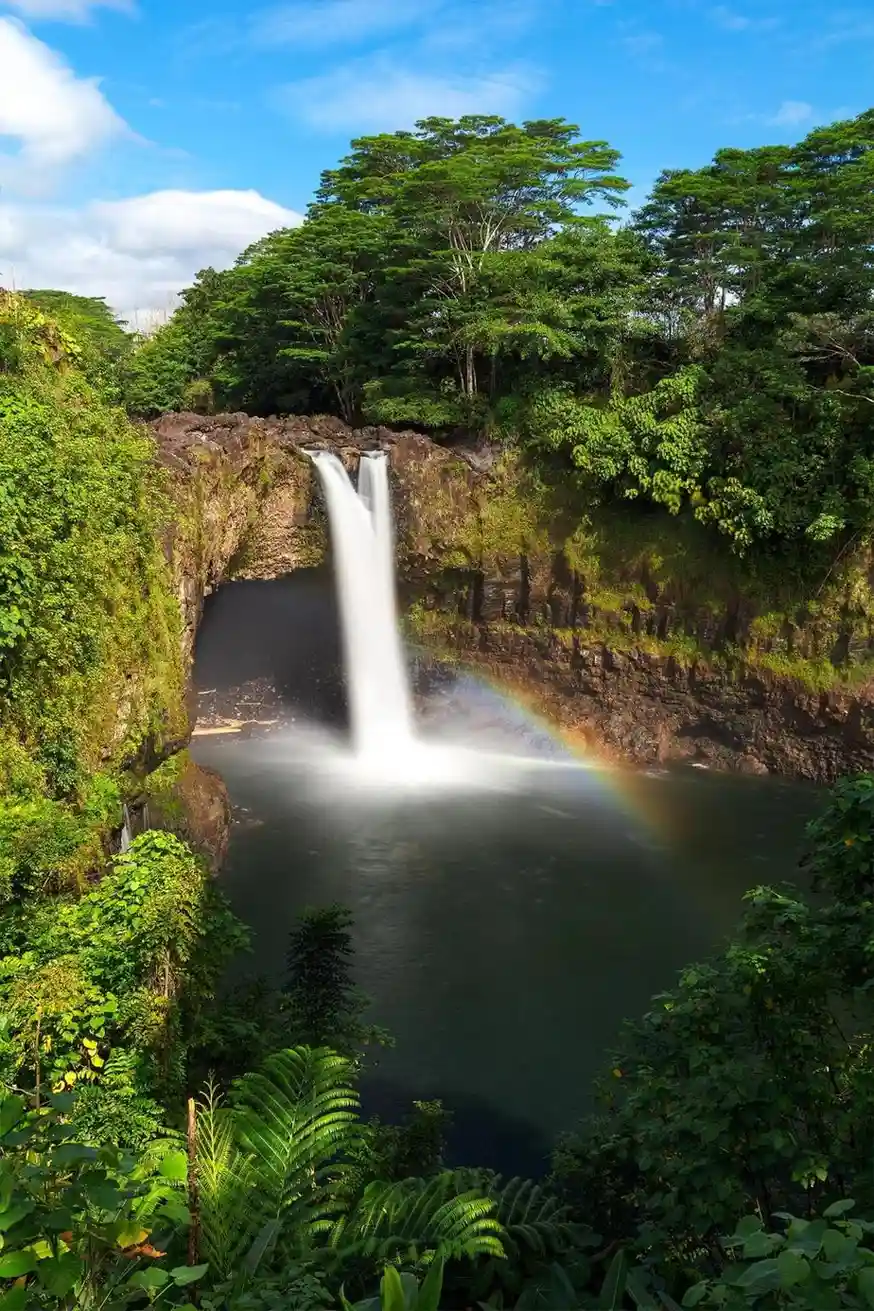
Imagine walking through a green forest where the only sounds you hear are birds singing and water flowing nearby. Every step takes you deeper into nature. Small bridges, tall trees, and cool fresh air make you forget the busy world behind you. Then, after a long trek, the trees slowly move apart, and you see a waterfall crashing into a bright blue pool. Sunlight touches the falling water, and suddenly a colourful rainbow appears in front of your eyes. You don’t rush to take out your phone. You simply stand there and enjoy the moment.
That’s the magic of Rainbow Falls.
While most travellers end their journey at the famous Double Decker Living Root Bridge, the real adventure begins beyond it. A quieter trail, fewer people, and untouched nature lead you to one of Meghalaya’s most beautiful waterfalls. If you’re visiting the state for the first time, our First-time Travel Guide will help you plan everything from transport and weather to permits and local travel tips. In this guide, you’ll learn everything about the Rainbow Falls trek, including the route, distance, timings, difficulty, entry fee, best time to visit, and useful tips to make your journey smooth and memorable.
Quick Facts About Rainbow Falls
| Details | Information |
| Location | Nongriat Village, Meghalaya |
| Famous For | Natural rainbow, blue swimming pool and jungle trek |
| Nearest Village | Tyrna |
| Trek Distance | Around 6.5 km (One Way) |
| Round Trip | Around 13 km |
| Trek Time | 8–10 Hours |
| Difficulty | Moderate to Difficult |
| Best Time | October to April |
| Entry Fee | No separate fee |
| Swimming | Yes (with caution) |
| Mobile Network | Very Limited |
Where is Rainbow Falls?
Rainbow Falls is hidden deep inside the forests of Nongriat Village in Meghalaya. It is located about 1.5 hours beyond the famous Double Decker Living Root Bridge, making it one of the least visited waterfalls in the region.
Most tourists complete their trek after reaching the Double Decker Bridge and head back. Only a few continue further towards Rainbow Falls. That’s one of the biggest reasons why this place still feels peaceful and untouched.
Unlike many popular waterfalls that can be reached by road, Rainbow Falls can only be visited on foot. The journey takes you through forests, hanging bridges, small streams, and beautiful jungle trails before finally reaching the waterfall.
If you enjoy peaceful places away from crowds, Rainbow Falls will probably become your favourite stop in Meghalaya.
Why is it Called Rainbow Falls?
The name itself tells the story.
When sunlight falls on the tiny water droplets created by the waterfall, a colourful rainbow appears above the pool. This beautiful natural effect is what gave the waterfall its name.
The rainbow doesn’t stay there all day. It usually appears when the sunlight is strong enough, which is why most trekkers prefer reaching the waterfall between late morning and early afternoon.
Along with the rainbow, the clear blue water makes this place look almost unreal. On a sunny day, the colours of the water, the forest, and the rainbow come together to create a view that stays in your memory long after the trek ends.
How to Reach Rainbow Falls
Reaching Rainbow Falls is an adventure from the moment you leave Shillong. There are no roads leading directly to the waterfall, so every visitor has to complete the final journey on foot.
Reach Shillong
Shillong is the nearest major city and the best place to begin your trip.
You can reach Shillong from Guwahati by taxi, shared cab, or bus. The drive takes around 3 hours and offers beautiful views of hills and valleys along the way.
Reach Sohra (Cherrapunji)
From Shillong, continue towards Sohra, which is around 55 km away.
The drive usually takes 2 hours and passes through some of Meghalaya’s most scenic roads.
Many travellers stay overnight in Sohra before starting the trek early the next morning.
Reach Tyrna Village
From Sohra, drive another 20 km to reach Tyrna Village, which is the starting point of the Rainbow Falls trek.
There is a parking area near the staircase where visitors leave their vehicles before beginning the trek.
Small tea stalls and local shops are also available near the starting point if you want to buy water or snacks.
Trek to Nongriat Village
The adventure begins with more than 3,000 stone steps going downhill.
At first, the staircase may look easy, but after a while you’ll realise this isn’t an ordinary walk.
The trail passes through thick forests, crosses hanging bridges, and follows small streams that make the journey enjoyable. You’ll also meet local villagers carrying supplies along the same route, reminding you that this trail is part of their everyday life.
After around 2 to 3 hours, you’ll finally reach the famous Double Decker Living Root Bridge in Nongriat.
Many visitors end their trip here.
But you shouldn’t.
Because the best part is still waiting ahead.
Trek from Double Decker Living Root Bridge to Rainbow Falls
As soon as you leave the Double Decker Bridge behind, the crowd slowly disappears.
The trail becomes quieter, greener, and much more peaceful.
You’ll cross small streams, walk over natural root bridges, climb rocky paths, and hike through dense rainforest. Every few minutes, you’ll hear the sound of flowing water somewhere nearby.
This final stretch takes around 1 to 1.5 hours, depending on your pace.
The moment you hear the roar of the waterfall, you’ll know you’ve almost reached one of Meghalaya’s best-kept secrets.
Rainbow Falls Trek Guide
The trek to Rainbow Falls is not just about reaching a waterfall. It’s about enjoying every step of the journey. You’ll walk through thick forests, cross hanging bridges, hear birds singing, and follow streams that flow beside the trail. Every few minutes, the view changes, making the hike feel exciting from start to finish.
The trek is long and can be tiring, but once you stand in front of Rainbow Falls, you’ll realise why so many travellers say it is one of the best trekking experiences in Meghalaya.
Trek Distance
The total trekking distance depends on where you start.
| Route | Distance |
| Tyrna to Double Decker Living Root Bridge | Around 3.5 km |
| Double Decker Bridge to Rainbow Falls | Around 3 km |
| Total One-Way Trek | Around 6.5 km |
| Total Round Trip | Around 13 km |
Although the distance may not seem very long, the thousands of stone steps make the trek much more challenging than it looks.
Trek Duration
You should keep an entire day for this adventure.
Here’s a rough idea of the timing:
| Route | Time |
| Tyrna to Double Decker Bridge | 2–3 Hours |
| Double Decker Bridge to Rainbow Falls | 1–1.5 Hours |
| Time at Rainbow Falls | 30–60 Minutes |
| Return Trek | 4–5 Hours |
In total, expect to spend 8 to 10 hours on the complete trek.
If you don’t want to rush, staying overnight in Nongriat is a great idea. It lets you enjoy the waterfall and the Double Decker Bridge without worrying about climbing thousands of steps on the same day.
Trek Difficulty
Difficulty Level: Moderate to Difficult
This trek is not difficult because of the distance.
It becomes challenging because you’ll climb and descend more than 3,000 stone steps.
The return journey is much harder than the way down, so save your energy and don’t walk too fast in the beginning.
If you are reasonably fit and can comfortably walk for a few hours, you can complete this trek without much trouble.
Can Beginners Do This Trek?
Yes.
Even first-time trekkers can complete the Rainbow Falls trek.
The secret is simple.
Walk slowly.
Take short breaks whenever needed.
Drink enough water.
There’s no need to race. Most people finish the trek by walking at their own pace.
Is This Trek Suitable for Kids?
Children who enjoy walking and outdoor activities can complete the trek with proper supervision.
However, very young children may find the long staircase tiring.
Parents should carry enough water, snacks, and allow plenty of rest stops.
Can Senior Citizens Do This Trek?
It depends on fitness.
Healthy senior travellers who regularly walk or exercise may complete the trek comfortably.
However, people with knee pain, breathing problems, or heart conditions should avoid this trek because the climb back to Tyrna is physically demanding.
Elevation
Rainbow Falls is located at an altitude of around 900 metres (3,000 feet) above sea level.
Since the altitude is not very high, there is no risk of altitude sickness.
The biggest challenge is the long climb and the humid weather.
Trail Conditions
The trail is well-marked and easy to follow.
During the trek, you’ll walk across:
- Thousands of stone steps
- Hanging bridges
- Living root bridges
- Narrow forest trails
- Rocky paths
- Small stream crossings
Most of the route remains under tree cover, which keeps the walk pleasant even on sunny days.
During the monsoon, however, the stones become slippery, so you need to be extra careful.
Do You Need a Guide?
A guide is not compulsory.
The trail is easy to follow because many trekkers use it every day.
However, if this is your first trek in Meghalaya or you want to learn more about the local villages and forests, hiring a local guide is a good idea.
It also supports the local community.
Mobile Network
Don’t expect good mobile coverage during the trek.
Most mobile networks stop working after Tyrna Village.
BSNL may work in a few places, but the signal is not reliable.
Download offline maps before starting the trek and let your family know your plans in advance.
Washrooms and Food
Washrooms are available near:
- Tyrna Village
- Nongriat Village
- Some homestays
After leaving Nongriat, there are very few facilities until Rainbow Falls.
Food is available at:
- Local cafés in Nongriat
- Small tea stalls
- Homestays
Once you continue towards Rainbow Falls, there are no restaurants or shops.
Carry:
- At least 2 litres of water
- Energy bars
- Dry fruits
- Fruits
- Light snacks
These will help you stay energetic throughout the trek.
Rainbow Falls Timings
Rainbow Falls does not have fixed opening or closing hours.
However, since it is a long trek, timing is very important.
| Timings | Details |
| Best Time to Start Trek | 6:00 AM – 8:00 AM |
| Best Time to Reach Rainbow Falls | 10:00 AM – 1:00 PM |
| Best Time to Return | Before 2:00 PM |
| Ideal Trek Finish | Before Sunset |
Starting early has many advantages.
- More pleasant weather
- Better chance to see the rainbow effect
- Enough daylight for the return journey
- Less crowded trail
Avoid starting late in the afternoon because climbing thousands of steps after sunset can become difficult.
Entry Fee
There is no separate entry fee for Rainbow Falls.
However, visitors have to pay the entry fee charged for the Double Decker Living Root Bridge, as the waterfall lies on the same trekking route.
You may also need to pay for:
- Parking charges at Tyrna Village
- Local guide (optional)
- Camera or drone charges (where applicable)
Carry enough cash because digital payments may not work due to poor network coverage.
Best Time to Visit Rainbow Falls
Rainbow Falls is open throughout the year, but your experience changes with the season.
October to April
This is the best time to visit Rainbow Falls.
The weather remains pleasant, the trail is safer, and the water stays beautifully clear.
Sunny days also increase your chances of seeing the natural rainbow that gives the waterfall its name.
May
May is also a good month if you don’t mind slightly warmer weather.
The forest looks fresh, and the waterfall continues to flow well.
June to September
The monsoon completely changes the experience.
The waterfall becomes more powerful, and the surrounding forest turns bright green.
However, heavy rain also makes the trail slippery and the streams stronger.
If you’re visiting during this season, wear proper trekking shoes and always check the weather before starting your hike.
If you’re planning to explore more places during your trip, follow this Perfect itinerary to experience the best waterfalls, caves, villages, and viewpoints across Meghalaya without rushing.
What to Expect at Rainbow Falls
The last part of the trek is something you’ll always remember.
As you walk through the forest, the sound of falling water becomes louder. With every step, the excitement grows. Then, the trees slowly clear, and Rainbow Falls appears in front of you.
A powerful waterfall falls into a bright blue pool surrounded by green trees and large rocks. If you’re lucky to visit on a sunny day, you’ll even see a natural rainbow forming above the water. It’s one of those moments where you simply stop, smile, and enjoy the view.
Since most visitors return after the Double Decker Living Root Bridge, Rainbow Falls remains quiet for most of the day. You won’t find loud crowds or busy cafés here. Instead, you’ll find fresh air, peaceful surroundings, and the sound of flowing water.
This is the kind of place where you forget about your phone and simply enjoy nature.
Can You Swim at Rainbow Falls?
Yes, you can swim in the natural pool, and many travellers take a short dip after completing the trek.
The water is cool, clean, and refreshing, making it the perfect reward after hours of walking.
Is Swimming Safe?
Swimming is usually safe when the weather is clear, but you should always be careful.
The rocks inside the pool can be slippery, and the water current becomes stronger during the monsoon or after heavy rain.
For a safe experience:
- Check the water before entering.
- Stay close to shallow areas.
- Never dive into the pool.
- Avoid swimming during heavy rain.
- Children should always be with an adult.
Enjoy the water, but never take unnecessary risks.
Photography Tips
Rainbow Falls is one of the best places in Meghalaya for photography. Almost every part of the trek offers beautiful views, from hanging bridges to green forests and flowing streams.
Best Time for Photos
Visit between 10:00 AM and 1:00 PM when sunlight is strong. This is also the best time to see the rainbow above the waterfall.
Tips for Better Pictures
- Capture both the waterfall and the rainbow in one frame.
- Take wide-angle photos to include the blue pool and forest.
- Wear bright clothes so you stand out in your pictures.
- Carry a waterproof cover for your phone or camera.
- Spend a few minutes enjoying the place before taking photos.
Sometimes the best memory isn’t the photo—it’s the feeling of standing there.
Things to Do at Rainbow Falls
Rainbow Falls is more than just a waterfall. Every part of the journey gives you a new experience.
Trek Through the Forest
The trek is the biggest adventure of this trip.
You’ll walk through thick forests, cross streams, climb thousands of stone steps, and pass hanging bridges before reaching the waterfall. Every turn brings a new view, making the journey just as exciting as the destination.
Spot Birds and Small Wildlife
The forests around Rainbow Falls are full of life.
If you keep your eyes open, you may see colourful butterflies, beautiful birds, and small forest animals. Walking quietly gives you a better chance to enjoy these little moments.
Explore Nongriat Village
Don’t rush back after visiting the waterfall.
Spend some time in Nongriat Village, where life moves at a slower pace. Walk through the narrow paths, meet local people, and enjoy the peaceful atmosphere surrounded by nature.
Visit the Double Decker Living Root Bridge
Your Rainbow Falls trek is incomplete without visiting the famous Double Decker Living Root Bridge.
Made from the roots of living trees, this bridge is one of Meghalaya’s most famous attractions and a perfect example of how people and nature work together.
Try Local Food
After a long trek, nothing tastes better than a simple home-cooked meal.
Local cafés and homestays serve fresh food prepared with local ingredients. It’s a great way to end your adventure before starting the climb back.
Where to Stay Near Rainbow Falls
The trek is long, so many travellers prefer staying overnight instead of returning the same day.
Stay in Nongriat
Nongriat is the best place to stay if you want to enjoy the trek without rushing.
You’ll find:
- Budget homestays
- Guest houses
- Simple rooms
- Home-cooked meals
Staying here also lets you visit the Double Decker Living Root Bridge early in the morning before most tourists arrive.
Stay in Sohra
If you prefer more comfortable hotels, stay in Sohra.
You’ll find:
- Budget hotels
- Boutique stays
- Resorts
- Family-friendly hotels
Just remember to start early the next morning to complete the trek comfortably.
Food Options
Simple food is available in both Tyrna and Nongriat.
Most cafés serve:
- Rice
- Dal
- Maggi
- Tea
- Coffee
- Omelettes
- Local Khasi dishes
Once you leave Nongriat for Rainbow Falls, there are no cafés or food stalls on the trail.
Carry:
- At least 2 litres of water
- Energy bars
- Dry fruits
- Fruits
- Light snacks
Suggested Itinerary
Don’t visit Rainbow Falls alone if you have enough time.
Combine it with other beautiful places across Meghalaya to make the most of your trip. Our Perfect Itinerary helps you explore waterfalls, caves, villages, and viewpoints without rushing from one place to another.
Nearby Attractions
Double Decker Living Root Bridge
The most famous attraction in Nongriat and the starting point for the Rainbow Falls trek.
Blue Lagoon
A beautiful natural pool located between the Double Decker Bridge and Rainbow Falls. Many trekkers stop here to relax and click photos.
Single Living Root Bridge
Smaller living root bridges can also be seen along the trail, showing the amazing skill of the local Khasi people.
Nongriat Village
A peaceful village where you can experience local life, simple homes, and beautiful forest surroundings.
Wei Sawdong Falls
One of Meghalaya’s most beautiful waterfalls, famous for its three blue pools.
Nohkalikai Falls
India’s tallest plunge waterfall and one of the top places to visit near Sohra.
Packing List for the Rainbow Falls Trek
Packing light will make your trek much easier. Since you’ll be walking for almost an entire day, carry only what you really need.
Essentials to Pack:
- Comfortable trekking shoes with good grip
- Small backpack
- At least 2 litres of drinking water
- Energy bars or dry fruits
- Raincoat or poncho (during monsoon)
- Quick-dry clothes
- Extra T-shirt
- Small towel
- Sunscreen
- Sunglasses
- Cap
- Power bank
- Basic medicines
- Waterproof cover for your phone or camera
Avoid carrying heavy luggage because climbing thousands of steps becomes much harder with extra weight.
Tips for Visiting Rainbow Falls
A little planning can make your trek much more enjoyable.
- Start your trek early in the morning to avoid crowds and enjoy cooler weather.
- Wear trekking shoes with a good grip because many parts of the trail can be slippery.
- Carry enough water and light snacks since there are very few shops after Nongriat.
- Walk at your own pace and take short breaks whenever needed.
- Keep some cash with you as online payments may not work due to poor network coverage.
- Don’t litter. Carry all your waste back with you.
- Avoid swimming if the water level is high or the current looks strong.
- Respect local villagers and follow the instructions given by guides.
- Keep enough time for the return climb, as it is much more tiring than the downhill walk.
Safety Tips
Rainbow Falls is generally safe for travellers, but the trek is long and physically demanding. A few simple precautions will help you enjoy a safe trip.
- Check the weather before starting your trek.
- Avoid visiting during heavy rainfall.
- Wear proper trekking shoes.
- Carry enough drinking water.
- Stay on the marked trail.
- Don’t climb slippery rocks near the waterfall.
- Never trek alone after sunset.
- Inform someone about your trekking plan before you leave.
Is Rainbow Falls safe for solo female travellers? Yes, the trek is generally considered safe during the daytime because many tourists and local guides use the same route. However, since the trek is long and passes through forests, it’s always better to start early, avoid trekking after dark, and stay in Nongriat if you’re unsure about completing the return journey on the same day. For a detailed safety guide, read our Is Meghalaya Safe for Solo Female Travellers? before planning your trip.
Conclusion
Some places don’t need loud crowds or famous landmarks to leave a lasting memory. Rainbow Falls is one of them.
Getting here isn’t easy. You’ll walk thousands of steps, cross hanging bridges, and hike through forests before reaching the waterfall. But the moment you see the blue pool, hear the sound of falling water, and watch a rainbow appear in the mist, every step feels worth it.
Rainbow Falls isn’t just another place to tick off your travel list. It’s a place where you slow down, enjoy nature, and forget about everything else for a while.
If you love peaceful trails, beautiful waterfalls, and adventures that stay with you long after the trip ends, Rainbow Falls deserves a place on your Meghalaya itinerary.
FAQs
Is Rainbow Falls worth visiting?
Yes. If you’re already trekking to the Double Decker Living Root Bridge, walking another 1.5 hours to Rainbow Falls is completely worth the effort. The waterfall is quieter, less crowded, and offers one of the most beautiful natural pools in Meghalaya.
How far is Rainbow Falls from the Double Decker Living Root Bridge?
Rainbow Falls is around 3 km from the Double Decker Living Root Bridge and takes about 1 to 1.5 hours to reach on foot.
How difficult is the Rainbow Falls trek?
The trek is moderate to difficult because of the thousands of stone steps. However, beginners with average fitness can complete it by walking slowly and taking regular breaks.
Can beginners do the Rainbow Falls trek?
Yes. Beginners can complete the trek if they start early, stay hydrated, and maintain a comfortable pace.
How many steps are there on the Rainbow Falls trek?
The trek from Tyrna to Nongriat includes more than 3,000 stone steps. The return climb is the most challenging part of the journey.
Can you swim at Rainbow Falls?
Yes, swimming is possible when the water is calm. However, avoid entering the pool during heavy rain or when the current is strong.
What is the best time to visit Rainbow Falls?
The best time to visit is October to April, when the weather is pleasant, the trail is safer, and the chances of seeing the rainbow effect are higher.
Is there an entry fee for Rainbow Falls?
No. There is no separate entry fee for Rainbow Falls, but you’ll need to pay the entry fee for the Double Decker Living Root Bridge trekking route.
Are there restaurants near Rainbow Falls?
Small cafés and homestays are available in Nongriat Village, but there are no restaurants near the waterfall itself. Carry enough water and snacks for the trek.
Can Rainbow Falls be covered in one day?
Yes, but you’ll need to start very early. If you want a relaxed experience, spending a night in Nongriat is the better option.
Is a guide required for the trek?
No, a guide is not compulsory because the trail is easy to follow. However, hiring a local guide can make the experience more informative and also supports the local community.
Which mobile network works on the trek?
Mobile connectivity is very limited after Tyrna Village. BSNL may work in a few places, but it’s best to download offline maps before starting the trek.
Apurv jain is a travel seo and content writer who specializes in creating well-researched and engaging travel content. His work focuses on destinations, itineraries, travel guides, and practical tips that help readers plan memorable and hassle-free journeys.