The first time you look at the night sky in Ladakh, you stop talking.
Not because someone asks you to.
But because the view leaves you speechless.
As the temperature drops, thousands of stars slowly appear across the sky. Within minutes, the Milky Way stretches above the mountains, looking brighter than most people have ever seen. There are no bright city lights to hide the stars. Just complete darkness, fresh mountain air, and a sky filled with endless stars.
If you’re planning your trip, our Complete Explorer’s Guide will help you plan everything before you leave for Ladakh. In this guide, you’ll learn about the best places for stargazing, the famous Hanle Dark Sky Reserve, the best time to see the Milky Way, photography tips, permits, and simple travel advice to make your trip even better.
Quick Facts About Stargazing in Ladakh
| Feature | Details |
| Best Place | Hanle Dark Sky Reserve |
| Best Season | May to October |
| Best Months | June to September |
| Best Time at Night | 10 PM to 4 AM |
| Best Moon Phase | New Moon |
| Famous For | Milky Way & Dark Sky |
| India’s First Dark Sky Reserve | Hanle |
| Best for Beginners | Pangong Lake & Nubra Valley |
| Highest Observatory | Indian Astronomical Observatory |
Why Is Ladakh One of the Best Places for Stargazing?
Many places have beautiful mountains.
Many places have clear skies.
But very few places let you see the night sky like Ladakh.
There are four simple reasons why.
Very High Above Sea Level
Most places in Ladakh are more than 10,000 feet above sea level.
At this height, the air is thinner and much cleaner.
Because of this, stars look brighter and the sky looks much clearer than in cities or low-lying areas.
Some places like Hanle are even higher, making them perfect for watching the night sky.
Almost No City Lights
Bright lights make it difficult to see stars.
In big cities, streetlights, buildings, and traffic lights hide most of the night sky.
Ladakh is different.
Many places here have very few lights after sunset.
The darker the sky, the more stars you can see.
That is why Ladakh is one of the best places in India for stargazing.
Dry Weather
Ladakh is a cold desert.
It gets very little rain, and the air stays dry for most of the year.
Dry air helps you see stars more clearly because there is less moisture in the sky.
This is one reason why photographers love coming here.
Clean Air
There is very little pollution in Ladakh.
Without smoke or dust in the air, stars look brighter and sharper.
On a clear night, you can even see the Milky Way with your own eyes.
You don’t always need a telescope.
Best Places for Stargazing in Ladakh
Every place in Ladakh offers a different experience after sunset.
Some places are famous for the Milky Way.
Some are known for peaceful nights.
Others are perfect for photography.
Here are the best places to enjoy the night sky.
Hanle Dark Sky Reserve
If someone asks,
“Where is the best place for stargazing in India?”
The answer is simple.
Hanle.
This small village is far away from busy towns and bright lights.
The air is clean.
The weather is dry.
The sky stays dark throughout the night.
That is why Hanle is now known as the best place for stargazing in India.
India’s First Dark Sky Reserve
Hanle became India’s first Dark Sky Reserve in December 2022.
The reserve covers about 22 kilometres around Hanle inside the Changthang Wildlife Sanctuary.
Its main goal is simple.
Keep the night sky dark so people can enjoy the stars and scientists can continue their research.
The project is managed together by:
- Union Territory of Ladakh
- LAHDC Leh
- Indian Institute of Astrophysics (IIA)
Because of this, Hanle’s night sky is protected for the future.
Why Is Hanle So Special?
Hanle has something that very few places in the world have.
Everything comes together perfectly.
- Almost no light pollution
- Very dry air
- High altitude
- Clean weather
- Dark skies throughout the year
This is why Hanle attracts both travellers and scientists.
Indian Astronomical Observatory
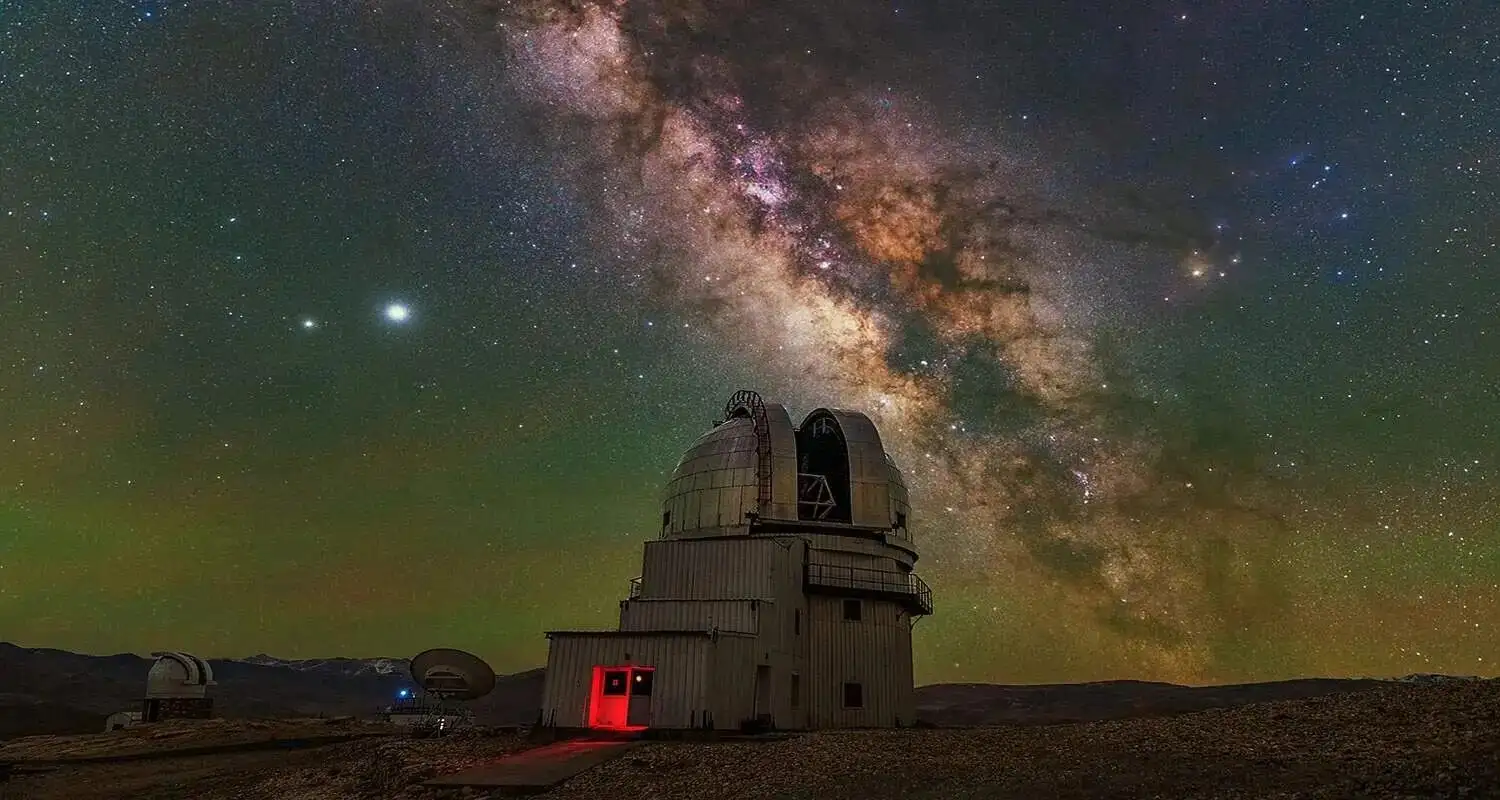
Hanle is also home to the Indian Astronomical Observatory (IAO).
It is one of the highest observatories in the world.
The observatory is located at about 4,500 metres above sea level.
Scientists use powerful telescopes here to study stars, planets, and galaxies.
The weather and dark sky make Hanle one of the best places in Asia for astronomy.
Can You Visit the Observatory at Night?
No.
This is something many travellers don’t know.
The observatory is not open for tourists at night.
It is a working research centre where scientists do their work.
You can see the building during the day, but visitors cannot enter at night or use its telescopes.
Instead, you can join a local telescope session in Hanle.
Meet Hanle’s Astro Ambassadors
One of the best things about Hanle is that local people now help visitors understand the night sky.
The Indian Institute of Astrophysics trained 24 local Astro Ambassadors, and many of them are women.
Each guide received an 8-inch Dobsonian telescope.
They now organise stargazing sessions for visitors and explain what you are looking at.
When you book one of these sessions, your money goes directly to local families instead of outside companies.
It is a great way to support the local community while enjoying an amazing experience.
What Can You See in Hanle?
On a clear night, you may see:
- The Milky Way
- Thousands of stars
- Bright planets
- Shooting stars
- Star clusters
- Satellites passing across the sky
Even if you have never used a telescope before, Hanle will surprise you.
Many visitors say it is the best night sky they have ever seen.
Pangong Lake
Pangong Lake is famous during the day for its blue water.
But after sunset, it becomes even more beautiful.
The dark sky fills with stars, and on clear nights, the Milky Way can be seen above the lake.
When the water is calm, it reflects the stars like a mirror.
This makes Pangong one of the best places in Ladakh for night photography.
Why Visit?
- Beautiful Milky Way views
- Star reflections on the lake
- Great place for camping
- Perfect for photography
Tso Moriri
Tso Moriri is quieter than Pangong.
There are fewer tourists and almost no bright lights nearby.
If you want a peaceful night under a sky full of stars, this is one of the best places to visit.
Why Visit?
- Very dark skies
- Less crowded
- Great for Milky Way photography
- Peaceful surroundings
Nubra Valley
Nubra Valley is another great place to enjoy the night sky.
The open land around Hunder and Turtuk has very little light, making it easy to see stars.
Camping in Nubra under a clear sky is an unforgettable experience.
Why Visit?
- Easy to combine with your Nubra trip
- Beautiful sand dunes and mountains
- Great for camping
- Clear night skies
Leh
Leh has more lights than Hanle or Pangong, but you can still enjoy stargazing from places away from the main market.
Areas near Shanti Stupa and the outskirts of Leh offer good views on clear nights.
It is a good choice if you don’t have time to travel to Hanle.
Why Visit?
- Easy to reach
- Good for first-time visitors
- No extra travel needed
Stok Kangri Base Camp
If you’re trekking to Stok Kangri Base Camp, don’t miss the night sky.
With almost no lights around, the stars look bright and clear.
It is one of the best places for people who love both trekking and stargazing.
Why Visit?
- High altitude
- Quiet location
- Great for Milky Way photos
Spituk Monastery
Watching the stars above an old monastery feels completely different.
Spituk Monastery offers peaceful views of the sky along with beautiful Buddhist buildings.
It is a great place for travellers who enjoy both culture and photography.
Why Visit?
- Beautiful hilltop views
- Peaceful atmosphere
- Good photography spot
Best Time for Stargazing in Ladakh
The right time can make a huge difference.
A clear sky with no moonlight gives you the best chance to see the Milky Way.
Best Months for Stargazing
The best season is from May to October.
However, most travellers should plan their trip between June and September.
During these months:
- Roads are open.
- The weather is more stable.
- Most hotels and homestays are open.
- Nights are cold but comfortable with proper winter clothes.
- The sky is usually clear.
Month-by-Month Guide
May
The stargazing season begins.
The weather can still change quickly, and nights remain very cold.
If you’re travelling in May, carry warm clothes.
June
One of the best months.
Road conditions improve, the skies are usually clear, and the Milky Way becomes easier to see.
July
July is perfect for stargazing.
Most tourist places are open, and the weather is comfortable during the day.
Night skies are usually amazing.
August
Another excellent month.
The Milky Way looks bright, and road conditions are generally good.
September
Many photographers love September.
The air becomes even drier, making the stars look brighter.
There are also fewer tourists compared to July and August.
October
October offers very clear skies, but nights become much colder.
Carry proper winter clothes if you visit this month.
Is Winter Good for Stargazing?
Yes, but it is not for everyone.
The skies remain clear, but temperatures can fall below -20°C in many places.
Roads may also close because of snowfall.
If this is your first Ladakh trip, visit between June and September instead.
Which Moon Phase Is Best?
Many people only check the weather before planning a stargazing trip.
They forget one important thing.
The moon.
A bright full moon can hide thousands of stars.
If you want to see the Milky Way clearly, plan your trip around the New Moon.
Why Is the New Moon Better?
During the New Moon, there is very little moonlight.
This makes the sky much darker.
A darker sky means:
- More stars become visible.
- The Milky Way looks brighter.
- Astrophotography becomes much easier.
Best New Moon Dates for 2026
If you’re planning a Milky Way trip in 2026, these dates are the best:
| Month | New Moon |
| May | 17 May |
| June | 15 June |
| July | 14 July |
| August | 12 August |
| September | 11 September |
| October | 10 October |
Try to stay in Hanle one or two nights before or after these dates.
Full Moon Dates to Avoid
If your main goal is seeing the Milky Way, avoid these dates.
| Month | Full Moon |
| May | 31 May |
| June | 30 June |
| July | 29 July |
| August | 28 August |
| September | 26 September |
| October | 26 October |
A full moon is still beautiful.
It lights up the mountains and lakes.
But it also makes many stars disappear from the sky.
One Simple Tip
Even during the New Moon, don’t rush outside just after sunset.
The sky usually becomes much darker later at night.
For the best experience:
- Sleep early.
- Wake up after midnight.
- Spend time outside between 12 AM and 4 AM.
This is usually when the sky looks its best.
How to Reach Hanle
Hanle is around 260–270 km from Leh.
Although the distance doesn’t look very long, the journey takes almost a full day because of mountain roads and army checkposts.
Road Route
The most common route is:
Leh → Karu → Upshi → Chumathang → Mahe → Nyoma → Loma → Hanle
Most travellers leave Leh early in the morning and reach Hanle by evening.
Starting early is always a better idea because driving after dark is not recommended.
Travel Tips
Before leaving Leh:
- Fill your fuel tank.
- Carry enough drinking water.
- Keep snacks with you.
- Download offline maps.
- Carry your ID and permit copies.
- Don’t expect many restaurants after Chumathang.
The roads become more remote after Nyoma, so plan your journey carefully.
Is There a Bus to Hanle?
Yes.
A government bus usually runs between Leh and Hanle on selected days every week.
It is much cheaper than hiring a private taxi.
However, bus timings may change.
Always confirm the latest schedule at the Leh Bus Stand before planning your trip.
Can You Combine Hanle with Pangong or Tso Moriri?
Yes.
Many travellers now choose a circuit instead of returning to Leh after every destination.
This saves both time and fuel.
Popular Route
Leh → Pangong Lake → Hanle → Tso Moriri → Leh
This is one of the best routes if you want to enjoy lakes, mountains, wildlife, and stargazing in one trip.
Can You Visit Umling La?
Yes, but only if you are fully acclimatised.
Umling La is one of the highest roads in the world, and the altitude is extreme.
Do not include it on the first day of your Ladakh trip.
Your body needs time to adjust before visiting such high places.
Do You Need a Permit for Hanle?
Yes.
Indian travellers need an Inner Line Permit (ILP) to visit Hanle.
The permit process is now mostly online.
You should also carry:
- Government ID
- Permit copy
- Leh arrival boarding pass
- Extra photocopies
These documents are checked at different checkpoints on the way.
If you need step-by-step instructions, read our complete Ladakh Permit Guide before planning your trip.
Permit Fees
Permit charges may change from time to time, but they usually include:
- Green Fee
- Wildlife Fee
- Red Cross Fund
Always check the latest fee before making your payment.
Foreign travellers need a Protected Area Permit (PAP) and should confirm the latest rules before travelling.
Where to Stay in Hanle
Don’t expect luxury hotels.
Hanle is famous for its simple homestays and small guesthouses.
But that’s part of the experience.
You’ll enjoy warm blankets, home-cooked food, peaceful nights, and some of the darkest skies in India.
Choose a Stay That Offers Telescope Sessions
This is one of the most important things to check before booking.
Many homestays work with the local Astro Ambassadors and can arrange guided telescope sessions.
This gives you a much better experience than simply looking at the sky on your own.
What Does a Stay Cost?
Prices change depending on the season.
Budget homestays usually start from ₹2,000–₹3,500 per night with meals.
Premium stays can cost much more.
Always contact the property directly for the latest price.
Astrophotography Tips
You don’t need expensive equipment to enjoy the night sky.
But a few simple tips can make your photos much better.
Camera Settings
- Use Manual Mode.
- Keep ISO between 1600 and 3200.
- Use a wide aperture if possible.
- Keep the shutter open for 15–25 seconds.
- Focus manually.
Carry These Things
- DSLR or Mirrorless Camera
- Wide-angle lens
- Tripod
- Extra batteries
- Memory cards
- Headlamp with red light
Useful Mobile Apps
These apps help you find stars and planets.
- Sky Guide
- Stellarium
- SkyView
- Star Walk 2
Tips for the Best Stargazing Experience
Before You Go
- Check the weather.
- Check the moon phase.
- Stay in Hanle for at least two nights if possible.
- Let your eyes adjust to the dark for 20–30 minutes.
- Avoid using bright mobile lights.
During Stargazing
- Dress in layers.
- Carry gloves and a cap.
- Stay hydrated.
- Respect nature.
- Keep the area clean.
Are the Best Stargazing Spots Safe?
Most popular stargazing places in Ladakh are safe if you travel responsibly.
Is It Safe for Solo Travellers?
Yes.
Places like Hanle, Pangong, Nubra Valley, and Tso Moriri are regularly visited by solo travellers.
Just avoid driving late at night and always stay at trusted homestays.
Is It Safe for Solo Female Travellers?
Yes.
Many women travel to Ladakh alone every year and enjoy stargazing without any problems.
Choose a trusted stay, avoid walking alone in isolated places after dark, and inform your host if you’re heading out for a late-night stargazing session.
For detailed safety tips, read our guide on Is Ladakh Safe for Solo Female Travellers?.
Ready to See the Darkest Sky in India?
Watching the Milky Way above Hanle or Pangong is something you’ll remember for years. Whether you love photography, camping, or simply want to spend a peaceful night under thousands of stars, Ladakh offers an experience that very few places in the world can match.
Plan your trip well, choose the right moon phase, spend at least one or two nights at your stargazing destination, and don’t forget to look up. Sometimes, the best part of Ladakh isn’t on the ground—it’s above you.
Conclusion
Ladakh is more than just mountain passes and beautiful lakes. It is one of the best places in India to experience a sky full of stars. From the world-famous Hanle Dark Sky Reserve to the peaceful shores of Pangong Lake and the quiet beauty of Tso Moriri, every destination offers a different way to enjoy the night sky.
Visit during the new moon, give yourself enough time to adjust to the altitude, and stay for more than one night whenever possible. With the right planning, your stargazing trip to Ladakh could easily become the most unforgettable part of your Himalayan adventure.
Frequently Asked Questions
Which is the best place for stargazing in Ladakh?
Hanle Dark Sky Reserve is the best place for stargazing in Ladakh and is also India’s first Dark Sky Reserve.
Can you see the Milky Way in Ladakh?
Yes. The Milky Way is clearly visible on dark, cloud-free nights, especially between May and October during the New Moon.
Do I need a telescope?
No. You can see thousands of stars and even the Milky Way with your naked eyes. A telescope simply gives you a closer view.
How many nights should I stay in Hanle?
At least two nights are recommended. If one night is cloudy, you’ll still have another chance to enjoy clear skies.
Can tourists visit Hanle Observatory at night?
No. The Indian Astronomical Observatory is a working research centre and is not open to tourists after dark.
Is Hanle suitable for beginners?
Yes, but spend at least 48 hours in Leh first so your body can adjust to the altitude before travelling to Hanle.
What is the best month for stargazing?
June, July, August, and September usually offer the best mix of clear skies, open roads, and comfortable travel conditions.