the valley of flowers trek is one of the most popular monsoon treks in uttarakhand. located in chamoli district, the valley is part of the nanda devi biosphere reserve and was recognised as a unesco world heritage site in 2005.
the main attraction here is the seasonal bloom of alpine flowers. during the monsoon months, the valley gets covered with different types of flowers, along with green meadows, streams, waterfalls and mountain views.
the trek is suitable for people who enjoy long mountain walks and want to experience uttarakhand during the monsoon. it is graded easy to moderate, although the hemkund sahib section is considerably more demanding because of the steep climb and high altitude.
quick details
| detail | information |
| location | chamoli, uttarakhand |
| trek duration | 6 days |
| trek distance | around 37-38 km |
| maximum altitude | around 14,100 ft |
| trek grade | easy to moderate |
| best season | july to september |
| base camp | pipalkoti |
| main trekking base | ghangaria |
| nearest railhead | rishikesh / haridwar |
| nearest airport | jolly grant airport |
the source itinerary lists the trek as a 6-day monsoon trek with around 37 km of trekking and a maximum altitude of approximately 14,100 ft.
where is valley of flowers located?
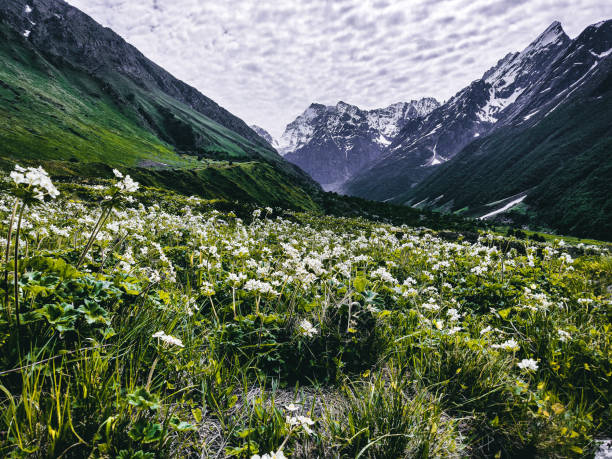
valley of flowers national park is located in chamoli district of uttarakhand. the area is part of the nanda devi biosphere reserve and sits in the high himalayan region.
the valley is not directly accessible by road. travellers have to reach pulna by road and then trek towards ghangaria. ghangaria acts as the main base for both the valley of flowers and hemkund sahib routes.
from pulna, the trail gradually climbs towards ghangaria. after reaching ghangaria, the next trekking section takes travellers towards the valley.
why is valley of flowers famous
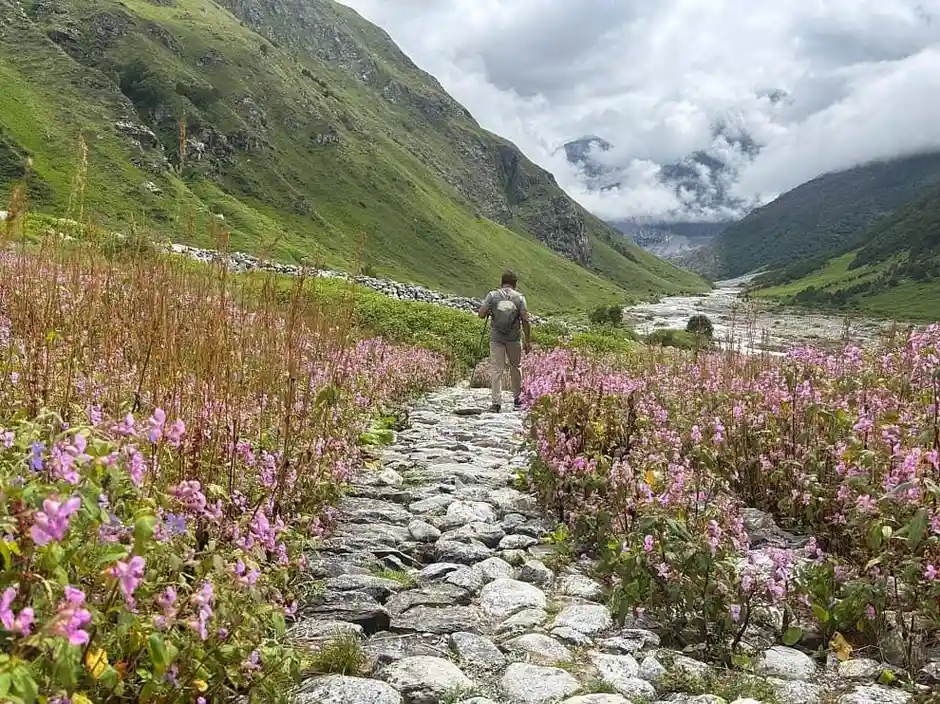
the biggest reason behind the popularity of valley of flowers is its seasonal alpine flowers. the valley is known for a large variety of flowers, including brahma kamal and himalayan blue poppy.
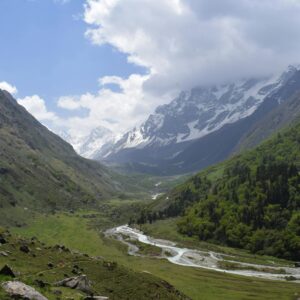
apart from flowers, the trail also offers waterfalls, streams, green meadows and mountain scenery. the combination of these features makes the trek different from many regular himalayan routes.
another major attraction near the valley is hemkund sahib, a high-altitude pilgrimage site. travellers can include it in their itinerary from ghangaria.
best time to visit valley of flowers
the best time to visit valley of flowers is from july to september. this is the period when the monsoon brings the valley to life and flowers start appearing across the landscape.
valley of flowers in july
july marks the beginning of the main flowering season. during the first half of july, travellers may find fewer visitors, while rainfall generally increases as the month progresses.
the valley starts becoming greener and flowers begin appearing along the trail.
valley of flowers in august
august is generally considered the peak month for flower varieties. travellers have a better chance of seeing the valley in full bloom during this period.
however, august also brings heavier monsoon conditions. trails can become muddy and slippery, and weather-related disruptions are possible.
valley of flowers in september
by september, rainfall usually starts reducing. the number of tourists can also be lower compared with the peak monsoon months.
some flowers may start fading, but the surrounding vegetation and mountain scenery continue to make the trek worthwhile.
valley of flowers trek route
the main route starts from pulna and goes towards ghangaria.
the road journey first takes travellers from pipalkoti towards govindghat. from govindghat, the route continues to pulna. the trekking section begins from pulna.
pulna to ghangaria
the trek from pulna to ghangaria is approximately 9 km. the trail has a steady uphill gradient and can take around 3 to 4 hours depending on walking speed and trail conditions.
along the route, travellers can see waterfalls, the river, local shops and mountain scenery.
ghangaria to valley of flowers
from ghangaria, the valley of flowers trail covers around 4 km one way.
the valley is located at around 3,500 metres, while ghangaria is around 3,000 metres. the route has a gradual gradient, although some sections can become muddy and slippery during the monsoon.
the itinerary gives around 7 hours for the valley of flowers visit, including the return to ghangaria.
valley of flowers trek itinerary
day 1: rishikesh to pipalkoti
the journey starts from rishikesh with a long drive towards pipalkoti.
the distance is around 200 km and the drive can take approximately 9 to 10 hours. the altitude gradually increases from rishikesh to pipalkoti.
this day is mainly focused on reaching the mountain region and getting ready for the trekking days ahead.
day 2: pipalkoti to govindghat, pulna and ghangaria
the second day begins with a drive from pipalkoti to govindghat and then towards pulna.
from pulna, the 9 km trek to ghangaria begins. ghangaria is located at around 3,000 metres and serves as the main base for the upcoming treks.
the route is uphill, so maintaining a comfortable pace is important.
day 3: ghangaria to valley of flowers and back
this is the main valley of flowers day.
the trek starts from ghangaria and continues towards the valley. the route is around 4 km one way, making the round trip approximately 8 km.
different flowers can be seen along the trail depending on the season. the source lists blue poppy, himalayan rose, meadow geranium, dog flower and river anemone among the prominent flowers.
after spending time exploring the valley, trekkers return to ghangaria.
day 4: ghangaria to hemkund sahib
the fourth day can be dedicated to hemkund sahib.
this is one of the toughest sections of the itinerary because the trail climbs steeply to a high altitude. the route is around 6 km one way and reaches approximately 14,200 ft according to the trek difficulty details.
because of the altitude and steep climb, this section requires better stamina than the main valley trail.
day 5: ghangaria to govindghat and pipalkoti
after completing the main trekking sections, trekkers return from ghangaria to pulna.
the descent from ghangaria to pulna is around 9 km and can take approximately 4 to 5 hours. from pulna, travellers continue by road towards govindghat and pipalkoti.
badrinath can also be added as an optional stop according to the itinerary.
day 6: pipalkoti to rishikesh
the final day involves the drive from pipalkoti back to rishikesh.
the road distance is around 200 km and the drive can take approximately 9 to 10 hours.
it is a good idea to keep some buffer in the overall travel plan because mountain roads and weather can affect travel time.
valley of flowers trek difficulty
the valley of flowers trek is graded easy to moderate. technical climbing skills are not required, which makes it possible for beginners with reasonable fitness to attempt the trek.
however, travellers should not underestimate the walking involved. the complete itinerary involves around 37 to 38 km of trekking.
the pulna to ghangaria section is a continuous uphill walk. the valley section can have wet and muddy patches during the monsoon. the hemkund sahib route is steeper and more tiring.
good stamina will make the overall experience much easier.
valley of flowers trek distance
the complete trek distance is around 37 to 38 km depending on the itinerary.
important distances include:
- pulna to ghangaria: around 9 km
- ghangaria to valley of flowers: around 4 km one way
- ghangaria to hemkund sahib: around 6 km one way
- ghangaria to pulna on return: around 9 km
the exact walking distance and time can vary depending on the route, weather and itinerary followed.
flowers found in valley of flowers
the valley is known for its wide range of alpine flowers.
some flowers mentioned in the trek information include:
- brahma kamal
- himalayan blue poppy
- blue poppy
- himalayan rose
- meadow geranium
- dog flower
- river anemone
- snake foil
- white leaf hog foot
the number and visibility of flowers can change according to the season and weather conditions.
hemkund sahib near valley of flowers
hemkund sahib is one of the important places that can be added to a valley of flowers itinerary.
it is a high-altitude pilgrimage site dedicated to guru gobind singh. the gurudwara is located beside a high-altitude lake and is surrounded by mountains.
the route from ghangaria is steep and requires considerably more effort than the main valley trail. travellers should keep enough time and energy for this section.
valley of flowers trek fitness requirements
although the trek is easy to moderate, preparation is still important.
the source recommends sufficient stamina for covering 5 km by jogging in around 45 minutes without stress. trekkers carrying their own backpack should also be comfortable with carrying around 10 to 12 kg.
if an off-load option is used, the trekker may need to carry around 3 to 5 kg in their personal backpack.
before the trek, regular walking, stairs and light cardio can help build stamina.
what to pack for valley of flowers trek
monsoon conditions make the packing list important.
basic trekking essentials
- backpack with rain cover
- day pack
- trekking shoes
- walking stick
- water bottles or hydration pack
- small lunch box
- energy bars and dry fruits
- personal medical kit
the source recommends a 50 to 60 litre backpack with rain cover and also mentions a walking stick and adequate water carrying capacity.
clothes for the trek
carry quick-dry clothes, warm layers, rain protection and extra socks.
because rainfall can make clothes and bags wet, keeping important items inside waterproof pouches or plastic covers is useful.
medicines and personal items
carry your regular medicines and a basic personal medical kit. if you have any medical concern or are unsure about high-altitude trekking, professional medical advice before the trip is sensible.
valley of flowers trek safety tips
monsoon is the best season for flowers, but it also brings rain-related challenges.
wet stones and muddy sections can make the trail slippery. rainfall can also affect road travel and trekking conditions.
walk slowly on slippery sections and avoid rushing to cover the trail. keep your rain jacket and waterproof protection easily accessible instead of packing them at the bottom of your bag.
always follow the trek leader, local authorities and park rules.
it is also useful to keep a buffer day because mountain weather and road conditions can cause delays.
how to reach valley of flowers from delhi
travellers coming from delhi can first travel towards rishikesh or haridwar.
rishikesh is the main starting point in the source itinerary. from rishikesh, the journey continues by road towards pipalkoti, then govindghat and pulna.
the trekking section begins from pulna and continues towards ghangaria.
since the road journey from rishikesh to pipalkoti itself can take around 9 to 10 hours, travellers should not plan a very tight schedule. keeping an extra day as a buffer is useful for a mountain trip.
valley of flowers trek cost
the trek cost can vary depending on the operator, batch date, transportation option, accommodation and inclusions.
the source currently lists a fixed departure price of ₹12,450 plus 5% gst per person for its listed 2026 departures, but this is a reference price from that source and should not be treated as a universal valley of flowers trek cost.
when comparing packages, check whether transportation, accommodation, meals, permits, entry fees, equipment and luggage support are included.
where to stay during valley of flowers trek
ghangaria is the main accommodation base for the trekking portion.
the source mentions guest house accommodation with attached washrooms at the base camp and triple or dormitory-style accommodation depending on the package. a cloakroom facility is also mentioned for storing additional luggage.
accommodation availability can depend on the season and booking schedule, so advance planning is recommended during july and august.
valley of flowers trek history
the modern trekking history of valley of flowers is connected with frank s. smythe and eric shipton, who reached the valley in 1931 after losing their route in monsoon fog following an expedition on mount kamet.
smythe later returned to the valley and studied its plant life. his book, the valley of flowers, helped introduce the region to a wider audience.
in 1939, botanist joan margaret legge visited the area for botanical research but died after an accident on a rocky slope. her memorial is still associated with the trekking route.
the area was declared a national park in 1982 and later received unesco world heritage recognition in 2005.
is valley of flowers trek worth it?
yes, especially if you enjoy monsoon travel, mountain walking and nature.
the trek gives you a chance to see seasonal flowers that are not visible in the same way throughout the year. the route also includes mountain streams, waterfalls, forests and high-altitude landscapes.
for travellers who want more than just the flower valley, hemkund sahib can be added to the itinerary.
the main thing to remember is that the trek happens during monsoon, so rain and slippery trails are part of the experience. proper preparation makes a big difference.
final thoughts
valley of flowers trek is a seasonal mountain experience where trekking and nature come together. from the trail between pulna and ghangaria to the flower-filled valley and the optional hemkund sahib climb, the trip offers different experiences across the route.
the best time is july to september, with august generally offering the strongest flower season. at the same time, travellers should be prepared for monsoon rain, slippery trails and changing mountain conditions.
with proper fitness, suitable trekking gear and enough buffer in the itinerary, valley of flowers can be a memorable addition to your uttarakhand travel plans.
FAQ
what is the best time to visit valley of flowers?
july to september is the main trekking season. august is generally the peak period for flower varieties, while september can offer comparatively lower rainfall and fewer crowds.
how difficult is valley of flowers trek?
it is graded easy to moderate. no technical climbing is required, but long walking and the high-altitude hemkund sahib section require good stamina.
how many days are needed for valley of flowers?
the source itinerary covers the trek in 6 days, starting and ending at rishikesh.
where does valley of flowers trek start?
the main trekking section starts from pulna. ghangaria is the base for the valley of flowers and hemkund sahib routes.
can beginners do valley of flowers trek?
yes, beginners can attempt it if they have reasonable fitness and stamina. the trek does not require technical climbing experience.
what flowers can be seen in valley of flowers?
flowers mentioned in the source include brahma kamal, himalayan blue poppy, himalayan rose, meadow geranium, dog flower and river anemone.
can hemkund sahib be covered with valley of flowers?
yes. hemkund sahib is generally included as a separate trekking day from ghangaria. the route is steeper and more demanding than the valley of flowers trail.
what should i carry for valley of flowers?
carry a rain-covered backpack, trekking shoes, walking stick, water, snacks, rain protection, extra socks and personal medicines.
is valley of flowers open throughout the year?
no. the main trekking season is limited to the monsoon months, with july to september listed as the trekking season in the source.
Anshra Zafar explores the mountains of Himachal Pradesh & Uttrakhand and writes detailed travel guides about Manali, Kasol, Sissu, Jispa.chopta and kedarnath trek She focuses on scenic road trips, backpacking experiences, café culture, snowfall destinations, and adventure activities in the Himalayas. Her content helps travelers plan smooth and memorable mountain journeys.